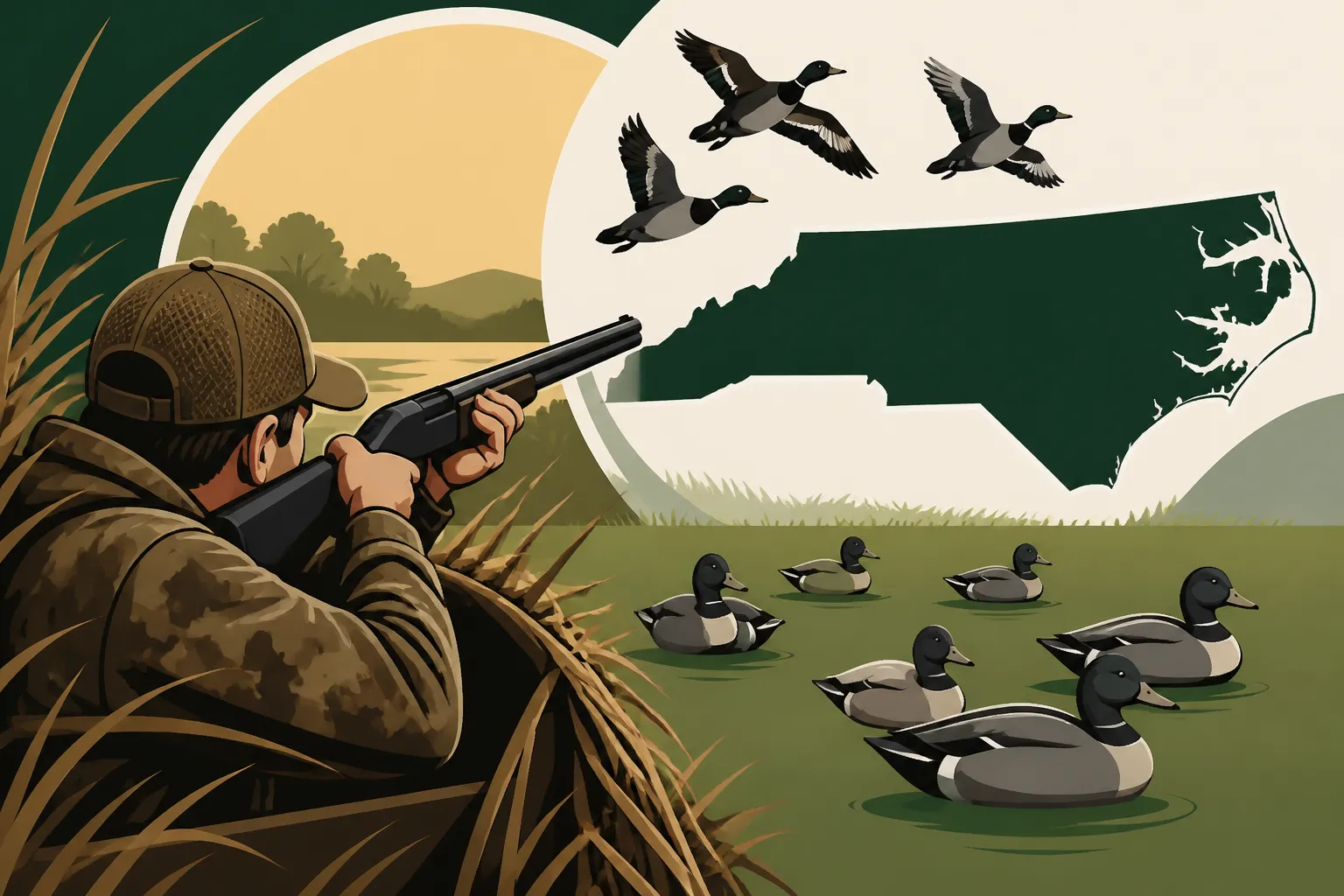
Decoy Placement for Pressured North Carolina Birds
There's nothing more frustrating than spending hours setting up a perfect spread of decoys, only to watch a flock of ducks flare at 100 yards, or a big tom gobbler hang up just out of range, refusing to commit. In North Carolina, with our diverse landscapes and often high hunting pressure, birds can be incredibly wary. This guide will walk you through advanced decoy placement strategies designed to fool even the most educated waterfowl and turkeys, helping you turn those frustrating near misses into successful harvests.
Understanding the Mindset of Pressured Birds
Pressured birds in North Carolina are essentially veterans of the hunting scene. They've seen it all: too many decoys, unnatural spreads, shiny new spinners, and hunters who can't sit still. This experience makes them incredibly cautious, often altering their behavior in ways that can baffle even seasoned hunters. Whether you're chasing greenheads on the coast or longbeards in the Piedmont, recognizing the signs of wariness is the first step toward outsmarting them.
Reading the Signs of Wary Waterfowl
Waterfowl, particularly ducks and geese, are highly communal animals that rely on visual cues for safety and feeding. When they're pressured, their natural instincts for self-preservation kick into overdrive. You might observe flocks of mallards or pintails making wide circles over your spread, hesitant to drop altitude, or worse, flaring aggressively the moment they spot something amiss. This often happens in popular areas like the Currituck Sound or on heavily hunted public reservoirs. Geese, equally intelligent, might land a half-mile away in a cut cornfield, preferring to walk into what they perceive as a safe feeding zone rather than directly commit to your perfectly placed spread. Their caution means they’re scrutinizing every detail, from the number of decoys to their spacing and the presence of any unnatural movement.
It’s crucial to understand that these birds aren't just being difficult; they're responding to perceived threats. Too many decoys too close together can signal danger, as can decoys that are too uniform or appear unnaturally stiff. Subtle changes in their flight patterns—like an immediate change in direction or a sudden gain in altitude—are dead giveaways that something in your setup is off. Using scouting tools, like the comprehensive maps available through platforms such as GoHunt, can help you identify areas with less pressure or pinpoint specific feeding and loafing zones where birds might feel more secure, allowing you to tailor your approach.
Decoding Pressured Turkey Behavior
Wild turkeys, especially mature gobblers, can become incredibly wary after facing consistent hunting pressure throughout the spring season. Early in the season, a gobbler might come charging into a full strut tom and hen decoy spread, but by mid-season or in heavily hunted regions, he's seen that trick before. Instead, you'll often find him "hanging up" at 100 yards, gobbling his head off but refusing to close the distance, despite your best calling efforts. He's looking for the hen to come to him, or he's suspicious of the visual setup. These birds have learned that aggression or over-eagerness can lead to trouble, making them much harder to pull into shotgun range.
Pressured turkeys might also become "call-shy," meaning traditional aggressive calling only serves to push them further away. They might slip silently into your setup, circling widely to get a better look, using thick cover to their advantage. Recognizing these subtle shifts in behavior—like a gobbler that appears to lose interest quickly, or one that approaches from an unexpected angle—is vital. This wariness is particularly prevalent in areas with high hunter density or on public lands where birds encounter hunters daily. To counter this, your decoy strategy needs to be less about creating an irresistible invitation and more about providing a subtle, convincing visual that reassures the bird it's safe to approach.
Advanced Decoy Placement Strategies for Waterfowl
When birds are pressured, a static, dense spread often does more harm than good. You need to think like the birds do, anticipating their caution and offering a setup that feels safe and inviting, rather than obvious and threatening. This means moving beyond the traditional X or J-hook spreads and considering more nuanced approaches that trick their wary eyes.
The 'Landing Zone' Myth and Reality
Many hunters focus heavily on creating a large, open landing zone within their decoy spread, assuming that birds want a clear path in. While this can work for unpressured birds, wary waterfowl often perceive a wide-open gap as an anomaly or a trap. Instead of a gaping hole, think about creating a "safe" entry point that feels natural. One effective strategy is a sparse "U" or "J" shape, with the open end facing into the prevailing wind (as ducks and geese prefer to land into the wind). However, the key is not to make this opening too pronounced. Scatter small groups of decoys irregularly around the edges of your intended landing area, creating a less defined, more natural-looking space.
Another excellent tactic is the "fringe" setup, particularly useful if you're Hunting Coastal Plain Pocosin Swamps or other areas with natural cover. Instead of a central landing zone, place your decoys along the edge of natural vegetation or a subtle bend in a creek. This suggests that birds are feeding or resting near cover, a behavior often observed in pressured birds seeking security. The "landing zone" then becomes an inconspicuous void adjacent to the cover, giving them a perceived safe space to drop into. For species like diving ducks, when you're Hunting Currituck Sound Diving Ducks, focus on setting your decoys in smaller, tighter clusters, mimicking their natural rafted behavior, rather than a wide-open invitation.
Confidence Decoys and Motion
Static plastic decoys can only do so much, especially for birds that have seen every trick in the book. To truly sell your spread to pressured birds, you need to introduce elements of realism and subtle motion. Subtle motion decoys, like jerk strings, ripples, or even light-touch wobblers, can breathe life into your spread without overdoing it. Avoid aggressive spinning wing decoys if birds in your area have become "spinner-shy," a common occurrence in heavily hunted spots. The goal isn't to draw their attention with flashy movement, but to convince them that the scene is alive and natural.
Adding "confidence" decoys is another game-changer. These are decoys that enhance the feeling of safety and well-being within your spread. For ducks, a few feeders with their heads down, or sleepers with their heads tucked, suggest a relaxed feeding environment. For geese, a couple of sentinels standing guard can make the flock feel secure. These specific, natural postures convey a sense of calm that helps ease the wariness of incoming birds. Many successful North Carolina hunters who use GoHunt to scout new areas also pay close attention to the wind, using it to their advantage to create natural decoy movement, even with static decoys.
Terrain-Specific Setups for Waterfowl
North Carolina's diverse landscapes demand adaptable decoy strategies. What works in a coastal marsh won't necessarily work in a Piedmont field.
For Hunting Flooded Timber for Wood Ducks, a notoriously wary species, less is often more. Instead of a large spread, use only a handful of wood duck decoys, placed very naturally in small groups among the trees. Position them in pockets of calm water where wood ducks would typically feed on acorns or bugs, creating intimate, believable scenarios. Their natural shyness means they'll scrutinize any large, obvious gathering.
When you're Layout Blind Hunting Coastal Plain Fields for geese or field ducks, the decoy spread needs to integrate seamlessly with your concealment. Instead of placing all decoys far in front of your blinds, position some decoys around your blinds, breaking up their outline. This helps your blind become part of the spread rather than an obvious anomaly. Ensure your decoys extend past your blind to the sides, creating the illusion that the flock is larger and your blind is merely part of it. This makes your blind a less distinct object to circling birds, which can be critical during early goose season tactics in North Carolina.
In open water environments like the Outer Banks or larger reservoirs, while you might need more decoys to be seen from a distance, spacing becomes paramount. Avoid tight clumps. Instead, create several smaller, distinct groups with ample space between them, mimicking natural feeding and resting patterns. This not only looks more natural but also provides multiple perceived safe landing zones for wary birds to choose from.
Strategic Decoy Deployment for Turkeys
Pressured gobblers are notorious for "hanging up," staying just out of shotgun range, often gobbling but never committing. Your decoy setup needs to address this wariness by being subtle, reassuring, and designed to draw the bird into an ethical shot distance without alarming him. The days of simply throwing out a full strut tom and expecting aggressive charges are often over with educated birds.
The "Loner" or "Submissive" Decoy Approach
When dealing with a pressured gobbler, an aggressive full strut tom decoy can often backfire. These birds have likely been challenged by hunters before and are more hesitant to commit to a direct confrontation. Instead, consider a less confrontational approach. A single hen decoy, especially a feeder or breeder hen, can be incredibly effective. This suggests a receptive hen that's focused on other things, rather than actively seeking out a gobbler. It subtly invites the tom to come investigate without posing a threat.
If you do choose to use a tom decoy, opt for a jake or a quarter-strut pose rather than a full strut. This still offers a visual challenge that might pique a dominant gobbler's interest, but it's less intimidating than a fully dominant tom. The key is to position this decoy for a broadside shot. Place it facing slightly away from you, so the gobbler approaches, circles, and presents his vitals as he attempts to confront or breed the decoy. This strategy is particularly effective when you're Calling a North Carolina Gobbler Off the Roost and need to provide a convincing visual once he hits the ground.
Concealment and Decoy Proximity to the Hunter
For pressured turkeys, your concealment is just as vital as your decoy placement. A gobbler's eyesight is legendary, and any unnatural movement or shine will send him running. Whether you're Using a Ground Blind on North Carolina Public Land or simply setting up against a large tree, ensure you're completely hidden. Don't be afraid to Brushing In a Blind on a Field Edge to break up its outline even further. The less visible you are, the more confident the turkey will be in approaching the decoy.
When placing decoys for wary birds, many hunters make the mistake of setting them too far out. A pressured gobbler might hang up at 60-80 yards, well out of comfortable shotgun range, if your decoys are placed too distantly. Instead, consider bringing your decoys much closer to your position, perhaps 10-20 yards. This forces the bird to commit to a much shorter distance to interact with the decoy, putting him well within lethal range. Angle the decoy so that when the gobbler approaches it, he naturally turns to offer a broadside shot, maximizing your chances for success in situations like Turkey Tactics for Piedmont Field Edges.
Reading the Gobbler's Approach and Adjusting
Turkey hunting with decoys isn't a "set it and forget it" endeavor, especially with pressured birds. You need to be constantly reading the gobbler's body language and adjusting your strategy. If a bird is hanging up and showing signs of extreme wariness, sometimes the best move is to remove the decoy entirely. A lone, distant gobble might sometimes be more enticing than a static visual if the bird is truly decoy-shy. Pay attention to his approach: Is he circling wide? Is he approaching silently?
If a gobbler is coming in, watch how he reacts to the decoy. If he's focused on it and closing the distance, stay still. If he hangs up, consider subtle calls to reassure him. The principle here is similar to adjusting your calling volume for deer when Rattling Volume in Thick Pine Cover or using Grunt Calls in Mature North Carolina Timber – sometimes less is more, and adapting to the animal's reaction is key. Sometimes a very subtle, soft cluck or purr after a period of silence can break the stalemate. The ability to be flexible and adapt your decoy strategy in real-time is what separates good turkey hunters from consistently successful ones, especially on pressured public lands.
Optimizing Your Setup Beyond Decoys
Decoys are a critical tool, but they are just one piece of the puzzle. To consistently fool pressured birds in North Carolina, you need a holistic approach that integrates exceptional concealment, nuanced calling, and meticulous scouting. Overlooking these complementary elements can render even the most advanced decoy placement ineffective.
Blending into the North Carolina Landscape
Your ability to disappear into the environment is paramount when dealing with pressured birds. No matter how perfect your decoy spread, if you're visible, moving, or reflecting light, you'll be busted. For waterfowl, this means ensuring your blind—whether a layout, panel, or boat blind—is meticulously brushed in with natural vegetation that matches the exact surroundings. On the coast, this might involve marsh grass and reeds. In a field, it means cut corn stalks or natural hedge row materials. For turkeys, pick a backdrop that offers complete concealment and break up your outline, like a wide oak tree or a thick pine cluster.
Consider the specific foliage and terrain of North Carolina. In the mountains, your camo should match dense hardwoods and rhododendron thickets. In the coastal plain, greens, browns, and grays for swamps and pine forests are key. Even the quality of your camouflage matters; modern patterns are designed to blend more effectively than older, simpler designs. Pay attention to shadows and light; setting up with the sun at your back can silhouette incoming birds for you, but it also means the sun might hit your face or equipment, creating a glint that wary birds will spot instantly.
Call Control and Sound Discipline
With pressured birds, often the biggest mistake a hunter makes is overcalling. Loud, aggressive, or repetitive calling can alarm birds that have learned to associate those sounds with danger. Instead, practice restraint and realism. For waterfowl, soft quacks, contented feeder chuckles, or subtle murmurs are often more effective than loud hails. Let the decoys do most of the visual work, and use your calls to add a layer of auditory realism that enhances the visual scene. If ducks are circling warily, a few quiet, reassuring quacks can sometimes seal the deal.
For turkeys, especially those wary to calls, less is definitely more. Focus on soft, realistic hen sounds: subtle clucks, purrs, and soft yelps. Mimic the sounds of a contented hen, not an overly excited one. Learn to read the gobbler's response; if he's gobbling but not moving, try silence for a while, letting his curiosity get the better of him. Remember, visual decoys are there to give him a reason to commit once he's heard your subtle calls. Overcalling can easily ruin an otherwise perfect decoy setup, turning a potentially successful hunt into another frustrating hang-up.
Scouting and Location Selection
Ultimately, the best decoy placement in the world won't matter if you're not in the right spot. Scouting is the foundation of success, especially for pressured birds. Use aerial photos, topography maps, and tools like GoHunt or the Scouting With the NC Wildlife App to identify potential bottlenecks, feeding areas, roosting sites, and low-pressure zones. Look for areas on public land that are difficult to access, or small pockets that other hunters overlook. Pressured birds learn to avoid easy-to-reach locations.
For waterfowl, scouting involves identifying current feeding patterns, whether it's a specific cut cornfield, a flooded timber block, or a section of marsh. For turkeys, it means finding fresh tracks, droppings, and understanding their roosting and travel routes. Observing how birds react to pressure in different areas will give you invaluable insight. Even a fantastic decoy spread will fail if placed in an area birds simply aren't using or if it's in a spot with high Hunting Pressure on North Carolina Public Land. The true art of hunting pressured birds lies in combining meticulous scouting with intelligent decoy placement and subtle calling, creating an irresistible illusion that even the wariest North Carolina game animal can't resist.
Decoy Strategy Summary for Pressured Birds
To summarize, here’s a quick overview of how to adjust your decoy strategies for those wary North Carolina birds:
| Decoy Type | Best Use for Pressured Birds | Target Species | Notes |
|---|---|---|---|
| Feeder Hen (Turkey) | Single, submissive, natural posture | Turkey | Non-threatening, encourages approach; ideal for call-shy birds. |
| Jake/Quarter Strut Tom | Challenges without aggression | Turkey | Use sparingly; position for broadside shot; less intimidating. |
| Shell Decoys (Ducks) | Sparse, spread out on field edges | Ducks, Geese | Mimics resting birds without density; ideal for open fields. |
| Full Body Floaters | Realistic, limited numbers, varied positions | Ducks, Geese | High realism, subtle motion in water is key; avoid tight clusters. |
| Motion Decoys | Subtle jerk strings, wobblers (waterfowl) | Ducks, Geese | Mimics life, avoids "spinner-shy" birds; realism over flash. |
| Silhouettes (Geese) | Large, spread out, in high-traffic fields | Geese | Good for distance, but realism must be maintained up close; use sparingly. |
| Sleeper Decoys (Waterfowl) | Adds confidence and portrays safety | Ducks, Geese | Mix in with feeder decoys for a relaxed look. |
Disclaimer
Please remember that hunting regulations, seasons, and licensing requirements can change. Always consult the latest North Carolina Wildlife Resources Commission (NCWRC) regulations before heading afield to ensure you are in compliance with all state laws. This guide is for informational purposes only and does not supersede official regulations.