North Carolina Posted Land Rules
The frustration of seeing prime hunting habitat across a fence line, only to wonder if it's "posted" or if you even have a chance at access, is a feeling many North Carolina hunters know all too well. It’s a common challenge, especially with the patchwork of private and public lands we have across our state. This guide is here to untangle the complexities of North Carolina's posted land rules, clarify what constitutes legal posting, explain your responsibilities as a hunter, and offer practical advice for navigating private property boundaries respectfully and legally.
Understanding North Carolina's Posted Land Laws
North Carolina's laws regarding private property are designed to protect landowners while also providing clear guidelines for those who wish to access land for activities like hunting. It’s not always as simple as seeing a "No Trespassing" sign, and understanding the nuances can save you a lot of headache and legal trouble.
The Legal Foundation of Posted Land
At its heart, the legal framework for posted land in North Carolina is about property rights. A landowner has the right to control who enters their property, and posting is one of the primary ways they communicate that intent. The law empowers landowners to define boundaries and restrict access, ensuring their privacy and preventing unwanted intrusions. This isn't just about hunting; it applies to all forms of entry, from hiking to foraging. When land is properly posted, it acts as a formal warning, elevating what might otherwise be a civil matter (simple trespass) into a criminal offense. The signs aren't just suggestions; they carry the weight of the law, and ignoring them can lead to serious consequences, not just for your hunting trip but for your record.
Many hunters, especially those new to an area or the sport, might mistakenly believe that if there isn't a fence or a glaring sign, the land is fair game. This is a dangerous assumption. The law doesn't always require a physical barrier or a sign to signify private property. While posting certainly makes it explicit, the core principle is that all private land is, by default, off-limits unless you have permission. This foundational understanding is crucial for every hunter operating in North Carolina, whether you're chasing deer in the Piedmont or turkeys in the Coastal Plain. It shifts the burden of proof, in a sense, to the hunter to secure permission, rather than simply avoiding posted signs.
What Constitutes "Posted" in North Carolina?
North Carolina law is quite specific about what officially constitutes "posted" land. It's not just any old sign scrawled on a piece of cardboard, though those might still convey a landowner's intent. According to the statutes, land is legally posted when signs or placards are placed conspicuously along the boundaries of the land at intervals of 200 yards or less. These signs need to bear a warning against trespassing, such as "Posted," "Private Property," or "No Trespassing." The key is "conspicuously" – meaning they should be easily seen and understood by someone approaching the property. The intent is to leave no doubt in a reasonable person's mind that entry is forbidden.
Beyond traditional signs, North Carolina also recognizes purple paint markings as a legitimate method of posting land. This is a common practice in many states and offers a durable, clear, and often less intrusive way for landowners to mark their boundaries. For land to be considered legally posted by purple paint, the marks must be vertical lines at least eight inches long and two inches wide, placed on trees or posts at intervals of 200 yards or less, and at a height of not less than three feet nor more than five feet from the ground. It’s designed to be unmistakable and permanent. If you see purple paint, consider that property posted, just as if you saw a "No Trespassing" sign. These distinct markings are invaluable for identifying property lines, especially in heavily wooded areas where signs might degrade or be harder to spot. If you're ever in doubt about the legality of a sign or marking, err on the side of caution and assume the land is private and access is restricted.
Distinguishing Between Posted and Unposted Private Land
This is where it can get a bit tricky for hunters. The crucial distinction is that all private land requires permission to enter, regardless of whether it is visibly posted or not. The "posted" status primarily changes the legal ramifications of trespassing.
| Land Status | Permission Requirement | Initial Trespass Consequence | Escalated Trespass Consequence (if warned) |
|---|---|---|---|
| Legally Posted Land (Signs < 200yds, purple paint) | Express (verbal or written) | Criminal Trespass (Class 1 Misdemeanor) | Criminal Trespass (Class 1 Misdemeanor) |
| Unposted Private Land | Express (verbal or written) | Civil Trespass (landowner can sue for damages) | Criminal Trespass (if warned to leave and remain or return) |
| North Carolina Game Lands / Public Land | Hunting License & Game Lands Permit (if applicable) | Game Land rule violation, fines | Game Land rule violation, fines, license revocation |
As you can see from the table, if you enter legally posted land without permission, you are immediately committing a criminal act. This is a Class 1 Misdemeanor in North Carolina. This is why paying attention to signs and purple paint is absolutely critical. Imagine you're deep in the woods, following a game trail, and suddenly you stumble onto a property line marked with faint purple paint you didn't notice before. Even if you meant no harm, you've crossed a legal boundary. Ignorance of the law is generally not a valid defense, so hunters must be vigilant about recognizing these markers.
On the other hand, if you enter unposted private land without permission, it's initially considered civil trespass. This means the landowner could potentially sue you for damages, but it's not a criminal offense unless they tell you to leave, and you refuse, or you return after being told not to. At that point, it escalates to criminal trespass. This distinction is vital, but don't let it fool you into thinking "unposted" means "okay." The landowner's rights are still paramount, and the best practice is always to secure permission before setting foot on any private property, posted or not. Many experienced hunters will tell you that the easiest way to ensure you're on the right side of the law is to treat all private land as if it's strictly off-limits unless you have explicit permission.
Navigating Private Land Access: Permission is Key
Gaining access to private land can unlock incredible hunting opportunities, especially in areas where public land is heavily pressured. However, the golden rule remains: you absolutely must have permission from the landowner before you step foot on their property. There's no getting around it, and trying to skirt the rules can lead to severe penalties.
The Importance of Express Permission
In North Carolina, "express permission" means a clear, undeniable authorization from the landowner or their authorized agent. This isn't a vague nod from a distant cousin or an assumption based on past interactions. It needs to be explicit. While verbal permission is legally binding, many seasoned hunters, and indeed, many landowners, prefer written permission. Why? Because written permission eliminates any ambiguity. It creates a record of who is allowed on the property, for what purpose (hunting deer, scouting, etc.), and for how long. This protects both you and the landowner. You have proof you're not trespassing, and they have a record of who is on their land.
Without express permission, you are trespassing. It’s that simple. Even if you see a beautiful stand of oaks on a piece of private property that looks like a deer magnet and there are no "No Trespassing" signs visible, you are still required to obtain permission. The onus is entirely on the hunter to know the property lines and to secure that permission. Tools like onX Hunt have revolutionized how hunters can identify property boundaries and even landowner contact information, making the process of seeking permission much more accessible. Carrying your hunting license, the landowner's contact information, and preferably, a written permission slip when hunting private land is always a smart move. This diligence shows respect for the landowner and ensures you're on solid legal footing. For more detailed insights on the legal requirements, check out What North Carolina Trespass Law Requires.
How to Legally Retrieve Game from Private Property
This is a common dilemma and a source of significant anxiety for hunters. You make a good shot, the deer runs, and you watch it bound onto the adjacent private property. What do you do? The immediate instinct might be to follow, but you absolutely cannot cross that property line without permission. Doing so, even to retrieve a downed animal, constitutes trespassing. North Carolina law does not grant a hunter the right to trespass on private land, posted or unposted, to retrieve game without the landowner's permission. This is a critical point that can lead to criminal charges if mishandled.
The correct procedure is to immediately contact the landowner and explain the situation. Be polite, be respectful, and ask for permission to retrieve your game. If you can't reach the landowner, or if they deny permission (which they have every right to do), you are simply out of luck. It's a tough pill to swallow, but violating property rights carries more weight than recovering an animal. In such situations, documenting your efforts to contact the landowner and adhering to their decision is crucial. If you're hunting near a boundary, being extra diligent with your shot placement to avoid this scenario is always the best strategy. For a deeper dive into this specific challenge, explore Retrieving Game From Private Land in North Carolina. Remember, always prioritize the law and landowner relations over a potential harvest.
Penalties for Trespassing in North Carolina
The consequences of trespassing in North Carolina are not to be taken lightly. As mentioned, trespassing on legally posted land without permission is a Class 1 Misdemeanor. This is a serious criminal offense, not just a slap on the wrist. A Class 1 Misdemeanor can result in significant fines, potential jail time, and a permanent criminal record. Beyond the immediate legal trouble, a conviction can also lead to the suspension or revocation of your hunting license and privileges, meaning you could be barred from hunting for a substantial period. Imagine losing your ability to hunt in North Carolina for a mistake that could have been avoided.
Even if the land isn't legally posted, if a landowner verbally tells you to leave their property, and you refuse, or if you return after being told not to, that civil trespass immediately escalates to criminal trespass. The law provides landowners with clear avenues to protect their property, and law enforcement takes these violations seriously. Furthermore, any equipment used during the trespass, such as firearms or bows, could potentially be confiscated. The financial costs, legal fees, loss of hunting privileges, and damage to your reputation are far greater than any perceived benefit of shortcutting the permission process. Hunters are always advised to be meticulously sure of their location and access rights, often using tools like GoHunt or onX Hunt to verify boundaries in the field. These apps can be lifesavers in preventing accidental trespass. Understanding these penalties reinforces why securing North Carolina Trespass and Permission Law is not just a suggestion, but a fundamental requirement for ethical and legal hunting.
Best Practices for Respecting Landowners and Hunting Ethically
Building and maintaining positive relationships with landowners is arguably one of the most important aspects of hunting in North Carolina, especially when you consider the vast amount of private land available. Ethical hunting isn't just about how you hunt game; it's also about how you treat the land and the people who own it.
Seeking Permission Effectively and Respectfully
Approaching a landowner to ask for hunting permission can feel intimidating, but a respectful and well-prepared approach significantly increases your chances of success. First, do your homework. Use mapping tools like onX Hunt or county GIS systems to identify the property owner's name and contact information. Knowing a little about the property and what you're asking for can show you're serious and not just haphazardly knocking on doors. When you make contact, whether in person or over the phone, be polite, articulate, and clear about your intentions. Explain that you're an ethical hunter, you understand their concerns about liability and property damage, and you're willing to adhere to any rules they set.
Offer to help with small tasks around their property, like fixing a fence, clearing brush, or keeping an eye on things. This shows you're not just there to take, but to contribute. Always suggest putting the agreement in writing, even if they initially offer verbal permission. A simple written agreement outlining dates, areas, and specific rules (like no ATVs, specific parking, etc.) provides clarity and protects both parties. Never take a "no" personally; thank them for their time and move on. Remember, every positive interaction with a landowner helps build a better reputation for hunters as a whole. Being patient and persistent, without being a nuisance, can eventually pay off, allowing you to access some prime Hunting Piedmont Farmland Deer spots. For practical tips, check out Asking a North Carolina Farmer for Permission.
Using Technology for Landowner Identification
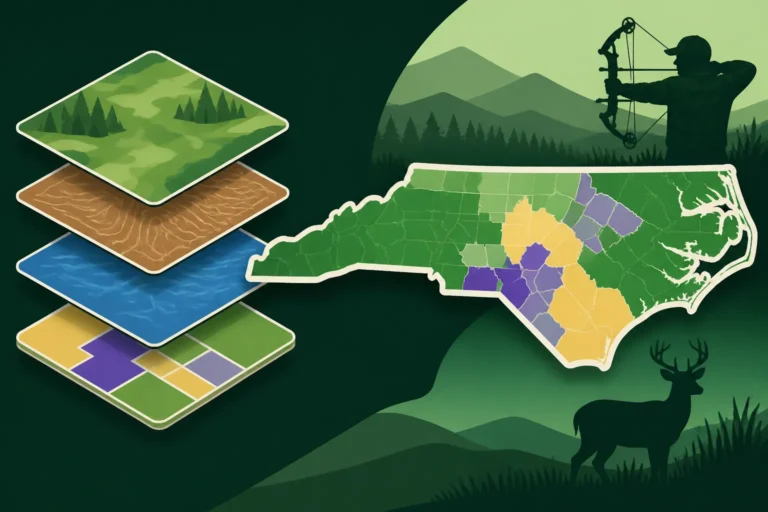
In today's world, technology has made the process of identifying property lines and landowners significantly easier, reducing the chances of accidental trespass. Mobile apps like onX Hunt and GoHunt are indispensable tools for North Carolina hunters. These apps use GPS and GIS data to overlay property boundaries, landowner names, and even parcel numbers directly onto satellite imagery and topographic maps on your phone. Imagine walking through thick woods, unsure of where the public land ends and private land begins, only to glance at your phone and see a clear line marking the boundary, along with the name of the landowner. This level of precision is invaluable.
Before you even leave your house, you can scout potential properties, identify owners, and often find contact information. This allows for a much more targeted and professional approach when seeking permission. In the field, these apps help you stay precisely where you're supposed to be, preventing any unintentional crossings onto posted land. They also often include layers for public lands, game lands, and even points of interest like food plots or water sources. While these tools are incredibly powerful, they should always be used as an aid, not a substitute for due diligence. Always cross-reference with physical signs or maps if there's any doubt, as technology can sometimes have slight discrepancies. Being proactive with tools like onX Layers for North Carolina Land Status can significantly enhance your hunting experience and keep you out of trouble.
Building and Maintaining Good Landowner Relationships
Once you've secured permission, the real work of maintaining that relationship begins. This isn't a one-time transaction; it's an ongoing partnership based on trust and mutual respect. Always follow through on any promises you made. If you said you'd close a gate, close it. If you agreed to only hunt certain days, stick to it. Never, ever abuse the privilege. This means leaving no trash behind, being mindful of livestock or crops, and respecting their property as if it were your own. If you notice anything amiss on their property while hunting – a downed fence, suspicious activity – inform them. This shows you care and are a responsible presence.
Consider sharing a portion of your harvest as a token of appreciation. A package of venison sausage or backstrap is often a welcome gesture and a great way to say "thank you." A simple holiday card or an occasional check-in call, even outside of hunting season, can go a long way in solidifying that relationship. If the landowner has specific requests, like not driving on wet fields or staying out of certain areas, always comply, even if it feels inconvenient. Remember, you are an ambassador for all hunters. A bad experience for one landowner can sour their opinion of all hunters, closing doors for everyone. Cultivating these relationships not only secures your hunting access but also fosters a stronger community between hunters and landowners, which is vital for the future of hunting in North Carolina.
Disclaimer
This article is for general informational purposes only and does not constitute professional advice. Laws, prices and regulations vary by location and change over time. Consult a qualified professional for guidance on your specific situation.