North Carolina Suburban Archery-Only Zones
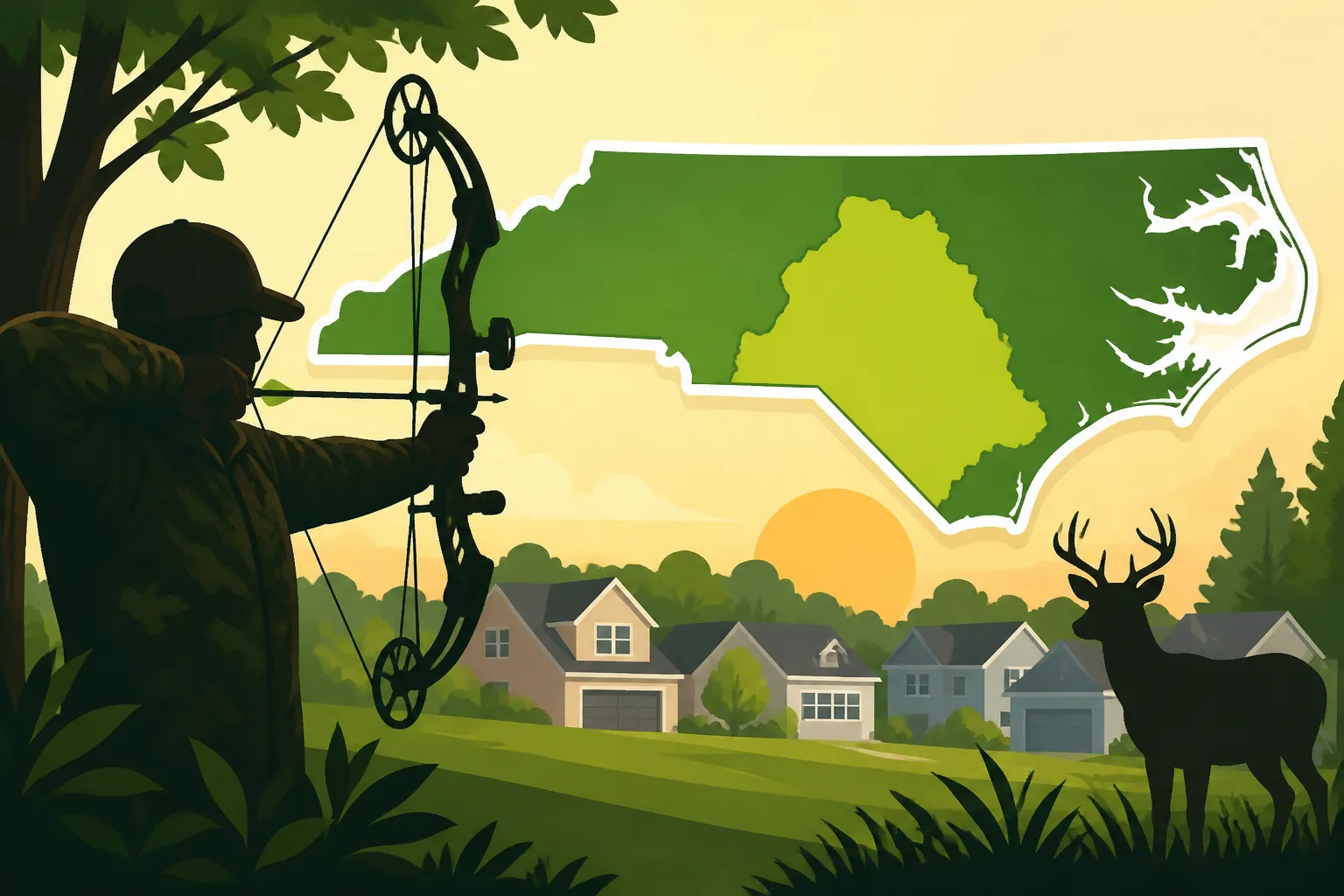
Hunting in North Carolina's rapidly expanding suburban areas presents a unique challenge: balancing healthy deer populations with the safety and concerns of residential communities. It’s a situation many hunters face, watching deer thrive in green spaces near homes but feeling restricted by traditional hunting methods. This guide aims to demystify North Carolina's suburban archery-only zones, helping you understand where they are, how to navigate their specific rules, and what it takes to ethically and successfully hunt deer in these often overlooked, yet prime, locations.
The Growing Need for Suburban Archery-Only Zones
It’s no secret that white-tailed deer are incredibly adaptable creatures. As North Carolina's cities and towns continue to sprawl, encroaching on what was once their natural habitat, deer populations often boom within these new suburban landscapes. While seeing deer graze in your backyard can be charming, this proximity comes with a host of problems that can quickly turn frustrating for residents and costly for communities.
One of the most immediate and dangerous issues is the dramatic increase in deer-vehicle collisions. Imagine driving home from work on a quiet back road near Raleigh or Charlotte, only to have a full-grown buck dart out in front of your car. These accidents not only cause significant vehicle damage but can also lead to serious injuries, or even fatalities, for drivers and passengers. Local law enforcement and insurance companies regularly report spikes in these incidents, particularly during the rut when deer are most active. Beyond the roadways, homeowners often grapple with extensive landscaping damage. Prized rose bushes, newly planted shrubs, and vegetable gardens can be decimated overnight by hungry deer, leading to significant financial losses and endless replanting efforts. Furthermore, with the growing concern of Chronic Wasting Disease (CWD) in North Carolina, managing deer populations, especially in areas where densities are high, becomes even more critical to herd health. These zones offer a precise, controlled method for local wildlife management agencies and landowners to address these burgeoning issues.
The reason these zones are typically "archery-only" boils down to public safety and noise concerns. Discharging a firearm in a densely populated area is simply not feasible or safe. The range of a rifle or shotgun, coupled with the loud report, makes them unsuitable for areas where homes, schools, and parks are in close proximity. Archery equipment, on the other hand, offers a much shorter effective range and is significantly quieter, greatly reducing the risk to bystanders and minimizing disturbance to residents. This makes archery the ideal, and often the only, legal method to manage deer numbers effectively in these sensitive environments, providing a crucial tool for communities struggling with overabundant deer populations.
Locating and Understanding Archery-Only Zones
Unlike the broad, statewide regulations governing traditional hunting seasons, North Carolina's suburban archery-only zones aren't uniformly designated by the state wildlife commission. Instead, these areas are typically created at the local level through county or municipal ordinances, or by private landowners responding to deer issues. This decentralized approach means that finding and understanding these specific hunting opportunities requires a bit more legwork than simply checking the North Carolina Wildlife Resources Commission (NCWRC) regulations handbook.
Often, these zones are established in response to specific requests from homeowners associations, property management companies, or even individual landowners who are experiencing significant deer damage. You might find them in large, undeveloped parcels within city limits, expansive greenways, utility corridors, or even on corporate campuses with significant acreage. Sometimes, entire communities or sections of a county might adopt an archery-only ordinance to address widespread deer issues. This also means that what's legal and acceptable in one town or county might be completely different just a few miles down the road. You can usually uncover details about these opportunities by checking county or city government websites for local ordinances related to hunting or wildlife management. It’s also wise to check with the local police department or sheriff's office, as they often field calls about wildlife and can direct you to relevant local regulations or contacts. Additionally, the NCWRC website might have information on specific municipalities participating in deer management programs that allow for archery hunting.
When you're trying to pinpoint suitable locations, especially on private land, mapping tools are your best friend. Applications like GoHunt can be invaluable for identifying property lines, understanding land ownership, and even seeing topographical features that might hold deer. Before you even step foot in the field, using a robust mapping platform like GoHunt to scout aerial photos of potential areas can help you identify dense cover, natural funnels, and potential travel corridors. This is critical for finding those often-overlooked small private tracts in North Carolina that could offer prime hunting. Remember, just because an area looks like a good spot on the map doesn’t mean it’s open to hunting, and securing permission is paramount, a topic we'll cover in more detail.
Specific Rules and Regulations for Archery-Only Zones
Navigating the rules within North Carolina's suburban archery-only zones can feel a bit like reading fine print, as they often layer local ordinances on top of existing state hunting laws. It's not enough to simply know the statewide regulations; you absolutely must understand the hyper-local requirements for each specific zone you plan to hunt. Failure to do so can lead to citations, fines, and even the loss of hunting privileges, so thorough research is non-negotiable.
Local Ordinances and State Overlap
The most critical distinction for suburban archery-only zones is the interplay between state law and local ordinances. While the NCWRC sets the statewide deer bag limit rules and season dates for archery, municipalities and counties can impose stricter rules. For example, a city might specify that hunting is only allowed on parcels above a certain acreage, or that a specific setback distance from occupied dwellings is required, perhaps even more stringent than the state's minimums for archery equipment. Some local ordinances may also require specific permits beyond your standard North Carolina hunting licenses and what they cost. You might need a special city-issued permit or have to register your intent to hunt with a local authority. Always check with the relevant city or county planning department, or local law enforcement, to understand all applicable local laws before you draw your bowstring.
A common point of confusion revolves around blaze orange requirements. Generally, during the statewide Archery Season Opening Day, blaze orange is not required for archery hunters. However, if a suburban archery-only zone overlaps with an area where firearm hunting is allowed (even if you are only archery hunting), or if the local ordinance specifically mandates it for safety reasons due to other outdoor activities, you might still need to wear it. It's always best to err on the side of caution and understand the specific requirements for your chosen hunting spot. When considering equipment, remember that while crossbows are generally allowed during North Carolina's archery season, some local ordinances might have specific rules or restrictions on their use in their designated archery-only areas. Always verify this detail.
Permission and Landowner Relations
Hunting in these zones is almost exclusively done on private land, which means obtaining explicit permission from the landowner is not just a courtesy, it's a legal requirement. North Carolina Trespass and Permission Law is clear: you need permission to hunt private property. This isn't like hunting on sprawling game lands where access is generally open with a valid license; here, you're often dealing with individual property owners or HOA boards. This is where your ability to communicate and build trust becomes paramount.
When you approach a landowner to ask for permission, be prepared, polite, and professional. Explain what you're trying to achieve – typically helping manage an overabundant deer population – and how your archery hunting will be done safely and ethically. Consider offering references or even providing proof of insurance. Tools like GoHunt can again be useful here, helping you pinpoint specific parcel owners so you know exactly who to speak with. If you get permission, consider drawing up a simple written agreement outlining the terms, dates, and areas where you’re allowed to hunt. This protects both you and the landowner. Maintaining a positive relationship is crucial, as word travels fast in these communities. A bad experience with one hunter could lead to all future requests being denied.
Here’s a simplified table comparing general statewide archery rules with potential specific requirements in suburban archery-only zones:
| Feature | North Carolina Statewide Archery Season (General) | North Carolina Suburban Archery-Only Zones (Potential Local Rules) |
|---|---|---|
| Weapon | Bow, Crossbow | Bow, Crossbow (verify local crossbow rules) |
| Blaze Orange | Not required for Archery | May be required by local ordinance for safety |
| Discharge Setback | State minimums apply (e.g., 250 yards from dwellings) | May have stricter local setback requirements (e.g., 500 yards) |
| Permits Required | State hunting license, Big Game Privilege | State license + potential local city/county permits |
| Land Access | Public Game Lands, Private Land (with permission) | Almost exclusively Private Land (explicit permission mandatory) |
| Bag Limits/Reporting | North Carolina Deer Bag Limit Rules & Deer Reporting Requirements apply | State limits apply, but local management plans may impose further restrictions (e.g., antlerless only) |
| Hunting Hours | Typically 30 min before sunrise to 30 min after sunset | Local ordinances may specify more limited hours (e.g., daylight only) |
It’s your responsibility to ensure you meet all requirements, both state and local. Don't assume anything. A quick phone call to the appropriate city or county department can save you a lot of headache and keep you in good standing as a responsible hunter.
Strategic Hunting and Ethical Considerations
Hunting in suburban archery-only zones demands a refined approach compared to hunting vast public lands. The proximity to homes, pets, and non-hunting residents means every decision, from scouting to shot placement, carries a heightened ethical responsibility. Success here isn't just about bagging a deer; it's about being a respectful and responsible ambassador for hunting.
Scouting and Stand Placement
Scouting in these environments is often more about reading subtle signs and understanding human movement patterns than just tracking deer. You'll still look for traditional deer sign – trails, rubs, scrapes, and feeding areas – but you'll also need to identify areas of minimal human disturbance. This might be a neglected corner of a large property, a dense thicket bordering a greenway, or a strip of woods between two subdivisions. Aerial photos from platforms like GoHunt become even more powerful tools here, allowing you to identify potential bedding areas, bottlenecks, and routes deer might use to move undetected between cover and food sources. You're effectively scouting North Carolina public land and private parcels simultaneously, even if you only have permission for one.
When it comes to stand placement, safety is paramount. Your shot needs to be ethical, with a clear understanding of what’s beyond your target. This means considering the trajectory of your arrow, knowing exactly where it will impact if it passes through the deer, and ensuring no homes, roads, or people are in the line of fire. Elevated treestands are often preferred in these settings because they offer a safer downward angle for your shot, reducing the risk of an arrow traveling too far. Ground blinds can also be effective, but they require careful brushing in to remain concealed and to ensure your arrow has a safe backstop. Think about entry and exit routes that are discreet and won't alarm residents. Walking through someone's manicured lawn with a bow and quiver might not be the best first impression, even if you have permission.
Shot Placement and Recovery
Ethical shot placement is always crucial in hunting, but in suburban zones, it takes on even greater significance. You're hunting close to people, and you absolutely cannot afford a wounded deer running onto someone’s property and dying in their backyard. This means only taking high-percentage shots with a clear, broadside or slightly quartering-away angle. Avoid risky shots, especially if you’re unsure of the deer’s exact location or the presence of hidden obstacles. Patiently wait for the perfect opportunity.
Should you make a good shot, blood trailing and recovery also require a delicate touch. You might be tracking through landscaped yards, across driveways, or near busy walking paths. Before you begin, notify the landowner or your contact person that you've shot a deer and might need to track. If the deer crosses a property line where you don't have permission, you must secure permission from that adjoining landowner before pursuing it. This is not only a legal requirement under North Carolina trespass law, but also a matter of courtesy and public perception. Having a plan in place for how you'll move the deer discreetly is also important. A deer cart, or a simple drag, might be necessary, and you’ll want to have game bags ready, especially if the weather is warm from an early archery season hunt. Remember, your actions reflect on all hunters, so professionalism and respect are key to maintaining these valuable hunting opportunities.
Building Positive Community Relations
Beyond the technical aspects of hunting, success in suburban archery zones hinges heavily on your ability to foster positive relationships with landowners and the broader community. These opportunities often exist because residents recognize a problem and trust hunters to be part of the solution. Your behavior on and off the stand can either reinforce that trust or erode it.
Be a good neighbor. Drive slowly on residential streets, park respectfully, and keep your gear out of sight as much as possible until you're at your hunting location. Offer to share venison with the landowner if they're open to it – it's a great way to say thank you and reinforce the positive aspects of deer management. If you encounter non-hunters, be polite, friendly, and willing to answer questions about what you're doing, always emphasizing safety and population control. Showing respect for their property, their concerns, and their way of life is fundamental. By acting as a responsible, ethical hunter, you not only improve your own chances of success but also help secure these unique and vital hunting opportunities for the future.
Disclaimer
Please be aware that hunting regulations, seasons, and local ordinances can change. It is your responsibility to verify all current rules and laws with the North Carolina Wildlife Resources Commission and relevant local authorities before engaging in any hunting activities. This guide is for informational purposes only and should not be considered legal advice.