Muzzleloaders for a North Carolina December
Hunting North Carolina in December can be a magical experience, but it also brings unique challenges. The air bites with a crisp chill, deer are often warier after months of pressure, and the fleeting daylight demands precision. If you're considering hitting the woods with a muzzleloader during this prime late-season window, you've chosen a path that requires specific knowledge and preparation. This guide will walk you through everything you need to know to make your December muzzleloader hunt in North Carolina a successful and memorable one.
The Unique Appeal of December Muzzleloader Hunting in North Carolina
There's something incredibly romantic and challenging about carrying a muzzleloader into the woods. It strips hunting down to its essence – a single shot, careful stalking, and a deep understanding of your firearm. For many North Carolina hunters, December represents a prime opportunity to embrace this tradition, offering different seasons and opportunities that modern firearms might not.
Why Muzzleloaders Shine in the Late Season
By December, the initial rush of the gun season has long passed, and deer have settled into predictable late-season patterns. This is where the muzzleloader can truly shine. Often, muzzleloader seasons run concurrently with or slightly after rifle seasons, or during specific windows that allow hunters a chance at deer that have become extremely wary of high-powered rifles. The slower pace required for a muzzleloader hunt, from loading to aiming, often forces a hunter to be more deliberate and methodical, which can be an advantage when targeting educated, pressured deer. You learn to make that one shot count.
It's a chance to extend your season, particularly in areas where rifle seasons have concluded but blackpowder options remain open. Plus, there's an undeniable satisfaction that comes from taking game with a muzzleloader. It connects you to a hunting heritage that predates cartridges and scopes, requiring a different kind of skill set and patience.
Historical Context and Modern Effectiveness
Muzzleloaders, for centuries, were the only firearms available. While today's inline muzzleloaders boast incredible accuracy and ease of use compared to their traditional flintlock or percussion cap ancestors, they still embody that historical spirit. They demand attention to detail: keeping powder dry, managing recoil, and understanding trajectory. In North Carolina, the opportunity to hunt with these firearms in December often means a quieter woods, fewer hunters, and a more intimate experience. The limited range and single-shot nature might seem like a disadvantage, but it forces hunters to truly hone their scouting and tracking skills, bringing them closer to the game.
Understanding North Carolina's Muzzleloader Regulations
Navigating hunting regulations can sometimes feel like trying to untangle a knot in the dark, and muzzleloader rules are no exception. North Carolina has specific guidelines that every blackpowder hunter needs to understand before heading afield, especially during the December window. Failing to adhere to these can quickly turn a hopeful hunt into a costly mistake.
Season Dates and Specific Zones
North Carolina's deer season structure is divided into distinct zones – Eastern, Central, and Western – each with its own specific opening and closing dates for various weapon types. While statewide archery season often opens much earlier, muzzleloader seasons typically fall into specific windows within the broader deer season. It's crucial to consult the latest North Carolina Wildlife Resources Commission (NCWRC) regulations to confirm the exact North Carolina Muzzleloader Season Rules for the county and zone you plan to hunt. These dates can sometimes overlap with gun seasons or offer exclusive windows depending on the zone. For instance, you might find a period in December where only muzzleloaders and archery equipment are legal in a particular zone, providing a unique advantage for blackpowder enthusiasts. Don't just assume; always double-check the current year's digest.
Legal Equipment and Ammunition for Muzzleloaders
The NCWRC defines what constitutes a legal muzzleloader for deer hunting. Generally, this includes traditional flintlock, percussion cap, or inline muzzleloading firearms, 20 caliber or larger, that load from the muzzle. There are often stipulations about sights (open sights, scopes, and even red dot sights are typically allowed), and some rules may apply to powder type and projectiles. For example, some states restrict saboted bullets, but North Carolina generally allows them. However, it's always wise to verify the latest regulations regarding:
- Caliber: Minimum .40 caliber for deer is a common rule in many places, though some states allow .36 for small game. For deer in North Carolina, it's usually .40 caliber or larger.
- Ammunition: Are conical bullets, sabots, or round balls allowed? What about solid projectiles versus expanding ones?
- Powder: Black powder and black powder substitutes (like Pyrodex or Triple Seven) are typically legal, but smokeless powder is almost universally prohibited in muzzleloaders.
- Primers: 209 shotshell primers are common for inlines, while percussion caps or flintlock systems are for traditional guns.
- Scopes: Magnified optics are generally permitted during muzzleloader season in North Carolina.
Always refer to the official NCWRC digest, often found on the GoHunt website or directly through the state's wildlife resources commission portal, to ensure your equipment is fully compliant. There’s nothing worse than finding out your favorite setup isn’t legal after you’ve already invested time and money.
Choosing Your Muzzleloader for North Carolina's Woods
The world of muzzleloaders offers a surprising variety, from classic side-hammer designs to modern inlines. Each type has its own characteristics, pros, and cons that can influence your hunting experience. For a North Carolina December hunt, where conditions can vary from mild to bitterly cold and wet, your choice of firearm can make a real difference.
In-line Muzzleloaders: Modern Performance
In-line muzzleloaders are, by far, the most popular choice for modern hunters, and for good reason. They feature a direct ignition system where the primer is "in line" with the powder charge, leading to more reliable ignition, especially in adverse weather conditions. They often use 209 shotgun primers, which are robust and offer excellent waterproofing. Many in-lines resemble modern rifles in their feel and accuracy, often equipped with scope mounts, synthetic stocks, and fast rifling twists designed for saboted bullets.
For hunters looking for maximum accuracy and reliability in a North Carolina deer stand, especially in a cold, damp December, an in-line is an excellent choice. Brands like Thompson/Center, CVA, and Traditions offer a wide range of models that are relatively easy to load, shoot, and clean. Their tighter breach designs and modern materials make them less susceptible to moisture, which is a significant advantage when you're sitting in a stand all day during a potential December rain or sleet. You can find models with different barrel lengths and weights, allowing you to choose one that fits your hunting style, whether you're still-hunting Nantahala Forest ridges or sitting over a food plot in the Piedmont.
Traditional Muzzleloaders: Embracing Heritage
Traditional muzzleloaders, encompassing flintlock and percussion cap rifles, offer a profound connection to hunting history. These firearms demand a different level of skill and commitment. Flintlocks use a piece of flint to strike steel, creating a spark to ignite the pan primer, which then flashes into the main charge. Percussion caps use a small, copper cap filled with an explosive compound, struck by a hammer to ignite the powder. Both require more meticulous care in the field, particularly concerning moisture, which can easily foul the ignition system.
While traditional muzzleloaders are certainly more challenging to master and keep firing reliably in inclement weather, they offer an unparalleled sense of accomplishment. Some hunters choose them for the sheer joy of the experience, the challenge, and the connection to the past. If you're venturing into thick cover on public land and want a truly unique hunt, a traditional muzzleloader can deliver. Just be prepared to practice extensively, understand the nuances of keeping your powder dry, and recognize their typically shorter effective range compared to in-lines.
| Muzzleloader Type | Pros | Cons | Best For |
|---|---|---|---|
| In-Line | High accuracy, reliable ignition, scope-ready, weather-resistant | Less "traditional" feel, can be heavier, higher cost | Modern hunters, longer shots, adverse weather |
| Percussion | Good balance of tradition and reliability (compared to flintlock), classic aesthetics | More susceptible to moisture than in-lines, slower lock time | Traditionalists, medium-range shots, fair weather |
| Flintlock | Ultimate historical authenticity, unique challenge | Most susceptible to moisture, slowest lock time, often less accurate at range | History buffs, short-range shots, dry weather |
Ammunition and Components for Your December Hunt
Once you've chosen your muzzleloader, the next critical step is selecting the right ammunition and components. This isn't like buying a box of cartridges; muzzleloading involves choosing powder, projectiles, and primers individually, each playing a vital role in your firearm's performance and accuracy. The combination you select will directly impact your effective range, trajectory, and terminal performance on a North Carolina whitetail.
Propellants: Black Powder and Substitutes
The heart of any muzzleloader is the propellant. You have two main categories: traditional black powder and modern black powder substitutes.
- Black Powder: This is the original, classic propellant. It produces a dense white smoke, has a distinctive smell, and requires specific cleaning routines to prevent corrosion. It comes in different granulations (Fg, FFg, FFFg, FFFFg), with FFFg typically being a good all-around choice for rifles. When using black powder, consistency is key – measuring each charge accurately is paramount for accuracy. Its hygroscopic nature means it absorbs moisture readily, making it vital to Keeping Powder Dry in Wet Snow or humid conditions.
- Black Powder Substitutes: Products like Pyrodex, Triple Seven, and Blackhorn 209 are designed to burn cleaner, produce less fouling, and be less corrosive than traditional black powder. They are also generally less sensitive to moisture. Triple Seven and Blackhorn 209 are particularly popular among inline muzzleloader users due to their clean-burning properties and often higher velocities. Blackhorn 209, for instance, is known for its incredible consistency and performance, almost mimicking smokeless powder in some aspects, though it requires specific cleaning solvents. Always check the manufacturer's recommendations for equivalent loads and cleaning instructions when switching from black powder to a substitute, as they don't always interchange volume for volume.
Projectiles: Sabots, Conicals, and Round Balls
Your choice of projectile is just as important as your powder, directly affecting accuracy and terminal ballistics.
- Saboted Bullets: These consist of a smaller-diameter bullet (like a .45 caliber) encased in a plastic sleeve (sabot) that matches the bore diameter (e.50 caliber). The sabot engages the rifling, and then peels away after leaving the muzzle, sending the bullet accurately downrange. Sabots are highly popular for their accuracy, flatter trajectory, and excellent expansion characteristics, making them ideal for deer. They are typically used in rifles with a faster rifling twist rate (1:28" or 1:32").
- Conical Bullets: These are full-diameter lead bullets, usually hollow-point or soft-point, that directly engage the rifling without a sabot. Examples include PowerBelt bullets or various Minie balls. Conicals offer heavy hitting power and excellent penetration. They are often preferred in traditional muzzleloaders or in-lines with slower twist rates (1:48" or 1:60"). They generally have a rainbow-like trajectory at longer ranges compared to sabots, but within typical muzzleloader hunting distances, they are very effective.
- Round Balls: These are simple lead spheres. While historically significant, they are generally less accurate and have less terminal energy than conicals or sabots, making them less common for deer hunting today, especially with modern in-lines. However, they are still used by traditionalists for very short-range hunting.
For a deeper dive into bullet types, exploring the nuances of Sabot Versus Conical for Deer can help you make an informed decision based on your rifle's twist rate and intended hunting range. Pay attention to how different projectiles load in your barrel – some combinations are much easier to seat than others, which is critical in a hunting scenario where a quick reload might be necessary.
Mastering Muzzleloader Accuracy for December Success
Accuracy is paramount, especially when you have only one shot. A muzzleloader, perhaps more than any other firearm, demands consistent technique and meticulous attention to detail to achieve consistent groupings. When December arrives and you're in a stand overlooking a frosty field or a thick bottomland, you want absolute confidence in your shot placement.
Sighting In and Practice Regimen
Sighting in a muzzleloader isn't a one-and-done affair; it's a process of careful experimentation. Start with a clean barrel and gradually work up your powder charge and projectile combination. Most muzzleloaders are sighted in for distances between 75 and 100 yards, though some can be pushed further depending on the setup. Remember, bullet drop is significantly more pronounced with muzzleloaders than with modern cartridges, so knowing your trajectory is critical.
A solid practice regimen includes:
- Bench Rest Shooting: Start from a stable bench to eliminate variables and find your most accurate powder/projectile combination. Shoot several groups, cleaning between shots if necessary, to understand your rifle's preferences.
- Field Positions: Once you're confident from the bench, practice shooting from hunting positions: kneeling, sitting, or using shooting sticks. A deer might not present itself perfectly broadside at 75 yards; it might be quartering away at 40.
- Cold Bore Shots: Always include cold bore shots in your practice. Your first shot from a cold, clean barrel might land differently than subsequent shots from a fouled barrel. This is your most important shot in the field.
- Weather Simulation: If possible, practice in conditions similar to what you expect in December – cold, perhaps damp. How does your load perform when the temperature drops 30 degrees?
Cleaning and Maintenance for Peak Performance
A clean muzzleloader is an accurate muzzleloader. Black powder and its substitutes produce significant fouling, which can quickly degrade accuracy and even make loading difficult if not addressed.
- Between Shots: Many hunters choose to swab their barrel with a damp patch (followed by a dry one) between each shot during a range session to maintain consistency. This removes fouling that can affect subsequent shots.
- After Each Hunt/Session: A thorough cleaning after every range trip or hunting outing is non-negotiable. Disassemble your muzzleloader according to the manufacturer's instructions. Use appropriate solvents for black powder or black powder substitutes. Pay special attention to the breech plug, nipple, and bore. Ensure all fouling is removed and the metal is protected with a rust preventative.
- Rust Prevention: December in North Carolina can be damp, foggy, and rainy. Moisture is a muzzleloader's worst enemy, leading to corrosion. After cleaning, liberally apply a good rust preventative to all metal surfaces, inside and out. Consider carrying a small kit in the field, including dry patches and a bore snake, especially on multi-day hunts. Ensuring your barrel is always dry is key to preventing misfires and maintaining accuracy. This ties directly into the critical practice of Keeping Powder Dry in Wet Snow.
Using high-quality components and maintaining your firearm meticulously will pay dividends when that moment of truth arrives. A well-maintained muzzleloader, combined with consistent practice, will instill the confidence you need for a successful December hunt.
Effective Muzzleloader Hunting Strategies for December
December hunting in North Carolina presents a specific set of challenges and opportunities. The deer have been pressured, food sources have changed, and the cold weather dictates new patterns. Using a muzzleloader during this time means adapting your tactics to maximize your single-shot advantage.
Scouting and Food Source Identification
Late-season scouting is paramount. By December, many natural food sources are depleted. Deer will be heavily focused on remaining nutritional options.
- Hard Mast: If there's any remaining hard mast (acorns, particularly white oaks) that didn't get consumed earlier, deer will be hitting it hard. Look for areas with less hunting pressure where these pockets might still exist.
- Browse: Evergreen browse, like honeysuckle or privet, can become important.
- Agricultural Fields: Cut cornfields, standing soybeans, or planted winter food plots (clover, brassicas, winter wheat) become absolute magnets. Identifying which fields deer are actively using and understanding their entry and exit routes is crucial. This is where a resource like GoHunt's mapping tools can be invaluable, helping you pinpoint those crucial agricultural hubs and potential bedding areas.
- Bedding Areas: With colder temperatures, deer will seek thermal cover – thick pines, dense briar thickets, or deep draws out of the wind. Focus your scouting on identifying these areas and how deer travel between them and preferred food sources.
Understanding Late-Season Food Sources for North Carolina Whitetails is non-negotiable. Deer drives, while controversial to some, can be effective in thick cover on public land, especially with a group of hunters strategically placed. A small drive with three or four hunters can push deer out of dense cover, offering shot opportunities. If you're interested in Deer Drives With Three or Four Hunters, ensure you're aware of public land rules and safety protocols.
Stand Placement and Still-Hunting Tactics
Given the muzzleloader's limited range, your stand placement needs to be precise.
- Closer is Better: Aim to set up within your comfortable effective range, ideally 75 yards or less from a known travel corridor or feeding area.
- Wind and Thermals: Pay extreme attention to wind direction. December winds can be shifty. In mountainous or hilly terrain, thermals will rise in the morning and fall in the evening; understand how these will carry your scent. Wind and Thermals on a Blue Ridge Slope can be particularly tricky, making careful planning essential.
- Ambush Points: Focus on bottlenecks, pinch points, and transition zones between bedding and feeding. A narrow strip of cover between two large fields, a saddle on a ridge, or a creek crossing can be perfect ambush spots.
- Still-Hunting: For those who prefer to be on the move, still-hunting with a muzzleloader in December can be incredibly effective. Move slowly, taking one or two steps, then pausing for several minutes to scan, listen, and glass. Cover scent is critical. Focus on areas with good visibility but enough cover to break up your silhouette. This slower, methodical approach aligns perfectly with the muzzleloader's single-shot nature, allowing you to get closer to your quarry before taking a shot.
A hunter's success with a muzzleloader in December often hinges on their ability to predict deer movement and position themselves for a close, ethical shot. The GoHunt platform can assist in identifying potential bedding and feeding areas, helping you refine your stand placement strategy before you even step foot in the woods.
Essential Gear and Clothing for a December Muzzleloader Hunt
December in North Carolina can be a mixed bag of weather, from unseasonably warm days to bitter cold, rain, or even a dusting of snow. Being properly equipped is not just about comfort; it's about safety and your ability to stay focused for that crucial shot. Your gear choices, especially for a muzzleloader hunt, need to be deliberate and tailored to the conditions.
Layering for Cold and Wet Conditions
Layering is the golden rule for cold-weather hunting. You need to be able to add or shed clothing to regulate your body temperature, preventing both overheating and hypothermia.
- Base Layers: Start with a good moisture-wicking base layer (merino wool or synthetic) against your skin. This pulls sweat away, keeping you dry even if you exert yourself walking to your stand.
- Mid-Layers: Add insulating mid-layers like fleece or puffy jackets. These trap warm air. Multiple thinner layers often work better than one thick, bulky one.
- Outer Layer: Your outer layer should be windproof and waterproof (or at least highly water-resistant). North Carolina December mornings can be damp, and a sudden cold rain can soak you quickly. Look for quiet fabrics that won't rustle as you move.
- Extremities: Don't forget your head, hands, and feet. A warm hat is crucial as you lose a lot of heat through your head. Insulated, waterproof gloves or mittens (with finger access for shooting) are a must. High-quality, insulated, waterproof boots are essential for keeping your feet warm and dry, especially if you're crossing damp ground or sitting for hours.
For more detailed advice on dressing for the cold, refer to Cold-Weather Sitting Strategy in the Mountains, which offers excellent tips for staying comfortable when the mercury drops.
Field-Specific Muzzleloader Accessories
Beyond your personal clothing, there are specific items every muzzleloader hunter needs in their pack.
- Loading Supplies: Pre-measured powder charges in speed loaders or plastic tubes are a lifesaver, allowing for quick and quiet reloads. Always carry extra projectiles, primers (in a waterproof dispenser), and patches.
- Cleaning Kit: A small, lightweight cleaning kit for the field is crucial. This should include a cleaning jag, patches, solvent, and a bore brush. If you experience a misfire, you'll need to remove the projectile, and a robust ramrod (often more durable than the one that comes with the rifle) is vital.
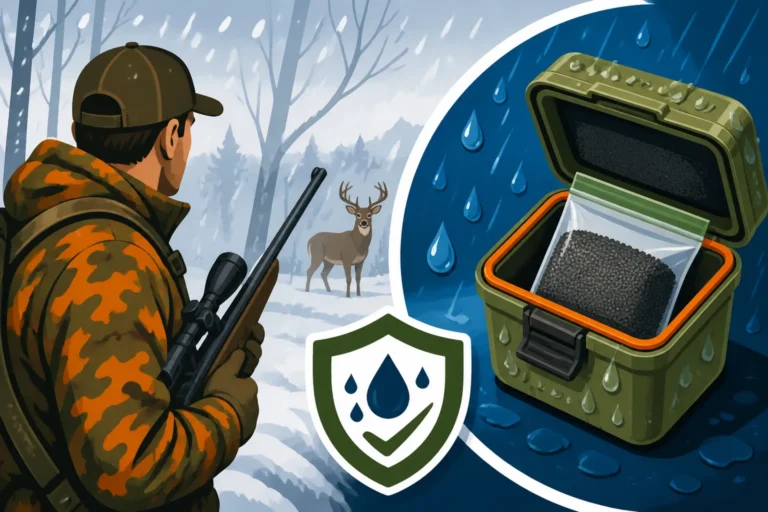
- Waterproof Container: Keep all critical muzzleloader components (primers, powder, extra patches) in a thoroughly waterproof container. A plastic pill bottle for primers and small zip-top bags for powder charges can save your hunt if the weather turns. This directly relates to the importance of Keeping Powder Dry in Wet Snow.
- Optics: Binoculars are indispensable for identifying game and ensuring an ethical shot. A rangefinder is even more critical for muzzleloader hunting due to the pronounced bullet drop. Knowing the exact distance to your target is key.
- Navigation: A reliable GPS unit or a mapping app on your phone (like the one GoHunt provides, with offline capabilities) is essential for public land, especially in unfamiliar territory or after dark. Scouting With the NC Wildlife App can help you download maps for offline use.
- Safety Gear: Always carry a first-aid kit, a sharp knife, a headlamp (for walking out after dark), and brightly colored blaze orange (even if not strictly required, it's a good safety measure, especially if modern gun seasons overlap).
Handling Your Harvest: From Field to Freezer
Successfully taking a deer with your muzzleloader in December is a moment of triumph, but the work isn't over. Proper field dressing, tracking, and meat care are crucial steps to ensure your harvest is respected and the meat is high-quality. December's colder temperatures can be a blessing, but you still need a plan.
Field Dressing and Initial Processing
Once you've made a successful shot, give the animal time before approaching. Once you confirm it's down, immediately begin field dressing.
- Quick Action: The sooner you get the internal organs out, the faster the carcass will cool, which is critical for meat quality. Even in December, residual body heat can spoil meat quickly, especially in the thick muscle groups.
- Cleanliness: Wear gloves. Work carefully to avoid puncturing the stomach or intestines. Keep the cavity as clean as possible.
- Transportation: If you're deep in the woods, consider how you'll get the deer out. A deer cart or a sled can be invaluable, particularly for dragging a deer out of a coastal swamp or down a long trail. For heavy mountain bucks, you might even consider boning out the animal in the field if you have a frame pack.
Knowing how to efficiently field dress and cool your deer is vital, especially if you're hunting in challenging terrain or Recovering a Deer From a Coastal Swamp.
Tracking and Recovery in December Conditions
Tracking a deer shot with a muzzleloader can be a bit different. The large diameter bullets often create a good blood trail, but the impact might not be as dramatic as a high-velocity rifle round.
- Patience is Key: After the shot, give the deer at least 30 minutes, or even longer for a questionable hit, to allow it to lie down and stiffen. This significantly increases your chances of recovery.
- Blood Trailing: Carefully follow the blood trail. Look for direction of travel, color of blood (bright red with bubbles often indicates a lung shot, darker blood with stomach contents indicates a gut shot), and how the deer was moving. December leaf litter can make blood trailing tough, so move slowly and mark your last known blood sign.
- Calling for Help: Don't hesitate to call a friend or another hunter for help. Two sets of eyes are better than one, especially when Blood Trailing After Dark in North Carolina. If you lose the trail, back out, wait until morning, and bring fresh eyes.
Meat Care and Storage in Cold Weather
December's cold weather is a huge advantage for meat care, allowing you more time before needing refrigeration.
- Cooling: Hang your field-dressed deer in a cool, shaded, well-ventilated area. If temperatures are consistently below 40 degrees Fahrenheit, the carcass can hang for several days to age the meat, improving tenderness and flavor. Ensure it's protected from scavengers and insects.
- Butchering: Whether you take it to a professional processor or butcher it yourself, ensure the meat is handled hygienically. Remove all hair, dirt, and damaged tissue.
- Reporting: Remember North Carolina's deer reporting requirements. You'll need to report your harvest online or via the GoHunt NC Wildlife app within a specific timeframe. Checking a North Carolina Deer Harvest Online is a quick and easy process.
A well-cared-for muzzleloader harvest provides delicious, organic meat for your table, a fitting end to a challenging and rewarding December hunt.
Maintaining Your Muzzleloader in the Field
A muzzleloader's performance in the field, especially during the often damp and chilly North Carolina December, hinges on proper care and handling. Unlike modern cartridge firearms, muzzleloaders require constant vigilance against moisture and fouling to ensure reliable ignition and consistent accuracy when that critical moment arrives.
Protecting Against Moisture and Fouling
Moisture is the sworn enemy of a muzzleloader. A single drop in the wrong place can lead to a misfire, turning a hunting opportunity into a frustrating fizzle.
- Weather Protection: If hunting in rain, snow, or heavy fog, use a barrel cover or a strip of electrical tape over the muzzle to prevent water from entering the bore. Some hunters carry a small piece of inner tube or a specialized muzzle cover for this purpose. Even the smallest amount of moisture can affect powder ignition or ballistics.
- Primer Protection: For inline muzzleloaders, ensure your 209 primer is seated firmly and consider using a small piece of electrical tape over the breech plug to seal it against moisture. Traditional percussion caps should be kept in a waterproof container until immediately before loading. Flintlocks require a dry pan and a good frizzen; keep the pan covered with a rubber cap or a piece of leather.
- Wiping Down: After walking through dew, rain, or even heavy fog, wipe down all external metal surfaces of your muzzleloader to prevent rust. Carry a small, oiled cloth for this purpose. This proactive approach saves much heartache later on, preventing issues like those described in Cleaning a Rifle After a Wet Sit.
Fouling is the other constant battle. While modern substitutes burn cleaner, they still leave residue. If you plan to carry your muzzleloader loaded for several days, it's good practice to un-load, clean, and reload every day or two, especially in humid conditions, to prevent powder from caking or absorbing moisture.
Safe Loading and Unloading Practices
Safe handling and precise loading are fundamental to muzzleloading. The single-shot nature means every step in the process matters.
- Consistent Loading: Use a consistent ramming pressure when seating your projectile. Inconsistent pressure can lead to significant variations in point of impact. Mark your ramrod to ensure the projectile is seated consistently against the powder charge every time.
- Never Carry Primed: For safety, avoid carrying your muzzleloader with a primer installed until you are actively hunting and ready for a shot. For inline muzzleloaders, keep the 209 primer separate until you're in your stand or actively stalking. Traditionalists usually prime the pan (flintlock) or place the cap (percussion) only when game is sighted or imminent.
- Unloading Safely: If your hunt is over and you haven't fired, you need a safe way to unload. The safest method is to fire it into a safe backstop. If that's not an option, many inline muzzleloaders allow you to remove the breech plug, which then allows the powder and projectile to be pushed out from the breech end. Never attempt to "uncap" or remove a primer and then simply push a loaded projectile out from the muzzle without first ensuring the powder charge is completely neutral or gone. Always consult your muzzleloader's manual for safe unloading procedures.
Meticulous attention to these details will ensure your muzzleloader is reliable and ready when the moment of truth arrives during your December North Carolina hunt.
Packing Your Pack for a December Muzzleloader Hunt
When you're heading into the North Carolina woods in December with a muzzleloader, your pack isn't just carrying snacks; it's a mobile command center. Every item needs to serve a purpose, contributing to your comfort, safety, and the successful execution of your hunt. A well-organized pack can make the difference between an enjoyable, productive day and a miserable, cut-short outing.
The Hunter's Emergency Kit
No matter how short your hunt, an emergency kit is non-negotiable, especially when venturing into potentially remote public lands or unfamiliar private tracts.
- First-Aid Essentials: A compact first-aid kit is paramount. Include bandages, antiseptic wipes, pain relievers, blister treatment, and any personal medications. Accidents happen, and being prepared for minor injuries is crucial.
- Navigation Tools: A reliable GPS device or a smartphone with downloaded offline maps (like those offered by GoHunt or through the NCWRC app) is essential. Scouting With the NC Wildlife App can really help here. Even if you know the area, things look different in the dark or under changing weather conditions. Carry a compass and a physical map as a backup – batteries die.
- Signaling Devices: A whistle and a small signal mirror can be used to attract attention if you become lost or injured.
- Fire Starting: Waterproof matches or a reliable lighter, along with some tinder, are vital for starting a fire for warmth or signaling in an emergency.
- Emergency Shelter: A lightweight emergency blanket or survival bag can provide crucial warmth and shelter if you're unexpectedly stranded overnight.
- Headlamp/Flashlight: A powerful headlamp with extra batteries is critical for navigating to and from your stand in the pre-dawn darkness or after shooting light.
These items might seem like overkill for a "day hunt," but conditions can change rapidly, and being prepared for the unexpected is part of being a responsible hunter.
Food, Water, and Comfort Essentials
Being cold, hungry, and thirsty drains your focus and motivation. Pack smartly to stay comfortable and fueled.
- Hydration: Even in cold weather, hydration is important. Carry a water bottle or a hydration bladder, insulated to prevent freezing.
- High-Energy Snacks: Pack calorie-dense snacks like nuts, trail mix, protein bars, and dried fruit. These provide sustained energy without taking up much space. A thermos of hot coffee, tea, or soup can be a morale booster on a frigid December morning.
- Extra Layers: Even if you're dressed for the cold, an extra warm hat, a pair of gloves, or a thin puffy jacket packed away can be a lifesaver if you sit longer than expected or the temperature plummets.
- Small Seat Pad: A lightweight, waterproof seat pad can make hours in a cold tree stand or ground blind much more comfortable, insulating you from the cold.
- Hand Warmers: Chemical hand and foot warmers can provide hours of supplemental heat, keeping your fingers nimble and your toes from freezing. They are a small luxury that makes a big difference.
Think through your typical hunt scenario and what you'd need if it extended beyond your expectations. For those long walks into remote public land, consider a pack designed for comfortably carrying gear and potential game, like the options discussed in Packs for a Pisgah Forest Day Hunt. Every item in your pack should contribute to your ability to stay out longer, stay safer, and stay focused on the hunt.
Disclaimer
This article is for general informational purposes only and does not constitute professional advice. Laws, prices and regulations vary by location and change over time. Consult a qualified professional for guidance on your specific situation.