Hunting Sandhills Region Longleaf Stands
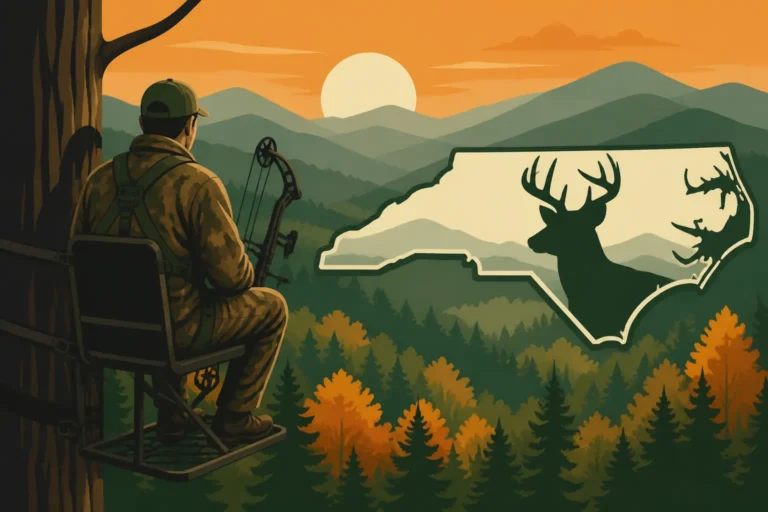
Hunting the Sandhills region of North Carolina can feel like a completely different world compared to the dense hardwoods of the Piedmont or the steep slopes of the mountains. Many hunters arrive expecting an easy hunt due to the seemingly open longleaf pine stands, only to find themselves struggling to locate deer in what can often seem like barren, quiet woods. The challenge isn't just about visibility; it's about understanding how deer adapt to this unique, fire-dependent ecosystem. This comprehensive guide will walk you through the specifics of hunting longleaf stands in the North Carolina Sandhills, helping you decipher deer patterns and increase your success in this beautiful but often misunderstood habitat.
Understanding the Unique Ecology of Sandhills Longleaf Stands
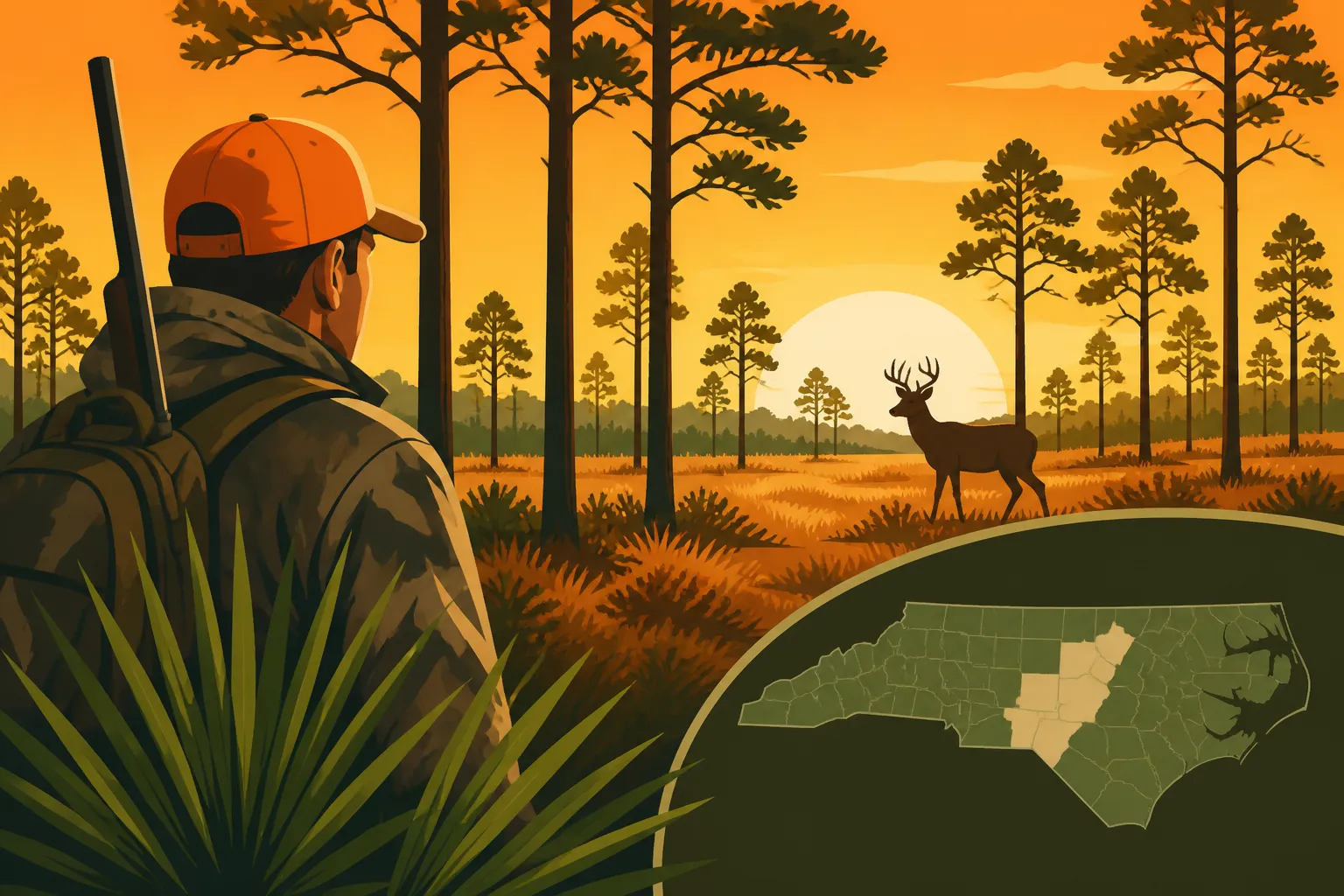
The North Carolina Sandhills, a distinct geographic region nestled between the Coastal Plain and the Piedmont, offers a truly unique hunting experience. Dominated by longleaf pine forests, these lands present a different set of challenges and opportunities for the dedicated hunter.
The Importance of Longleaf Pine in the Ecosystem
Longleaf pine (Pinus palustris) isn't just another tree; it's the keystone species of an ancient and incredibly biodiverse ecosystem. Historically, longleaf forests covered vast swathes of the southeastern United States, including much of North Carolina's Sandhills. These forests are characterized by widely spaced, mature pines with an open, grassy understory, maintained by frequent, low-intensity prescribed burns. Counties like Richmond, Scotland, Moore, Hoke, and Montgomery are prime examples of this unique habitat.
The prescribed burns, often conducted by the North Carolina Wildlife Resources Commission (NCWRC) on public lands like the Sandhills Game Land, are critical for the health of the longleaf ecosystem. They prevent the encroachment of hardwoods and thick underbrush, allowing sunlight to reach the forest floor and promoting the growth of a diverse array of grasses, forbs, and legumes. This open structure is a double-edged sword for hunters: it offers excellent visibility but can make deer feel exposed and therefore more cautious. Understanding this fire-dependent cycle is crucial; deer are constantly adapting to the fresh growth and cover changes that follow a burn, often keying in on areas recovering from recent fire for foraging.
Primary Game Species and Their Behavior
While many species call the longleaf ecosystem home, white-tailed deer are a primary target for hunters in the Sandhills. Unlike deer in thicker, more diverse habitats, Sandhills deer often display behaviors uniquely suited to their environment. Due to the generally open understory, deer in longleaf stands are incredibly wary. They rely less on dense visual cover for escape and more on their acute senses of smell and hearing, coupled with their ability to quickly disappear into subtle depressions or isolated thickets.
You'll find that these deer often bed down in areas that offer a slight elevation for better visibility or utilize the limited dense patches of scrub oak, gallberry, or young pine regeneration that escaped recent fires. Their feeding patterns are dictated by the seasonal availability of acorns from scattered oak trees, forbs, and young pine shoots. Water sources can be scarce in the Sandhills, meaning deer often gravitate towards drainages, small creeks, or low-lying areas where moisture is more prevalent, even if these are dry for much of the year. This makes identifying these often-subtle water features or damp areas incredibly important when scouting. Remember, deer here often travel long, straight lines between food, water, and bedding, rather than winding through dense cover. For more on how these deer populations are managed, check out our detailed guide on North Carolina Deer Season Structure Explained.
Scouting and Locating Deer in Open Longleaf Pine
The open nature of longleaf stands demands a different approach to scouting. Forget looking for extensive rub lines or huge community scrapes; here, you're looking for subtle clues and strategic choke points.
Reading the Subtle Signs of Deer Activity
Traditional deer sign can be much harder to spot in the Sandhills. The sandy soil, while good for tracking, often doesn't hold impressions as well as rich dirt, and the pine needle litter can quickly obscure faint tracks. Instead of searching for heavy deer trails, look for more subtle indicators:
- Tracks: Focus on finding tracks in softer, damp spots, especially along the edges of drainages, old logging roads, or where sand has accumulated. Pay attention to the direction of travel and size. Look for areas where the pine needles are consistently scuffed or disturbed, indicating repeated use.
- Droppings: Deer droppings in longleaf areas are often scattered rather than concentrated. Look for them along travel routes, especially where deer might pause to browse. Fresh droppings are key to identifying recent activity.
- Browse: Examine low-growing vegetation, especially young pine saplings, scrub oaks, huckleberry, and gallberry bushes, for signs of browsing. The specific plants that deer prefer change with the season, but any consistent nibbling indicates a food source they're utilizing.
- Rubs and Scrapes: While less abundant than in other regions, rubs and scrapes do exist, particularly where scattered hardwoods provide an opportunity. Look for rubs on smaller pine saplings or low branches of oaks. Scrapes will often be found at the edges of thicker cover or along the fringes of hardwood bottoms, indicating buck activity during the rut.
Firebreaks and transition zones are critical areas to focus on. Deer often use the clear edges of firebreaks as travel corridors, and the abrupt change in vegetation at the boundary between longleaf pine and a hardwood bottom, a thick clear-cut, or a swampy drain can be a natural funnel for deer movement.
Leveraging Technology and Topography for Scouting
Modern technology is a game-changer for Sandhills hunting. Relying solely on boots-on-the-ground scouting can be exhausting and inefficient in such expansive, often monotonous terrain.
- Aerial Maps: Before you even set foot in the woods, spend significant time poring over aerial maps using tools like Google Earth or dedicated hunting apps like GoHunt. These platforms allow you to identify crucial topographic features that might be barely noticeable on the ground. Look for:
- Drainages and Creeks: Even if dry, these depressions often hold slightly different vegetation, offering more cover or preferred food sources. They act as natural travel corridors.
- Hardwood Bottoms: Patches of oaks, poplars, or other hardwoods within the longleaf are goldmines. They provide different food (acorns!) and denser cover.
- Isolated Thickets/Regeneration: Identify areas that appear darker green on the map, indicating denser patches of vegetation, often young pine regeneration or scrub oak thickets that either weren't burned or are quickly recovering. These are prime bedding areas.
- Old Roads and Trails: These provide easy travel for deer and hunters, but also show patterns of movement.
- Subtle Elevations: Even a few feet of elevation change can be a thermal advantage for deer or offer better visibility.
The GoHunt platform's detailed mapping layers can be particularly useful for highlighting these subtle shifts in elevation, vegetation types, and land features that might otherwise go unnoticed. They can help you visualize how deer might move through the open pines, connecting bedding areas to feeding zones and water. Additionally, don't forget the power of scouting with the NC Wildlife App for identifying public land boundaries and specific regulations.
By combining detailed map analysis with focused ground scouting in promising areas, you can significantly reduce wasted time and pinpoint the high-percentage spots where deer are most likely to be.
Effective Hunting Strategies for Sandhills Longleaf
The unique environment of the Sandhills demands a flexible and often patient hunting approach. Due to the openness, both still-hunting and strategic stand placement can be highly effective when executed correctly.
Still-Hunting and Stand Placement Tactics
Still-hunting, or slowly moving through the woods, is incredibly effective in longleaf stands due to the excellent visibility and often quiet pine needle floor. The key is extreme patience and using the terrain and scattered pines to your advantage.
- Still-Hunting: Move at a snail's pace, taking only a few steps, then pausing for several minutes to glass, listen, and scan for subtle movement. Use the trunks of the pines as temporary cover, always thinking about what might be on the other side. This method is best on windy days, which can help mask your sound, or after a light rain when the pine needles are damp and quiet. Focus on moving parallel to drainages or along the edges of hardwood pockets, constantly checking ahead and to your sides.
- Stand Placement: Finding a suitable tree for a treestand in open longleaf can be a challenge. Many pines lack lower limbs for concealment or are simply too small. When you do find a suitable tree, strategic placement is paramount.
- Transition Zones: Position your stand at the edge of a longleaf stand overlooking a hardwood bottom, a dense clear-cut, or a thick pocosin edge. These areas offer the most consistent deer movement as deer transition between cover and food sources. For more on this, consider our guide on Hunting Coastal Plain Pocosin Swamps, as the principles often overlap.
- Natural Funnels: Look for where the open pines narrow, perhaps between two thickets or around a small knoll. Deer will naturally funnel through these pinch points.
- Isolated Cover: Sometimes, a lone, dense thicket or cluster of young pines can act as a bedding area. Setting up downwind and overlooking the approach to such a spot can be productive.
- Ground Blinds: If suitable trees are scarce, a well-brushed-in ground blind can be an excellent alternative, especially along field edges or near known travel routes. Using a Ground Blind on North Carolina Public Land can be a very effective strategy here.
- Wind Direction: Always play the wind. In open terrain, your scent will carry far. Set up so the prevailing wind carries your scent away from where you expect deer to approach. Understanding Wind and Thermals on a Blue Ridge Slope, while a mountain topic, offers foundational knowledge applicable to any terrain.
Timing Your Hunts and Understanding Deer Movement
Timing is crucial in the Sandhills, as deer movement can be heavily influenced by weather and seasonal patterns.
- Low Light Movement: Deer in open longleaf are often most active during the first and last hours of daylight, when lower light levels offer them a sense of security from predators (including hunters). Consider being in your stand well before dawn and staying until after legal shooting light.
- Cooler Temperatures: Cooler weather, especially after a cold front, can spur increased deer activity. During warmer periods, deer may become more nocturnal, seeking refuge from the heat in thick cover during the day.
- The Rut: The rut in the Sandhills can be an exciting time. While intense chasing might not be as visible in the open, bucks will cover significant ground searching for does. Focus your efforts around known doe bedding areas or travel corridors that connect them to feeding areas. Understanding Hunting the Rut in the Eastern Zones (which often covers Sandhills counties) is key. The increased movement of a mature buck during this period makes still-hunting an even more viable strategy, as you might intercept a cruising buck.
- After Rain: Hunting immediately after a rain shower can be highly productive. The damp ground softens your footsteps for still-hunting, and it makes tracks much easier to spot, providing fresh intel on deer movement. The woods are also generally quieter, allowing you to hear deer approaching.
| Hunting Strategy | Pros | Cons | Best Conditions |
|---|---|---|---|
| Still-Hunting | Maximizes ground covered, good visibility | Requires extreme patience, easy to spook deer | Windy days, after rain, cooler temperatures, rutting phase |
| Treestand | Elevated view, scent advantage | Limited suitable trees, long sits, less adaptable | Overlooking funnels, food sources, or bedding transitions |
| Ground Blind | Great concealment, comfortable, adaptable | Limited visibility, can be hot, hard to reposition | Field edges, thickets, high-traffic corridors |
| Scouting | Identifies patterns, minimizes guesswork | Time-consuming, can be physically demanding | Pre-season, during off-hours, using technology like GoHunt |
Essential Gear and Mindset for Sandhills Hunting
Having the right gear and adopting a specific mindset are critical for a successful and enjoyable hunt in the North Carolina Sandhills.
Optics, Clothing, and Footwear
The open nature of longleaf stands makes certain gear choices more important than others.
- Optics: Good quality binoculars are not optional; they are absolutely essential. With excellent visibility, you'll be spending a lot of time glassing ahead, looking for the flicker of an ear, a patch of deer hide, or subtle movement. An 8x or 10x power binocular is ideal. A rangefinder is also highly recommended, as judging distances in open, uniform terrain can be deceiving. Consider a high-quality model for crisp images, similar to what you might use for Binocular Power for Mountain Hunting.
- Clothing: Choose lightweight, breathable, and quiet clothing. Even in the cooler months, temperatures in the Sandhills can fluctuate, and you'll likely be doing a lot of walking if still-hunting. Consider camouflage patterns that blend with the colors of pine needles, shadows, and sparse undergrowth, such as Mossy Oak Bottomland or patterns with a strong vertical element. Layering is always a good idea, as mornings can be chilly but midday sun can quickly warm things up. Don't forget your blaze orange for safety, especially during gun season.
- Footwear: Comfortable, sturdy boots are a must for navigating the sandy, often uneven terrain. Look for boots with good ankle support and breathability. Rubber boots can be beneficial if you plan to hunt near wetter drainages or pocosin edges, but general all-terrain hiking boots are usually sufficient for the drier longleaf.
When choosing a rifle, consider one that offers flat trajectory and good accuracy for potentially longer shots across open lanes. A .270 Winchester, .30-06 Springfield, or 6.5 Creedmoor are all excellent choices and easily fit within North Carolina Legal Firearms for Deer Hunting.
Staying Hydrated and Prepared for the Elements
Beyond your hunting-specific gear, remember that the Sandhills can be deceptively challenging physically, especially during early seasons.
- Hydration: Always carry plenty of water. The combination of walking and sun exposure can lead to dehydration quickly, even on cooler days. Consider a hydration pack for easy access.
- Sun Protection: Sunscreen, a wide-brimmed hat, and sunglasses are vital. The open canopy allows a lot of sunlight to penetrate, leading to increased exposure.
- Navigation: While the terrain might seem simple, the uniformity of longleaf stands can make it easy to get disoriented, especially when still-hunting over long distances. A reliable GPS unit or a smartphone with a pre-downloaded mapping app like GoHunt is non-negotiable. Always mark your vehicle's location and potential entry/exit points.
- Basic Essentials: Don't forget a sharp knife, a small first-aid kit, a headlamp for walking out in the dark, and a drag rope. Even smaller deer can be a challenge to extract from the deep Sandhills if you're alone.
Hunting the Sandhills longleaf stands is a rewarding experience that demands respect for the unique environment. By understanding the ecology, adapting your scouting, employing effective strategies, and carrying the right gear, you'll be well on your way to punching your North Carolina Deer Tag.
Disclaimer
Hunting involves inherent risks, including but not limited to injury or death. Always prioritize safety, follow all local, state, and federal hunting regulations, and obtain proper licenses and permits. The information provided in this guide is for informational purposes only and should not be considered a substitute for professional instruction or official wildlife agency guidelines. It is the responsibility of each hunter to be educated and prepared before entering the field.