Grouse Hunting Blue Ridge Cover
For many North Carolina hunters, the idea of chasing grouse in our beloved Blue Ridge Mountains can feel like a daunting challenge. The terrain is rugged, the cover is thick, and these elusive birds seem to vanish into thin air just as you get close. This guide is dedicated to helping you unravel the mysteries of grouse hunting in the Blue Ridge, equipping you with the knowledge and tactics to find success in those beautiful, unforgiving mountains.
Understanding Blue Ridge Ruffed Grouse Habitat
Ruffed grouse in North Carolina are largely confined to the cooler, higher elevations of the Appalachian Mountains, primarily within the Blue Ridge escarpment and its surrounding foothills. Unlike their counterparts in more northern states that might thrive in mixed hardwoods, our southern grouse often seek out very specific niches. Finding these birds isn't just about walking through the woods; it's about understanding their preferred real estate.
Identifying Key Forest Types and Features
The prime grouse habitat in the Blue Ridge often consists of early successional forests, which are essentially younger, regenerating stands of timber. Think about areas that have been logged within the last 10 to 20 years, or those that have seen prescribed burns or natural disturbances. These spots offer a dense understory of saplings, briars, and low-growing vegetation that provides critical cover from predators and harsh weather, as well as a rich food source. Look for areas with a mosaic of young hardwoods, particularly aspen, poplar, and birch, alongside older timber. You'll often find them on slopes or in hollows adjacent to thicker, mature timber, where they can escape if pressured.
Another crucial feature is water. While grouse don't need open water like ducks, they need moist environments that support insect life and soft mast. Creek bottoms, spring seeps, and areas with damp soil can be excellent spots to focus your efforts. Don't overlook old logging roads or clearings that have started to regenerate; these often serve as travel corridors and feeding areas, especially where sunlight penetrates to encourage berry growth. When you're scouting, consider using mapping tools like GoHunt to analyze forest age, topography, and identify these critical features before you even step foot in the woods. These insights can save you countless hours of unproductive walking.
Food Sources Throughout the Season
Ruffed grouse are opportunistic foragers, and their diet changes with the seasons. In the early fall, they're often gorging on soft mast like wild grapes, blackberries, and serviceberries. As the season progresses into late fall and winter, their diet shifts to hardier fare, including buds and catkins of birch, aspen, and ironwood. They'll also consume fern fronds, wintergreen leaves, and the occasional insect or snail.
Understanding these food sources is paramount. If you're out in October, focus on areas with remnants of berry bushes, especially around the edges of thickets. By December, start looking higher up in the trees for budded branches. A key sign of grouse feeding is finding "cuttings" – small twigs and buds nipped off and lying on the snow or leaf litter. Finding these is like hitting the jackpot; it tells you grouse are actively using that specific patch of cover. Pay close attention to how a particular area might have a variety of these food sources, providing sustenance throughout the colder months.
Essential Gear for Upland Success
Grouse hunting in the Blue Ridge is not a casual stroll. It’s physically demanding, often requiring long walks through difficult terrain. Having the right gear isn't just about comfort; it's about safety and efficiency. Skimping on quality here can quickly turn a hopeful day into a miserable one.
Shotguns and Ammunition Selection
For ruffed grouse, a fast-handling, open-choked shotgun is generally preferred. Most hunters opt for a 12-gauge or 20-gauge, with some preferring the lighter carry of a 28-gauge or even a .410, especially when covering many miles. The dense cover means shots are usually close and fleeting, often within 20-30 yards. A "Cylinder" or "Improved Cylinder" choke allows for a wider, more forgiving pattern at these close ranges, increasing your chances of connecting with a fast-flushing bird.
| Gauge | Choke Recommendation | Shot Size (Lead) | Primary Advantage |
|---|---|---|---|
| 12 Gauge | Improved Cylinder | 7.5 or 8 | Versatile, good pattern density |
| 20 Gauge | Improved Cylinder | 7.5 or 8 | Lighter carry, still effective |
| 28 Gauge | Skeet or Improved Cylinder | 8 or 9 | Very light, quick handling |
| .410 Gauge | Full (often fixed) | 7.5 or 9 | Challenging, but rewarding |
Ammunition-wise, lead shot in sizes 7.5 or 8 is standard for grouse. These smaller shot sizes provide excellent pattern density for the relatively small body of a grouse. Given the tight cover, high-velocity loads aren't always necessary, and standard field loads often perform perfectly well. If you're concerned about potential lead restrictions or just prefer to use non-toxic shot, bismuth or other non-toxic alternatives are available, though they typically come at a higher cost. Just make sure to pattern your shotgun with your chosen loads before heading out, confirming how it performs at typical grouse flushing distances.
Clothing and Footwear for Mountain Terrain
The North Carolina mountains can present a wide range of weather conditions, often changing rapidly throughout the day. Layering is absolutely critical. Start with a moisture-wicking base layer, add an insulating mid-layer like fleece or wool, and top it off with a durable, briar-resistant outer shell. Blaze orange is a must for safety, especially on public lands where other hunters may be present. A good upland vest with plenty of game storage and shell loops is indispensable.
Perhaps the most important gear is your footwear. You'll be traversing steep slopes, crossing rocky creek beds, and pushing through dense underbrush. A sturdy pair of waterproof boots with excellent ankle support and aggressive tread is non-negotiable. Look for boots designed for rugged terrain, perhaps even a pair meant for Boots for Walking North Carolina Ridges to give you an idea. Many hunters prefer a stiff-soled boot to prevent fatigue and provide stability. Consider gaiters to keep burrs, stickers, and debris out of your boots and to add an extra layer of protection to your lower legs. Nothing ruins a hunt faster than wet, sore feet or a nasty briar scratch that could have been prevented with proper gear.
Tactics for Flushing and Shooting Grouse
Grouse hunting is an active sport, demanding constant attention and quick reflexes. These birds are known for their explosive flushes and uncanny ability to put an obstacle between themselves and you in a split second. Developing effective tactics for flushing and shooting will significantly increase your success rate.
Working Coverts Effectively
When you're approaching a likely piece of grouse cover, such as a thick stand of young pines or a dense laurel thicket, slow down. Grouse will often hold tight, relying on their camouflage until you're almost on top of them. Instead of crashing through, try to walk with purpose, but methodically. Move in a zig-zag pattern, covering as much ground as possible within the promising area. Pay close attention to any changes in terrain, like small draws, old logging cuts, or dense pockets of briars – these are prime holding spots.
If you're hunting with a dog, let them work the cover ahead of you, but stay close enough to be ready when a bird flushes. If you're hunting solo, use your senses: listen for the tell-tale wing beats of a flush, and keep your eyes peeled for movement. Don't be afraid to stop and stand still for a minute or two, especially after pushing through a particularly dense section. Grouse will sometimes flush when they think you've passed. A good strategy is to hunt with a partner, walking parallel lines about 20-30 yards apart, effectively beating a wider swath of cover and increasing the chances of flushing a bird within shooting range. Using an app like GoHunt on your phone can help you track your path and ensure you're systematically covering promising areas without missing spots.
Shot Placement and Follow-Through
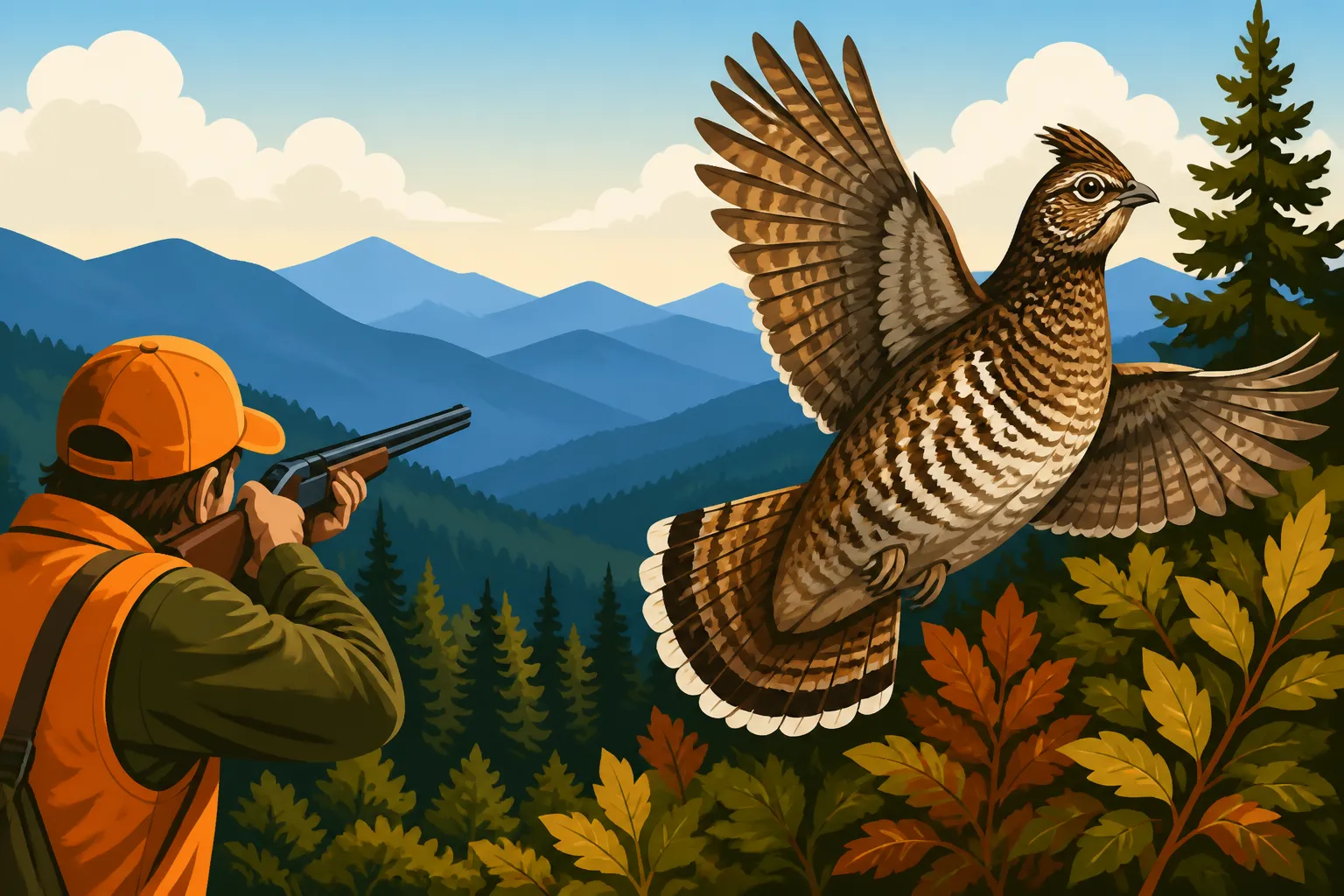
When a grouse explodes from cover, your natural instinct might be to shoulder the gun and fire immediately. However, with shots often being very close, this can lead to missed birds or severely damaged meat. The key is to hesitate for just a split second, let the bird get clear of the immediate cover, and then mount your gun smoothly. This allows you to get a clearer, safer shot.
Aim for the front half of the bird, just ahead of its head, especially if it's quartering away. This ensures a clean kill without ruining too much breast meat. Swing through the bird, pull the trigger, and continue your swing after the shot. This follow-through is crucial for hitting fast-moving targets. If you miss, be ready for a second shot. Grouse often fly a short distance and then dive back into another thicket. If you mark where it landed, you can sometimes get a second chance. Remember, patience in the mount and a smooth swing are far more effective than a rushed, jerky shot. It's a challenging shot to master, but incredibly rewarding when you connect.
Navigating Public Lands and Regulations
North Carolina offers ample public land opportunities, but grouse hunting often takes you to the most remote corners of these areas. Understanding the specific regulations and where you can legally hunt is paramount.
Understanding North Carolina's Grouse Season
The North Carolina Wildlife Resources Commission sets specific seasons for ruffed grouse, typically running from late October through February. The exact dates can vary slightly year to year, so always check the current regulations before heading afield. The daily bag limit is generally two birds, with a possession limit of four. These regulations are in place to ensure a sustainable population, as grouse numbers have seen some decline in recent decades due to habitat loss and other factors.
It's also important to understand that grouse populations in North Carolina can be cyclical. Some years will be better than others, largely depending on breeding success and habitat conditions. While not as common as in more northern states, you might also find that specific areas have higher concentrations of birds than others. For example, areas along the Blue Ridge Escarpment Public Access often provide prime grouse hunting opportunities due to their elevation and forest composition. Always refer to the official NCWRC digest for the most up-to-date information on seasons, bag limits, and any special regulations that might apply to particular game lands or national forests.
Accessing National Forest and Game Lands
Much of North Carolina's prime grouse habitat lies within our national forests, specifically the Pisgah and Nantahala National Forests. These lands are generally open to public hunting, but they come with their own set of rules and access considerations. You'll need a valid North Carolina hunting license, including the big game privilege, and a Game Lands license if you're hunting on areas designated as Game Lands.
Access points are often along forest service roads, many of which may be seasonally gated or unmaintained. Before you go, study maps carefully, looking for parking areas, trailheads, and potential walk-in access. Tools like GoHunt can be invaluable here, showing land ownership boundaries, forest road networks, and topographic details. You might also want to consult the Scouting North Carolina Public Land Before Season guide to get a head start. Always be respectful of private property boundaries, even if they're adjacent to public land. Remember that other users, such as hikers or mountain bikers, may also be recreating in these areas, so practice good outdoor etiquette and clearly display blaze orange for safety. Finally, be prepared for a long walk back to your vehicle, as many good grouse coverts are far from easy access.
Disclaimer
Hunting is an inherently risky activity. Always prioritize safety, understand and follow all local and state regulations, and ensure you have the proper training and equipment. The information provided here is for educational purposes and should not replace official safety courses or legal guidance.