Hunting After a Poor Acorn Year
The absence of that familiar crunch of acorns underfoot during the early fall in North Carolina can be a real gut punch for deer hunters. When the oak trees fail to deliver their annual bounty, it often feels like the deer simply vanish, throwing all your tried-and-true hunting spots into question. This guide aims to pull back the curtain on deer behavior during a poor acorn year, offering actionable strategies to help you find and successfully hunt whitetails when their primary food source is scarce.
Understanding the Impact of a Poor Acorn Crop
When you walk into the woods and barely hear a single acorn fall, much less crunch under your boots, it’s a clear signal that the deer's world has fundamentally shifted. Acorns are much more than just a snack for North Carolina's whitetails; they're a cornerstone of their diet and a major driver of their movement patterns.
The Acorn's Role in North Carolina Deer Diets
Acorns are like nature's superfood for deer. They're packed with carbohydrates and fats, providing a crucial energy boost that helps deer put on weight for the upcoming rut and the lean winter months. In a normal year, deer will prioritize acorns above almost any other food source once they start dropping, often abandoning agricultural fields or browse for the bounty beneath an oak canopy. Different oak species in North Carolina drop their acorns at different times, with white oaks typically falling earlier and red oaks later into the season. This staggered availability usually provides a consistent food source for deer for months.
A strong mast crop dictates where deer bed, where they travel, and where they ultimately spend the majority of their time during daylight hours. When this primary food source is abundant, deer will often stick to areas with high acorn concentrations, making them somewhat predictable. Conversely, a poor acorn year means deer have to work harder, travel further, and diversify their diet, which can make locating them feel like searching for a needle in a haystack for us hunters. Their nutritional intake might suffer, potentially impacting their overall health and even the intensity of the rut, though this varies greatly by local conditions.
Recognizing the Signs of a Mast Failure
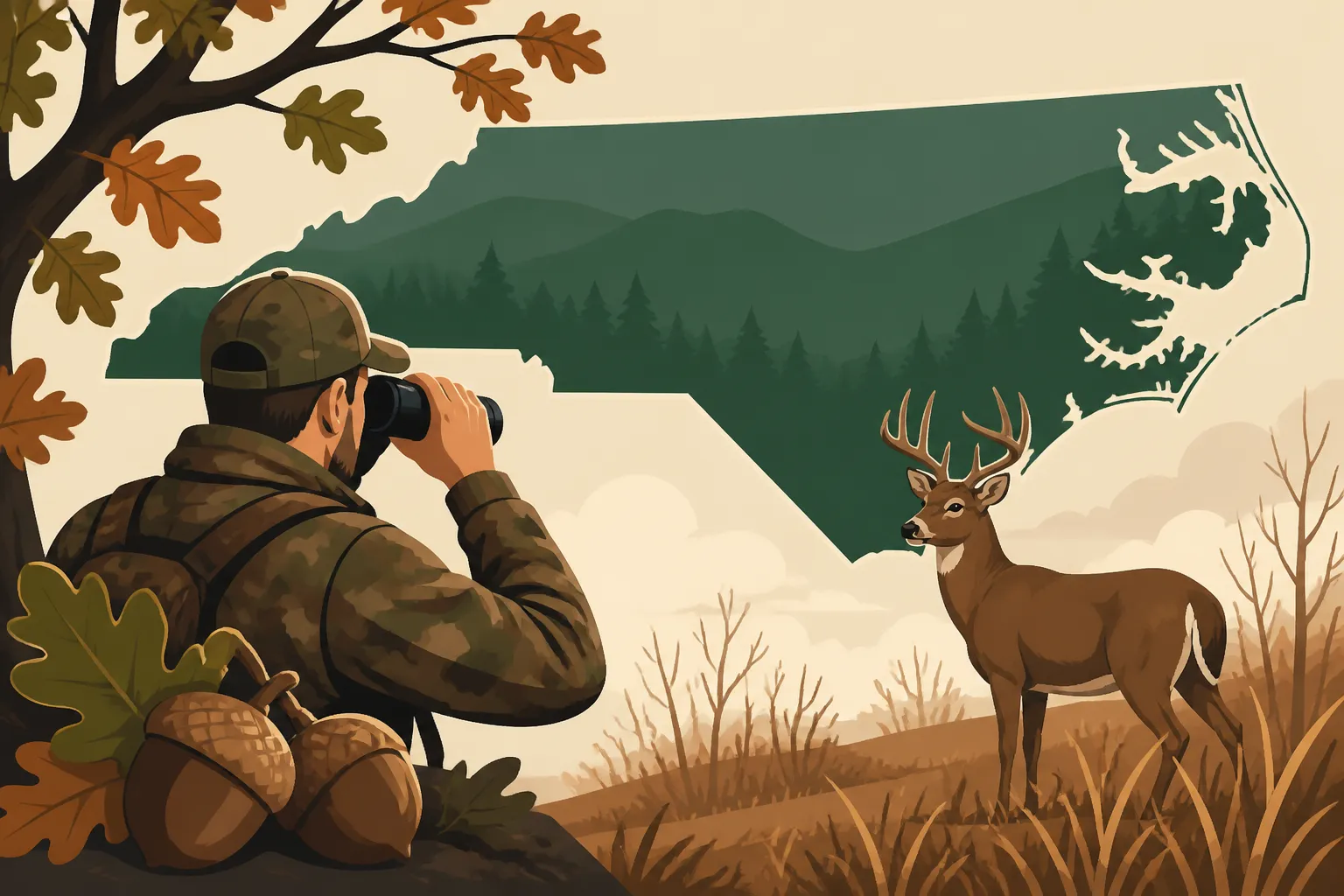
Determining the acorn crop doesn't have to be a guessing game based solely on what you hear (or don't hear) on opening day. Savvy hunters start assessing the mast crop long before the season begins. A quick stroll through various timber stands in late summer and early fall can give you a significant advantage. Look up into the oak canopies – do you see developing acorns? Are there a lot of them, or are the branches mostly bare? Then, once some begin to drop, what's on the ground? Are there abundant, healthy nuts, or are they sparse, small, or insect-damaged?
Sometimes, you might also pick up on cues from local wildlife agencies or even just talking to farmers and other hunters in your area. They often have a good pulse on what's happening in the woods. When you consistently see few or no acorns, hear reports of a widespread "bust" in your hunting zone, and notice deer sign (tracks, droppings) notably absent from traditional oak flats, it's time to accept reality: you're hunting after a poor acorn year. This recognition is the first, crucial step toward adapting your strategy, because stubbornly hunting empty oak stands will only lead to frustration.
Shifting Your Focus: Alternative Food Sources
When acorns fail, deer don't just starve; they adjust. And as hunters, we must adjust with them. This means meticulously scouting for and understanding the alternative food sources that will suddenly become deer magnets.
Targeting Persistent Hard Mast
While oaks might be taking a break, other hard mast trees in North Carolina could still be producing. Hickory nuts, for example, are another high-energy food source that deer will readily consume, though they're harder for deer to crack open. Beech nuts, while less common in many areas, are also highly palatable and sought after. If you're hunting public lands like the expansive Pisgah National Forest Hunting or Nantahala National Forest Hunting, pay special attention to stands of hickory, especially along ridges and in mature timber.
These alternative hard mast sources, even if not as abundant as a good acorn crop, will attract deer disproportionately in a lean year. Deer will spend more time foraging under these trees, and the sign (scrapes, rubs, droppings) will often be concentrated there. A diligent hunter will shift their focus from looking for oak trees to identifying and scouting these less common but newly critical food providers. It often requires more walking and searching, but the payoff can be significant.
Identifying Soft Mast and Browse Opportunities
Beyond other hard mast, soft mast becomes incredibly important. Think about persimmons, wild grapes, pokeberries, and muscadines – these fruits offer a quick sugar boost and will be heavily utilized by deer. You'll often find these growing along field edges, old logging roads, and clear-cuts. Honeysuckle, a persistent green browse, is another unsung hero in a poor mast year. Deer will voraciously browse on new green growth, especially privet, greenbriar, and various tender forbs that are often overlooked in a heavy acorn year.
Scouting for these becomes paramount. Walk the edges of different habitat types. Look for persimmon trees, especially those with fruit still clinging to branches or fresh drops on the ground. Check under wild grapevines and muscadine thickets for signs of heavy feeding. In areas like Hunting Coastal Plain Pocosin Swamps or even when Hunting Piedmont Farmland Deer, these soft mast and browse options can be the primary draw. Deer will spend considerable time in areas with abundant, digestible forage, making these locations prime candidates for a stand setup.
Finding Agricultural Fields
Without a doubt, agricultural fields become absolute magnets for deer when acorns are scarce. This is where those protein and carbohydrate needs that would normally be met by acorns are now fulfilled by crops. Think corn, soybeans, peanuts, winter wheat, and even clover plots. If you have access to private land with these crops, or public land that borders working farms, your odds of success will dramatically increase.
Deer will pour into these fields, particularly at dawn and dusk, to gorge themselves. Your focus should shift to identifying their entry and exit routes, which are often through thick cover bordering the fields, or along fencerows and creek bottoms. Entry Routes Through Standing Soybeans become super highways. Consider hunting the edges of these fields, focusing on the paths deer use to get from their bedding areas to the buffet. For areas in eastern North Carolina, even cotton fields can draw deer in the late season as they pick at the remaining plant material. Utilizing tools like GoHunt's mapping features can be invaluable for identifying prime agricultural parcels and their proximity to thick cover, helping you pinpoint these crucial feeding zones.
Adjusting Your Strategy: Where Deer Will Be
A poor acorn year doesn't just change what deer eat; it fundamentally alters where they spend their time. Your hunting strategy needs to adapt to these shifts, focusing on concentration points where deer will predictably show up.
Focusing on Water Sources
Water, always essential, becomes even more critical for deer in a poor mast year. When deer are consuming more dry browse and agricultural crops, their need for hydration increases. Natural springs, small creeks, drainage ditches, and the edges of swamps or ponds will see increased deer activity. These aren't just drinking spots; they often become pronounced travel corridors.
Deer will use these water features as linear routes between bedding and whatever limited food sources they've found. This makes them fantastic places to hang a stand or to perform a still-hunt. Pay attention to muddy banks for fresh tracks, or subtle trails paralleling a creek. Even a small, stagnant pool of water can be a hot spot. Consider how deer might use a specific feature, like when Working a Creek Bottom for Late-Season Deer, as a primary pathway when other attractants are missing.
Bedding Areas Near Scanty Food
Deer are efficient creatures; they won't travel further than necessary, especially when food resources are spread thin. In a poor mast year, expect deer bedding areas to shift and consolidate much closer to their new primary food sources. Instead of bedding in thick cover far from the acorns, they'll find dense sanctuaries adjacent to honeysuckle thickets, agricultural fields, or patches of persistent soft mast.
Look for thick pine plantations, clear-cuts with dense regrowth, deep creek bottoms, or the secluded edges of a swamp that offer both security and proximity to food. Knowing Where Nantahala Forest Bucks Bed in relation to limited food or understanding how deer utilize the dense cover near Hunting Croatan Forest Pocosin Edges becomes vital. Your approach to these areas needs to be ultra-stealthy, focusing on quiet entry and exit, especially on public lands where other hunters might be pushing deer. The goal is to catch deer moving between these tight bedding areas and their limited feeding zones.
Travel Corridors and Funnels
With food sources more scattered and less predictable, deer movement between these vital areas will be more concentrated. This means natural funnels and travel corridors become absolute gold mines. Think about saddles in ridges, creek crossings, pinch points between clear-cuts and mature timber, or even dense fencerows that connect woodlots to fields. These aren't just convenient paths; they are often the only viable routes deer will take.
Deer will rely on these constricted travel ways to move securely and efficiently. Setting up an ambush on one of these funnels can be incredibly effective, as it forces deer into a predictable path. Using satellite imagery, even services like GoHunt can help you pick out these subtle changes in terrain and vegetation that create natural pinch points. Look for heavy trails, fresh rubs, and old scrapes along these features, indicating consistent use. Understanding how to interpret these signs in areas with varying topography, like the rolling hills of the Piedmont or the steep terrain of the mountains, is crucial.
Scouting and Adaptability: Your Keys to Success
When Mother Nature throws a curveball like a poor acorn year, the most successful hunters aren't necessarily the luckiest; they're the most adaptable and diligent scouts. Your pre-season preparation and in-season adjustments will make all the difference.
Pre-Season and In-Season Scouting Adjustments
This isn't the year to rely on last year's hotspots if they were centered around oak flats. You need to hit the woods with a renewed sense of purpose, focusing on finding those alternative food sources. During your Scouting North Carolina Public Land Before Season, forget the traditional oak hammocks and instead search for persimmon groves, honeysuckle thickets, and agricultural field edges. Glassing fields at dawn and dusk with binoculars can reveal critical entry and exit points.
As the season progresses, continue to scout. A poor acorn year means deer are constantly evaluating and re-evaluating their feeding options. Fresh sign – new rub lines leading to a different food source, or concentrated droppings under a particular browse patch – tells a story. Trail cameras become even more valuable during these times, allowing you to monitor newly discovered food sources without putting undue pressure on the area. Remember, the deer's routine might shift multiple times throughout the season, so your scouting needs to be ongoing.
Utilizing Technology for Smarter Hunting
In times of uncertainty, technology can be your best friend. Mapping apps like onX Hunt, the NC Wildlife App, or GoHunt are indispensable for identifying diverse habitat types. They allow you to quickly pinpoint agricultural fields, clear-cuts, creek bottoms, and property lines – all critical features when you're hunting without a primary food source. For example, using the aerial photography layers, you can identify hidden food plots, old logging roads that act as travel corridors, or dense bedding cover adjacent to a newly discovered food source. Reading Aerial Photos for Piedmont Deer can give you a bird's-eye view of where deer might be concentrated.
Furthermore, these apps can help you understand the lay of the land, identifying potential funnels or pinch points that might not be obvious on the ground. GoHunt provides real-time public land boundaries and even recent timber activity, which can pinpoint new browse areas. Keeping an eye on weather patterns through these apps can also help, as deer movement often shifts significantly before and after cold fronts, affecting their feeding times. Knowing where to focus your efforts when a front moves through can be the difference between seeing deer and seeing nothing.
The Importance of Adaptability
Perhaps the most critical skill during a poor acorn year is adaptability. Don't be stubborn. If your traditional stand locations over oak trees aren't producing, don't keep hunting them day after day. Be willing to pick up and move, even mid-hunt if necessary. This might mean shifting from a sit-and-wait strategy to more active methods like still-hunting through creek bottoms or along bedding area edges. Understanding the nuances of North Carolina's Four Gun Deer Zones and how food availability might differ drastically between them can also inform your choices.
The deer are being forced to adapt, and so must you. This year might call for more aggressive scouting, longer walks to find untouched pockets of food, or a willingness to try new areas altogether. With the comprehensive data from services like GoHunt, you can quickly identify alternative spots and plan a completely new strategy. The hunter who learns to read the new landscape, interpret subtle signs of feeding, and adjust their tactics based on these observations will be the one who punches a tag, even when the acorns are scarce.
| Food Source Category | Examples in North Carolina | Deer Preference (Poor Acorn Year) | Scouting Tips |
|---|---|---|---|
| Persistent Hard Mast | Hickory, Beech, Chestnut (limited) | High | Look for nut fragments, fresh droppings, and rubs around these trees. |
| Soft Mast | Persimmon, Wild Grapes, Muscadine, Pokeberry | High | Check field edges, clear-cuts, power lines for vines and fruit-bearing trees. |
| Browse | Greenbriar, Honeysuckle, Tender Shoots, Privet | Medium-High | Focus on dense thickets, recent timber cuts, young pine plantations for fresh nibbles. |
| Agricultural | Soybeans, Corn, Peanuts, Winter Wheat, Clover | Very High | Glass fields at dawn/dusk, identify clear entry/exit points, look for tracks. |
| Forbs | Various weeds and broadleaf plants | Medium | Check disturbed areas, logging roads, and open woods for preferred greenery. |
Disclaimer
Hunting carries inherent risks, and it is the responsibility of each hunter to understand and follow all applicable local, state, and federal laws and regulations. This guide provides general information and recommendations but should not be considered a substitute for personal research, professional guidance, or mandatory hunter education. Always prioritize safety, respect wildlife, and obtain all necessary licenses and permits before hunting. Conditions and regulations can change, so always consult the latest North Carolina Wildlife Resources Commission guidelines.