Avery County Public Land Access
Trying to find public hunting land in North Carolina's mountain counties, especially somewhere like Avery, can feel like you're trying to solve a puzzle with half the pieces missing. It's not like the vast, continuous blocks of national forest you might find out West, or even in other parts of our state. Instead, you're often left scratching your head, wondering where the boundaries truly lie and if there's any ground left for the everyday hunter. This guide is all about helping you untangle that knot, showing you how to find and access what public hunting opportunities exist in Avery County, so you can spend less time guessing and more time in the woods.
The Challenge of Public Land in Avery County
Hunting in the mountains of North Carolina presents a unique set of challenges, and Avery County really highlights many of them. Unlike some larger, more contiguous blocks of public land, finding consistent, accessible hunting ground here can feel like a constant uphill battle. It's a gorgeous area, no doubt, but that beauty comes with its own complexities when you're looking to punch a tag.
Why Avery Feels So Different
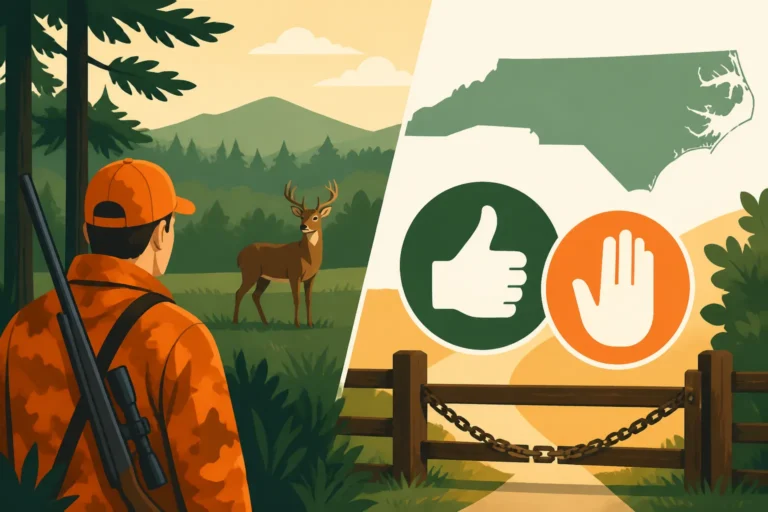
One of the biggest frustrations for hunters looking at a map of Avery County is the sheer "checkerboard" nature of land ownership. You'll see small, fragmented parcels of public land nestled right up against vast private estates, timber company holdings, or even smaller family farms. This isn't like the expansive, unbroken tracts of Pisgah National Forest Hunting or Nantahala National Forest Hunting you might envision when you think of mountain hunting. Instead, it's a patchwork where boundaries can be incredibly confusing, and the line between public and private can shift with every contour of the ridge. This often means that while there is public land, it might be tough to get to, or it might not connect to other huntable areas, isolating pockets that are hard to effectively hunt.
Adding to this, many of the private landowners in Avery County, understandably, cherish their privacy and resources. You're less likely to find large, openly accessible tracts, and getting permission to hunt private land, while always worth a try, can be a real challenge due to population density and increased land value. This makes reliable public access even more critical, yet simultaneously harder to identify and utilize effectively.
Navigating the Boundaries
Given the fragmented nature of land ownership in Avery County, knowing exactly where you stand (literally!) is paramount. Accidentally trespassing is not just a legal issue, but it can also damage the reputation of all hunters and make it even harder to gain future access or goodwill. This is where modern technology truly shines and becomes an absolute necessity for mountain hunting.
Mapping applications like onX Hunt and GoHunt are invaluable tools for hunters in Avery County. These platforms overlay property lines, public land boundaries, and even topography onto satellite imagery, giving you a real-time understanding of where you are relative to those critical lines. Imagine being deep in a hardwood hollow, following a deer trail, and seeing precisely where the national forest ends and a private parcel begins, right on your phone screen. This kind of detailed mapping prevents unintentional trespass and helps you plan your approach and exit routes with confidence. Without these tools, especially in areas with poor signage or unclear markers, you'd be guessing, and guessing is a recipe for trouble in the mountains. They can also help you identify those little fingers or pockets of public land that might otherwise go unnoticed.
Where to Find Huntable Public Ground in Avery
So, with all the challenges, where does one actually find a spot to hunt in Avery County? It requires a bit more detective work and a willingness to explore, but opportunities do exist for the persistent hunter. The key is understanding the types of public land available and how to best approach them.
Small Game Lands and Their Quirks
North Carolina has a fantastic system of Game Lands, and while Avery County isn't home to the massive Game Lands you'd find on the Coastal Plain, it does have some smaller, often less-known tracts. These are typically managed by the North Carolina Wildlife Resources Commission (NCWRC) and can vary greatly in size, habitat, and accessibility. You might find a few hundred acres here, a couple of hundred there, often interspersed with private holdings.
These smaller game lands often offer good opportunities for Squirrel and Small Game Hunting in North Carolina, and many will permit archery hunting for deer. They might consist of regenerating clear-cuts, mature hardwoods, or even thick rhododendron thickets. Because they're smaller, they can sometimes be overlooked by other hunters, offering a sliver of solitude. However, they can also receive significant pressure, especially on opening day or during peak season weekends. The trick is to identify these tracts using your mapping apps, then go put boots on the ground to scout them thoroughly. Look for subtle access points, old logging roads, or terrain features that might concentrate deer or other game. Remember, these aren't always manicured parcels, so be prepared for some rugged hiking.
National Forest Fragments and Isolated Parcels
While Avery County isn't dominated by the National Forests, it does border or contain smaller, often less-publicized fragments of the larger Pisgah National Forest Hunting system. These aren't always continuous blocks but might be smaller sections or even specific hollows and ridges that fall under National Forest designation. Sometimes, these are areas that connect to larger National Forest tracts in adjacent counties, requiring a bit of a drive or a longer walk-in, but offering access that feels like true wilderness.
The beauty of these National Forest fragments is that they often hold older timber, more diverse habitat, and generally less immediate hunting pressure than easily accessible state game lands. They might require longer walks from established roads, navigating steep terrain, and being comfortable with navigating without many landmarks. This is where your onX Hunt app becomes your best friend, allowing you to trace those faint property lines and ensure you're within the legal boundaries. Consider looking at county lines on your map – sometimes the best public land access for Avery County is just across the border in a neighboring county's National Forest. These isolated parcels can often be goldmines for deer, bear, and even Ruffed Grouse in the North Carolina Mountains, but you'll have to work for it.
Practical Tips for Hunting Avery's Public Access
Okay, so you've identified some potential public ground in Avery County. Now what? Mountain hunting, especially on fragmented public land, demands a particular approach. It's not just about showing up with a rifle; it's about preparation, respect, and a good dose of perseverance.
Scouting and Reconnaissance is King
I cannot stress this enough: scouting is absolutely non-negotiable when hunting Avery County's public land. You simply cannot expect to show up on opening morning and have success without putting in the time beforehand. Start with your digital scouting tools. Pour over satellite imagery on onX Hunt or GoHunt, looking for:
- Topographical Features: Identify saddles, ridges, draws, and benches where deer might travel or bed. Look for changes in elevation that might create thermal currents influencing deer movement, something crucial to understand for Wind and Thermals on a Blue Ridge Slope.
- Habitat Changes: Pinpoint transitions between different forest types – mature hardwoods bordering thick rhododendron, for example, or older timber adjacent to younger growth. These "edges" are often prime spots for game.
- Access Points: Find any old logging roads, ATV trails (where legal), or even faint footpaths that might offer an entry route. Crucially, identify places to legally park without blocking private drives or forest service gates.
- Water Sources: In drier periods, springs and small creeks can be magnets for wildlife.
After digital scouting, you must hit the ground. Walk the property lines you identified. Look for old rub lines, scrapes, and bedding areas. Try to understand how deer move through that specific piece of ground. This boots-on-the-ground reconnaissance will confirm your digital hunches and reveal hidden details you can't see from a satellite image. If you're planning on using a treestand, this is the time to identify suitable trees and plan your Treestand Setups in Pisgah National Forest (even if it's a small patch of Pisgah).
Respecting Private Property and Local Culture
Hunting on public land that borders private property, especially in an area like Avery County with a strong sense of community and land ownership, requires an extra layer of awareness and respect. The local culture here values courtesy and good neighborliness.
Always, always know where the property lines are. If you wound an animal and it crosses onto private property, you are legally obligated to ask for permission before tracking or retrieving it. Knock on the door, introduce yourself, explain the situation calmly and respectfully. Offer to show them your permit if they ask. A polite, humble approach can often lead to a positive outcome, whereas an entitled or aggressive one will certainly shut doors. Retrieving Game From Private Land in North Carolina is a situation you need to be prepared for.
Beyond that, practice leave-no-trace principles. Pack out everything you pack in. Don't litter. Don't cut trees or damage property. Be mindful of noise, especially early in the morning or late in the evening. Park considerately. Being a responsible hunter isn't just about following the law; it's about being a good ambassador for our sport, ensuring that access for all hunters remains possible in the future.
Gear for Mountain Hunting
Hunting Avery County's steep, rugged terrain demands the right gear to ensure both success and safety. This isn't flatland hunting; you'll be putting in miles and climbing elevation.
| Category | Essential Gear Items | Why It's Crucial in Avery County |
|---|---|---|
| Navigation | GPS unit or Smartphone with onX Hunt/GoHunt app |
Essential for identifying property lines, staying found in dense timber. |
| Footwear | Sturdy, waterproof hiking boots with good ankle support | Protects against rough terrain, slippery leaves, and wet creek crossings. |
| Clothing | Layered, moisture-wicking, quiet fabrics | Manages body temperature during strenuous climbs and cold sits, minimizes noise. |
| Optics | Binoculars (8x or 10x) | Spotting game in thick cover or across hollows; assessing distant terrain. |
| Pack | Comfortable daypack with hydration system | Carries essentials, water, snacks, field dressing kit, extra layers. |
| Safety | First-aid kit, headlamp, fire starter, knife, whistle | Preparedness for unexpected emergencies in remote areas. |
| Game Care | Game bags, sharp knife, gloves | Essential for proper field dressing and protecting meat from elements. |
For long walks and steep climbs, a good pair of boots is probably your most important piece of gear. Think about Boots for North Carolina Swamps and Ridges – you'll need something that can handle both the mud in a creek bottom and the rocky climbs up a ridge. A reliable headlamp is also non-negotiable; walking out after dark on mountain terrain is exponentially harder than flat ground, and a good light is a lifesaver. Don't skimp on a first-aid kit, either; a sprained ankle or a bad cut in a remote hollow is a serious issue.
Planning Your Hunt: Logistics and Regulations
Before you ever set foot on public land in Avery County, it's vital to have a clear understanding of the rules and regulations that govern your hunt. North Carolina has specific requirements, and Game Lands often have additional rules.
Understanding North Carolina Game Lands Rules
When you're hunting on any North Carolina Game Lands, you're operating under a specific set of guidelines. First and foremost, you'll need a North Carolina Game Lands License Requirements in addition to your standard hunting license. This is a critical step, as many hunters overlook this permit.
Beyond the license, be aware of specific access rules. Some game lands may have designated parking areas, and others might require you to sign in and out at a kiosk. Always check the specific regulations for the particular Game Land you intend to hunt, as rules can vary regarding ATV use, camping, and even Treestand Rules on North Carolina Public Land or Ground Blind Rules on North Carolina Game Lands. The NCWRC website and its interactive mapping tool are excellent resources for finding these specific rules. Pay attention to any special draw hunts or quota hunts that might be in effect for certain species or areas; these will be clearly posted. For deer hunting, for example, the North Carolina Deer Bag Limit Rules will apply, and you'll need to report your harvest.
License and Permit Requirements
No matter where you hunt in North Carolina, you need to have the proper licenses. For residents, this typically starts with a North Carolina Resident Hunting License Options and a Big Game Harvest Report Card. Non-residents will need a North Carolina Nonresident Hunting License Options, which often come with different costs and duration options. If you're targeting specific species, like bear or turkey, you'll need additional privileges or stamps, such as the North Carolina Bear Management Stamp Rules or the Migratory Bird Certification if you're chasing doves or waterfowl.
It's always a good idea to Buying a License on the NC Wildlife Portal well in advance of your hunt. This allows you to confirm you have everything you need and avoid any last-minute stress. Keep a copy of your license and any permits on you at all times while hunting. Remember, youth hunters also have specific rules and opportunities, such as the North Carolina Youth Deer Weekend. Being fully compliant with licensing isn't just about avoiding fines; it's about contributing to conservation efforts that help maintain healthy game populations and public hunting opportunities for everyone in North Carolina.
Disclaimer
This article is for general informational purposes only and does not constitute professional advice. Laws, prices and regulations vary by location and change over time. Consult a qualified professional for guidance on your specific situation.