Yadkin County CWD Zone Public Ground
Hunting in North Carolina, especially when you're navigating the complexities of Chronic Wasting Disease (CWD) management areas like Yadkin County, can feel like a whole new ballgame. It adds layers of regulations and considerations that seasoned hunters might not be accustomed to. This guide is here to walk you through the specifics of hunting public ground within Yadkin County's CWD zone, helping you understand the rules, find opportunities, and hunt responsibly.
Understanding the CWD Zone in Yadkin County
The emergence of Chronic Wasting Disease in North Carolina has undoubtedly changed the landscape for deer hunters, and Yadkin County finds itself at the heart of one of these critical management areas. It’s a serious issue that impacts our deer herd, and subsequently, our hunting practices. Trying to wrap your head around what this means for your time afield can be daunting, but understanding the fundamentals is the first step.
What CWD Means for Hunters in Yadkin County
Chronic Wasting Disease is a fatal neurological disease affecting deer, elk, and moose. It's caused by abnormal proteins called prions and leads to progressive degeneration of the brain. While there's no evidence of CWD transmitting to humans, the scientific community emphasizes caution. For hunters, its presence in a county like Yadkin means a heightened awareness and a commitment to slowing its spread. The North Carolina Wildlife Resources Commission (NCWRC) has established specific CWD management areas, and unfortunately, Yadkin County is one of them. This designation brings with it a set of unique rules that don't apply statewide, all designed to monitor the disease and prevent its further proliferation. It’s about being good stewards of our wildlife and ensuring the health of the herd for future generations. You can learn more about these designated areas by checking out North Carolina's Chronic Wasting Disease Areas and understanding Which Seven Counties Sit in a CWD Management Area.
The concern isn't just about the deer that might be infected; it's about the potential for the disease to spread to other areas. CWD can persist in the environment for a long time, making effective management crucial. Hunters play a vital role in this effort. By adhering to the specific guidelines for CWD zones, we become part of the solution rather than inadvertently contributing to the problem. It requires a shift in mindset, perhaps, but it's a necessary one if we want to continue enjoying the rich hunting traditions North Carolina offers.
Mandatory Testing and Carcass Restrictions
One of the most significant changes for hunters in Yadkin County's CWD zone is the requirement for mandatory testing of harvested deer during specific periods. This isn't just a suggestion; it's a critical component of the state's surveillance strategy. The NCWRC needs as much data as possible to track the disease's prevalence and distribution. When you harvest a deer in Yadkin County during a mandatory testing period, you'll need to present the head for sampling. This usually involves designated drop-off locations or checking stations, and it's essential to know where these are and their operating hours before you head out. Failing to comply can result in penalties, but more importantly, it hinders the overall CWD management effort. Get up to speed on the specifics by looking into North Carolina CWD Testing for Hunters.
Beyond testing, there are strict rules regarding carcass movement. This is designed to prevent the physical spread of prions to unaffected areas. Essentially, you cannot take certain parts of a deer harvested in a CWD zone outside of that zone unless specific conditions are met. Typically, this means removing all brain and spinal column material. You might be able to transport deboned meat, capes (without the skull or spinal column attached), cleaned skull plates, or finished taxidermy products. This can be a real logistical challenge, especially if you live outside the CWD zone or plan to process your deer elsewhere. It’s important to plan ahead: know your butcher's policies, or be prepared to do your own processing to ensure you're in compliance. This isn't just a recommendation; it's a legal requirement. Make sure you understand North Carolina Carcass Movement Restrictions before you attempt to move any part of your harvested deer.
Identifying Public Hunting Opportunities in Yadkin County
When you think of public land hunting in North Carolina, places like the vast national forests often come to mind. Yadkin County, nestled in the Piedmont region, presents a slightly different picture. While it might not boast thousands upon thousands of contiguous acres of federal land, there are still valuable public hunting opportunities available for those willing to do their homework. The key is knowing where to look and understanding the nature of these tracts.
Finding Game Lands and Other Public Access
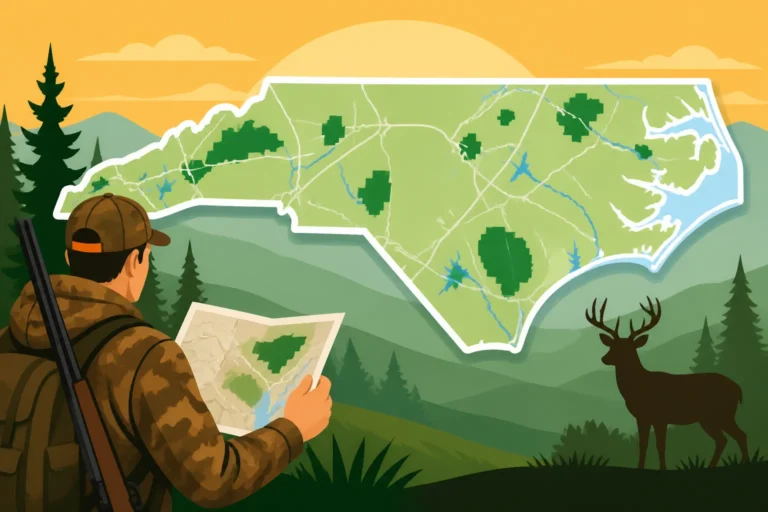
Yadkin County itself doesn't host a major national forest, but it does have access to Game Lands managed by the NCWRC. These smaller, often fragmented tracts are crucial for public hunting access in the Piedmont. While they may not be as expansive as their mountain counterparts, they can hold good populations of deer, especially if they offer diverse habitat like mature hardwoods, thickets, and agricultural edges. Identifying these specific Game Lands is paramount. The NCWRC's website and its interactive map tool are invaluable resources for this. You can literally zoom into Yadkin County and see where these green-shaded areas are. It's often helpful to cross-reference this with satellite imagery from tools like onX Hunt to get a feel for the terrain, cover, and potential access points. Understanding North Carolina Game Lands will give you a broader context for these areas, and the Using the NC Wildlife Map Tool guide can help you pinpoint specific locations.
Public access might also include smaller, less-advertised areas, such as municipal lands that allow hunting under specific permits, or even private lands enrolled in cooperative programs with the state. These can be golden opportunities, but they usually come with very specific rules and often limited hunter numbers. Don't overlook the potential for areas bordering the Yadkin River, as river bottoms often create natural travel corridors and diverse habitats. The challenge is that these areas might be surrounded by private land, requiring careful attention to property lines, which mapping tools like onX Hunt are exceptionally good at displaying.
Navigating Access Points and Terrain Challenges
Once you've identified potential public hunting spots in Yadkin County, the next hurdle is figuring out access. Many smaller Game Lands in the Piedmont might have limited parking or official entry points. You might find yourself walking in from a gravel road or an old logging path. It's not always a grand entrance, and that's often a good thing, as it can deter some of the casual hunting pressure. The terrain in Yadkin County typically features rolling hills, mature hardwood ridges, creek bottoms, and agricultural fields. This mosaic creates excellent deer habitat, but it also means hunters need to be prepared for varied conditions. You could be walking through dense briar thickets one minute and open timber the next.
Effective scouting becomes even more critical on these smaller, more diverse public tracts. Before the season opens, spend time walking the boundaries, identifying deer trails, rub lines, and food sources. Look for pinch points, saddles, and funnels that deer might use to navigate the landscape. Pay close attention to water sources and bedding areas, particularly those offering thick cover. Sometimes, the best public land spots are those that are just a little harder to reach, the ones others walk past. A good place to start your planning is with Scouting North Carolina Public Land Before Season. Understanding the terrain and how deer use it will give you a significant advantage, helping you identify areas that might concentrate deer movement.
Navigating Regulations and Restrictions for CWD-Zone Public Land
Hunting in a CWD zone means you're operating under an extra layer of regulations. These aren't arbitrary rules; they're in place to safeguard the deer herd and to comply with broader CWD management strategies. For hunters in Yadkin County, it’s crucial to be aware of these specific provisions, as they can impact when you hunt, what you hunt, and even how you process your game.
Special Seasons and Bag Limits in CWD Zones
The NCWRC has implemented some specific season structures within CWD management areas, including Yadkin County, to enhance surveillance and management efforts. One notable example is the special early CWD-zone season. This season often runs earlier than the traditional statewide archery opener and is typically restricted to antlered deer. The goal here is to increase harvest opportunities for animals that are often the most difficult to sample for CWD testing. This early window can be a fantastic opportunity to get into the woods before the main pressure hits, but you absolutely must be aware of the specific dates and bag limits for this special season. Hunters who pay attention to these early opportunities can sometimes find less pressured deer, making it a unique advantage. Delve deeper into this specific hunt by reading Hunting the Special Early CWD-Zone Season and understanding Why the Early Season Targets Antlered Deer Only.
Beyond special seasons, always double-check the overall deer bag limits for Yadkin County. While statewide limits exist, CWD zones might have specific harvest guidelines that could differ. Sometimes, there are incentives or specific guidelines for antlerless deer harvest to help control deer density, which is a factor in CWD transmission. It's also worth noting if any antler point restrictions (APRs) are in place for the general deer season in Yadkin. While North Carolina largely doesn't have statewide APRs, specific Game Lands or CWD zone rules could introduce them. Always check the current regulations digest thoroughly before heading afield. Information on North Carolina Antler Point Restriction Status will help you confirm any local rules.
Equipment and Methods Specific to CWD Areas
When it comes to equipment and hunting methods, CWD zones often have additional rules aimed at preventing disease transmission. The most common and impactful restriction is the statewide ban on baiting and feeding deer. This rule is particularly important in CWD zones because concentrating deer at a single location through baiting can increase nose-to-nose contact, thereby facilitating the spread of the disease. This means no corn piles, no mineral blocks, and no other attractants. Hunters need to rely on natural food sources, scouting, and woodsmanship. This can be a challenge for those accustomed to baiting, but it also elevates the hunt to a more traditional, skill-based pursuit.
Safety is always paramount, and on public land, wearing blaze orange or blaze pink remains a crucial requirement during specific seasons. Even within CWD zones, these rules are in effect to ensure visibility among hunters. Always know when and how much blaze orange you need to wear. North Carolina Blaze Orange Requirements will give you the full breakdown. Furthermore, if you plan on using treestands on public land, remember that rules apply to how you can hang them, whether they need to be removed after a certain period, and any specific labeling requirements. Familiarize yourself with Treestand Rules on North Carolina Public Land to avoid any issues. Generally, permanent stands are prohibited, and temporary stands must be removed at the end of the season.
Practical Hunting Strategies for CWD-Affected Public Ground
Hunting public land in a CWD zone like Yadkin County requires a thoughtful approach. You're not just dealing with hunting pressure and challenging terrain; you're also being a part of a larger wildlife management effort. Adapting your strategies to account for both effective hunting and responsible disease management is key to success and contributing positively to the resource.
Adapting Scouting and Hunting Tactics
Since baiting is prohibited, your scouting efforts become even more critical. You'll need to focus on finding natural food sources that deer are currently utilizing. This means identifying mast crops like acorns, persimmons, and soft mast, as well as browsing areas in recent timber cuts or thickets. During the early season, look for white oak acorns, and as the season progresses, switch your focus to red oaks or any remaining agricultural crops on adjacent private lands that deer might be sneaking into. Terrain features become your best friends: saddles, creek crossings, ridge points, and pinch points where deer are naturally funneled are prime locations. Use tools like GoHunt or onX Hunt to dissect aerial maps and identify these key features before you ever set foot in the woods. Reading the landscape and understanding deer movement patterns in relation to Wind and Thermals on a Blue Ridge Slope (or rolling Piedmont terrain, in this case) will give you a significant edge.
Hunting pressure on public land can be a real factor, especially during opening week. To counter this, consider pushing deeper into areas that are harder to reach or focusing on weekdays if your schedule allows. Deer quickly learn to avoid easy-access spots, so putting in the extra effort to get away from roads and trails often pays off. Stealthy entry and exit routes are paramount. Don't blow out deer coming in or leaving your stand. Also, think about hunting edge cover and transition zones. Deer in pressured areas will often bed in the thickest cover available and only venture out during low light or under very specific conditions. Your goal is to intercept them during these movements.
Post-Harvest Considerations and Best Practices
Once you've successfully harvested a deer in Yadkin County's CWD zone, the work isn't over. The post-harvest steps are just as important as the hunt itself. First and foremost, you need to report your harvest as required by NCWRC, and if it's during a mandatory testing period, ensure you bring the deer's head to a designated CWD testing site. This critical step provides the state with valuable data for disease monitoring. Make sure you know the nearest drop-off locations and their hours of operation.
Proper carcass handling is also essential. As mentioned, strict rules govern what parts of a deer can be moved out of a CWD zone. Your best bet is to process your deer within the CWD zone itself, leaving the brain, spinal column, and other specified high-risk tissues behind. This means either having a local butcher or being prepared to debone the meat in the field. When handling the carcass, wear gloves and minimize contact with brain and spinal tissues. While there's no known human transmission, it's always wise to exercise caution. After processing, make sure to dispose of any unwanted carcass parts responsibly, preferably at a designated landfill or through approved methods that prevent scavenger access. For thorough information on this, check out Handling Venison From a CWD Management Area.
| CWD Zone Rule Category | Specific Rule for Yadkin County (CWD Zone) | Hunter Action Required |
|---|---|---|
| Mandatory Testing | During designated surveillance periods, all harvested deer must be submitted for CWD testing. | Check NCWRC website for current mandatory testing dates and locations. Bring harvested deer head to an official CWD sampling station. |
| Carcass Movement | Whole carcasses, brains, spinal columns, and certain other high-risk tissues cannot be removed from the CWD zone. | Debone meat, clean skull plates, and process deer within the CWD zone. Only move deboned meat, capes (without skull/spine), cleaned skull plates, or finished taxidermy out of the zone. |
| Baiting & Feeding | It is unlawful to place bait or feed to attract deer. | Rely on natural food sources and scouting. Do not use corn, mineral blocks, or other attractants. |
| Special Seasons | May include special early seasons (e.g., antlered deer only) to increase harvest opportunities for surveillance. | Consult the current NCWRC regulations digest for specific dates, bag limits, and any antler restrictions for special CWD-zone seasons. |
| Blaze Orange/Pink | Standard blaze orange/pink requirements apply for safety during designated gun seasons on public lands. | Wear appropriate blaze orange/pink as specified in the NCWRC regulations digest during required seasons. |
| Public Land Stand Use | General public land rules for treestands and ground blinds apply (e.g., no permanent stands, remove temporary stands at season's end, proper labeling). | Adhere to NCWRC rules for Treestand Rules on North Carolina Public Land or ground blind placement on Game Lands within Yadkin County. |
Disclaimer
This article is for general informational purposes only and does not constitute professional advice. Laws, prices and regulations vary by location and change over time. Consult a qualified professional for guidance on your specific situation.