Mallards and Divers on Currituck Sound
For many North Carolina waterfowlers, the thought of wide-open water and a sky full of ducks immediately brings to mind Currituck Sound. It’s a legendary place, but hunting these vast, dynamic waters for both high-flying divers and wary puddle ducks presents a unique set of challenges that can frustrate even seasoned hunters. This guide will dive deep into understanding these magnificent birds, the diverse environment of the Sound, and the specialized tactics needed to find success on its storied waters.
The Unique Ecosystem of Currituck Sound
Currituck Sound isn't just a body of water; it's a dynamic, brackish estuary that serves as a vital wintering ground for countless waterfowl. Its unique characteristics — vast expanses of shallow water, fluctuating salinity, and abundant submerged aquatic vegetation — make it a magnet for ducks traveling the Atlantic Flyway. Understanding this ecosystem is the first step to unlocking its hunting potential.
Reading the Water and Weather
Hunting Currituck Sound means constantly adapting to its mercurial moods. The vast, shallow nature of the Sound makes it highly susceptible to wind and weather changes, which can drastically impact duck behavior and hunter accessibility. A calm morning can quickly turn into a white-capping gale, making navigation treacherous and duck movement unpredictable.
One major frustration for hunters is how quickly conditions can shift. A light breeze from the north might have ducks working a particular marsh edge, but a sudden shift to a strong south wind can completely change their flight paths and feeding locations. It's not enough to check the weather once in the morning; you need to be constantly aware of changing winds, tide, and even barometric pressure. Seasoned hunters often use real-time weather apps and local forecasts, sometimes even a dedicated marine weather radio, to stay updated. A crucial aspect often overlooked is how wind affects water levels in such a shallow system; sustained strong winds can push water out of certain areas, leaving vast mudflats, or pile it up in others, flooding prime feeding grounds. Knowing how to Reading a Sound-Side Marsh for a Morning Flight involves more than just looking for birds; it's about interpreting the entire environment.
Navigating the Sound also demands respect for its shallow depths and shifting channels. Many a hunter has found themselves stuck on a sandbar or mudflat, sometimes miles from the nearest boat ramp, simply by misjudging a route or venturing into unfamiliar territory. The bottom composition can vary dramatically, from soft mud to firmer sand, and prop-fouling vegetation is common. This is where detailed mapping tools become indispensable. Using an app like GoHunt, for example, to scout historical depths, identify potential hazards, and mark safe travel lanes, can prevent a lot of headaches and ensure you spend more time hunting and less time pushing your boat. Always have a backup plan, know your escape routes, and consider the limitations of your vessel before heading out, especially if you're exploring new areas.
Identifying Key Habitat and Food Sources
The secret to success on Currituck Sound lies in understanding what ducks are eating and where they can find it. The Sound's primary draw for waterfowl is its abundance of submerged aquatic vegetation (SAV), often referred to as "duck grass." Species like wigeon grass, sago pondweed, and redhead grass are incredibly nutritious and form the backbone of the waterfowl diet here.
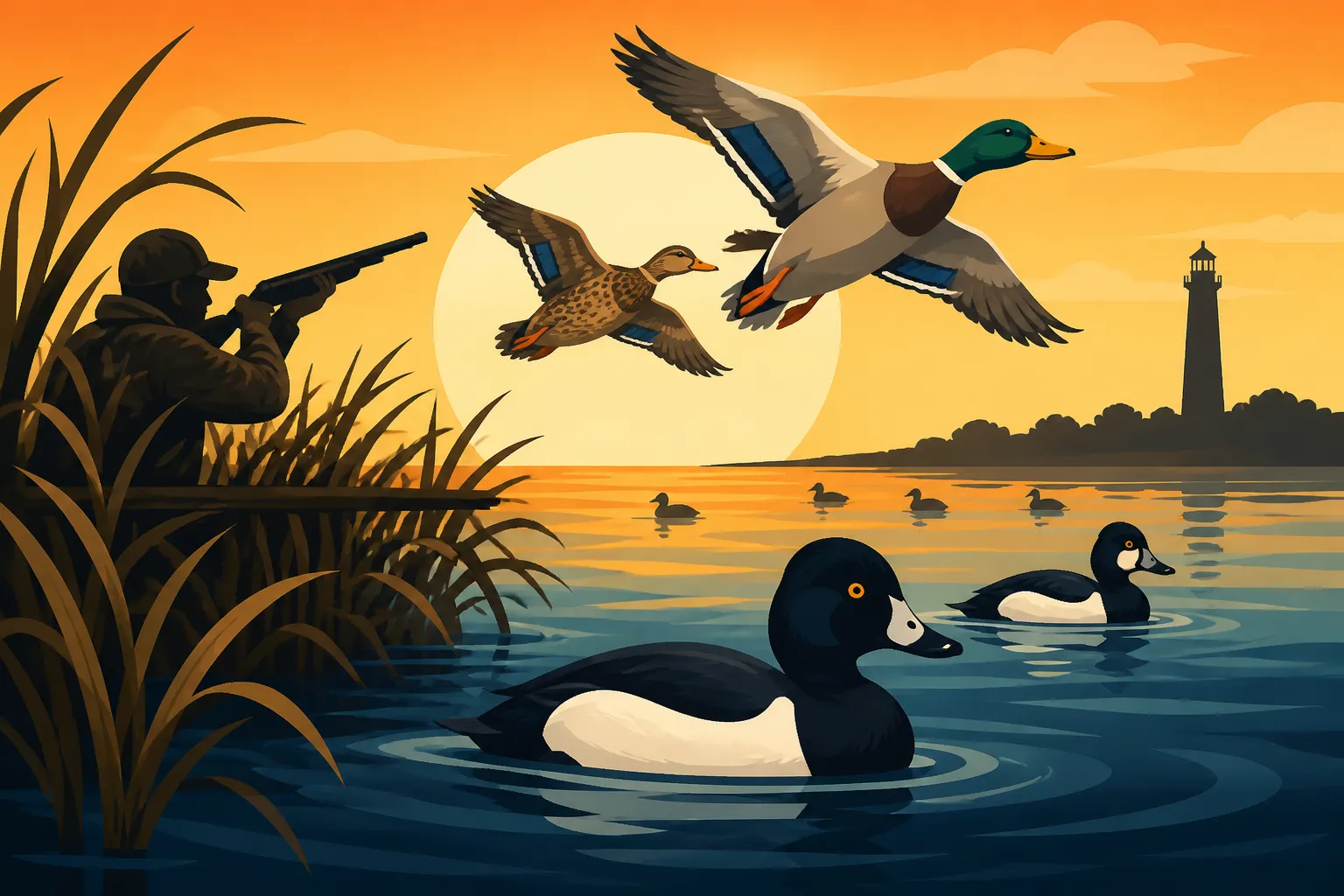
Mallards, being primarily dabbling ducks, gravitate towards shallower areas, particularly those with dense beds of wigeon grass, where they can tip up to feed. These areas often coincide with the marsh edges, protected coves, and creek mouths that dot the perimeter of the Sound. They also appreciate flooded timber or agricultural fields adjacent to the Sound when conditions are right, offering alternative food sources like waste grain or acorns. Divers, on the other hand, such as Redheads, Canvasbacks, and Scaup, prefer deeper water, typically congregating over beds of sago pondweed or redhead grass, which they can dive to reach. These deeper flats often extend far out into the open Sound, sometimes miles from shore, making them harder to access and scout without specialized boats. Locating these beds requires patience and often a good depth finder, or even better, local knowledge passed down through generations of Currituck hunters. The specific quality and distribution of these food sources can change year to year, influenced by salinity, storm events, and water clarity.
Beyond SAV, other food sources play a role. During certain times of the season, or if SAV is scarce, ducks might feed on small invertebrates, crustaceans, or even small fish. Mallards, in particular, are opportunistic and will exploit agricultural fields. When hunting Waterfowl Hunting Currituck Sound and the Coast, scouting becomes paramount. A simple pass with a shallow-draft boat or even observing from shore with good optics can reveal where birds are congregating, which often points directly to a prime feeding area. Pay attention to changes in water color, which can indicate feeding activity stirring up the bottom, or even floating pieces of vegetation brought up by ducks.
Deciphering Mallard Behavior on the Sound
Mallards are North Carolina’s most recognizable puddle duck, and their presence on Currituck Sound offers exciting hunting opportunities. However, these aren't your typical farm pond mallards; the birds wintering here are often seasoned travelers, extremely wary, and require precise tactics to bring into range.
Understanding Mallard Preferences and Flight Patterns
Mallards on Currituck Sound are creatures of habit, but those habits are dictated by food, weather, and pressure. They generally prefer the shallower, more protected waters of the Sound, especially along the numerous marsh islands, sloughs, and protected coves where they can dabble for submerged aquatic vegetation or feed on seeds. They are highly attuned to weather patterns; a strong north wind will often push them into more sheltered areas, while calmer days might see them spread out across open flats.
Their flight patterns are often predictable once you understand their routine. Mallards will typically roost in large groups overnight in open, safe areas of the Sound, or in adjacent impoundments. At first light, they disperse to feeding grounds, often flying low along marsh edges or drainage ditches. As hunting pressure builds throughout the day, they become more wary, flying higher and circling extensively before committing to a spread. Hunters often get frustrated by seemingly "unreachable" birds, but this is usually a sign that their setup is lacking concealment or their calling isn't quite convincing enough. To connect with these intelligent birds, it's essential to study their movements and adjust accordingly, something a feature like the weather overlays in a GoHunt subscription can help visualize on a map. Remember that Duck Migration Timing Through North Carolina means peak mallard numbers are often mid to late season.
Effective Decoy Spreads and Calling for Mallards
Hunting mallards on Currituck demands a realistic and adaptable approach to decoying and calling. Unlike divers, mallards prefer more natural-looking, smaller spreads that mimic a feeding flock. A typical spread might consist of 2-4 dozen decoys, mostly mallards, with a few pintails, wigeon, or black ducks mixed in to create a diverse, natural appearance. Critical to mallard spreads are motion decoys – spinning-wing decoys (like Mojos) can be incredibly effective in attracting distant birds, especially on calm days. Position these in the "kill hole" or upwind of your main spread to draw birds into optimal shooting range. Remember, however, that over-reliance on motion decoys, or placing them in unnatural positions, can sometimes flare birds that have seen them too many times.
Concealment is absolutely paramount when hunting mallards on Currituck. These birds have incredible eyesight, and even a slight outline against the sky can send them flaring. Using a well-brushed blind, a layout blind tucked into marsh grass, or a natural point with ample cover is non-negotiable. As for calling, less is often more with wary mallards. Aggressive calling might work on opening day, but as the season progresses, a few soft quacks, feeding chuckles, and comeback calls are usually more effective. Practice your calling, paying close attention to cadence and realism. The goal isn't just to make noise, but to convince those high-flying birds that your spread is a safe, inviting place to land. It's not uncommon for hunters to spend years perfecting their calling techniques, but the payoff of watching a flock of mallards drop into your spread is unmatched. When planning your hunt, consider the overall North Carolina Duck Daily Bag Limit and manage your expectations for these intelligent birds.
Mastering Diver Duck Strategies
While mallards hug the marsh edges, Currituck Sound is arguably most famous for its incredible diver duck hunting. Species like Redheads, Canvasbacks, and Scaup (Bluebills) flock to these waters in impressive numbers, offering fast-paced, action-packed hunting for those willing to brave the open water.
Distinguishing Diver Species and Behaviors
Diver ducks are a distinct group of waterfowl, characterized by their preference for deeper waters and their ability to dive for food. On Currituck Sound, the most sought-after divers include Redheads, known for their striking plumage and often rapid flight; Canvasbacks, regal birds that are among the largest and fastest of North American ducks; and Lesser and Greater Scaup (Bluebills), smaller but incredibly numerous, often flying in large, sweeping flocks. Each species has subtle behavioral differences that can influence your hunting strategy. Redheads and Canvasbacks are highly attracted to large decoy spreads and can be quite aggressive in working into them, especially early in the season. Scaup, while plentiful, can be more challenging to decoy consistently, often flying in wide arcs before committing.
The feeding habits of divers are closely tied to the deeper water sections of the Sound, where abundant beds of sago pondweed and redhead grass are found. They will spend most of their day diving to extract these plants, often in large rafts visible from a distance. Their flight paths tend to be more open-water oriented, often flying straight lines across the Sound or following shorelines, rather than hugging marsh edges like mallards. Understanding these tendencies is key to setting up in the right location. For detailed information on these specific birds, check out a resource like North Carolina Mallard and Wood Duck Numbers which often details populations of various species including divers. Knowing what to expect in terms of typical group sizes and flight patterns for each species can dramatically improve your chances of success.
Advanced Decoy Spreads and Layout Blind Tactics
Diver duck hunting on Currituck Sound often calls for a completely different approach to decoying and concealment compared to puddle ducks. Instead of small, natural spreads, divers are typically attracted to large, highly visible spreads that mimic a huge raft of feeding or resting birds. A common diver spread might consist of anywhere from 50 to 200 decoys, often arranged in a J-hook or U-shape, with the "hook" or "opening" facing into the wind where you expect birds to land. Use predominantly diver decoys – Redheads, Canvasbacks, and Scaup – with a few confidence decoys like geese or swans on the outer edges to add realism and visibility from afar.
| Feature | Mallard Hunting (Puddle Duck) | Diver Hunting (Diving Duck) |
|---|---|---|
| Habitat | Shallow marsh edges, flooded fields, protected coves | Deeper open water, large flats, main Sound channels |
| Primary Food | Submerged aquatic vegetation (wigeon grass), seeds, waste grain | Submerged aquatic vegetation (sago pondweed, redhead grass), mollusks |
| Decoy Spread Size | 2-4 dozen, realistic, natural-looking | 50-200+, large, highly visible rafts or lines |
| Decoy Types | Mallards, pintails, wigeon, black ducks, motion decoys | Redheads, Canvasbacks, Scaup, confidence decoys |
| Concealment | Well-brushed natural blinds, layout blinds in marsh | Layout blinds in open water, marsh boats, permanent floating blinds |
| Calling Style | Soft quacks, feeding chuckles, comeback calls (less is more) | Minimal, occasional gruff purrs, focused on movement and visibility |
| Typical Shot | Dropping into spread, often close range | Passing, coming into decoys, faster, sometimes longer shots |
For concealment, layout blinds are the standard for diver hunting on the open Sound. These low-profile blinds allow hunters to hide effectively amidst their massive decoy spreads, blending into the water or marsh edge. Positioning your layout blinds within the "kill hole" of your spread is crucial, ensuring birds commit to landing right in front of you. Another popular method is using specialized marsh boats or permanent floating blinds, often heavily brushed in with natural vegetation, allowing for excellent concealment and mobility. When learning how to perfect Hunting Currituck Sound Diving Ducks, remember that patience is key. Divers often take wide passes, checking the spread multiple times before committing. Resist the urge to call excessively or sit up too early. Your goal is to be invisible until the very last moment. Also, make sure you're compliant with North Carolina Coastal Duck Zone Rules which dictate season dates and specific regulations for this area.
Essential Gear for Currituck Success
Hunting the open waters of Currituck Sound for both mallards and divers requires specialized gear designed to withstand the elements, ensure safety, and maximize your chances of success. This isn't a place for shortcuts when it comes to equipment.
Waterfowl Shotguns and Ammunition
Your shotgun is your primary tool on the duck marsh, and for Currituck, reliability and appropriate ballistics are paramount. A 12-gauge shotgun is the overwhelmingly popular choice, offering a versatile platform for various loads and choke options. Semi-automatics or pump-actions are favored due to their quick follow-up shots, often necessary for fast-flying divers or multiple birds working a spread. When choosing a firearm, consider a model designed for waterfowl, often with synthetic stocks and corrosion-resistant finishes, as the brackish water and salt spray can be brutal on traditional blued steel and wood.
Ammunition choice is equally critical, especially since lead shot is strictly prohibited for waterfowl hunting across the country, including North Carolina. You'll be using non-toxic shot, primarily steel, bismuth, or tungsten alloys. For mallards in closer, marshy setups, steel shot in sizes #2 or #3 with a modified choke is often sufficient. However, for the more robust divers that present longer shots and tougher feathering, heavier loads of steel in BB or #1, or even premium bismuth or tungsten in #3 or #4, coupled with an improved cylinder or modified choke, will provide the necessary knockdown power. Patterning your shotgun with your chosen loads and choke is an absolute must. Knowing how your gun performs at 30, 40, and even 50 yards will prevent frustrating misses and ensure clean kills. Don't show up on opening day without having spent time at the range; it's a disservice to yourself and the birds. Remember to follow rules for Waterfowl Loads for Sound-Side Divers and always use non-toxic shot in North Carolina.
Blinds, Boats, and Decoy Spreads
The vastness and open nature of Currituck Sound necessitate specific equipment for concealment and mobility. For hunters targeting puddle ducks along marsh edges or in shallow coves, well-camouflaged, portable panel blinds or meticulously brushed-in ground blinds are effective. These need to be robust enough to withstand potential wind and waves. For divers in open water, layout blinds are the go-to. These low-profile shelters are designed to make you disappear within a large decoy spread, protecting you from the wind and providing excellent concealment. Specialized marsh boats, often camouflaged and shallow-drafting, are also common, allowing hunters to access remote areas and serve as mobile blinds.
Decoys are where many hunters truly invest. For mallards, a realistic spread of 2-4 dozen high-quality mallard decoys, often interspersed with a few pintails or wigeon, will do the trick. Motion decoys, such as spinning-wing or jerk-string systems, are highly effective for drawing in puddle ducks. For divers, however, the game changes dramatically. You’ll need a much larger spread, often 50 to 200 or more decoys, predominantly Redheads, Canvasbacks, and Scaup. These are often deployed on long gang lines to create a convincing, massive raft of birds, visible from long distances across the open water. Ensuring your decoy lines are strong and your anchors are secure is vital, as losing decoys to strong winds or currents on Currituck is a common, frustrating occurrence. Considering that Layout Blinds and Marsh Boats are frequently used, make sure you have practiced setting up and taking down your gear in varying conditions.
Navigation and Safety Gear
Safety on Currituck Sound cannot be overstated. Its large, open expanses can become incredibly dangerous in inclement weather, with strong winds quickly whipping up significant waves. A reliable boat, appropriate for the size of the Sound and equipped with a dependable motor, is non-negotiable. Always have a backup motor, if possible, or at least oars/paddles. Essential safety gear includes properly fitting personal flotation devices (PFDs) for everyone on board, a sound-producing device (whistle or horn), navigation lights, and a fire extinguisher. A well-stocked first-aid kit, a dry bag with spare clothes, and emergency rations are also smart additions.
Navigation on the Sound can be tricky, especially on foggy mornings or when running in the dark. A reliable GPS unit or a smartphone with a robust mapping app (like GoHunt, which can work offline) is crucial. Mark your launch point, your hunting spot, and any known hazards. Compass and physical maps are good backups. Communication is also vital; always carry a fully charged cell phone (in a waterproof case) and consider a marine-band VHF radio for more reliable communication on the open water. The brackish, cold water of Currituck presents hypothermia risks, so dressing in layers with appropriate Waders for Sound-Side Marsh Hunting and waterproof outerwear is vital. Always tell someone your float plan – where you're going, when you expect to return, and what to do if you don't check in.
Navigating Regulations and Access on Currituck
Hunting on Currituck Sound, like any public water body in North Carolina, comes with a specific set of regulations and access considerations. Understanding these rules is essential to ensure a legal, ethical, and successful hunt. The unique challenges of a large, shared waterway mean that special attention must be paid to zone specific rules and public access points.
Understanding Currituck's Waterfowl Zones and Seasons
North Carolina divides its waterfowl hunting into several zones, and Currituck Sound falls squarely within the Coastal Duck Zone. This zone often has different season dates and bag limits compared to the state's other zones, reflecting varying migration patterns and local duck populations. It's crucial to check the current year's North Carolina Inland Fisheries and Wildlife Resources Commission (NCWRC) regulations booklet or website well in advance of the season, as dates and bag limits can change annually. The exact opening and closing dates for North Carolina Waterfowl Zones and Seasons can vary, particularly for different species groups like sea ducks versus dabblers.
Beyond the general season dates, pay close attention to species-specific bag limits. While the aggregate North Carolina duck daily bag limit might allow for a certain number of ducks, there are often restrictions on how many of specific species (like Canvasbacks or Redheads) you can harvest. Overlooking these details can lead to fines and loss of hunting privileges. It's also important to understand the concept of legal shooting hours, which typically begin 30 minutes before sunrise and end at sunset. Using a reliable app that provides sunrise/sunset times for your specific location on the Sound is helpful. A common frustration is confusing the Coastal Zone rules with inland regulations; always double-check you're looking at the right section of the rule book for Currituck.
Public Access Points and Game Lands
Accessing the vast waters of Currituck Sound is a primary concern for many hunters, especially those without private land access. Fortunately, there are several public boat ramps and access points available. These can be found in various locations along the mainland shore and on the Outer Banks. Popular ramps might include those in Currituck, Coinjock, or near Corolla, depending on what part of the Sound you aim to hunt. However, parking at these ramps, especially on opening weekend or prime days, can be extremely limited, leading to early morning frustration. Arriving well before legal shooting light is often necessary to secure a spot and allow ample time to launch your boat and reach your hunting location.
While much of Currituck Sound is navigable public water, there are also specific Game Lands and National Wildlife Refuges adjacent to or encompassing parts of the Sound that offer hunting opportunities, often under special regulations. For instance, some areas may require specific permits, lottery draws, or have unique restrictions on boat motors or hunting hours. The Currituck National Wildlife Refuge, for example, may have specific rules regarding waterfowl access and methods. It is critical to consult the NCWRC's Game Lands map and individual refuge websites for detailed information. A general North Carolina Game Lands License is often required to hunt on these public areas, in addition to your standard state hunting license and federal duck stamp. Knowing the boundaries of public versus private land on the Sound is paramount; a mapping tool like GoHunt can display property lines and public access areas, preventing accidental trespass or setting up in an illegal spot.
Conservation and Responsible Hunting on Currituck Sound
As legendary as Currituck Sound is for waterfowl hunting, its health and the abundance of ducks depend on ongoing conservation efforts and the responsible actions of every hunter. Understanding these dynamics ensures that future generations can also experience the thrill of a Currituck duck hunt.
Impact of Habitat Changes on Waterfowl Populations
The Currituck Sound ecosystem is incredibly dynamic and, unfortunately, vulnerable to environmental changes. Over the decades, issues like declining water quality, changes in salinity, and the loss of critical submerged aquatic vegetation (SAV) have all impacted waterfowl populations. Runoff from agricultural areas, septic systems, and development can introduce excess nutrients, leading to algal blooms that block sunlight and kill off SAV, the primary food source for many ducks. Increased salinity, possibly due to ocean overwash during storms or dredging, can also stress freshwater-dependent plant species.
Hunters often lament years with fewer birds, or birds that seem "scattered," and these observations are frequently linked to the health of the SAV beds. When the duck grass is thriving, the birds are typically abundant and patterned. When it declines, birds disperse, become harder to find, and may even bypass the Sound for healthier habitats elsewhere. Conservation organizations and state agencies, like the NCWRC, work tirelessly on restoration projects, improving water quality, and planting SAV in an effort to maintain this vital habitat. Hunters play a crucial role by supporting these efforts, often through their license and stamp purchases, which directly fund habitat work. Understanding these challenges helps contextualize why some seasons are better than others, and reinforces the importance of ethical harvest limits. You can look into topics like North Carolina Waterfowl Banding Programs to understand how data is collected for management decisions.
Ethical Hunting Practices and Regulations Compliance
Responsible hunting is not just about following the law; it's about respecting the resource and ensuring the long-term sustainability of waterfowl hunting on Currituck Sound. This means strict adherence to all federal and state regulations, including bag limits, shooting hours, and the use of non-toxic shot. Intentional violations, or even careless mistakes, can lead to enforcement actions and tarnish the reputation of all hunters. The North Carolina Federal Duck Stamp Requirement is a key component of funding these very conservation efforts, so purchasing and signing your stamp is a direct contribution.
Beyond the regulations, ethical hunting involves practices that minimize stress on the birds and ensure clean harvests. This includes accurate shooting within your effective range, rapidly retrieving downed birds, and making every effort to recover crippled waterfowl. Knowing your limits as a shooter and not attempting excessively long shots is a hallmark of a responsible hunter. It also means managing hunting pressure; if a particular area is being hammered day after day, consider giving it a rest or seeking out less pressured spots. Public awareness campaigns and hunter education emphasize these points, ensuring new hunters understand their responsibilities. Ultimately, being a good steward of the resource means actively contributing to conservation, obeying all rules, and setting a positive example for others on the water, thus preserving the rich heritage of waterfowl hunting on Currituck Sound for generations to come.
Disclaimer
Please note that hunting regulations, seasons, and licensing requirements in North Carolina can change. Always consult the most current North Carolina Inland Fisheries and Wildlife Resources Commission (NCWRC) regulations before planning any hunting trip. This guide is for informational purposes only and should not be considered a substitute for official legal guidance.