North Carolina Waterfowl Migration Timing
One of the biggest frustrations for waterfowl hunters in North Carolina is trying to pinpoint exactly when the ducks and geese will show up and, more importantly, where they'll be. It often feels like a guessing game, with conditions changing faster than you can scout. This comprehensive guide will pull back the curtain on North Carolina's waterfowl migration timing, helping you understand the rhythms of the flyway so you can be in the right place at the right time.
Understanding Waterfowl Migration in North Carolina
North Carolina sits squarely in the middle of the Atlantic Flyway, a massive aerial highway that guides millions of migratory birds from their northern breeding grounds to their southern wintering habitats. For hunters, this means we get to witness an incredible parade of different species throughout the season, but it also means constant adjustments are needed to stay on top of the movement.
The Atlantic Flyway and Its Importance
Imagine a superhighway stretching from the Arctic tundra all the way down to the Caribbean. That's essentially the Atlantic Flyway for ducks and geese. North Carolina, with its diverse habitats ranging from vast coastal sounds and brackish marshes to inland agricultural fields and mountain impoundments, acts as a critical stopover and wintering ground. Birds traveling this route follow historical patterns, but these patterns are always influenced by current weather, habitat conditions, and food availability. Understanding this macro-level movement is the first step to predicting local bird presence. The sheer volume of birds that pass through or winter here is staggering, making it a prime destination for waterfowlers.
Key Factors Driving Waterfowl Movement
Migration isn't just about the calendar; it's a complex dance driven by instinct and environment. The primary drivers are decreasing daylight hours, which signal the end of the breeding season, and the onset of colder temperatures to the north. As wetlands freeze over and food sources become scarce in places like Canada and the Great Lakes region, ducks and geese are literally pushed south. They're constantly seeking open water and reliable food. Beyond these major forces, smaller weather systems like strong cold fronts or prolonged periods of rain can trigger localized movements, causing birds to shift from one feeding ground to another within the state.
North Carolina's Unique Geographic Position
Our state offers a fascinating cross-section of migratory habitats. The mountainous west sees fewer large concentrations of waterfowl, but small pockets of wood ducks and local geese can be found on rivers and farm ponds. The Piedmont, with its mix of agricultural lands and impoundments, acts as a crucial staging area and wintering ground for dabblers and Canada geese. But it's truly the Coastal Plain, with its vast sounds like Currituck and Pamlico, extensive marshes, and agricultural fields, that becomes the grand finale of the flyway. This geographic diversity means that "North Carolina waterfowl migration" isn't one singular event; it's a series of overlapping waves, each species responding to conditions in its own way. Different waterfowl species also prefer different habitats, with some sticking to freshwater, some to brackish, and others comfortable in saltwater environments.
Early Season Arrivals: Teal and Wood Ducks
The first hint of the migration often arrives with the early teal season, a short but exciting prelude to the main event. These fast-flying birds, along with our plentiful wood ducks, kick off the waterfowl calendar.
September Teal: The First Wave
When those crisp mornings of late August and early September start to roll in, waterfowlers across North Carolina begin to get that familiar itch. It's teal season! Both blue-winged and green-winged teal are among the earliest migrants, often showing up in the state before many other ducks have even thought about heading south. Blue-wings, in particular, are notorious for their early departure from their breeding grounds, pushed south by the slightest chill in the air. They're looking for shallow, food-rich wetlands – think flooded timber, marsh edges, and the fringes of agricultural fields. Their presence is fleeting, a quick burst of action before they continue their journey to warmer climates further south. Understanding Why Currituck Draws Teal Every Early Season is key for hunters in that region, as specific habitat conditions make it a prime early stopover.
For hunters, this means scouting needs to start early. Look for isolated pockets of water, often in areas that might be dry later in the fall. A good pair of binoculars and a willingness to walk some muddy edges can pay off handsomely. They're often gone as quickly as they arrive, so when the season opens, you really have to be ready to go.
Wood Ducks: Resident and Migratory Populations
Wood ducks are a bit different because North Carolina boasts a healthy resident population. You can find "woodies" in nearly every county with suitable habitat – beaver ponds, cypress swamps, and flooded bottomland hardwoods. These local birds provide consistent hunting opportunities right from the opener. However, as the fall progresses, our resident wood ducks are augmented by migratory wood ducks pushing down from northern states. These new arrivals significantly swell the numbers, especially in prime timber holes.
The beauty of hunting wood ducks is their love for flooded timber, making for some truly atmospheric hunts. You'll often find them feeding on acorns and other mast crops in these environments. Knowing when to target these birds, especially the influx of migrants, can drastically improve your success. We have some great resources on Hunting Flooded Timber for Wood Ducks that can help you plan your next hunt for these beautiful birds.
Hunting Strategies for Early Migrants
Successfully targeting these early migrants requires a specific approach. Teal respond well to small decoy spreads and often come in low and fast. Decoys like Higdon Outdoors or GHG Aves are popular choices for their realism. Their speed demands quick shooting and a tight focus. Wood ducks, on the other hand, are often more comfortable in dense cover. Setting up where a creek bottlenecks into a larger swamp, or along a flyway over a beaver pond, can be highly effective. Both species benefit from minimal calling – a few soft quacks for woodies, or a whistle for teal, often does the trick without overdoing it. Patience and stealth are paramount, as these birds can be incredibly wary, especially the resident populations that have seen hunting pressure for years. Using a reliable mapping app, like one from GoHunt, to identify potential early season hotspots can give you a significant advantage in finding those elusive pockets of water.
Mid-Season Rush: Dabblers and Divers
As October turns to November and the cold really starts to bite up north, North Carolina experiences the true main event of the waterfowl migration: the arrival of countless dabbling and diving ducks. This is when our marshes, sounds, and impoundments truly come alive.
Peak Dabbler Activity: Mallards, Pintails, and Wigeon
The mid-season is prime time for the "bread and butter" dabblers – mallards, pintails, gadwall, and American wigeon. These birds prefer shallower waters where they can tip-up to feed, often found in flooded fields, shallow impoundments, and the edges of larger marshes. Their arrival coincides with increasing cold fronts from the north. When a significant cold snap hits the Midwest or Northeast, expect a fresh push of these ducks into our state. They're typically seeking out readily available food sources, like waste grain in harvested corn or soybean fields, or the aquatic vegetation in our coastal marshes.
For hunters, this period often offers some of the most exciting action. Large decoy spreads, persistent calling, and strategic blind placement become critical. North Carolina Mallard and Wood Duck Numbers typically swell during this time, providing ample opportunity for those who put in the effort. Tracking weather patterns further north can be incredibly helpful in anticipating these movements.
Divers Descend: Canvasbacks, Redheads, and Scaup
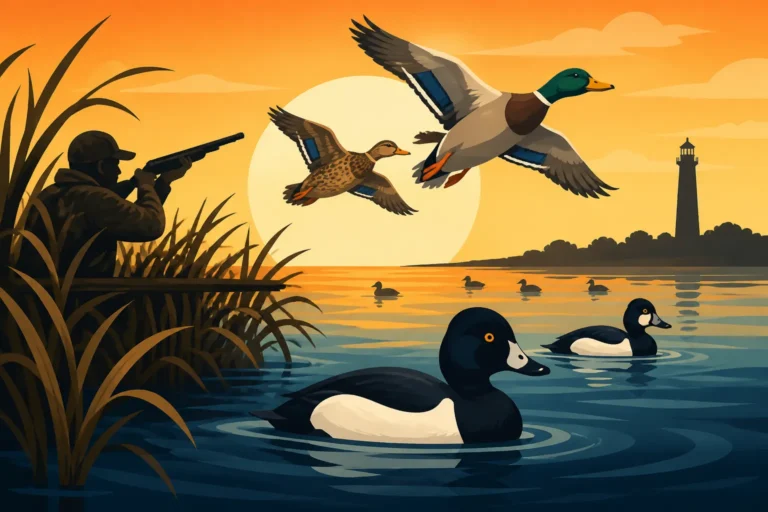
While dabblers are feeding in the shallows, the deep waters of North Carolina's sounds and larger rivers become home to significant numbers of diving ducks. Canvasbacks, redheads, scaup (bluebills), ringnecks, and buffleheads arrive in force, often driven by the freezing over of large northern lakes and bays. These birds dive deep to forage on submerged aquatic vegetation, clams, and other invertebrates. Currituck Sound, Pamlico Sound, and the larger sounds of the Outer Banks are famous for their diver hunting opportunities.
Hunting divers is a different game altogether. It often involves large spreads of specialized diver decoys, stout boats, and a willingness to brave open water and potentially rough conditions. Many hunters on the sounds utilize layout blinds or traditional sink boxes to hunt these wary birds. If you're looking to experience the thrill of diver hunting, learning about Hunting Currituck Sound Diving Ducks is a fantastic starting point. The peak of diver migration usually runs from late November through January, offering some truly epic hunting during severe cold snaps.
The Role of Weather Fronts
For both dabblers and divers, weather fronts are the ultimate game-changer. A strong cold front pushing through the Midwest or Northeast, especially one accompanied by snow or freezing rain, acts like a giant broom, sweeping birds south. This isn't just a gradual trickle; these can be massive pushes of birds arriving in North Carolina within a day or two. Conversely, prolonged periods of mild weather can stall migration, keeping birds further north or scattering them into less predictable patterns.
Hunters should pay close attention to long-range forecasts, not just for North Carolina, but for states further up the flyway. Websites and apps like GoHunt that provide detailed weather overlays and tracking can be invaluable. A sudden dip in temperatures in Ohio or Pennsylvania often means new birds are on their way to our state. These weather events can also cause existing birds to shift their location within the state, moving from open water to more protected areas, or from one feeding ground to another as local conditions change.
Late Season Dynamics: Geese and Winter Holdovers
As the waterfowl season progresses into December and January, the focus often shifts, especially with the arrival of vast numbers of geese and the patterns of those ducks that choose to winter in North Carolina.
Canada Geese: Resident and Migratory Flocks
Just like with wood ducks, North Carolina has a substantial resident population of Canada geese. These birds can be found year-round in agricultural areas, urban ponds, and larger impoundments across the state. They provide consistent hunting opportunities, particularly in the Piedmont and Coastal Plain, where they readily feed on waste grains in cut corn and soybean fields. However, the true spectacle of goose migration occurs when the migratory "honkers" start to arrive from Canada and the northern states.
These larger, often darker-plumaged birds make up significant flocks that can dramatically increase hunting prospects, especially in areas like eastern North Carolina where large agricultural operations provide abundant food. Their arrival is usually later than most ducks, peaking in December and January as severe winter weather grips their northern homes. For hunters, distinguishing between resident and migratory flocks can be tricky, but understanding the patterns of both is essential. Early season opportunities for geese often target these resident birds, as detailed in Early Goose Season Tactics in North Carolina.
Snow Geese and Other Arctic Visitors
While Canada geese are a familiar sight, the sight of thousands of snow geese descending upon a field is something truly spectacular. North Carolina, particularly the vast agricultural expanses of the Coastal Plain, is a major wintering ground for snow geese. These birds breed in the Arctic tundra and undertake one of the longest migrations of any waterfowl species. They typically arrive later in the season, with peak numbers often occurring from late December through February.
Hunting snow geese is a highly specialized pursuit, often requiring massive decoy spreads (hundreds, sometimes thousands, of decoys), electronic calls, and specialized blinds. Beyond snow geese, hunters might also encounter smaller numbers of other arctic visitors like greater white-fronted geese (specklebellies) and brant, especially along the Outer Banks. These provide unique and challenging hunting experiences for those willing to brave the late-season elements.
Targeting Late-Season Concentrations
By the late season, waterfowl have typically settled into their wintering patterns. This means they've often established specific feeding, roosting, and resting areas. Scouting becomes paramount during this time. Birds, especially geese, will stick to reliable food sources, and understanding their daily routines – when they leave the roost, where they feed, and when they return – is crucial. For ducks, open water that doesn't freeze over, coupled with consistent food, will hold birds.
Late season often brings bitter cold, demanding specialized gear and clothing to stay comfortable and effective. This is when layering systems, quality insulated waders, and reliable blind setups truly shine. Hunters should also be aware of North Carolina Waterfowl Zones and Seasons and North Carolina Duck and Goose Bag Limits as regulations can sometimes shift or vary depending on the zone and species. The birds that have made it this far have also seen a lot of hunting pressure, making them incredibly wary. Decoy spreads need to be meticulously arranged, calling needs to be realistic and subtle, and hide needs to be absolute.
Factors Influencing Migration Timing
Waterfowl migration isn't a fixed calendar date; it's a dynamic process influenced by a complex interplay of environmental factors. Understanding these can help hunters better predict bird movements.
Weather Patterns: Cold Fronts and Winter Storms
Undoubtedly, weather is the single biggest driver of waterfowl migration. It's not just about local weather in North Carolina, but also the conditions hundreds or even thousands of miles north. A severe cold front sweeping across the prairie provinces of Canada or the upper Midwest can trigger a mass exodus of ducks and geese south. Freezing temperatures that lock up open water and cover traditional food sources are immediate motivators. Similarly, heavy snowfalls can force birds to move on, seeking areas with accessible food.
On the flip side, mild winters can delay migration significantly, or even cause birds to "short-stop" in states north of North Carolina, meaning fewer birds might push all the way down to our traditional wintering grounds. This is why paying attention to regional weather patterns, not just local ones, is critical. Hunters often use weather apps that provide detailed, long-range forecasts, sometimes even tracking specific weather systems from Canada right down to the Mid-Atlantic.
Food Availability and Habitat Conditions
Even with cold weather, birds won't stay if there's no food. Habitat quality and food availability are enormous factors in where waterfowl decide to stop and, more importantly, stay. In North Carolina, this means everything from waste grain in harvested corn, soybean, and rice fields to the health of submerged aquatic vegetation (SAV) in our coastal sounds and the abundance of acorns in flooded timber. A bumper acorn crop in a particular area might hold wood ducks and mallards longer, while a poor crop could push them to seek food elsewhere.
Changes in agricultural practices, severe droughts or floods that impact natural food production, or even disease outbreaks can all influence where birds choose to concentrate. Our state's Game Lands, managed by the NC Wildlife Resources Commission, often undertake habitat projects like planting specific crops or managing water levels to provide optimal conditions for migrating birds. Hunters often scout these areas, looking for signs of recent feeding, such as shattered corn cobs or clipped vegetation.
Hunting Pressure and Refuge Systems
Birds aren't stupid. They learn quickly where they're safe and where they're not. Intense hunting pressure in certain areas can cause waterfowl to "refuge up" in designated no-hunting zones or large bodies of open water where they feel secure. National Wildlife Refuges and State Game Lands often have sections dedicated as waterfowl sanctuaries. These areas, while off-limits to hunting, are crucial for holding birds in the region.
Understanding where these refuges are, and how birds move off them to feed, can be a major advantage. Waterfowl will often fly predictable patterns from a safe roost to a feeding ground at dawn and dusk. By setting up along these flight paths, or by keying in on fields near refuge boundaries, hunters can capitalize on these movements. Using scouting tools, like the public land layers offered by GoHunt, can help identify these key refuge areas and potential flyways, allowing hunters to set up effectively just outside of them.
Leveraging Migration Knowledge for Hunting Success
Knowing when and why birds move is one thing; putting that knowledge into practice is another. Successful waterfowl hunting hinges on diligent preparation and adaptability.
Scouting and Patterning Migratory Birds
You've heard it a thousand times: "You can't shoot 'em from the couch." This old adage rings especially true for waterfowl. Scouting isn't just a pre-season activity; it's an ongoing commitment throughout the migration. As new birds arrive or conditions change, their patterns will shift. This means spending time driving backroads, using binoculars to glass fields, walking marsh edges, or even running a boat across a sound to observe where birds are feeding and roosting.
Pay attention to flight lines, the specific fields they hit, and the times they typically make these movements. Are they consistently hitting the same cut cornfield every morning? Are they rafted up on a certain part of the sound in the afternoon before flying to a freshwater impoundment to feed at dusk? Patterning these behaviors, even for just a few days, can lead to incredible success. Modern tools, like the mapping and scouting features in GoHunt, can help you mark observations, track bird movements, and identify potential hunting spots, making your scouting efforts much more efficient.
Adapting Tactics to Changing Conditions
Just because something worked last week doesn't mean it will work this week. Waterfowl hunting demands constant adaptation. A new cold front might bring in a fresh batch of birds, but they could be warier than the earlier migrants. A shift in wind direction might change their flight path entirely. A sudden flood could open up new feeding areas that were previously dry.
This means being flexible with your decoy spreads, your calling strategy, and even your blind location. On a windy day, bigger spreads and aggressive calling might be effective to catch attention. On a calm, bluebird day, a smaller, more subtle spread and soft, realistic calling might be better. Sometimes, moving just a hundred yards can put you under a new flight path. Don't be afraid to experiment, and always observe how the birds are reacting to your setup. For instance, if you're hunting diving ducks, your spread might need to change based on the specific species that have moved into How Many Ducks Winter on Currituck Sound.
Using Technology for Real-Time Insights
In today's hunting world, technology is a powerful ally. Beyond basic weather apps, several resources can provide real-time or near real-time insights into waterfowl movements. Duck migration reports from various state agencies and private organizations often track bird numbers, species composition, and habitat conditions across the flyway. Social media groups and forums dedicated to North Carolina waterfowl hunting can offer anecdotal reports from other hunters, though always take these with a grain of salt and verify with your own scouting.
Advanced mapping apps, like the ones offered by GoHunt, allow you to overlay public land boundaries, satellite imagery, and even real-time weather, helping you identify prime habitat and potential hunting spots before you ever set foot in the field. They can also help you understand North Carolina Coastal Duck Zone Rules and other regulations relevant to your chosen hunting area. Combine this digital intelligence with old-fashioned boots-on-the-ground scouting, and you'll be well on your way to a successful season.
North Carolina Waterfowl Migration Table: Peak Activity by Species
| Waterfowl Species | General Peak Migration/Presence | Primary Habitat Preference | Key Indicators of Arrival | Notes |
|---|---|---|---|---|
| Blue-Winged Teal | Early September – Early October | Shallow wetlands, flooded agricultural fields, marsh edges | First significant cold fronts in late Aug | Fast, erratic flyers; short-term visitors. |
| Green-Winged Teal | Late September – Late October | Shallow wetlands, flooded timber, small ponds | Persistent cool weather to the north | Often arrive shortly after blue-wings. |
| Wood Ducks | Early October – Late November | Flooded timber, beaver ponds, swampy creeks | Acorn drop, sustained cool temperatures | Healthy resident population; migrants swell numbers. |
| Mallards & Pintails | Mid-October – December | Flooded fields, shallow impoundments, coastal marshes | Strong cold fronts from the Midwest/NE | Core dabbler species; sensitive to food availability. |
| Gadwall & Wigeon | Late October – January | Shallow marshes, impoundments, open water edges | Freezing temps to the north | Often mix with mallards; prefer aquatic vegetation. |
| Canvasbacks & Redheads | Mid-November – January | Large open water bodies, sounds, deep impoundments | Freezing of northern lakes and bays | Dive for submerged vegetation; wary. |
| Scaup (Bluebills) | Late November – February | Large open water, sounds, deeper coastal bays | Significant winter storms in Great Lakes | Very numerous, especially on coastal sounds. |
| Canada Geese (Migratory) | December – February | Agricultural fields (corn, soy), large impoundments | Severe cold and snow in Canada/NE | Resident populations present year-round. |
| Snow Geese | Late December – February | Large agricultural fields, coastal marshes | Heavy winter in Arctic/Northern Plains | Arrive in massive flocks; specialized hunting. |
Disclaimer
Hunting is an activity that carries inherent risks. Always prioritize safety, understand and follow all North Carolina Wildlife Resources Commission regulations, and obtain proper licensing. This guide is for informational purposes and should not replace official safety courses or legal consultation. Ensure you are familiar with all relevant laws and best practices before engaging in any hunting activities.