Hunting Currituck Sound Diving Ducks
The vast, open waters of North Carolina's Currituck Sound hold a special allure for duck hunters, yet its sheer scale and often unpredictable conditions can make planning a successful hunt feel daunting. Trying to decipher the best strategies for diving ducks amidst its sprawling marshes and open water can leave even seasoned waterfowlers scratching their heads. This comprehensive guide aims to demystify hunting Currituck Sound diving ducks, offering you practical advice on species, gear, tactics, and regulations to help you navigate this iconic waterway with confidence.
Understanding Currituck Sound's Unique Appeal
Currituck Sound, a vast, shallow estuary nestled behind the Outer Banks, is a legendary destination for waterfowl. Its unique ecosystem makes it a magnet for thousands of migrating diving ducks each year, offering a hunting experience unlike any other in North Carolina. But what exactly makes this body of water so special, and why do divers flock to it?
Why Currituck Draws Diving Ducks
Currituck Sound's appeal to diving ducks lies in its bountiful aquatic vegetation and relatively protected waters. While the Atlantic Ocean crashes against the barrier islands to the east, the Sound itself offers a calmer, shallower environment. Historically, its clear, brackish waters teemed with wild celery, sago pondweed, and other submerged aquatic vegetation (SAV) – prime food sources for canvasbacks, redheads, and scaup (bluebills). Even with some changes in water clarity and vegetation over the years, the Sound still retains significant areas that provide crucial forage and loafing grounds for these migratory birds. When strong northeasterly winds blow, the Sound becomes an even more critical refuge, offering shelter from the brutal ocean conditions.
The sheer size of Currituck Sound, stretching over 40 miles long and varying from 3 to 8 miles wide, provides ample space for large rafts of divers. This expansive habitat allows birds to spread out, find secluded loafing areas, and access diverse feeding grounds. Hunters often find themselves scouting immense stretches of water, looking for the tell-tale black blobs on the horizon that indicate a raft of hundreds or even thousands of birds. This scale can be intimidating, but it also speaks to the incredible potential for a memorable hunt.
Shallow Water Dynamics and Feeding Habits
One of the most defining characteristics of Currituck Sound is its shallow depth. Averaging only about 5 feet deep, and much shallower in many areas, this makes it ideal for diving ducks that primarily feed by submerging themselves to reach vegetation or small invertebrates on the bottom. The constant interaction between wind, tide, and fresh/saltwater influences creates dynamic conditions that shift food availability and bird patterns. Strong winds can churn up the bottom, making feeding difficult in some areas, while pushing birds into more protected coves and lee shores.
Understanding these shallow-water dynamics is crucial. Divers on Currituck aren't typically feeding in deep, swift currents like sea ducks might offshore. Instead, they're methodically working shallow flats and bars, often in depths of just a few feet. This means hunters need to pay close attention to water depth, not just for navigating their boats, but for identifying prime feeding zones. A good mapping tool, like those offered by GoHunt, can be invaluable for pinpointing these subtle depth changes and identifying potential areas where submerged vegetation might thrive, even if you can't see it from the surface.
Best Times to Hunt the Sound
The prime time for hunting diving ducks on Currituck Sound generally aligns with the coldest months of the late season. While the early splits might see some resident birds and early migrants, the true spectacle begins when bitter cold pushes birds down from the north. Typically, late November through January offers the most consistent action. This is when the largest concentrations of canvasbacks, redheads, and bluebills have arrived, seeking refuge and food for the winter.
Weather plays a huge role in successful Currituck hunting. Blustery, overcast days with a stiff wind are often preferred, as they tend to keep ducks flying lower and closer to shore, making them more susceptible to decoy spreads. Calm, sunny days can be beautiful on the Sound, but often lead to ducks rafted far offshore, unmoving and uninterested in venturing close to shore. Keep a close eye on the long-range forecast and plan your trips around significant cold fronts and strong winds for the best chances. It's also worth noting that the North Carolina Coastal Duck Zone Rules have specific opening and closing dates, which you'll need to strictly adhere to for a legal hunt.
Key Diving Duck Species to Target
While many species of waterfowl might pass through Currituck Sound, a few diving duck species stand out as the primary targets for hunters. Knowing how to identify them, and understanding their specific behaviors, is key to tailoring your hunting strategy for success.
Bluebills and Redheads: The Sound's Staples
When most hunters think of Currituck diving ducks, bluebills (lesser and greater scaup) and redheads are often the first to come to mind. These birds consistently utilize the Sound, forming large rafts that can cover acres of water. Bluebills are typically a dark-backed duck with white sides, known for their distinctive blue bills. Redheads are recognizable by the reddish-brown head of the drake, contrasting with a gray body, and their similar bill structure to a canvasback but with a rounded head. Both are highly social birds, often found together in large groups.
Hunting bluebills and redheads often involves setting large, visible decoy spreads designed to attract their attention from a distance. They are often less wary than puddle ducks and will commit readily to a well-placed spread, especially on windy days. Their feeding habits focus on submerged vegetation and mollusks, so finding areas with ample food sources is paramount. Look for areas with current or wave action that might dislodge food from the bottom, as these can be hotspot feeding zones. Remember that North Carolina Duck and Goose Bag Limits apply, so be sure to check the current regulations for both daily and possession limits on these popular species.
Canvasbacks and Buffleheads: Other Opportunities
While bluebills and redheads might be the most numerous, the majestic canvasback is often considered the "king of ducks" on Currituck Sound. Drakes are stunning, with a rich reddish-brown head and neck, a black chest, and a brilliant white body. Hens are a more subdued grayish-brown. Canvasbacks are powerful fliers and strong divers, with a distinct wedge-shaped head and long bill. They are highly sought after for their table fare and challenging nature. They typically feed almost exclusively on submerged vegetation, particularly wild celery, and prefer clearer water with abundant food.
Buffleheads, on the other hand, are smaller, compact divers with an oversized head. Drakes are striking with a large white patch behind their eye, contrasting with an iridescent green-purple head and black back. They are incredibly agile fliers, often zipping past blinds at incredible speeds, making them a challenging shot. Buffleheads primarily feed on aquatic insects, crustaceans, and small fish, and are often found in shallower water than canvasbacks, sometimes even in tidal creeks and protected coves. Their distinctive "whistle" in flight is often the first indication of their presence.
Identifying Diving Ducks in Flight and on Water
Accurate identification is not just important for bag limits, but also for refining your hunting strategy. Diving ducks often fly lower and faster than puddle ducks, with rapid wingbeats. On the water, their profile is typically sleek and low.
Here’s a quick comparison of some key characteristics:
| Species | Size | Drake Head Color | Body Color (Drake) | Bill Shape | Key ID Feature | Flight Pattern |
|---|---|---|---|---|---|---|
| Canvasback | Large | Reddish-brown | White | Long, wedge-shaped | Sloping forehead, long bill | Fast, powerful, often in "V" or diagonal lines |
| Redhead | Medium | Reddish-brown | Grayish | Blue-gray with black tip | Rounded head, blue bill with black tip | Fast, often in loose flocks |
| Bluebill | Medium | Black/Iridescent | White (sides) | Blue-gray with black tip | Ring on bill, white speculum | Fast, often in dense flocks, sometimes low over water |
| Bufflehead | Small | Iridescent Green | Black/White | Small, dark | Large white patch behind eye | Erratic, rapid wingbeats, often in small groups |
Practicing identification of these birds by silhouette, flight pattern, and subtle color cues is crucial for making ethical shots and staying within legal limits. Many hunters use a comprehensive hunting app like GoHunt to review species identification guides before and during the season.
Essential Gear and Setup for Sound Hunting
Hunting Currituck Sound for diving ducks isn't like hunting a flooded timber hole. The open water environment demands specific gear and a strategic setup to ensure safety, comfort, and success.
Boats and Motors for Open Water
A reliable boat is non-negotiable for Currituck Sound. Given the shallow depths, persistent winds, and the need to transport decoys and hunters, a sturdy, flat-bottomed boat or a shallow-draft V-hull is generally preferred. Jon boats in the 16-18 foot range, often with a wider beam for stability, are popular. Don't skimp on horsepower; you'll appreciate a motor that can handle chop and get you quickly to and from your spot, especially if the weather turns. A 25-50 HP outboard is common, but ensure your boat is rated for it.
The most critical aspect of boat choice, however, is reliability. The Sound can be unforgiving. You need a motor that starts every time and won't leave you stranded miles from the ramp in freezing temperatures. Regular maintenance is paramount. Additionally, a strong trolling motor with GPS Spot-Lock is a game-changer for precise decoy deployment and blind positioning, allowing you to quietly adjust your spread without firing up the main engine. Having a backup paddle or even a small kicker motor for emergencies is also a smart move, especially when you're Hunting the Outer Banks Marsh and might be far from help.
Specialized Decoys and Rigging for Divers
Diving ducks respond best to large, realistic decoy spreads. Unlike puddle ducks that might finish over a dozen dekes, divers often key in on massive spreads, sometimes numbering in the hundreds, mimicking the large rafts they typically associate with. Investing in good quality, magnum-sized diving duck decoys (especially bluebills, redheads, and canvasbacks) is essential. These larger decoys offer better visibility from a distance, which is critical on such expansive water.
Rigging is equally important. Texas rigs are popular for their quick deployment and retrieval, especially when hunting in shallow water. You'll want heavy weights (at least 4-6 oz) to keep decoys from drifting in strong currents and winds, and longer lines (6-8 feet) to allow for movement and prevent tipping in chop. Another effective method is stringing decoys on long gang lines, often 50-100 feet long, with a heavy anchor at each end. These lines create the illusion of a massive raft and can be deployed quickly from a boat. Consider adding a few confidence decoys, like coots or even a goose, to your spread – sometimes these can make your setup seem more natural and draw in wary birds.
Appropriate Clothing and Waders
Staying warm and dry is paramount on Currituck Sound. The combination of cold water, biting wind, and often freezing temperatures can be brutal. Layering is key, starting with moisture-wicking base layers, insulating mid-layers like fleece or wool, and a waterproof, windproof outer shell. Choose clothing designed for waterfowl hunting – often in drab marsh tones – that allows for a full range of motion. For optimal warmth, consider investing in heated vests or hand warmers that can make those long, cold waits much more tolerable.
Waders are another essential piece of gear. Chest waders made of neoprene or breathable, insulated materials are a must. They not only keep you dry when deploying decoys or wading to a blind, but also provide an extra layer of insulation against the cold. Look for waders with sturdy boots designed for traction in mud and muck. Remember, you might be standing in water for hours, so comfort and insulation are crucial. Don't forget waterproof gloves, a warm hat that covers your ears, and a facemask to protect against windburn.
Decoying and Calling Strategies
Successfully luring diving ducks on Currituck Sound requires understanding their behavior and employing strategies tailored to their open-water tendencies. It's often less about intricate calling and more about visual appeal.
Spreading Decoys for Diving Ducks
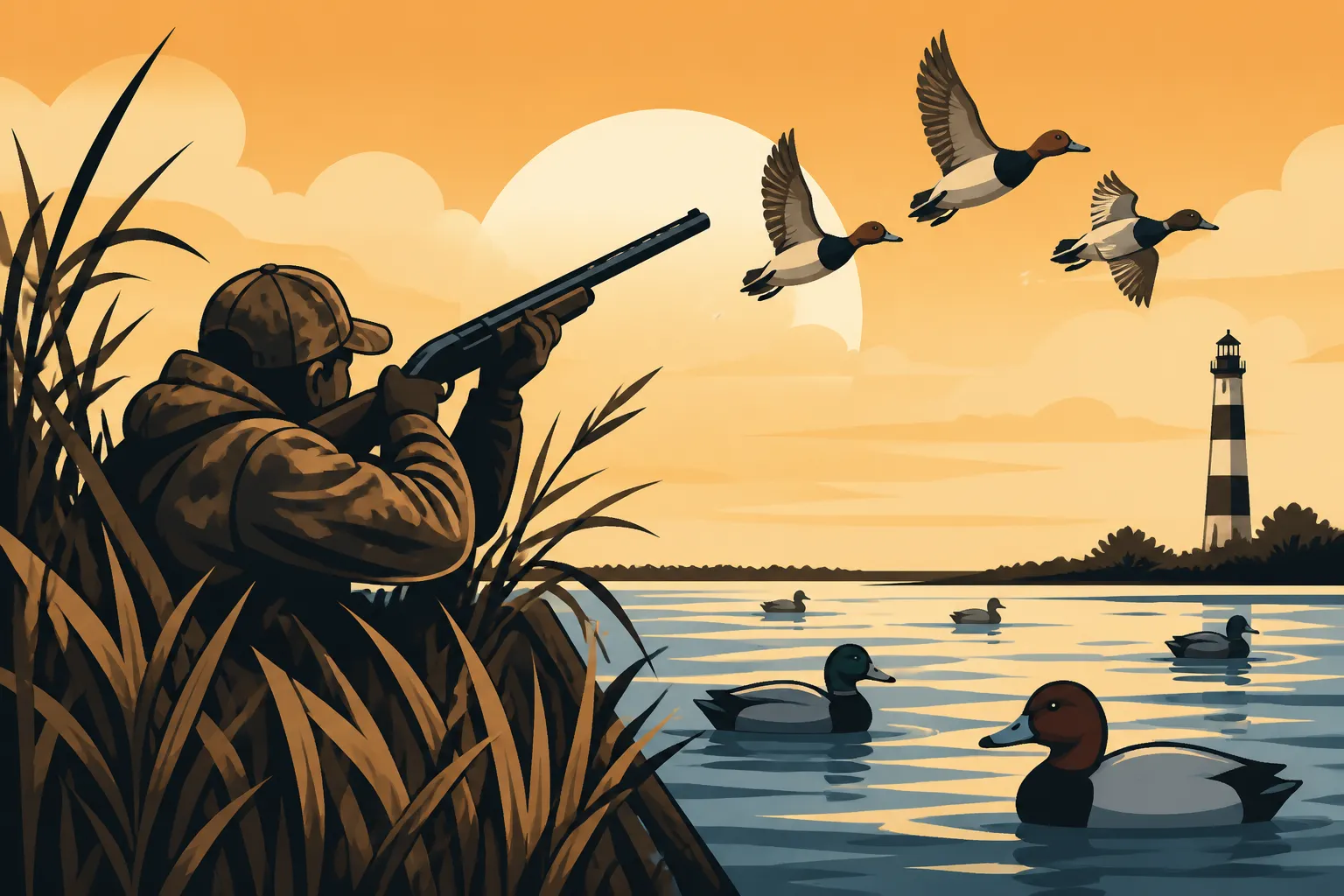
The general rule for diving duck spreads is "bigger is better." Divers are attracted to numbers, so aim for as many decoys as you can realistically deploy and retrieve. A typical spread for Currituck might involve 50-100 decoys, but some hunters go much larger. The layout is also crucial. Instead of tight, natural-looking groups like for puddle ducks, divers often prefer a more open, "J" or "U" shaped spread. The open pocket within the J or U is where you want the ducks to land, directly in front of your blind.
Consider the wind direction. Diving ducks, like most waterfowl, prefer to land into the wind. Set your spread so that the open "landing zone" is downwind from your blind, forcing birds to cup their wings and fly directly into your shooting lane. Spacing between decoys should be a little wider than for puddle ducks, giving the appearance of a relaxed raft. You might have several "pods" of 10-20 decoys, connected by longer lines, to create a massive, spread-out effect. This helps birds spot your setup from a distance and feel safe enough to commit.
The Role of Confidence Decoys
While diver decoys are the backbone of your spread, adding "confidence decoys" can significantly enhance its realism and pulling power. These are decoys of species that commonly associate with diving ducks or simply add to the impression of a safe feeding area. Coots are perhaps the most common confidence decoy used in diving duck spreads. Their dark bodies contrasting with a white bill are highly visible, and they are almost always found loafing or feeding alongside divers. Placing several coot decoys around the edges of your diver spread, or even creating a separate small raft of coots, can make your setup much more convincing to wary birds.
Another effective confidence decoy, especially in areas where geese are present, can be a few Canada goose floaters. Geese are often seen resting in the same shallow areas as diving ducks, and their large size makes them highly visible. The presence of geese suggests a safe, undisturbed area, which can encourage ducks to land. Remember, the goal is to create an irresistible invitation, and varied, realistic additions can play a significant role. For detailed scouting information to help you pinpoint areas where these species naturally congregate, platforms like GoHunt can provide valuable insights into habitat and bird movement.
Minimalist Calling for Divers
Unlike puddle duck hunting, where a variety of quacks, feeds, and chatter can be effective, calling for diving ducks is generally more minimalist. Divers are typically less vocal than puddle ducks, and over-calling can often spook them. The most effective calls for divers are usually short, sharp "purrs" or low "growls" that mimic the contented sounds of feeding ducks. For bluebills, a short, sharp "bbrrrtt" sound, often made with a standard duck call, can be effective. Redheads have a distinctive "meow" or cat-like call, which can be replicated with specialized calls.
The timing of your calls is also critical. Focus on calling to birds that are still at a distance, trying to get their attention and turn them towards your spread. Once they are locked in and coming, it's often best to go silent or use very subtle calls. Let the visual appeal of your large spread do the work. If birds start to flare, a soft, reassuring call might turn them, but aggressive calling is usually counterproductive. Often, the sound of the wind, the splashing of your decoys in the chop, and the sheer numbers of your spread are more effective than any call you can make.
Navigating Regulations and Access
Hunting Currituck Sound involves a specific set of rules and access considerations that every hunter must understand before heading out. North Carolina has clear regulations designed to manage waterfowl populations and ensure safe, fair hunting.
North Carolina Coastal Duck Zone Rules and Seasons
Currituck Sound falls within North Carolina's Coastal Duck Zone, which has specific season dates and bag limits that can differ from the Inland Zone. It's absolutely crucial to consult the current North Carolina Inland Fishing, Hunting and Trapping Regulations Digest each year, as dates and rules can change. This digest, published by the North Carolina Wildlife Resources Commission (NCWRC), is your definitive guide. You'll find sections on North Carolina Waterfowl Zones and Seasons and North Carolina Coastal Duck Zone Rules that detail the open seasons for various duck species, including separate segments for early teal, regular duck season, and late goose seasons.
Beyond season dates, pay close attention to shooting hours, which are typically from one-half hour before sunrise until sunset. Also, be aware of specific regulations regarding legal methods of take, such as gauge restrictions for shotguns (typically 10-gauge or smaller) and the requirement for plugs to limit shotguns to a three-shell capacity. Non-toxic shot is mandatory for all waterfowl hunting, so be sure you're using steel, bismuth, or other approved alternatives. For those using an app like GoHunt, these regulations are often integrated, offering quick access to vital information in the field.
Public vs. Private Access on Currituck
Access to Currituck Sound can be a mix of public and private opportunities. The Sound itself is public water, meaning you can navigate and hunt most areas, provided you are not trespassing on private land or within a private hunting club's lease. However, many of the prime marsh islands, shorelines, and productive shallow flats are privately owned or leased by hunting clubs. Identifying these boundaries is critical to avoid legal issues. Tools like the NCWRC's Game Lands map or premium mapping apps can display property lines and public access points.
There are also several designated public hunting areas, often managed by the NCWRC or U.S. Fish and Wildlife Service, such as the Currituck National Wildlife Refuge. These areas usually have specific regulations, permit requirements, and sometimes even blind draw systems for access. For example, some blinds might be available on a first-come, first-served basis, while others require a lottery application. Always research the specific rules for any public area you plan to hunt well in advance. Consider topics like North Carolina Wildlife Cooperator Land Access if you are looking for other managed areas.
Permits, Stamps, and Reporting Requirements
Before you even step foot on the Sound, you need to ensure all your licenses and stamps are in order. For waterfowl hunting in North Carolina, you'll need:
- A valid North Carolina hunting license: This is your base requirement.
- North Carolina Waterfowl Privilege: An additional privilege needed for waterfowl.
- Federal Migratory Bird Hunting and Conservation Stamp (Federal Duck Stamp): This is required for anyone 16 years or older.
- North Carolina Migratory Bird Hunting Certification (HIP Certification): Required for all migratory bird hunters, regardless of age.
You can purchase most of these through the NCWRC website, licensed agents, or via phone. It's a good idea to buy them well in advance to avoid any last-minute issues. Beyond licenses, you must report your harvest. The NCWRC requires all harvested deer, turkeys, and bear to be reported, but it's equally important to understand any harvest reporting requirements for migratory birds if they become mandatory or are part of a specific research effort. Ensure you complete your North Carolina Migratory Bird Certification annually.
Safety Considerations on Open Water
Hunting on Currituck Sound can be an incredible experience, but the open water environment, especially in cold weather, presents unique safety challenges. Ignoring these can lead to serious, even life-threatening, situations.
Weather and Wind Awareness
The weather on Currituck Sound can change dramatically and rapidly. What starts as a calm, frosty morning can quickly turn into a howling gale with dangerous whitecaps in a matter of hours. The vast, shallow nature of the Sound means that even moderate winds can quickly create significant chop, making navigation difficult and dangerous, especially in smaller boats. Always check the marine forecast before heading out, and continually monitor conditions throughout the day. Be aware of wind direction and strength, as well as impending cold fronts or precipitation.
If the forecast looks dicey, it's always better to err on the side of caution and stay home. No duck hunt is worth risking your life. If you do go out and conditions worsen, don't hesitate to pull your decoys and head back to the ramp. Having a reliable weather app on your phone or a marine radio is crucial. Strong winds can also impact how you set your Decoy Spreads for Currituck Sound Divers, making it harder to anchor effectively.
Boat Safety and Emergency Preparedness
Your boat is your lifeline on the Sound, so ensure it's equipped with all necessary safety gear. This includes:
- Life Jackets (PFDs): Absolutely everyone on board must have a wearable PFD, and children must wear them at all times. Consider wearing an inflatable PFD yourself, especially when setting decoys or in rough conditions.
- Throw Cushion/Ring: For emergency retrieval.
- Sound-Producing Device: A whistle or horn to signal.
- Visual Distress Signals: Flares or an electronic signal light.
- Fire Extinguisher: For engine fires.
- Navigation Lights: If hunting before sunrise or after sunset.
- Anchor and Sufficient Line: For holding position in wind or emergencies.
- Bailer or Bilge Pump: To remove water.
- First-Aid Kit: Stocked for cold-weather injuries and general emergencies.
- Tools and Spare Parts: Basic tools, spare spark plugs, and an emergency repair kit for your motor.
- Communication Device: A fully charged cell phone (in a waterproof bag) and ideally a marine VHF radio.
Always tell someone your float plan – where you're going, when you expect to be back, and who is with you. If you hunt alone, this is especially critical. The cold water poses a significant hypothermia risk, so dress in layers and consider a survival suit if conditions are extreme.
Retrieving Birds in Open Water
Retrieving downed birds in open water can be surprisingly challenging and even dangerous. A strong current or stiff wind can quickly carry a bird out of reach. This is where a well-trained retriever truly shines, minimizing the need for dangerous boat maneuvers in rough water. If you don't have a dog, carefully plan your approach to a downed bird, keeping wind and current in mind. Never attempt to retrieve a bird if it means putting yourself or your boat in a dangerous situation. It's always better to lose a bird than to capsize your boat or put yourself in hypothermia's grasp.
When approaching a bird, always do so into the wind to minimize boat drift. Have a long pole or net handy for retrieving. Be especially careful when reaching over the side of the boat, as stability can be compromised. Always wear your PFD when retrieving birds, and ensure others in the boat are also wearing theirs. The exhilaration of a successful hunt can sometimes make us less cautious, but remembering that safety is paramount will ensure you return home to tell the tale.
Disclaimer
Always consult the current North Carolina Inland Fishing, Hunting and Trapping Regulations Digest for the most up-to-date information on seasons, bag limits, and licensing requirements. Hunting regulations can change annually, and it is the hunter's responsibility to know and follow all applicable laws.