Wild Turkeys in North Carolina
For many of us who cherish the outdoors, there's nothing quite like the sound of a distant gobble echoing through the North Carolina woods on a crisp spring morning. Yet, understanding these elusive birds—where they live, how they behave, and what makes them tick—can feel like trying to solve a complex puzzle. This comprehensive guide is designed to peel back the layers of mystery surrounding wild turkeys in North Carolina, providing you with the deep, localized insights you need to truly appreciate and pursue these magnificent game birds.
The Resurgence of Wild Turkeys in North Carolina
It's a story of triumph, really, when you look at how far wild turkeys have come in North Carolina. Not so long ago, hearing a gobble was a rarity, a whispered legend from an older generation. Now, thanks to dedicated efforts, these birds are thriving across the state, bringing excitement back to our spring woods.
A History of Decline and Restoration
It's hard to believe, but at one point, wild turkeys were virtually gone from North Carolina. Unregulated hunting in the late 1800s and massive habitat loss from widespread timbering practices pushed them to the brink. By the early 20th century, their numbers were so critically low that many thought they might never recover. Can you imagine the quiet woods without that booming call? It truly was a bleak time for our state's wild turkey populations.
Thankfully, the North Carolina Wildlife Resources Commission (NCWRC), along with conservation partners, stepped in with a monumental effort to bring them back. Starting in the 1950s and really picking up steam in the 1970s, they initiated trap-and-transfer programs. This involved capturing wild turkeys from healthy populations in other states or isolated pockets within North Carolina and releasing them into suitable, unoccupied habitats across the state. This wasn't just dumping a few birds; it was a carefully planned, scientific endeavor that continued for decades. If you’re interested in the nuts and bolts of how this incredible comeback happened, you should check out the detailed story of How Turkeys Were Restored to North Carolina.
These efforts slowly but surely paid off. Imagine the dedication: biologists and technicians spending countless hours in the field, setting up rocket nets, relocating birds, and then monitoring their progress. It was a long, arduous process, but their persistence created the foundation for the healthy turkey populations we enjoy today. Without that vision and hard work, our spring woods would be a much quieter, less exciting place.
Current Population Trends and Distribution
Today, North Carolina boasts a thriving wild turkey population, estimated to be well over 200,000 birds. This is a far cry from the mere thousands that existed during their lowest point. The birds are now found in all 100 counties, which is a testament to the success of those restoration efforts and the adaptability of the Eastern wild turkey. It’s truly amazing to see how they’ve recolonized so much of our state.
While turkeys are widespread, their distribution isn't entirely uniform. You'll find higher densities in certain regions, often tied to habitat quality and food sources. The Piedmont and Coastal Plain generally hold the highest concentrations, particularly in areas with a mosaic of mature timber, agricultural fields, and river bottomlands. These areas provide an abundance of food, nesting cover, and roosting sites. If you’re curious about the overall health and numbers, the North Carolina Turkey Population Trends data from the NCWRC offers some fascinating insights into their continued growth and regional distribution.
Even the mountain regions, with their steep terrain and dense forests, now support robust turkey populations, though perhaps in more localized pockets. Hunters in the Blue Ridge can expect to find birds, especially in areas with good mast crops and open understories, which are crucial for foraging and bugging. The consistent success across such diverse landscapes really highlights the adaptability of these incredible birds.
Subspecies Found in North Carolina
When we talk about wild turkeys in North Carolina, we're almost exclusively talking about the Eastern wild turkey (Meleagris gallopavo silvestris). These are the most widely distributed subspecies across the eastern half of the United States, and they're the only ones native to our state. You won't find Osceolas, Merriam's, Rio Grandes, or Goul's turkeys strutting through our woods; those are found in other parts of the country.
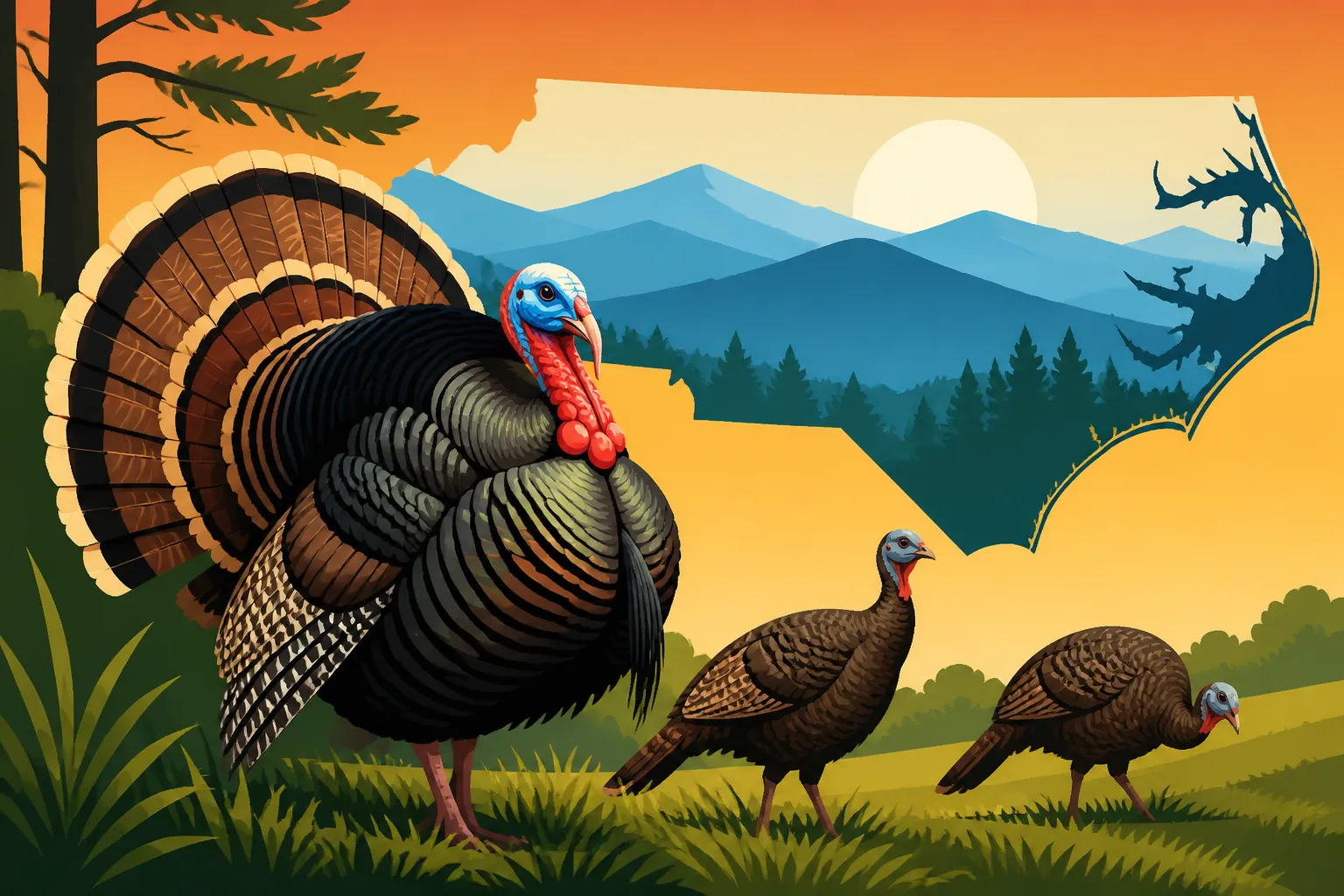
The Eastern wild turkey is renowned for its vibrant iridescent plumage, displaying hues of red, green, copper, and bronze when caught in the sunlight. Their tail feathers are tipped with a rich chestnut brown, and mature gobblers sport impressive beards, spurs, and bright red, white, and blue head coloration during the spring breeding season. They are truly magnificent birds to behold, especially when fully fanned out, putting on a show for the hens.
These birds are also known for their diverse vocalizations, from the classic gobble that gets our hearts racing to clucks, yelps, purrs, and putts. Each call has a meaning, and learning to mimic them is a crucial part of turkey hunting. While they might all look similar to the untrained eye, each gobbler has its own unique cadence and timber, much like human voices. They're intelligent and wary creatures, making them a worthy adversary for any hunter.
Understanding North Carolina Turkey Behavior
To consistently find and successfully hunt wild turkeys, you really need to get inside their heads, or at least understand their daily and seasonal routines. Their lives are dictated by instinct, food sources, and the need to reproduce, all shaped by the unique North Carolina environment.
Seasonal Movement and Habitat Preferences
Wild turkeys are creatures of habit, but their habits shift dramatically with the seasons. In spring, it’s all about breeding. Gobblers become vocal and visible, strutting incessantly to attract hens. You’ll find them in more open areas like field edges, logging roads, and ridge tops where they can display easily and be heard from a distance. Hens will be seeking out dense cover for nesting, often in brushy areas, thickets, or young timber where they can hide their eggs from predators.
As summer arrives, after the eggs hatch, hens and their poults will shift their focus to insect-rich habitats like agricultural fields, pastures, and regenerating clear-cuts. Young poults need a high-protein diet to grow quickly, and bugs provide just that. Gobblers, having finished their breeding duties, often form small bachelor groups and seek out cooler, shadier areas, often near water sources, to feed and recuperate. This is also when they'll molt, losing their old feathers and growing new ones, making them less vibrant for a short period.
Come fall and winter, turkeys regroup into larger flocks, often separating by sex. Hens and poults will form large family groups, while gobblers may form their own bachelor groups, though these are typically smaller than the spring breeding aggregations. Their diet shifts to hard mast like acorns, hickory nuts, and beech nuts, so you’ll find them concentrating in mature hardwood forests. They’ll also browse on various seeds and greens, constantly moving to find the most abundant food sources. Understanding these shifts is absolutely critical; what works in April won't necessarily work in November.
Roosting Habits and Preferred Trees
Turkeys are known for their strong roosting habits, flying up into trees to spend the night safely away from ground predators. This behavior is a cornerstone for many hunting strategies, especially in the spring. They typically fly up an hour or so before dark and fly down around dawn. The choice of roost tree isn't random; they prefer tall, sturdy trees with strong horizontal limbs that offer good visibility and protection.
In North Carolina, you’ll often find them roosting in mature pines, especially those in river bottomlands or along ridge lines. Large hardwoods like oaks and poplars are also common choices. They often favor trees near a water source or overlooking an open field, giving them a clear view of their surroundings as they fly down. Learning to identify these potential roost sites is a game-changer. For a deeper dive into what makes a good roost tree and how to find them, be sure to check out North Carolina Turkey Roost Tree Preferences.
One interesting aspect is that turkeys will often use the same roosting areas consistently, especially if they feel safe and food sources are nearby. However, they can and will change roosts if disturbed, if weather conditions change dramatically, or if they’ve depleted the food in a particular area. A good hunter pays attention to these patterns and adapts. Utilizing tools like GoHunt’s mapping features can help you mark potential roost trees and observe flight paths over multiple scouting trips, giving you a distinct advantage in predicting where birds will be.
Diet and Foraging Patterns
Wild turkeys are opportunistic omnivores, meaning they'll eat just about anything they can get their beaks on, depending on availability. Their diet is incredibly varied and changes throughout the year, directly influencing where you'll find them. In spring and summer, insects like grasshoppers, crickets, beetles, and ants are crucial, especially for growing poults. They also consume fresh greens, seeds from various plants, and small fruits.
As fall approaches, hard mast becomes the primary driver of their diet. Acorns, from various oak species, are a staple, providing essential energy for winter. Beech nuts and hickory nuts are also highly prized. They'll spend hours scratching through leaf litter in mature hardwood forests, searching for these nutrient-rich foods. If a particular area has a bumper crop of acorns, you can bet turkeys will be in that vicinity.
Beyond mast, turkeys will also forage in agricultural fields after crops have been harvested, picking up leftover corn, soybeans, or wheat. They’ll also eat berries, grapes, and other soft mast when available. Understanding these foraging patterns is key to scouting. If you know what they’re eating, you’ll have a much better idea of where to set up your ambush. It's all about connecting the dots between food, water, and cover throughout the seasons.
Reproduction and Poults in the Tar Heel State
The annual cycle of reproduction is the driving force behind many turkey behaviors and population dynamics. For North Carolina’s wild turkeys, successful breeding and poult survival are critical for the health and future of the flock.
The Spring Breeding Cycle
The spring breeding cycle is what every turkey hunter lives for. It typically kicks off in late March or early April in North Carolina, though it can vary slightly by region and weather conditions. As daylight hours lengthen, gobblers' hormones surge, leading to increased gobbling, strutting, and aggressive displays. They're essentially putting on a show to attract receptive hens, using their impressive plumage and vocalizations to signal their dominance and fitness.
Hens, in turn, become receptive and will seek out these strutting gobblers. After breeding, the hen will begin searching for a suitable nesting site. This period of intense gobbling and strutting usually peaks in mid-April, which conveniently aligns with much of North Carolina's spring turkey season. However, understanding that birds will still gobble after the peak, especially lone "lonely" gobblers, is important for hunters extending their season into May.
Once a hen has been bred, her focus shifts entirely to nesting. She'll typically lay a clutch of 10-12 eggs over a period of about two weeks, laying one egg every other day. During this time, gobblers might still be attempting to breed, often finding themselves with fewer and fewer available hens as more start sitting on nests. This can lead to a period where gobblers become a bit more responsive to calls, as they're actively seeking companionship.
Nesting and Brood Rearing Success
Nesting success is paramount for maintaining healthy turkey populations. Hens prefer secluded spots with dense vegetation that offer excellent camouflage from predators. Think thickets, briar patches, tall grasses, or areas of regenerating timber. The goal is to lay eggs in a spot where a predator is unlikely to stumble upon the nest, as well as one that provides cover for the hen as she incubates. She'll sit on the nest for about 28 days, only leaving briefly to feed and drink.
Once the poults hatch, the hen leads them away from the nest within a day or two. The first few weeks of a poult's life are the most vulnerable. They are susceptible to cold, wet weather and a myriad of predators. Brood survival is heavily influenced by weather conditions during the hatch and the availability of good brooding habitat—areas with abundant insects and cover, allowing poults to feed and hide easily. A warm, dry spring generally means a good hatch and higher poult survival. The NCWRC closely monitors Poult-to-Hen Ratios and What They Mean to gauge reproductive success, which gives biologists insights into the overall health of the turkey population.
If a hen's first nest fails due to predation, human disturbance, or other factors, she may attempt a "re-nest." These re-nests typically have fewer eggs and often occur later in the season. Successfully raising a brood to adulthood is a challenging feat for a hen, requiring constant vigilance against predators and the ability to find sufficient food and cover.
Predator Impact on Turkey Populations
While weather and habitat play huge roles, predation is a constant threat to wild turkeys, especially to nests and young poults. North Carolina is home to a wide array of predators that view turkey eggs and young birds as easy meals. Raccoons, opossums, skunks, and snakes are notorious nest predators, capable of wiping out an entire clutch of eggs in short order. It's one of the tough realities of life in the wild for turkeys.
Once poults hatch, the list of threats grows. Coyotes, bobcats, foxes, and even certain raptors like great horned owls and hawks will prey on young turkeys. While adult turkeys are much more resilient, even they can fall victim to larger predators like coyotes, especially when sick, injured, or during harsh winter conditions. If you're keen to learn more about the broader predator landscape in our state, the information on Coyotes and Predators in North Carolina offers some context regarding the animals sharing the turkey's habitat.
However, it's important to understand that predation is a natural part of the ecosystem. Healthy turkey populations can generally withstand a certain level of predation, as long as good habitat provides ample nesting and brooding cover. The NCWRC manages predator populations and habitats to ensure a balance, recognizing that a diverse ecosystem supports a healthy turkey population in the long run. Hunters play a role too, by being mindful of nest sites and limiting disturbance during the critical nesting period.
Key Hunting Considerations for North Carolina Turkeys
Hunting wild turkeys in North Carolina is a deeply rewarding pursuit, but it's one that requires preparation, knowledge, and a healthy respect for the bird. From understanding where you can hunt to knowing the rules, there's a lot to consider before heading into the spring woods.
Public Land Opportunities and Challenges
North Carolina offers a significant amount of public land accessible to turkey hunters, primarily through our vast system of game lands and national forests. These include major tracts like Pisgah National Forest, Nantahala National Forest, Croatan National Forest, and Uwharrie National Forest, all of which hold huntable populations of turkeys. Finding Public Hunting Land in North Carolina is easier than ever with online maps and resources. These areas offer incredible opportunities for those willing to put in the effort.
However, hunting public land comes with its own set of challenges. Pressure from other hunters can be significant, especially during opening weekend and on easily accessible tracts. Turkeys on public land are often "educated" birds, meaning they've heard it all before and are much warier of calls and human presence. This means you’ll need to work harder, scout more thoroughly, and often hike deeper to find less pressured birds. Utilizing mapping applications like those offered by GoHunt can be invaluable for identifying remote access points, scouting potential roost sites, and locating hidden pockets of habitat away from the crowds.
Effective public land hunting often involves extensive preseason scouting. You need to locate roost sites, strutting zones, and feeding areas. Look for tracks, droppings, and scratch marks in the leaves. Being patient, adaptable, and willing to cover ground are essential qualities for success on public lands. Don't be afraid to try different tactics and call less aggressively than you might think necessary. For detailed guidance on getting started, Scouting North Carolina Public Land Before Season is an excellent resource to help you find those honey holes.
Private Land Access and Management
While public land offers great opportunities, a significant portion of North Carolina's best turkey habitat lies on private land. Gaining permission to hunt private tracts can be a game-changer, as these areas often experience less pressure and can hold more consistent turkey populations. Building relationships with landowners is key here. It often starts with a polite knock on the door, a respectful conversation, and an offer to help with chores or provide something in return for access.
Once you have permission, effective private land management can dramatically improve your hunting success. Landowners can implement habitat improvements specifically designed to benefit turkeys. This might include planting food plots with clover or chufa, conducting prescribed burns to enhance understory growth and insect populations, or thinning timber to create better strutting and foraging areas. These efforts not only benefit turkeys but often a host of other wildlife species as well.
Remember, when hunting private land, you are a guest. Always adhere to the landowner's rules, be respectful of their property, and leave the area better than you found it. Offering to share some of your wild game or simply saying thank you goes a long way in maintaining that valuable relationship. Many of our local Piedmont counties, rich in agricultural lands and timber, offer fantastic private land turkey hunting if you can secure access.
Understanding North Carolina Turkey Season Rules
Before you even think about hitting the woods, it’s absolutely vital to be intimately familiar with North Carolina’s specific turkey hunting regulations. These rules are designed to manage the population sustainably and ensure fair chase. The spring turkey season typically kicks off in early April for the statewide opener, but there’s also a special youth-only weekend that precedes it, usually in late March. Understanding the specific dates and zones is critical to staying legal. The North Carolina Spring Turkey Season Rules document from the NCWRC is your bible for all the official dates and regulations.
Key regulations include bag limits: typically, hunters are allowed two bearded turkeys per season. However, there are nuances, especially concerning the youth season. For instance, if a youth hunter harvests a turkey during the youth-only weekend, that bird counts toward their two-bird season limit. This is especially important for young hunters and their mentors to understand to avoid any violations. Details for our younger hunters can be found in North Carolina Youth Turkey Weekend Rules.
Don't forget the reporting requirements. In North Carolina, all harvested turkeys, like deer, must be reported to the NCWRC. This can usually be done quickly and easily online or via the agency's mobile app. Reporting helps biologists collect crucial data on harvest trends, which in turn informs future management decisions. Failing to report a harvest is a violation, so make it a habit as soon as you get your bird out of the woods.
Regional Turkey Hotspots and Their Characteristics
North Carolina is a geographically diverse state, and just like deer, turkey behavior and habitat vary significantly from the mountains to the coast. Knowing these regional differences can greatly inform your hunting strategy.
Mountain Zone Turkey Hunting
Hunting turkeys in North Carolina's Mountain Zone is a unique challenge and a truly rewarding experience. The rugged terrain, steep slopes, and vast expanses of mature hardwoods and conifer forests require a different approach than the flatter regions. Here, turkeys often follow contour lines, using benches, saddles, and ridge lines for travel and strutting. They'll gobble from high points, allowing their calls to carry further across the valleys.
The key to success in the mountains often lies in being in prime position before the birds fly down from the roost. Locating a gobbler on the roost the evening before, then executing a quiet, strategic approach in the dark, can be incredibly effective. Once on the ground, turkeys might be harder to pinpoint, as they can quickly disappear into thick rhododendron or laurel thickets. Using terrain to your advantage, such as calling from an opposing ridge to draw a bird across a hollow, is a common tactic. Areas within the Pisgah and Nantahala National Forests, particularly those with good mast crops and a mix of open and dense timber, are prime spots.
Calling in the mountains requires a nuanced approach due to the echoes and sound-deadening effects of the terrain. Sometimes less is more, with softer purrs and clucks being more effective than aggressive yelping, especially if the bird is close. Patience is also a virtue; mountain gobblers might travel significant distances or take their time to commit, so don't give up too quickly if a bird goes quiet.
Piedmont Zone Turkey Hunting
The Piedmont Zone, with its rolling hills, mixed forests, and abundant agricultural lands, often boasts some of the highest turkey densities in North Carolina. This region presents a different set of challenges and opportunities. Private land dominates, so securing permission is often the biggest hurdle. Once access is granted, hunters can capitalize on the patchwork of timber blocks, creek bottoms, and crop fields that turkeys absolutely love.
In the Piedmont, turkeys frequently use field edges for strutting and feeding, especially in the mornings. Setting up along a field edge, or in a timber strip bordering one, can be a highly effective tactic. Birds will often roost in mature hardwoods or pines along creek drainages, then fly down into fields or adjacent woods to begin their day. Calling can be more aggressive here, as the terrain doesn't absorb sound as much as in the mountains, but always be mindful of hunting pressure. Tactics for hunting specific habitat features like Turkey Tactics for Piedmont Field Edges can provide valuable insights.
Road hunting is common in the Piedmont, but often a deeper penetration into the woods on private or smaller public tracts will lead to less pressured birds. Look for areas where timber transitions into fields, or where food plots are maintained. The mosaic of habitat provides ample food and cover, making the Piedmont a fantastic, albeit often private, turkey hunting destination.
Coastal Plain and Sandhills Turkey Hunting
The Coastal Plain and Sandhills regions of North Carolina offer another distinct turkey hunting experience. Here, the landscape is generally flatter, dominated by pine plantations, vast swamps (known as pocosins), and river bottoms. Turkeys in these areas adapt to their surroundings, often roosting in tall pines along swamp edges or river corridors and foraging in pine stands, cut-overs, and agricultural fields.
Hunting in the Coastal Plain often involves negotiating wet terrain, particularly in areas near river systems or in the extensive pocosin swamps. Rubber boots or even waders can be essential, especially after heavy rains. Turkeys in these areas tend to be less vocal on the roost but can become quite active once on the ground. They'll travel along old logging roads, power lines, and the edges of thick cover. Finding good clearings or openings where they can strut is key.
The Sandhills, characterized by its longleaf pine savannas, presents its own unique habitat. Here, turkeys thrive in the open pine woods with a sparse understory, often created by prescribed fire. They'll use these open areas for feeding and strutting, making them visible from a distance. The key to success in both the Coastal Plain and Sandhills is often covering ground, listening intently, and adapting your calling to the specific environment—sometimes subtle, sometimes aggressive, depending on the bird and the cover.
Gear and Tactics for North Carolina Gobblers
Hunting turkeys isn't just about showing up; it's about having the right tools and knowing how to use them. From your shotgun to your calls, every piece of gear and every tactical decision plays a role in your success.
Essential Gear for Spring Turkey Hunting
A successful spring turkey hunt starts with having the right equipment. First and foremost is your shotgun. While any shotgun can technically kill a turkey, a dedicated turkey gun, often a 12-gauge or 20-gauge, with a tight choke (like an extra-full or super-full) and capable of shooting specialized turkey loads, significantly increases your effective range and pattern density. Understanding Turkey Shotguns and Chokes is crucial for ensuring you can deliver a lethal shot at typical turkey ranges.
Beyond the shotgun, a good array of calls is essential. This includes a mouth call (diaphragm call) for hands-free calling, a slate or pot call for versatile sounds, and perhaps a box call for loud, attention-grabbing yelps. Decoys, typically a hen or jake decoy, can also be highly effective in drawing a gobbler into range, especially on private land or less pressured public land. Don't forget a comfortable turkey vest to carry all your gear, keep you organized, and provide a padded seat for long waits.
Other essentials include binoculars for scouting and identifying birds from a distance, a rangefinder to confirm shot distances, camouflage clothing to break up your silhouette, and comfortable, waterproof boots, especially in North Carolina's often damp spring woods. A good headlamp for walking in and out in the dark, and a small first-aid kit, should always be in your pack. Thinking through all these details beforehand can really make or break a hunt.
Calling Strategies for Pressured Birds
Hunting pressured turkeys on North Carolina public land or in areas with heavy hunting activity requires a nuanced and often conservative calling approach. These birds have heard it all: the aggressive cuts, the constant yelps, the excited gobblers. They've likely seen decoys and had bad experiences. Therefore, less is often more. Start with soft, subtle calls – quiet clucks, purrs, and soft yelps. The goal is to sound like a natural hen going about her day, not an overeager, desperate one.
Patience is paramount. Instead of trying to force a bird to come in, try to pique its curiosity just enough to make it want to investigate. Set up in a good location, call softly, and then go quiet for longer periods, listening intently for the bird's response. Sometimes, letting the woods go silent for 15-20 minutes after an initial soft calling sequence is all it takes for a wary gobbler to decide it's safe to investigate. Using a mapping app like GoHunt to analyze terrain and potential travel corridors can help you pick a spot where a bird has to come around a bend or over a rise, making it feel more natural.
If a gobbler hangs up out of range, resist the urge to immediately hit him with aggressive calls. Instead, try changing calls (from a mouth call to a slate, for example) or switching to different hen vocalizations. Sometimes a very soft, confident cluck is all it takes to tip a stubborn bird over the edge. If he still won't budge, consider a "run-and-gun" approach, moving to a new setup spot to try and get ahead of him, which is a tactic often employed effectively on public lands. More strategies for this mobile style of hunting can be found by researching Run-and-Gun Turkey Tactics on Public Land.
Decoy Placement and Setup
Turkey decoys can be incredibly effective, but their placement and setup are crucial. The goal is to make them look as natural as possible and to position them to draw the gobbler into your effective shooting range. For most scenarios, a single hen decoy or a jake/hen combination works well in North Carolina. A full-strut gobbler decoy can be highly aggressive and effective on dominant birds, but it can also intimidate smaller gobblers or draw in other hunters, so use it with caution, especially on public land.
Position your decoys so that a gobbler approaching them will present a broadside or slightly quartering-away shot at your ideal range (e.g., 20-30 yards). If using a jake or full-strut gobbler decoy, place it facing away from your position. This forces the real gobbler to circle the decoy to challenge it, giving you a better shot opportunity as he focuses on the fake bird. Always set your decoys facing into the wind, if possible, as birds typically land and approach into the wind.
Safety is paramount when using decoys. Always set up with your back against a large tree or obstacle that's wider than your shoulders, providing a safe backdrop. Never stalk decoys, and be absolutely certain of your target and what lies beyond before you pull the trigger. Understanding appropriate Decoy Placement for Pressured North Carolina Birds is vital for maximizing their effectiveness while maintaining safety. Remember, while decoys can be a powerful tool, they are not always necessary, especially if you're hunting extremely wary birds or in very dense cover where visibility is limited.
Challenges and Conservation Efforts
While North Carolina's wild turkey populations are thriving, they face ongoing challenges. Recognizing these threats and understanding the conservation efforts underway are vital for ensuring healthy turkey numbers for generations to come.
Habitat Loss and Fragmentation
One of the most significant long-term threats to North Carolina's wild turkey populations, like many other wildlife species, is habitat loss and fragmentation. As our state continues to grow and develop, wild spaces are converted to residential, commercial, or industrial uses. This directly reduces the amount of land available for turkeys to live, feed, and reproduce.
Even if habitat isn't completely destroyed, it can become fragmented—broken up into smaller, isolated patches by roads, subdivisions, or other developments. This makes it harder for turkeys to move between different areas to find food, mates, or escape predators. Small, isolated populations are more vulnerable to genetic issues and local extinctions. Maintaining large, contiguous blocks of diverse habitat, including mature forests, open woodlands, and early successional areas, is critical for turkey survival.
Efforts by conservation organizations and landowners to protect existing wildlands, restore degraded habitats, and implement responsible forestry practices are crucial in mitigating these impacts. Every acre conserved or managed for wildlife helps ensure that North Carolina remains a haven for these magnificent birds.
Disease and Environmental Factors
Wild turkeys, like all wildlife, are susceptible to various diseases and environmental factors that can impact their populations. Avian pox and Lymphoproliferative disease (LPDV) are examples of diseases that can affect turkeys, sometimes causing localized mortality events. While generally not a widespread threat to the entire state population, these diseases can weaken individual birds and make them more vulnerable to predation or other stressors.
Environmental factors also play a massive role. Severe weather during the critical nesting and brooding periods can be devastating. Prolonged cold, wet springs can lead to high poult mortality, as young turkeys are highly susceptible to hypothermia. Droughts can reduce food sources, while severe winter weather can put stress on birds already weakened by disease or lack of food. These natural fluctuations are part of the ecosystem, but their intensity can be amplified by other stressors.
The NCWRC monitors disease outbreaks and conducts research to understand their impacts on turkey populations. They also track weather patterns and conduct brood surveys to assess nesting success and poult survival. This data is vital for making informed management decisions and adapting hunting seasons as needed to ensure the long-term health of the flock.
The Role of NCWRC and Hunters in Conservation
The incredible comeback of wild turkeys in North Carolina is a testament to the power of dedicated conservation efforts, with the NCWRC leading the charge. They fund research, conduct habitat projects, manage harvest regulations, and educate the public, all aimed at ensuring sustainable wildlife populations. Much of this work is funded directly through the sale of hunting licenses and excise taxes on hunting equipment, demonstrating a powerful "user pays" model where hunters directly contribute to conservation.
Hunters are, in fact, the backbone of turkey conservation. By purchasing licenses, following regulations, and reporting harvests, hunters provide essential financial support and data that allows the NCWRC to effectively manage the species. Beyond that, many hunters are actively involved in habitat improvement projects on private lands, planting food plots, and creating better conditions for turkeys and other wildlife.
It's a partnership: the wildlife agency sets the framework, and hunters, through their passion and participation, provide the means and the boots on the ground to make it happen. This collaborative approach has successfully brought turkeys back from the brink and continues to protect them for future generations to enjoy in North Carolina's diverse landscapes.
North Carolina Turkey Harvest by Zone (2022-2023 Season)
Zone Estimated Harvested Gobblers
Mountains 2,000 – 2,500
Piedmont 9,000 – 10,500
Coastal Plain 4,500 – 5,500
Total Statewide Harvest ~16,000 – 18,500
Note: Numbers are approximate and subject to change based on final NCWRC data.
Disclaimer
Please note that hunting regulations, seasons, and licensing requirements can change. Always consult the most current North Carolina Inland Fishing, Hunting, and Trapping Regulations Digest or visit the North Carolina Wildlife Resources Commission website before planning any hunting trip. This guide is for informational purposes only and should not be considered a substitute for official regulations.