North Carolina Turkey Tag Transport Rules
You've just wrapped up a thrilling morning in the turkey woods, heard that thunderous gobble, worked a bird perfectly, and now you're standing over your harvested North Carolina gobbler. The hard part, the hunt itself, is over. But hold on a second – the administrative side of hunting, often overlooked, can be just as crucial. Knowing exactly what to do with that bird regarding tags and transport can feel like navigating a legal maze, and nobody wants a fine or worse after a successful hunt. This comprehensive guide is here to untangle North Carolina's turkey tag and transport rules, ensuring your hard-earned harvest makes it legally from the woods to your table.
Understanding North Carolina's Turkey Tagging and Reporting System
The joy of harvesting a wild turkey is immense, but it's quickly followed by a crucial set of responsibilities. North Carolina, like many states, has evolved its game management to a more digital system, which can sometimes leave hunters scratching their heads, especially if they're used to the old paper tag methods.
The Immediate Post-Harvest Requirements for Turkey
In North Carolina, the immediate aftermath of harvesting a turkey is pretty straightforward, but absolutely critical to get right. Unlike some states that still require a physical tag to be attached to the bird immediately, North Carolina primarily relies on an electronic reporting system. However, this doesn't mean you can just throw the bird in the truck and head home without a thought.
First and foremost, you must ensure that your hunting license and any required Big Game Harvest Report Cards are readily accessible. You might be deep in the Uwharrie National Forest, miles from cell service, but if a wildlife enforcement officer approaches, you need to prove you're hunting legally. While a physical tag isn't mandated for turkey, the legal proof of your right to hunt is. The North Carolina Wildlife Resources Commission (NCWRC) regulations require that certain identifying features of your turkey remain intact during transport until you've completed the reporting process and are ready for final processing. Specifically, the head (which includes the beard for identification of sex) and one leg with spur(s) must remain attached to the carcass. This is vital for enforcement officers to confirm it's a legal bird (male or bearded hen) and to differentiate it from other game or illegally taken birds. Imagine you're hunting near the Turkey Tactics for Piedmont Field Edges in late April, and it's getting warm. You might be tempted to breast out the bird right there for easier cooling, but doing so too soon could lead to issues if you haven't yet fulfilled your reporting obligations.
Digital Reporting: The Modern Hunter's Responsibility
Once you've got your bird in hand and are out of the immediate hunting area, your next big step is the electronic reporting. North Carolina mandates that all harvested big game, including turkeys, be reported to the NCWRC. This isn't just a bureaucratic hurdle; it's how the state gathers crucial data on turkey populations, harvest numbers, and overall health of the species, which directly impacts future season structures and management strategies.
The most common way to report your turkey is through the official NCWRC website or, even more conveniently, via their mobile app. You need to report your harvest before you process the bird beyond the point where sex and species can be determined, and certainly before you take it home to put in the freezer. The deadline for reporting is typically before midnight on the day of harvest, which means planning ahead is key. This is where modern tools can be incredibly helpful. Platforms like GoHunt, while primarily a planning tool, can remind you to check local regulations and make sure you're set up for reporting before you ever head afield.
Many hunters experience the frustration of no cell service deep in the woods or forgetting their login details when adrenaline is high. It's a common complaint! To mitigate this, consider reporting as soon as you get a reliable signal, or even better, before you leave the general hunting area if you know service drops off further down the road. Keep your NCWRC login information handy, maybe even written down on a card in your wallet (though keep it secure, of course). The reporting process will typically ask for information such as the date of harvest, county, game land name (if applicable), and gender of the bird. Once successfully submitted, you'll receive a confirmation number. Keep that confirmation number! It's your proof that you've fulfilled your reporting obligation. Without it, you could face penalties for North Carolina Wildlife Violation Penalties, which nobody wants.
Here’s a quick overview of the key actions:
| Action | Description | Timing |
|---|---|---|
| Maintain Integrity | Keep the head (with beard) and one leg (with spur) attached to the carcass. This allows for species and sex identification by wildlife officials. | During transport, until reporting & processing |
| Access License | Have your valid North Carolina hunting license and Big Game Harvest Report Card (even if not physically tagging) readily available for inspection. | At all times while hunting and transporting |
| Report Harvest | Electronically report your turkey harvest through the NCWRC website or mobile app. Provide accurate details (date, county, game land, sex). | Before midnight on the day of harvest |
| Retain Confirmation | Save the confirmation number generated after successful electronic reporting. This is your proof of compliance. | Indefinitely |
Legal Transporting Your Harvested Turkey
Once you've done the immediate post-harvest necessities, including the electronic report, the next step is safely and legally transporting your trophy home. This might seem simple, but there are nuances, especially when considering how you've field-dressed the bird and whether you plan to cross state lines.
Transporting Within North Carolina
For most hunters, transporting their turkey means a drive across North Carolina, perhaps from a public game land where you were Calling a North Carolina Gobbler Off the Roost to your home in a different part of the state. As mentioned earlier, the key here is to maintain enough of the turkey's identifying features until you are ready for final processing at your home or a processor.
This generally means the head, including the beard, and one leg with a spur must remain attached to the carcass. Why? Because wildlife officers need to be able to confirm that the bird you're transporting is indeed a legally harvested male turkey (gobbler) or a bearded hen. Removing these identifying features prematurely makes it impossible for them to verify, which can lead to questions and potential citations. So, resist the urge to completely breast out your bird in the field if you haven't reported it and still need to transport it a significant distance.
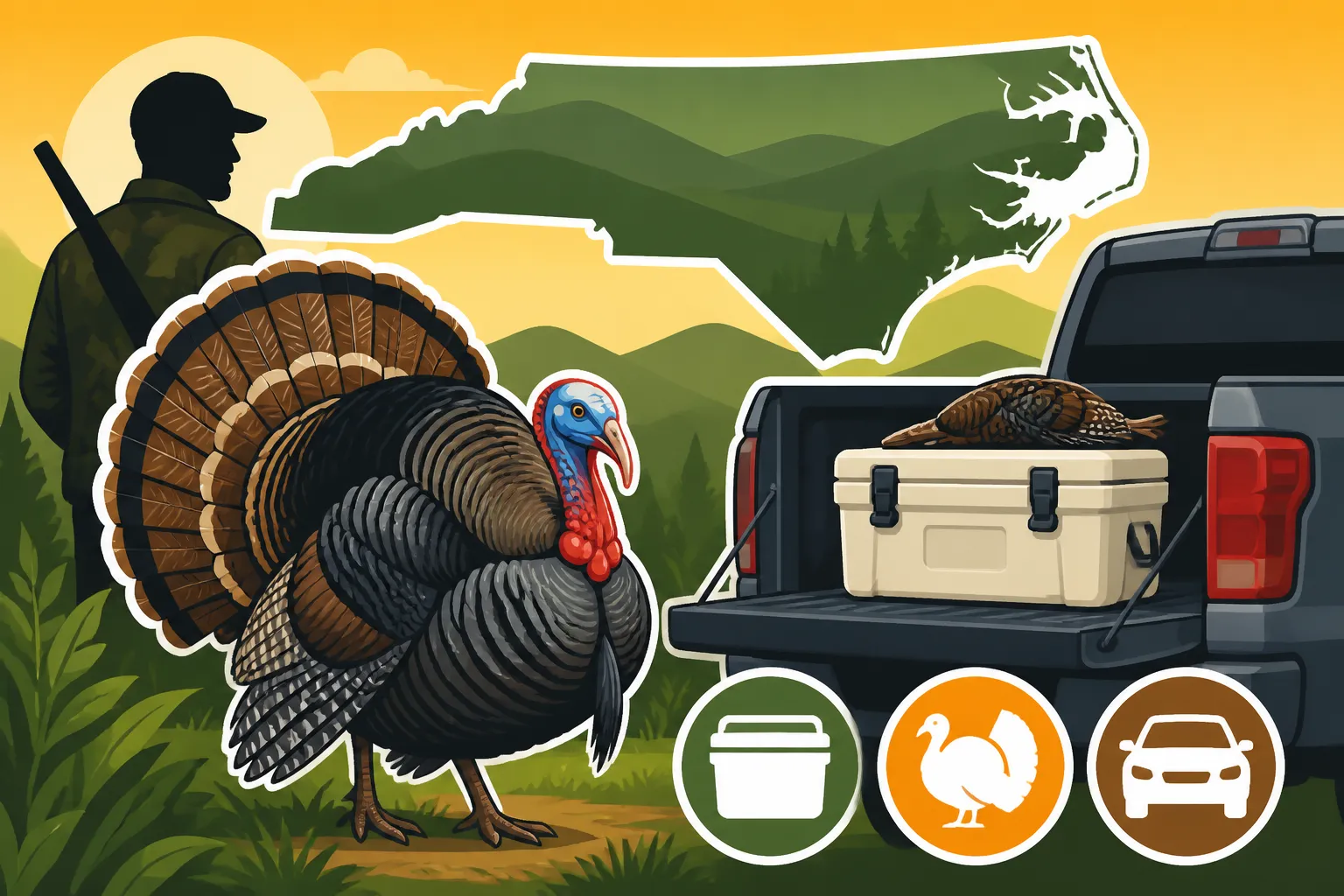
If you've successfully reported your turkey and have your confirmation number, you technically have more leeway once you're beyond the point of needing species/sex verification by an officer. Many hunters will, at this point, breast out the bird to cool the meat more effectively, especially if it's a warm spring day, which is common during North Carolina Spring Turkey Season Rules. If you choose to do this, make sure you keep the confirmation number easily accessible with the meat. It's always better to err on the side of caution. For longer drives, especially when going from the mountains to the coast, consider how you'll keep the meat cool and sanitary. A quality cooler with ice is non-negotiable to prevent spoilage. GoHunt can be a great resource for planning these trips, allowing you to scout potential stops or even locate game lands where you might set up an initial processing station if needed.
Crossing State Lines with Your North Carolina Turkey
This is where things can get a bit more complex, and it’s a situation many hunters encounter, especially those who travel for hunting. Taking a legally harvested North Carolina turkey across state lines involves not only North Carolina's rules but also the regulations of any state you pass through and, critically, your destination state.
Federal regulations generally allow the transport of legally harvested game across state lines, but individual states often have their own specific rules regarding what parts of the animal must be present, how it must be tagged, and any health or disease concerns. For instance, while North Carolina might be okay with you transporting a reported, breasted-out turkey (with confirmation number), Virginia or South Carolina might require different proof or have stricter rules about carcass parts.
The absolute golden rule here is to check the regulations of your destination state (and any states you'll be driving through) BEFORE you leave North Carolina. A quick call to their respective wildlife agencies or a visit to their official websites can save you a world of trouble. You'll need proof of legal harvest from North Carolina, which is your electronic reporting confirmation number. It's often wise to print this out or have it easily accessible on your phone, along with your North Carolina hunting license.
While CWD (Chronic Wasting Disease) is primarily a concern for deer and other cervids, it highlights the importance of understanding carcass movement restrictions. Though not typically an issue for turkey, it's a good example of how disease management can impact transport rules. You'll also want to consider if your destination state has any specific rules about the import of certain game parts, even from a non-CWD species like turkey. For example, some states might have specific rules about importing whole birds versus processed meat, particularly concerning disease surveillance. Always be prepared to explain your harvest and show your documentation. This is where being thoroughly prepared, perhaps with information you gathered using a platform like GoHunt to research regulations, really pays off.
Common Mistakes and How to Avoid Them
Even experienced hunters can slip up when it comes to game regulations. The rules can change, memory fades, and sometimes, excitement simply overrides caution. Being aware of the most common mistakes can help you avoid them.
Forgetting to Report or Delaying Reporting
This is arguably the most frequent and easily avoidable mistake. After a successful hunt, especially if it's a late-day affair, fatigue can set in, or you might get caught up in the celebration. You tell yourself, "I'll do it in the morning," but North Carolina's regulations are clear: the harvest must be reported before midnight on the day of harvest.
The consequences of not reporting are not just minor inconveniences. They can range from a substantial fine to loss of hunting privileges. Beyond the legal ramifications, timely reporting is fundamental to wildlife management. Each reported turkey provides data points that biologists use to assess population health, track harvest trends, and make informed decisions about future seasons and bag limits. If hunters don't report, the data is incomplete, potentially leading to less effective management strategies. Imagine the impact if everyone forgot to report their birds after Hunting the Statewide Turkey Opener in April – the NCWRC would have no real idea of the actual harvest numbers.
To avoid this, build reporting into your post-hunt routine. As soon as you have a signal, or as soon as you get home, make it the first thing you do. Set a reminder on your phone or designate a hunting buddy to remind everyone. Keep the NCWRC app or website bookmarked, and your login details saved (securely!) for quick access. It's a small task with big implications.
Improper Field Dressing and Transport Preparation
Another common pitfall involves improper field dressing or preparation for transport, leading to identification issues. As discussed, keeping the head (with beard) and one spurred leg attached until reporting and initial processing is crucial for identification. Mistakes here typically involve removing these identifying features too early.
Consider a scenario: you've just taken a beautiful gobbler while Setting Up Against a Big Oak on a hot April morning. You want to get the meat cooled down quickly to prevent spoilage. You might be tempted to breast out the bird right there, separating the meat from all identifying features. While getting the meat cool is important, doing this before you've completed your reporting, and before you've fully understood the transport rules, could put you in a tough spot with a wildlife officer. They need those features to verify that what you've harvested is a legal bird.
Beyond identification, proper meat care is paramount. Spring turkey season can bring surprisingly warm weather to North Carolina. Neglecting to properly cool your bird can result in spoiled meat, which is a tragedy after all your hard work. Always carry a cooler with ice, especially if you anticipate a warm day or a long walk back to the vehicle. Even if you've reported your bird and can legally breast it out in the field, ensuring the meat is placed on ice immediately will make a huge difference in taste and quality. Think of it this way: the hunt doesn't end until the meat is properly cared for and safely home. Resources you might find on GoHunt often include comprehensive post-harvest checklists that address both legal compliance and meat care.
Best Practices for a Smooth Turkey Season
A successful turkey season isn't just about bagging a bird; it's also about doing everything by the book, from scouting to reporting. A little preparation goes a long way in ensuring a smooth and enjoyable experience.
Pre-Season Prep: Know Before You Go
The foundation of a hassle-free hunting season starts long before you ever step foot in the woods. This means thoroughly reviewing the current year's North Carolina Wildlife Resources Commission (NCWRC) regulations. Don't rely on what you remember from last year; rules can change. This is especially true for specific bag limits, zone dates, and reporting requirements. For instance, always double-check the North Carolina Spring Turkey Bag Limit and the exact North Carolina Turkey Season Closing Date for your hunting area.
A key part of your pre-season checklist should be digital readiness. Download the NCWRC mobile app to your smartphone and log in before you head out. Verify your login credentials and make sure you understand how to navigate the reporting feature. This way, you won't be fumbling with forgotten passwords or struggling with an unfamiliar interface when you've just harvested a bird and are trying to report it on the fly. Ensure your hunting license is valid and up-to-date. Understanding North Carolina Hunting Licenses and What They Cost and having the correct privileges is non-negotiable. If you're planning to take a mentee out, be sure you're both familiar with North Carolina Mentored Youth Hunting Rules. A platform like GoHunt can be invaluable here, offering aggregated information and tools to help you stay organized and informed about the latest regulations and hunting opportunities.
In the Field: Staying Compliant and Organized
Once you're actually in the field, vigilance and organization are your best friends. Always keep your hunting license and any other required permits easily accessible. This isn't just for potential wildlife officer encounters; it's also a good habit for accountability. Many hunters carry a small, waterproof pouch or a wallet designed for licenses.
After a harvest, take a moment to document your success with photos, but make sure those photos include the identifying features of the bird, such as the beard and spurs. While not a legal requirement for reporting, these photos serve as great personal records and can be helpful if any questions arise later. Plus, they make for fantastic memories!
Finally, having a proper plan for meat care right after the shot is essential. This often means carrying a dedicated cooler with ice or reusable freezer packs in your vehicle, especially in the warmer spring months. The sooner you can get the bird cooled down, the better the quality of the meat will be. Even if you plan to breast it out in the field after reporting, having a clean, cool container ready will protect your hard-earned venison. Thinking through your entire process, from the shot to the dinner plate, will ensure that every step is legal, ethical, and efficient.
Disclaimer
Please remember that hunting regulations, seasons, and licensing requirements in North Carolina are subject to change. While this guide provides comprehensive information, it is crucial to consult the official North Carolina Wildlife Resources Commission (NCWRC) regulations handbook or website for the most current and accurate rules before participating in any hunting activity. This content is for informational purposes only and should not be considered legal advice.