North Carolina Squirrel Season Opening Day
That first crisp morning chill, the kind that makes you pull your hoodie a little tighter, signals more than just the changing seasons in North Carolina. For many of us, it whispers the promise of getting back into the woods, chasing the lively, bushy-tailed residents that offer some of the fastest, most engaging action available. Pinpointing the exact North Carolina Squirrel Season Opening Day and understanding all the nuances can sometimes feel like trying to track a squirrel through a thick canopy – a little confusing. This guide is dedicated to giving you the straight scoop, ensuring you're fully prepared to hit the timber running for opening day and beyond.
Understanding North Carolina's Statewide Squirrel Season Opener
For many hunters, squirrel season is the unofficial kick-off to the broader fall hunting calendar, a chance to shake off the summer rust, get the shotgun swinging, or sharpen those small-bore rifle skills. It's an accessible and exciting way to introduce new hunters to the sport or just enjoy a peaceful morning in the woods. Knowing precisely when that season starts is the first critical step to planning a successful outing.
The Official Dates for Gray and Fox Squirrels
In North Carolina, the opening day for both gray squirrels and fox squirrels typically falls on a consistent date: October 1st. This is a statewide opening, meaning you don't have to worry about different zones or complex calendars like you might for deer season. It's a welcome simplicity that allows hunters across the Coastal Plain, Piedmont, and Mountains to mark their calendars with confidence. However, always remember that regulations can change, so a quick check of the current North Carolina Wildlife Resources Commission (NCWRC) regulations each year is a smart move. They publish their annual digest well in advance, and a tool like GoHunt can keep you up-to-date with any last-minute adjustments.
Think about the excitement of that first morning. Imagine planning a trip with a friend or family to a favorite hardwood bottomland, knowing that on October 1st, the woods will be alive with activity. Whether you're heading to a sprawling game land or a smaller private tract, that uniform opening date simplifies planning considerably, allowing you to focus on scouting and gear prep rather than deciphering complex zoning maps. The anticipation of that first bark from a gray squirrel, or the slow, deliberate movements of a big fox squirrel, makes the wait all the more worthwhile.
Why the Timing is Just Right for Early Fall Hunting
The October 1st opener isn't just a random date; it's strategically placed to coincide with several natural events that make for prime squirrel hunting. First, the cooler temperatures of early fall are a welcome relief after the oppressive heat of summer. This means both hunters and squirrels are more active and comfortable in the woods. You can cover more ground without overheating, and the squirrels are busy with their crucial autumn task: foraging.
As autumn progresses, the leaves begin to drop, gradually opening up the canopy. While opening day in early October might still see a lot of foliage, especially in the Coastal Plain and lower elevations, the process is well underway. This means that as the season progresses, visibility improves, making it easier to spot squirrels silhouetted against the sky. On opening day, you'll often find squirrels heavily concentrated on hard mast crops like acorns and hickory nuts, which are usually abundant and falling around this time. Understanding these patterns is key to Squirrel Hunting a North Carolina Oak Ridge or any other productive habitat. The squirrels are in a feeding frenzy, trying to store up fat reserves for the colder months, making them predictable and active targets.
Key Regulations and Licensing for Squirrel Hunters
Venturing into the North Carolina woods requires more than just knowing the opening day; it means understanding the rules that govern our outdoor pursuits. Squirrel hunting, while relatively straightforward, still has specific regulations regarding bag limits, licensing, and legal methods that every responsible hunter must follow. It’s all part of ensuring sustainable populations for future generations and keeping everyone safe.
Daily Bag Limits and Possession Limits
For both gray and fox squirrels in North Carolina, the daily bag limit is 6 squirrels per hunter. This means that in any given day, you can harvest up to six squirrels. But what about the possession limit? That's typically 12 squirrels, which means you can have no more than 12 harvested squirrels in your possession at any time, whether they're in your cooler, your game vest, or at home in the freezer.
This distinction is important, especially if you're planning a multi-day hunt or taking a substantial harvest home. For example, if you shoot six squirrels on Saturday, you can legally head out again on Sunday and take another six, bringing your total possession to twelve. However, if you already have twelve squirrels in your freezer from previous hunts, you'd need to consume or process some of them before heading back out. This rule helps manage the overall harvest and encourages hunters to utilize their game effectively. It's a generous limit for these abundant critters, providing plenty of opportunity for a delicious meal or two, or enough for a squirrel stew gathering with friends and family.
Essential Licenses and Hunter Education Requirements
To legally hunt squirrels in North Carolina, you'll need the appropriate hunting license. For residents, this typically means a basic resident hunting license. Unlike deer or bear, there's no specific "Big Game Privilege" required for small game like squirrels. However, if you plan to hunt on North Carolina's extensive system of public game lands, you will also need a Game Lands license in addition to your basic hunting license. These licenses are easily purchased online through the NCWRC website, at various retail agents (like sporting goods stores), or by phone. Sites like GoHunt also offer excellent resources for understanding license requirements and purchasing options. For a full breakdown of what you might need, check out North Carolina Hunting Licenses and What They Cost.
Beyond licenses, North Carolina has hunter education requirements. If you were born on or after July 1, 1989, you must complete a hunter education course before you can purchase a hunting license or hunt without supervision. There are exceptions for apprentice hunters, who can hunt under the direct supervision of a licensed adult. This ensures that new hunters learn about firearm safety, hunting ethics, and wildlife conservation. For more details on this vital training, refer to North Carolina Hunter Education Requirements. These rules are in place to ensure a safe and responsible hunting culture across our state.
Legal Equipment and Methods
When it comes to equipment for squirrel hunting, North Carolina offers a good deal of flexibility. Most hunters opt for either a small-bore rifle, typically a .22 caliber rimfire, or a shotgun. A .22 rifle is fantastic for precise headshots, especially when squirrels are treed or sitting still, offering minimal meat damage. Shotguns, particularly in 20 gauge or 12 gauge with a light game load (like 6-shot or 7.5-shot), are excellent for fast-moving squirrels in thick cover or for bringing down multiple squirrels quickly when the action is hot. Air rifles are also a legal and increasingly popular option, offering quiet shooting perfect for areas where noise might be a concern. Archery equipment, including traditional bows and crossbows, is also legal.
A classic and highly effective method for hunting squirrels in North Carolina is with the aid of a squirrel dog. These dogs, often breeds like Feists or Curs, are bred for their keen noses and ability to locate and tree squirrels. Once a squirrel is treed, the dog will "bark up," alerting the hunter to the squirrel's location. This method offers a unique and engaging hunting experience, turning a solo stalk into a dynamic team effort. While often associated with larger game, the principles of Running Hounds Where North Carolina Allows It are also applied to small game like squirrels, adding a rich tradition to the hunt.
Differentiating North Carolina's Squirrel Species and Their Habitats
North Carolina is home to two primary species of huntable squirrels: the gray squirrel and the fox squirrel. While both offer fantastic hunting opportunities, they differ in appearance, behavior, and preferred habitats. Knowing these differences can significantly improve your scouting and hunting success, helping you tailor your approach to the specific squirrel you're targeting.
Gray Squirrels: The Ubiquitous Bushy-Tails
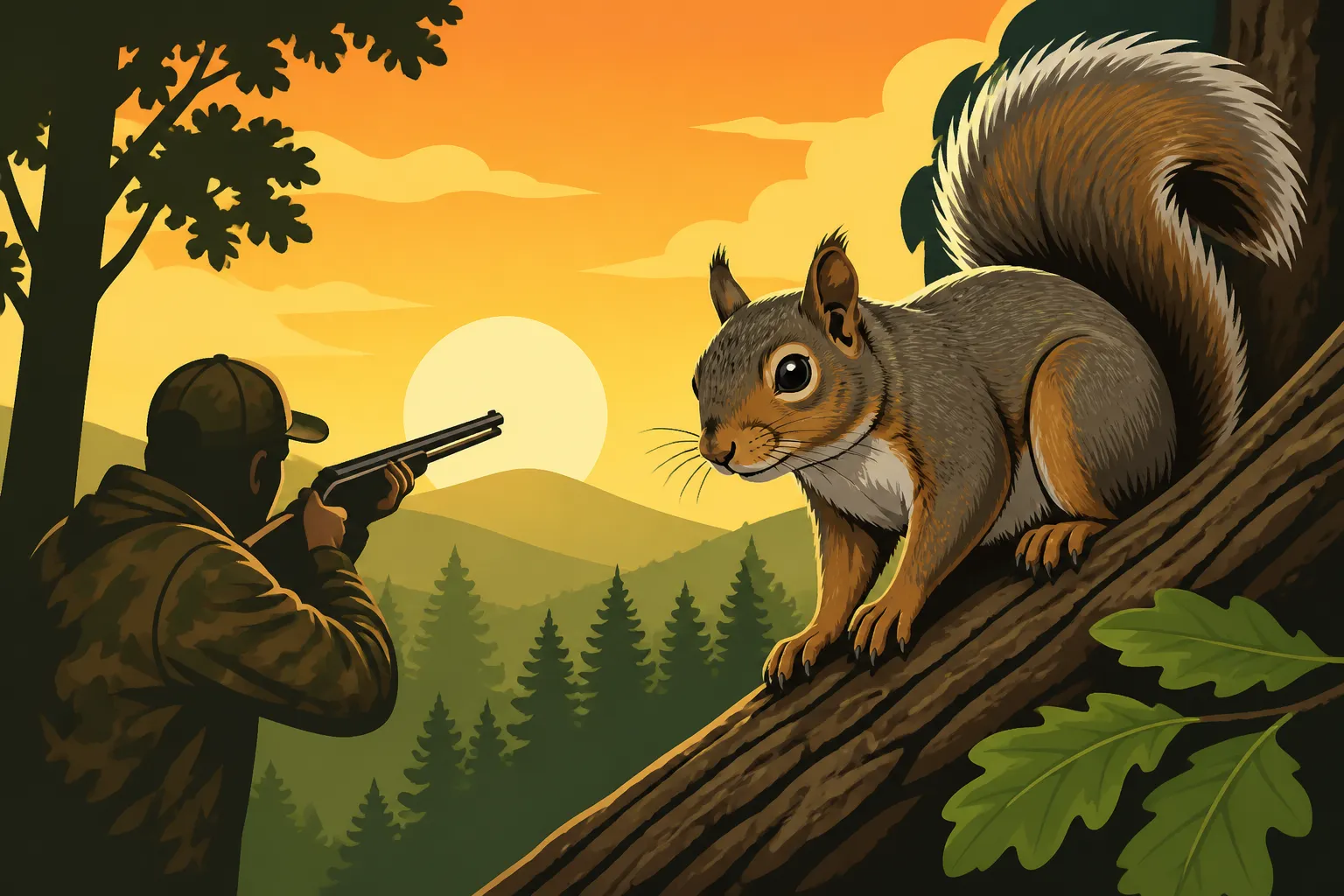
The gray squirrel ( Sciurus carolinensis) is by far the most common and widespread squirrel species in North Carolina. You'll find them almost everywhere, from mature hardwood forests to urban parks and suburban backyards. They are typically smaller than fox squirrels, weighing about 1 to 1.5 pounds, with a uniform gray coat, a white belly, and a prominent bushy tail. Their chattering calls and quick, agile movements are characteristic. Gray squirrels are highly arboreal, spending most of their time in trees, but they're also frequently seen on the ground foraging for nuts, seeds, and fungi.
These busy creatures are vital dispersers of tree seeds, playing a crucial role in forest regeneration. When you're Squirrel and Small Game Hunting in North Carolina, gray squirrels will likely be your primary quarry. They are prolific breeders and incredibly adaptable, thriving in diverse environments. Their active nature, especially during early morning and late afternoon, makes them exciting targets. Hunters often find them in high concentrations in mature oak and hickory forests where abundant mast crops provide their main food source. For a deeper dive into their characteristics and how they compare to their larger cousins, check out Gray Versus Fox Squirrels in North Carolina.
Fox Squirrels: Larger, Less Common, and Unique Colors
The fox squirrel (Sciurus niger) is North Carolina's largest squirrel species, often weighing twice as much as a gray squirrel, typically between 2 and 3 pounds. They are also distinctive for their incredible variety of color phases, which can range from grizzled gray and tawny orange to deep black with white markings on the nose and ears (often called "black squirrels"). This striking variation makes spotting one a real treat.
Unlike gray squirrels, fox squirrels tend to be less numerous and prefer more open, mature pine stands, mixed pine-hardwood forests, and especially the longleaf pine savannas of the Sandhills and Coastal Plain regions. They are less frenetic than gray squirrels, moving with a more deliberate, almost lumbering gait when on the ground. Their larger size and striking appearance make them a prized trophy for many small game hunters. In certain regions, particularly in the Uwharrie National Forest or Croatan National Forest, encountering a jet-black fox squirrel with its stark white nose can be a truly memorable experience. To maximize your chances, try Hunting Longleaf Pine Savanna for Deer, but keep an eye out for these unique squirrels while you're there; their habitats often overlap.
Here's a quick comparison of our two main squirrel species:
| Feature | Gray Squirrel (Sciurus carolinensis) | Fox Squirrel (Sciurus niger) |
|---|---|---|
| Size | Smaller (1-1.5 lbs) | Larger (2-3 lbs) |
| Color | Uniform gray, white belly | Highly variable (gray, tawny, black, white markings) |
| Habitat | Diverse; mature hardwoods, suburban, mixed | Open pine stands, mixed forests, longleaf savanna |
| Behavior | Agile, quick, chattering, highly arboreal | More deliberate, less common, often ground-foraging |
| Vocalization | High-pitched chattering, barking, squeaking | Deeper, more throaty calls, less frequent |
| Abundance | Very common, widespread | Less common, more localized |
Finding the Best Early Season Squirrel Hotspots
Successful squirrel hunting, especially on opening day, boils down to finding where the squirrels are feeding. In early fall, this almost exclusively means locating areas with abundant hard mast. Scout for oak ridges, hickory bottoms, and beech groves. Look for signs of squirrel activity on the ground: freshly cut acorn caps, hickory nut shells, and gnawed pine cones. These "cuttings" are undeniable proof that squirrels are in the area and actively feeding. Paying attention to these subtle clues, as discussed in Reading Cuttings Under an Oak, will put you on the right track.
Public lands across North Carolina, from our National Forests like Pisgah and Nantahala to the many state Game Lands, offer excellent squirrel hunting opportunities. Using online mapping tools is incredibly helpful. The NCWRC's own Using the NC Wildlife Map Tool can help you identify game lands and their boundaries, while platforms like GoHunt offer detailed satellite imagery, property line overlays, and habitat data that can pinpoint potential mast-producing areas. Even driving around and looking for mature trees from a vehicle can give you clues. Don't be afraid to pull over and take a short walk into the woods to confirm the presence of nuts on the ground. This pre-season reconnaissance is crucial for Scouting North Carolina Public Land Before Season and will significantly increase your odds of a productive opening day.
Early Season Tactics for North Carolina Squirrel Hunters
Once you know when and where to go, the next step is deciding how you'll hunt. Early season squirrel hunting offers a variety of effective tactics, each with its own rhythm and appeal. Whether you prefer a quiet, solitary stalk or the lively company of a good squirrel dog, there's a method that fits your style.
Still-Hunting and Sit-and-Wait Approaches
Still-hunting involves moving slowly and deliberately through the woods, pausing frequently to scan the trees and listen for sounds. This is a highly effective method, especially in the early morning or late afternoon when squirrels are most active. You're looking for movement, flicking tails, or the tell-tale rustle of leaves as a squirrel digs for nuts. The key is patience and stealth. Take a few steps, then stop for several minutes, letting your eyes and ears do the work. Often, squirrels that were hidden or spooked by your initial movement will resume their activity if you remain still. This technique is particularly rewarding when you're hunting gray squirrels in thick hardwoods, as they tend to be quite vocal, giving away their positions with barks and chatter.
The sit-and-wait approach is exactly what it sounds like: finding a good spot near abundant mast trees or a well-used game trail, and settling in. This is often done from a comfortable seat on the ground, leaning against a tree, or even from a small stool or ground blind. The advantage here is minimizing your own movement and scent, allowing squirrels to move naturally around you. This method requires a bit more patience but can be incredibly productive, especially if you've scouted a prime feeding area. Imagine sitting quietly as the sun rises, surrounded by the sounds of the awakening forest, and suddenly, a large fox squirrel saunters into view. It's an immersive experience that connects you deeply with nature.
Hunting with Dogs: A Traditional and Effective Method
For many hunters, especially in the South, squirrel hunting with dogs is a cherished tradition. There's nothing quite like the excitement of a good squirrel dog working a timber stand. These specialized dogs, typically smaller breeds like Feists, Mountain Curs, or mixed breeds known for their "treeing" instincts, use their incredible sense of smell and hearing to locate squirrels. Once a squirrel is found and has scrambled up a tree, the dog will "bark up" at the base, indicating the location to the hunter. This makes finding the squirrel much easier, particularly in dense foliage or against dark bark.
Hunting with a dog is a dynamic, fast-paced experience that keeps you moving and engaged. It's a great way to cover a lot of ground and can be incredibly effective at finding squirrels that might otherwise be overlooked. The bond between a hunter and their squirrel dog is special, built on shared experiences in the field. It’s important to ensure your dog is well-trained and that you're hunting in areas where dogs are permitted, especially on public lands. Many of the same considerations for Running Hounds Where North Carolina Allows It for deer also apply to smaller game; always be aware of local regulations and other hunters.
Practical Tips for a Successful Opening Day
Beyond the basic methods, a few practical tips can make your North Carolina squirrel season opener even more successful. First, dress in layers. October mornings can be cool, but midday temperatures can rise significantly, especially if you're moving a lot. Camouflage isn't strictly necessary for squirrels, but natural earth tones or drab greens will help you blend in. While not as critical as for deer, practicing some basic scent control can't hurt, especially if you plan to sit still for extended periods.
Consider carrying a squirrel call. Barking calls or chittering calls can sometimes entice a hesitant squirrel to reveal itself or even come closer. Always prioritize safety: know your target, know what's beyond it, and unload your firearm when crossing obstacles or moving through dense brush. Check the weather forecast before you head out; a rainy or windy day can make squirrels less active, though a light drizzle often brings them down to the ground. A good pair of binoculars, even a compact 8x, can be invaluable for spotting squirrels high in the canopy. And finally, bring a small game vest or bag to carry your harvest, along with water and a snack. The simple pleasure of a morning spent chasing squirrels is a fantastic way to reconnect with the outdoors and enjoy some of the best small game hunting North Carolina has to offer.
Disclaimer
The information provided in this guide is for general informational purposes only and is not a substitute for official regulations. Hunting laws and regulations in North Carolina are subject to change. Always consult the most current North Carolina Wildlife Resources Commission (NCWRC) regulations digest or their official website before participating in any hunting activity. Failure to do so could result in fines or legal penalties.