North Carolina Turkey Season Closing Date
It can be incredibly frustrating to plan your spring turkey hunts, invest your time in scouting, and then realize you're not absolutely certain about the exact dates. North Carolina's turkey season, while generally straightforward, still leaves many hunters wondering about the precise closing day. This comprehensive guide is here to clear up any confusion, providing you with all the details you need to confidently plan your pursuit of longbeards right up to the very end of the season.
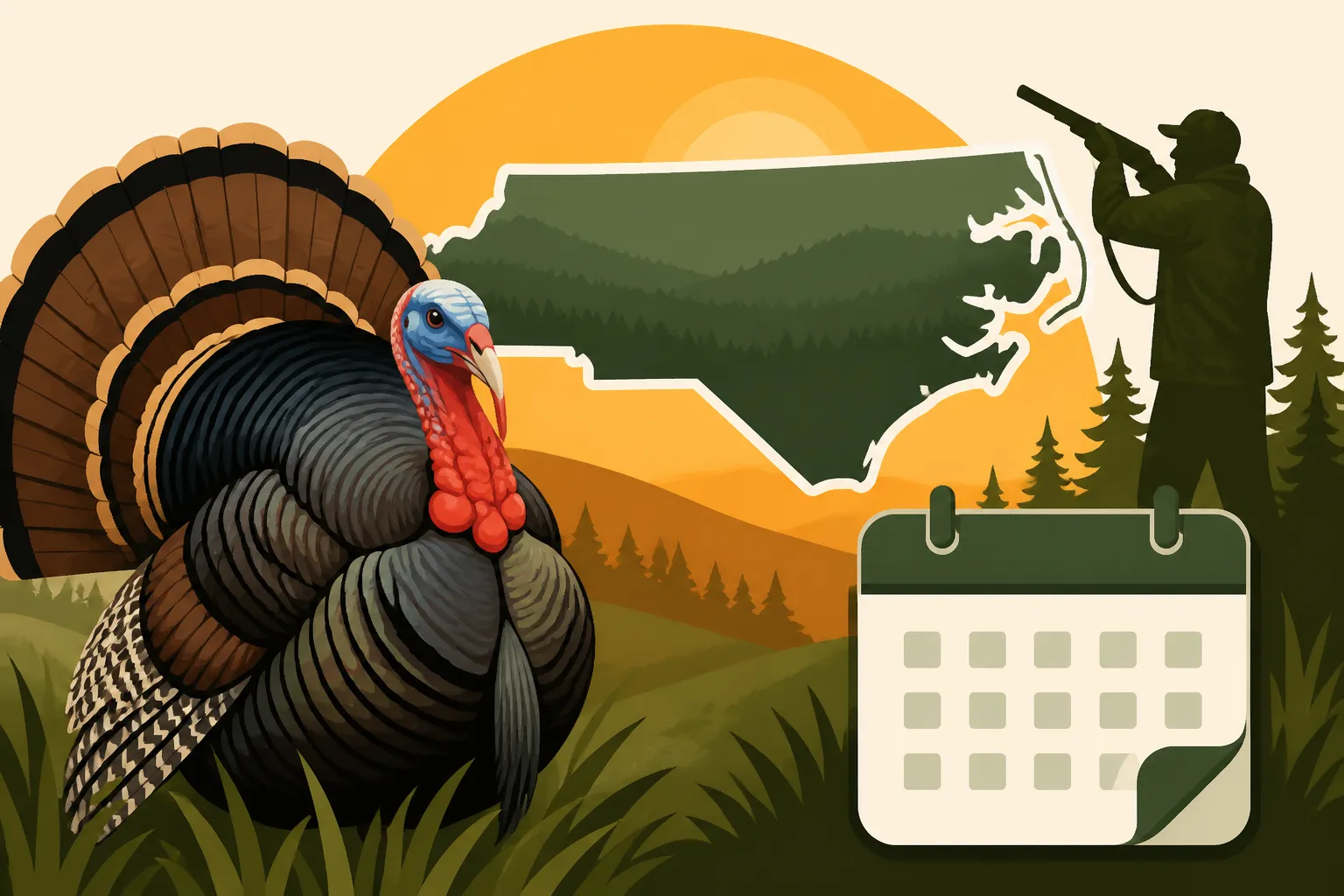
The North Carolina statewide spring turkey season typically concludes on May 8th. This closing date applies uniformly across all zones in the state, making it simpler than deer season zones, but it's crucial to mark this date clearly on your calendar to avoid any missteps.
Understanding North Carolina's Spring Turkey Season Structure
North Carolina's spring turkey season is eagerly anticipated by hunters across the state. Unlike the various deer zones that can make planning a bit of a headache, the turkey season operates on a more unified schedule for the general statewide hunt. This structure is designed to provide ample opportunity while also ensuring the long-term health and sustainability of the wild turkey population. It's a balance act, really, between giving us hunters enough time afield and making sure those gobblers can do their thing without too much pressure right before nesting.
The Statewide Opener and How It Works
Before we talk about the end, it’s helpful to remember how it all begins. The statewide opener for North Carolina's spring turkey season usually kicks off on the first Saturday in April. This single, consistent start date across all regions is a real blessing, cutting down on the confusion that can come with staggered openers. Knowing this, you can focus on the birds, not the calendar. While the main season runs with this statewide opening, there's also a special window for our youngest hunters. For those looking to dive deeper into the full schedule, you can check out the North Carolina Statewide Turkey Opener details to ensure you're squared away. It's a fantastic time to be in the woods, hearing those first gobblers echo through the still morning air.
For example, if the first Saturday in April falls on April 6th, then April 6th would be the general statewide opener. This consistent start allows everyone, from the seasoned veteran to the beginner, to plan their initial scouting and hunting trips without worrying about different zones opening at different times. It fosters a sense of community among turkey hunters, as most of us are hitting the woods around the same timeframe, sharing in the excitement of spring.
Youth Season Special Considerations
One of the best aspects of North Carolina's turkey season is the dedicated youth weekend. This special two-day hunt usually happens the weekend before the general statewide opener, offering young hunters (under 18) a chance to get out and chase gobblers with an adult mentor, often before the woods get really crowded. It’s an invaluable opportunity to introduce the next generation to the thrill of turkey hunting, fostering a love for the outdoors in a less pressured environment.
However, there are specific rules for this. For instance, only one turkey harvested during the youth season counts towards the statewide bag limit, and the mentor cannot harvest a bird. This means if a young hunter bags a bird on youth weekend, they still have one more turkey tag for the regular season. The adult mentor's role is strictly observational and instructional during this special weekend. Understanding these nuances is key, and you can find all the specifics regarding North Carolina Youth Turkey Weekend Rules to make sure your young hunter is set up for success and enjoys a fully compliant experience.
Bag Limits and Daily Harvest Rules
Speaking of success, let's talk about what you can actually take home. North Carolina has a very specific bag limit for spring gobblers: two turkeys per season. And here’s a critical detail that sometimes gets overlooked: you can only harvest one turkey per day. This means if you're lucky enough to tag a gobbler early in the morning, your turkey hunting for the day is done. You can't just head out that afternoon hoping for another, even if you still have an unused tag for the season.
This regulation is firmly in place to manage the population responsibly. It's not about denying hunters success, but ensuring that our wild turkey populations remain robust for years to come. Remember, only male or bearded turkeys are legal to harvest during the spring season. Hens are protected to ensure strong nesting populations. For a complete rundown on these restrictions, make sure you're familiar with the North Carolina Turkey Daily Bag Limit so you're always within the legal bounds and contributing to ethical hunting practices.
Factors Influencing Season Dates and Turkey Behavior
The North Carolina Wildlife Resources Commission (NCWRC) doesn't just pull these dates out of a hat. There's a lot of biological science and observation that goes into setting the spring turkey season, particularly when it comes to the closing date. They're trying to strike a careful balance between hunter opportunity and the biological needs of the turkey population. As hunters, it's really helpful to understand this, as it gives us a deeper appreciation for the regulations and often helps us predict turkey behavior during different phases of the season.
Biological Considerations for Conservation
The primary driver behind the season closing date is the reproductive cycle of wild turkeys. The NCWRC aims to provide ample hunting opportunity during the peak breeding and gobbling period, which typically occurs in April and early May. However, they also want to ensure that hens have begun nesting and gobblers have had sufficient time to breed before the season concludes. Hunting too deep into the nesting cycle can potentially disrupt hens, increase stress on the population, and negatively impact poult production.
The May 8th closing date is chosen to largely coincide with a point where most hens are already on their nests, minimizing disturbance and allowing the population to thrive. This commitment to conservation is something we should all appreciate as it secures the future of our sport. Biologists constantly monitor factors like poult-to-hen ratios and overall flock health to determine if season adjustments are needed. You can learn more about how the NCWRC monitors these trends by looking into the North Carolina Turkey Population Estimate and related research, which directly influences these decisions.
Regional Variations and What They Mean
While North Carolina's spring turkey season is statewide for general hunters, it's worth noting that turkey breeding activity can vary slightly from the warmer Coastal Plain up into the cooler Mountain regions. Hens in the eastern part of the state might start nesting a little earlier than those in the higher elevations of the west. This is due to temperature differences affecting vegetation green-up and insect emergence, which are key for hen conditioning and poult survival.
However, rather than create a patchwork of different closing dates that would inevitably lead to confusion for hunters and enforcement, the NCWRC opts for a single, conservative statewide closing date. This simplifies things for hunters and ensures that even the latest-breeding birds in the mountains have adequate protection during their critical nesting phase. Other states, particularly those with vast geographical differences like Texas or California, might implement zone-specific dates, but for North Carolina, the unified approach works well and promotes broader understanding and compliance among hunters.
Historical Context of Season Setting
The current framework for North Carolina's turkey season is the result of years of observation, hunter feedback, and scientific management. There have been adjustments over time as populations have fluctuated and our understanding of turkey biology has evolved. In the past, turkey populations were much lower, and seasons were far more restricted, or even closed in many areas. It's hard to imagine now, but at one point, wild turkeys were nearly extirpated from much of the state.
The successful restoration efforts, primarily through trap-and-transfer programs that began in earnest in the mid-20th century, have allowed for the generous season lengths we enjoy today. This historical context reminds us that the privilege of hunting comes with the responsibility of adhering to regulations, which are designed for the long-term benefit of the resource. Knowing this background makes that May 8th closing date feel less like a hard stop and more like a carefully considered part of a larger, highly successful conservation strategy.
Strategies for Late-Season Turkey Hunting
As the calendar rolls into May and that closing date of May 8th looms, turkey hunting takes on a different flavor. The early season rush has passed, gobblers have been called to, and the woods often feel quieter. But don't let that discourage you! Late season can be incredibly rewarding, often producing some of the most memorable hunts, provided you adapt your tactics. It requires patience, keen observation, and a willingness to adjust from those aggressive early-season approaches.
Locating Pressured Birds in May
By late April and early May, many gobblers have heard it all. They've been called to, spooked, and perhaps even shot at. This means they're often more wary and less likely to charge into every yelp they hear. Instead of focusing solely on traditional roost-to-field patterns, start looking for quieter, less accessible areas. Public land birds, especially, will often seek refuge in thick bottoms, deep hollows, or areas far from roads and trails that experience heavy human traffic.
This is where advanced mapping tools can be invaluable; services like GoHunt offer detailed topographical maps and satellite imagery that help you identify potential escape cover, dense bedding areas, or unpressured pockets of woods. I’ve found great success by hiking further than most, targeting those overlooked ridges or dense pine thickets that offer security. Sometimes, finding a small patch of good habitat surrounded by less appealing terrain can hold a resident longbeard that's managed to avoid the crowds. If you're struggling to locate those vocal birds, consider When North Carolina Gobblers Go Quiet in May for more in-depth tips on adjusting your scouting and hunting efforts.
Adapting Calling Tactics
Aggressive calling that might have worked wonders in early April can actually push late-season gobblers away. Think subtle. Think realistic. Instead of loud cutting and constant yelping, try soft clucks, purrs, and quiet hen yelps. Mimicking a lone hen going about her business, subtly feeding and moving, can be far more enticing than a boisterous call that sounds like a hunter broadcasting their location. These older, wiser gobblers have a refined sense of caution.
Sometimes, no calling at all is the best calling. Sit tight, listen intently, and only call sparingly if you hear a distant gobble or need to confirm a bird's location. If you do call, make it brief and wait a good long while before your next sequence – ten to fifteen minutes, sometimes even longer. Remember, these birds are smart, and they've learned lessons throughout the season. Sometimes just seeing a realistic decoy setup, like those from Avian-X, can bring them in without a sound, especially when paired with patience. Learn more about effective decoy use with Decoy Placement for Pressured North Carolina Birds.
Understanding Roosting Patterns in Late Spring
Early in the season, gobblers are often eager to announce their presence from the roost, letting out booming gobbles that carry across the landscape. By late season, this enthusiasm can wane significantly. They might gobble only a few times before flying down, or they might not gobble at all until they're on the ground, already moving towards hens. This means you need to adjust your approach to finding their roosts.
Focus on terrain features that offer good visibility for the birds, but also proximity to food and water sources. Look for older, taller trees in creek bottoms, along ridge lines, or near fields. Instead of relying solely on auditory cues, employ more visual scouting. Arriving well before daylight and just listening for wingbeats as birds fly down, or faint tree yelps and soft clucks, can be more effective than expecting a thunderous pre-dawn serenade. Once they fly down, they often move quickly to find hens that are already on nests or moving to them. Understanding Roost Hunting North Carolina Gobblers can make a huge difference in your late-season success, especially when targeting those elusive, silent birds.
Important Regulations to Remember
Even as the season winds down, staying compliant with all North Carolina hunting regulations is paramount. It’s not just about avoiding fines; it’s about ethical hunting and respecting the resource. The NCWRC has clear guidelines in place for reporting, hunting hours, and equipment, and being informed ensures a smooth and legal hunt every time.
Tagging and Reporting Requirements
This is a non-negotiable step after harvesting any turkey in North Carolina. Once you've successfully harvested a gobbler, you are required to immediately validate your tag (usually by punching out the date on your license) and report the harvest. This can be done through the NC Wildlife Resources Commission's website, their mobile app (which is incredibly convenient), or by calling a toll-free number. The reporting window is critical: all big game harvests, including turkeys, must be reported by midnight on the day of harvest. There's no leeway here; fail to report, and you're in violation.
This data is incredibly important for wildlife biologists to monitor population trends, assess harvest rates, and make informed management decisions for future seasons. It’s part of our responsibility as hunters to contribute to this data, providing accurate information that helps ensure healthy turkey populations continue to thrive. Always carry your license and proof of big game harvest authorization when afield, whether it's a physical copy or easily accessible on your phone. For more details on this process, refer to North Carolina Turkey Checking Requirements.
Legal Hunting Hours
Throughout the spring turkey season, including those last few days leading up to May 8th, legal hunting hours are consistent. You are permitted to hunt from 30 minutes before sunrise to sunset. This gives you ample opportunity during the prime gobbling periods of the morning and again in the late afternoon. It’s crucial to know your sunrise and sunset times for your specific location, and many hunting apps or even a quick phone search can provide this information accurately. An app like GoHunt, for example, often integrates this information directly into its mapping features, making it easy to stay compliant.
Setting up your blind or getting to your stand well before legal shooting light allows the woods to settle, increasing your chances of a close encounter. Conversely, packing up at sunset means respecting the boundaries and avoiding any unintentional infractions. Never push beyond sunset, even if a bird is still gobbling. For a comprehensive overview of when you can and cannot be afield, check out North Carolina Public Land Hunting Hours.
Weapon Restrictions and Other Gear Considerations
North Carolina has specific rules about what you can and cannot use to harvest a wild turkey. Shotguns must be no larger than 10-gauge and no smaller than 20-gauge, and they must be plugged to hold no more than three shells in the magazine and chamber combined. Muzzleloading shotguns are also permitted. Additionally, archery equipment, including bows and crossbows, is legal. However, rifles are strictly prohibited for turkey hunting in North Carolina. This means no centerfire or rimfire rifles are to be used for turkeys.
While this might seem restrictive to some, it’s designed to promote fair chase and prevent overharvest, particularly as turkeys can be patterned more easily than deer. When considering other gear, don't forget your blaze orange for walking in and out on public lands, though it's not required while stationary hunting for turkey. A good vest with a comfortable seat and plenty of pockets for calls and water is always a solid choice. Also, remember to carry your license and all necessary permits at all times.
Here's a quick summary table of key dates and rules for the North Carolina Spring Turkey Season:
| Item | Detail |
|---|---|
| Youth Season | The weekend preceding the statewide opener (typically late March/early April) |
| Statewide Opener | First Saturday in April |
| Season Closing Date | May 8th |
| Daily Bag Limit | One (1) male or bearded turkey per day |
| Seasonal Bag Limit | Two (2) male or bearded turkeys per season |
| Legal Hunting Hours | 30 minutes before sunrise to sunset |
| Reporting Deadline | By midnight on the day of harvest via app, web, or phone |
| Legal Weapons | Shotguns (10-20 gauge, 3-shell capacity), Muzzleloading Shotguns, Bows, Crossbows |
| Illegal Weapons | Rifles |
Don't forget to use reliable resources like the NCWRC website or a robust hunting app like GoHunt to double-check these dates and regulations, as they can sometimes be adjusted. Staying informed is your best defense against missing out or making a mistake in the field.
Disclaimer
Disclaimer: The information provided in this guide is for general informational purposes only and is not a substitute for the official regulations published by the North Carolina Wildlife Resources Commission (NCWRC). Hunters are responsible for consulting the current NCWRC regulations each season before hunting, as rules and dates are subject to change.