North Carolina Coyote Hunting Season Status
It can be incredibly confusing trying to figure out the rules for hunting certain species in North Carolina. Unlike deer or turkey, which have very specific opening and closing dates, bag limits, and often even weapon restrictions tied to different seasons and zones, coyotes operate under a completely different set of regulations. This guide is here to clear up that common confusion and explain exactly what the "season status" is for hunting coyotes in our great state, so you can hunt with confidence and clarity.
The Year-Round Reality of North Carolina Coyote Hunting
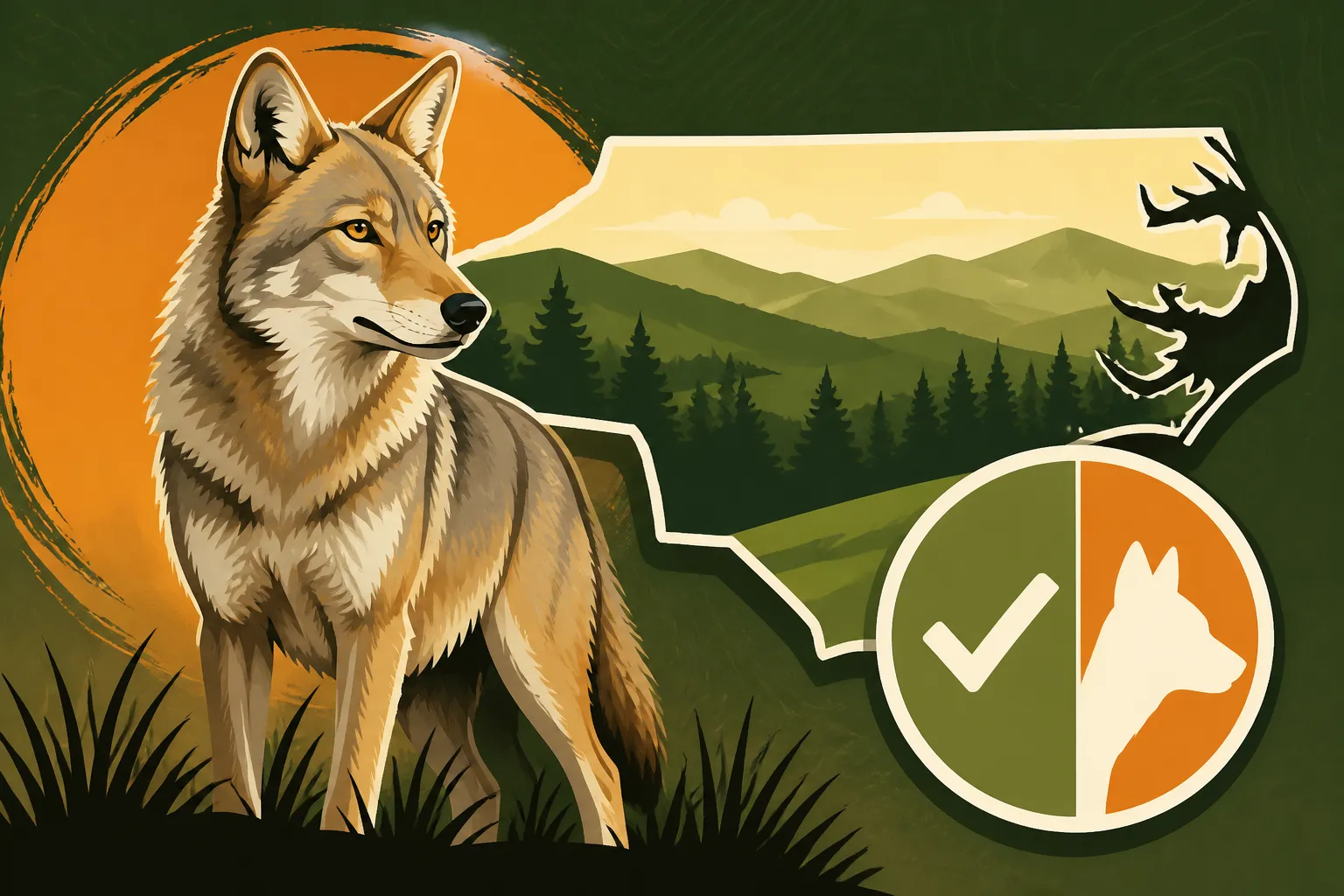
Let's cut right to the chase because this is the most common question: North Carolina does not have a closed season for hunting coyotes. That's right, it's year-round, 365 days a year, with no bag limit. For many hunters, especially those new to predator hunting or who are used to the strict seasonal calendars for big game, this can be quite a surprise. You might be scratching your head, wondering why such a prominent animal wouldn't have a designated season.
The primary reason for this unrestricted status boils down to the coyote's classification and its ecological impact across North Carolina. Coyotes are considered a nuisance species and are often viewed as a threat to native wildlife populations, livestock, and even pets. They are not native to our state; rather, they expanded their range eastward over the last century, becoming well-established throughout all regions, from the mountains to the coast. Because they're an introduced species that can have significant impacts on deer fawns, turkey poults, small game, and farm animals, the North Carolina Wildlife Resources Commission (NCWRC) encourages their control through hunting and trapping.
This year-round permission to hunt is a testament to the management philosophy surrounding coyotes. The goal isn't necessarily eradication, which is largely considered impossible given their adaptability and prolific breeding rates. Instead, it's about population control and reducing localized impacts. Farmers experiencing significant livestock depredation, or landowners seeing a severe decline in deer fawn recruitment, are essentially given the green light to take action whenever and wherever coyotes are causing problems. This approach places the responsibility, and the opportunity, squarely in the hands of hunters and landowners.
For hunters, this means an incredible amount of flexibility. There's no need to wait for a specific date on the calendar. If you see coyotes on your property, or you have permission to hunt them on private land, you can go after them. This contrasts sharply with the meticulously planned schedules needed for something like North Carolina's Gun Deer Season by Zone or Spring Turkey Hunting in North Carolina. The freedom can be liberating but also comes with the responsibility of understanding all other relevant hunting laws, which we'll dive into next.
Navigating Regulations and Methods for Coyote Hunting
While the "season" aspect is straightforward (there isn't one!), that doesn't mean it's a free-for-all. Hunters still need to adhere to general hunting regulations, especially concerning property boundaries, legal methods, and nighttime restrictions. This is where it gets a little more nuanced, and understanding these details is crucial to staying on the right side of the law.
Public Versus Private Land Rules
The biggest distinction you'll encounter when hunting coyotes is whether you are on private land or public game lands.
On private land, with proper permission from the landowner, you generally have the most flexibility. The year-round, no-bag-limit rule applies here directly. However, it's absolutely vital to have clear, explicit permission. Many landowners are eager for help managing coyotes, especially if they have livestock or are trying to boost their deer or turkey populations. Always secure written permission, if possible, or at least have a very clear verbal agreement. This prevents any misunderstandings or potential trespass issues. For a deeper dive into how to secure access, check out Getting Private Land Permission in North Carolina. Even on private land, you must respect local ordinances regarding firearm discharge setbacks from residences, which can vary by county or municipality. This often means you can't just shoot indiscriminately if you live close to neighbors, even if it's your land.
On public game lands, the year-round coyote hunting still applies, but you must be acutely aware of specific game land rules. These rules are put in place by the NCWRC to manage hunting pressure and ensure safety across diverse user groups. For instance, while you can hunt coyotes year-round, the types of weapons you can use might be restricted during specific big game seasons or even on particular game lands. During archery-only deer seasons, you might only be able to use archery equipment for coyotes. During muzzleloader season, only muzzleloaders. Always consult the current North Carolina Inland Fishing, Hunting & Trapping Regulations Digest for the specific game land you intend to hunt. Some game lands might also have specific hours of operation, limiting hunting to certain times of day, which would impact your ability to hunt coyotes at night. Knowing your hunting location and its specific rules is key, and tools like the Using the NC Wildlife Map Tool can be invaluable for this research.
Night Hunting and Equipment Considerations
Night hunting for coyotes is perhaps the most exciting, and often the most regulated, aspect of predator hunting in North Carolina. It's also where hunters often face the most confusion. Thankfully, North Carolina does allow night hunting for coyotes under specific conditions, which is a powerful tool for population control since coyotes are largely nocturnal.
The general rule is that you can hunt coyotes at night on private lands with the use of artificial lights, including spotlights, thermal imaging, and night vision devices. This is a game-changer for serious predator hunters. However, there's a critical caveat: you cannot shine lights from a vehicle on public roads or rights-of-way. You must be on private property, with permission, and you can only use lights to locate and shoot coyotes, not to harass other wildlife. For those looking to learn more about the specifics, our guide on Night Hunting Rules for North Carolina Coyotes provides a comprehensive overview. The technology involved can get pretty advanced, and if you're considering investing in specialized gear, understanding Thermal and Night Vision Rules in North Carolina is paramount. You also need to be mindful of your shooting backdrop and ensure complete safety, as visibility is obviously reduced.
On public game lands, night hunting for coyotes is generally not permitted. The use of artificial lights for hunting, beyond what's specified for certain species (like raccoons or opossums) during their specific seasons, is typically prohibited. Always check the specific game land regulations, but assume night hunting is off-limits unless explicitly stated otherwise. This is a significant difference from private land opportunities and highlights the importance of understanding the land you're on.
Regarding legal firearms, the good news is that most firearms legal for deer hunting are also legal for coyotes. This includes centerfire rifles, shotguns, and archery equipment. While there aren't specific "minimum caliber" rules for coyotes, common sense and ethical hunting practices dictate using a cartridge powerful enough to humanely harvest the animal. Many hunters favor fast, flat-shooting centerfire rifle cartridges like a .223 Remington, .22-250, or a .243 Winchester for coyotes, especially when calling them in over open fields. For a general understanding of legal firearms, you can refer to North Carolina Legal Firearms for Deer Hunting.
Calling and Other Tactics
With the year-round status, coyote hunting has become a popular pursuit. Calling is undoubtedly the most effective and exhilarating method. Hunters typically use electronic or mouth calls to mimic the sounds of distress (rabbit, fawn, bird in distress) or coyote vocalizations (howls, barks, pup distress) to lure curious or territorial coyotes into shooting range. Setting up downwind, breaking up your silhouette, and remaining absolutely still are critical for success. This method is explored in more detail in articles like Coyote Calling in North Carolina Farm Country and Predator Calling North Carolina Pine Plantations.
Another common way coyotes are harvested is incidentally while hunting other game species, particularly deer. If you're sitting in a stand for deer and a coyote comes by, you're generally permitted to take it, provided it's during legal hunting hours for whatever species you're actually hunting (if on public land) or during any daylight hours if on private land. This is a fantastic bonus and contributes to overall coyote management efforts. Trapping is also a very effective method, especially for landowners experiencing persistent problems, though it requires specific trapping licenses and adherence to trapping regulations.
The Broader Impact and Management Philosophy
The unrestricted hunting status for coyotes isn't just about giving hunters something to do in the off-season. It's a strategic management decision rooted in the animal's impact on North Carolina's ecosystem and economy. Understanding this broader context can help hunters appreciate why their efforts are important.
Ecological Impacts and Native Wildlife
Coyotes are incredibly adaptable generalist predators. This means they'll eat almost anything – deer fawns, turkey poults, rabbits, squirrels, rodents, insects, fruits, and even domestic animals. Their presence, especially in high densities, can put significant pressure on native prey species, particularly during vulnerable periods like fawning and nesting seasons. For instance, studies across the Southeast, including in North Carolina, have shown that coyote predation can be a major factor in North Carolina Fawn Survival Rates, sometimes accounting for a substantial percentage of fawn mortality. This impacts deer herd health and recruitment, which, in turn, can affect hunter success rates and overall deer populations.
The story is similar for wild turkeys. Coyote predation on nests and poults can hinder Poult-to-Hen Ratios and What They Mean, potentially slowing the recovery or growth of turkey populations in certain areas. They also compete with native predators like bobcats and foxes, though the long-term effects of this competition are still being studied. The NCWRC continuously monitors these interactions, and the open season on coyotes is a direct response to their pervasive and often detrimental influence on other wildlife.
Managing a Resilient Population
Despite extensive hunting and trapping efforts, coyote populations remain robust across North Carolina. This is due to their incredible reproductive capacity and adaptability. They can quickly learn to avoid pressure, thrive in diverse habitats from deep woods to suburban fringes, and reproduce at a rapid rate, often having larger litters when populations are under stress (a phenomenon known as compensatory reproduction). This resilience is why efforts aren't focused on eradication, but rather on localized control.
The NCWRC's philosophy is to empower landowners and hunters to address coyote problems as they arise. This decentralized approach acknowledges that coyote impacts are often localized and that constant, year-round pressure from multiple sources is more effective than a short, intense hunting season. Hunters, therefore, play a vital role in balancing the ecosystem, even if it feels like a never-ending battle against a persistent and clever foe. For more information on their presence and behavior, you can delve into North Carolina Coyote Range and Density.
Practical Tips for North Carolina Coyote Hunters
Now that we've covered the rules and the why, let's talk about the how. Successful coyote hunting, especially in North Carolina's diverse terrain, requires some specific strategies and gear.
Scouting and Location Selection
Effective coyote hunting starts long before you ever pull the trigger. Scouting is paramount. Look for signs of coyote activity: tracks (often resembling dog tracks but narrower, with visible claw marks), scat (often containing hair or bone fragments), and travel corridors. Coyotes frequently use logging roads, field edges, creek bottoms, and clear-cuts as travel routes. Pay attention to areas where prey animals, like rabbits or deer, are abundant, as coyotes will naturally gravitate to these food sources.
When choosing a stand location, consider the wind. Coyotes have an incredible sense of smell, and a single whiff of human scent will send them packing. Always try to set up with the wind in your favor, blowing your scent away from where you expect the coyote to approach. Consider terrain features that might funnel coyotes or provide natural cover for your setup. A good vantage point overlooking an open field or clear-cut can be ideal, especially for calling setups. Tools like GoHunt or other mapping apps can be immensely helpful in identifying these features, understanding elevation changes (especially in the mountains), and planning your approach and escape routes silently. Scouting, much like for deer, is key. Even though it’s year-round, you can still apply principles from Scouting North Carolina Public Land Before Season to find good coyote spots.
Gear and Setup Essentials
The gear you bring can significantly impact your success and comfort.
- Firearm: As mentioned, a flat-shooting rifle is often preferred for coyotes, especially if you're calling them in and might have a longer shot. Calibers like .223 Rem, .22-250, .243 Win, or even a .308 are popular choices. Shotguns loaded with buckshot can be effective in thick cover or at closer ranges, especially when hunting at night.
- Optics: A good scope with adequate magnification is crucial for rifle hunting. If you're night hunting, thermal optics or night vision are almost essential. Binoculars can help you scan distant areas for approaching coyotes without moving your head as much.
- Calls: Electronic calls offer a wide variety of sounds and consistent delivery, but mouth calls are lightweight, reliable, and can be very effective in skilled hands. Having a range of sounds (distress calls, howls, barks) can give you options depending on the coyote's response.
- Camouflage and Scent Control: While coyotes aren't colorblind like deer, good camouflage helps you blend into your surroundings. More importantly, meticulous scent control is vital. Wear scent-free clothing, spray down, and consider using a scent eliminator.
- Comfort: Coyote hunting often involves long, stationary sits. A comfortable seat, like a small folding stool or a pad, can make a huge difference. Dress in layers, especially during colder months, as you'll be stationary for extended periods.
- Mapping Apps: This is where modern tools like GoHunt really shine. Use it to mark access points, potential stand locations, property lines, and to navigate silently to your spot in the dark. It helps you stay oriented, especially when venturing into unfamiliar territory, and ensures you're always within legal boundaries, which is critical for night hunting.
| Feature | Private Land Coyote Hunting | Public Game Lands Coyote Hunting |
|---|---|---|
| Season Status | Year-round, no bag limit | Year-round, no bag limit |
| Permission | Required from landowner (preferably written) | Game Lands Permit/License required, no specific landowner permission |
| Night Hunting | Generally permitted with artificial lights, thermal/NV | Generally not permitted with artificial lights, thermal/NV |
| Weapon Restrictions | General firearm laws apply (no minimum caliber for coyote, but ethical considerations) | May be specific weapon restrictions during other game seasons (e.g., archery only, muzzleloader only) |
| Artificial Lights | Permitted for locating and taking coyotes | Generally prohibited for hunting coyotes |
| Blaze Orange | Not legally required for coyotes, but highly recommended during big game seasons | Follow blaze orange requirements for the specific game land and concurrent seasons (e.g., during North Carolina's Four Gun Deer Zones) |
| Vehicle Use | Can use on private roads, but no shining from public roads | Follow posted rules for vehicle access on game lands |
| Sound Devices | Electronic calls, mouth calls permitted | Electronic calls, mouth calls permitted |
Remember, hunting coyotes is a continuous effort to help manage a challenging species in North Carolina. Your participation, done ethically and legally, contributes to the health of our native wildlife and agricultural resources.
Disclaimer
Please be aware that hunting regulations can change. Always consult the most current North Carolina Inland Fishing, Hunting & Trapping Regulations Digest published by the North Carolina Wildlife Resources Commission (NCWRC) before heading afield. This guide provides general information and should not be considered a substitute for official regulations.