Thermal and Night Vision Rules in North Carolina
It's an exciting time to be a hunter, with technology advancing at a breathtaking pace. But let's be honest, trying to figure out what's actually legal to use in the field, especially with newer gadgets like thermal and night vision optics, can feel like navigating a maze blindfolded. Many folks get really frustrated, shelling out big bucks for gear only to find out it's a no-go for their intended game animal. This guide aims to cut through that confusion, giving you a clear picture of North Carolina's rules on thermal and night vision devices for hunting, so you can hunt confidently and legally.
The Murky Waters of Thermal and Night Vision Hunting in North Carolina
The allure of thermal and night vision technology is undeniable. Imagine being able to pierce the darkness, spotting game that would otherwise remain hidden. For many hunters, especially those dealing with nuisance animals or wanting to extend their hours afield, these devices seem like a game-changer. However, North Carolina's hunting regulations, like those in many states, haven't always kept perfect pace with technological advancements, leading to a patchwork of rules that can leave even seasoned hunters scratching their heads.
Understanding the Core Regulations
At its heart, North Carolina's approach to hunting big game, primarily deer, during nighttime hours or with specific electronic aids is quite conservative. The general rule of thumb, and it's a critical one to remember, is that it is unlawful to hunt deer or bear at night with the aid of artificial light. This principle extends to night vision and thermal imaging devices when it comes to these species. The intent behind this is rooted in fair chase principles and preventing the overharvesting of game animals, giving them a distinct advantage under the cloak of darkness.
This means if you're out chasing a whitetail, even during the regular season, you absolutely cannot mount a thermal scope to your rifle or use handheld thermal monoculars to locate or track that deer for the purpose of taking it. The same goes for bear hunting. This isn't just a recommendation; it's a hard-and-fast rule designed to maintain ethical hunting standards and manage our wildlife populations responsibly. Trying to skirt this rule can lead to significant penalties, including fines, loss of hunting privileges, and confiscation of equipment. Always remember that North Carolina places a strong emphasis on daylight hunting for its primary big game species.
Why the Rules Can Feel Confusing
Part of the confusion often stems from the fact that while hunting big game with these devices is largely prohibited, the possession of such equipment might not be. You could own a fantastic thermal monocular for scouting or property surveillance, but using it to hunt deer or bear is where you cross the line. Another layer of complexity comes from the fact that many hunters see news or social media posts from other states where night vision or thermal is legal for certain species, like hogs, and assume it applies uniformly. But each state, and often each game agency within a state, sets its own parameters.
Then there's the distinction between "artificial light" and "imaging devices." While traditional spotlights are clearly artificial light, thermal and night vision don't technically emit visible light. However, the spirit of the law often treats them similarly when it comes to providing an unfair advantage to the hunter targeting regulated game animals. The North Carolina Wildlife Resources Commission (NCWRC) makes these distinctions clear in its regulations, and it's on us as hunters to stay informed. A quick check of the current hunting regulations digest or even the NC Wildlife app can clear up many common misconceptions.
Specific Species and Equipment Legalities
Navigating the nuances of thermal and night vision rules really comes down to what you're hunting. North Carolina makes some very clear distinctions, and understanding them is crucial to staying on the right side of the law.
Deer and Big Game Restrictions
Let's reiterate the most important point for many North Carolina hunters: thermal and night vision devices are generally NOT legal for hunting deer or bear. This applies across the board, whether you're using a rifle, a bow, or a muzzleloader. The NCWRC's position is that hunting these big game animals under the cover of darkness, or with technology that effectively removes the darkness, is contrary to fair chase principles.
This prohibition isn't just about the final shot; it extends to using these devices to locate or track a deer or bear with the intent to harvest it during restricted hours. So, even if you planned to shoot at dawn, using a thermal scanner an hour before legal shooting light to pinpoint a deer's location could be problematic. It’s best to err on the side of caution and rely on traditional scouting methods, patience, and good old-fashioned daylight when pursuing our prized whitetails and majestic black bears. North Carolina Legal Firearms for Deer Hunting are specific to caliber and type, but the method of hunting, especially at night, is a separate and equally important regulation.
Predator and Feral Hog Exceptions
Now, here's where things get interesting, and where many of the questions surrounding night hunting and advanced optics come into play. North Carolina does allow the use of night vision and thermal imaging devices for hunting coyotes and feral hogs under specific conditions. This is a crucial distinction, as these animals are often considered nuisance species, and their populations can be destructive to native wildlife and agricultural interests.
For coyotes, the use of artificial lights, night vision, and thermal devices is permitted at night on private lands. This provides an important tool for farmers and landowners to manage coyote populations that can depredate livestock or impact deer fawn survival. You can call them in, spot them with thermal, and take them down. However, remember that if you're on public game lands, general rules regarding night hunting and specific equipment might still apply, so always double-check game land regulations. You can find detailed rules about Night Hunting Rules for North Carolina Coyotes in the wildlife regulations.
Similarly, feral hogs can be hunted at night with artificial lights, night vision, and thermal devices on private lands. This is a critical management tool, as feral hogs are incredibly prolific breeders and cause immense damage to crops, timber, and native habitats. Landowners often utilize these technologies to get an upper hand on these intelligent and elusive animals. Again, this privilege typically applies to private land, so don't assume the same rules apply to public hunting areas. If you're tackling hogs, understanding North Carolina Feral Hog Regulations will give you the full picture.
Thermal vs. Night Vision: What's the Difference Legally?
From a regulatory standpoint in North Carolina, when it comes to big game like deer and bear, there's little practical difference in the legal outcome: both are generally prohibited for hunting these species. The law aims to prevent hunters from gaining an unfair advantage by being able to see in the dark, regardless of how that ability is achieved.
Let's break down the technical difference briefly:
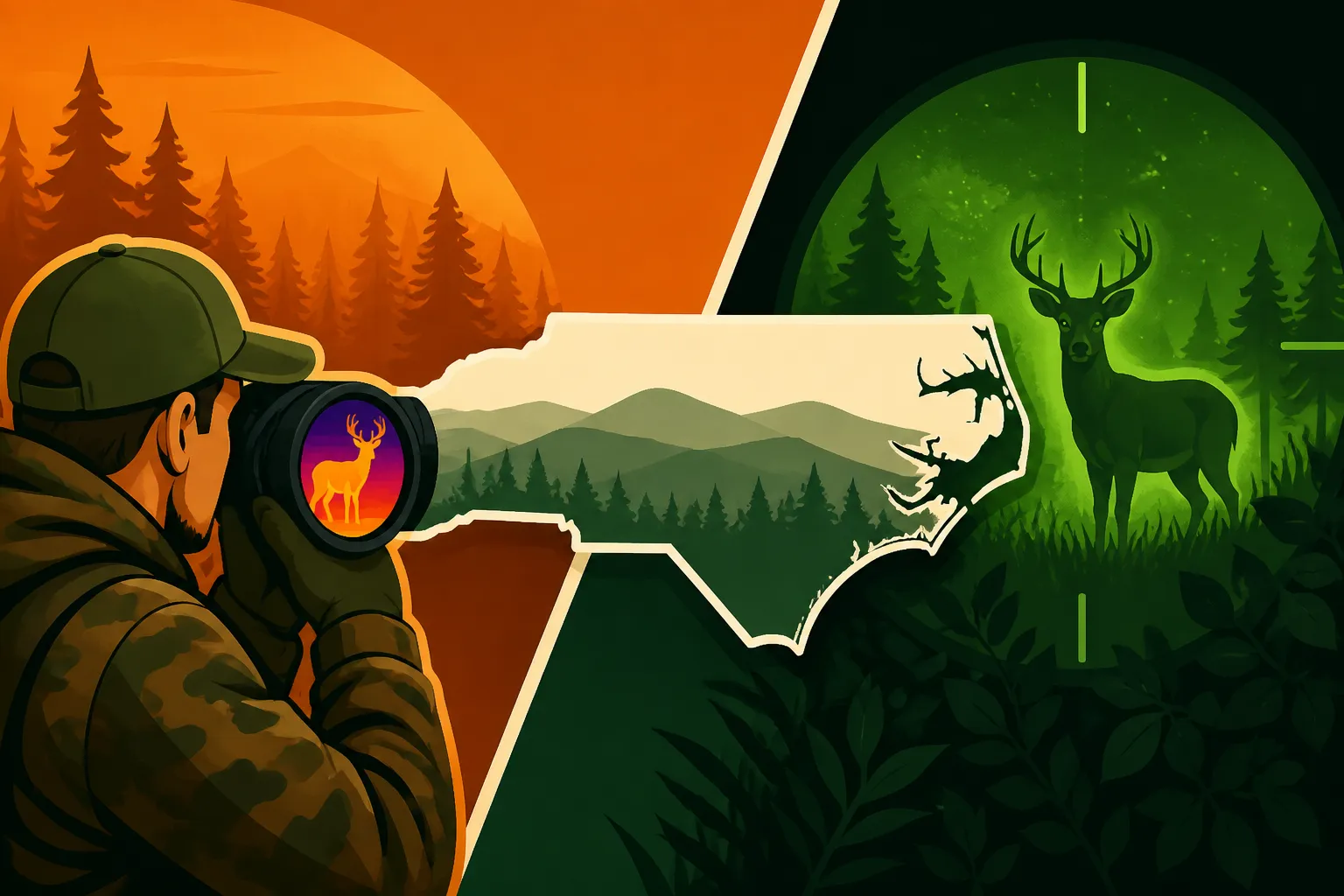
- Night Vision: These devices amplify existing ambient light (starlight, moonlight, infrared light). They typically present a green-hued image and require at least some light to work, though many have built-in infrared (IR) illuminators to provide their own light source.
- Thermal Imaging: These devices detect the heat signatures emitted by objects, creating an image based on temperature differences. They don't require any ambient light and can "see" through fog, smoke, and light brush, making them incredibly effective at spotting warm-blooded animals.
| Device Type | Hunting Deer/Bear | Hunting Coyotes/Hogs (Private Land) | Primary Mechanism | Requires Ambient Light? |
|---|---|---|---|---|
| Night Vision | Generally Prohibited | Generally Permitted | Amplifies existing light | Yes (or IR illuminator) |
| Thermal Imaging | Generally Prohibited | Generally Permitted | Detects heat signatures | No |
While the technology differs, the regulatory intent in North Carolina for big game is consistent: if it lets you see in the dark to hunt deer or bear, it's a no-go. For nuisance species like hogs and coyotes on private land, however, the playing field changes significantly, recognizing the need for more aggressive control methods.
Practical Considerations and Ethical Debates
Beyond the black-and-white regulations, there are practical considerations and ongoing ethical debates surrounding the use of thermal and night vision. As hunters, we're stewards of the land and wildlife, and our choices reflect on the entire community.
The Importance of Knowing Your Local Laws
I cannot stress this enough: always, always, always consult the most current North Carolina Inland Fishing, Hunting & Trapping Regulations Digest before heading into the field with any advanced optics. Regulations can change, specific areas (like certain Game Lands or National Forests) might have additional rules, and it's your responsibility to be informed. Don't rely solely on what you heard from a buddy or saw in an old forum post.
The NCWRC website is your best friend here. You can download the latest digest, search for specific rules, and often find FAQs that address common questions. Even better, platforms like GoHunt often integrate state regulations into their mapping tools, making it easier to see what rules apply to a specific parcel of land. Before you invest in expensive gear, or certainly before you use it in a hunting scenario, make that quick check. It can save you a lot of headache, fines, and potentially losing your hunting privileges. Ignoring the rules is not an excuse, and game wardens are well-versed in these technologies.
Ethical Hunting with Advanced Optics
Even where legal, the use of thermal and night vision raises ethical questions for some hunters. The principle of "fair chase" is deeply ingrained in hunting tradition. Does seeing a deer's heat signature from hundreds of yards away in total darkness, giving you a definitive advantage, align with that principle? For big game in North Carolina, the answer from the NCWRC is clearly "no," which is why it's prohibited.
However, for invasive species like feral hogs or overpopulated predators like coyotes, the ethical landscape shifts. Here, the goal often transitions from "fair chase" to "effective management." These animals can be incredibly detrimental to native ecosystems and agricultural operations, and using advanced tools to control their numbers is often seen as a necessary and responsible action. When using these devices for hogs or coyotes, always aim for clean, ethical kills. Just because you can see them in the dark doesn't mean you should take risky shots that might wound an animal. Precision and ethical shot placement remain paramount, regardless of the technology used. Respect for the animal, even an invasive one, should always guide our actions.
Navigating Public vs. Private Land with These Devices
Where you plan to hunt plays an enormous role in whether thermal and night vision are permissible. The rules on public land, especially highly regulated Game Lands or National Forests, are often much stricter than on private property.
Public Land Constraints
If you're hunting on North Carolina Game Lands, National Forests (like Pisgah, Nantahala, or Croatan), or National Wildlife Refuges, you can almost always assume that the general prohibitions on night hunting and the use of thermal/night vision for deer and bear apply. In many cases, these public lands will have additional, more restrictive rules regarding hunting hours and equipment.
For example, on many Game Lands, hunting is strictly limited to legal shooting hours, which means from 30 minutes before sunrise to 30 minutes after sunset. Using any device to aid in hunting outside those hours, even for species that might be legal to take at night on private land, would typically be a violation of game land rules. Furthermore, many public lands have rules about what equipment you can even possess or deploy. Treestand Setups in Pisgah National Forest or Ground Blind Rules on North Carolina Game Lands often come with specific regulations about how and when they can be used, and those same principles extend to advanced optics. Always, and I mean always, check the specific rules for the public land area you intend to hunt. The NCWRC website or a quick call to the local wildlife enforcement officer can clarify any doubts.
Private Land Opportunities and Responsibilities
Private land is where the exceptions for coyotes and feral hogs truly open up opportunities for thermal and night vision users. If you have permission to hunt on private property, you generally have more leeway to utilize these tools for predator and hog control. This is a huge benefit for landowners struggling with these animals, and it offers hunters exciting new challenges.
However, even on private land, responsibility is key. Just because you can use thermal to hunt hogs at night doesn't mean you can disregard safety. Always be acutely aware of your surroundings, your backdrop, and any nearby dwellings or property lines. It's easy to get tunnel vision when looking through a thermal scope. Use a tool like GoHunt or your own topographical maps to clearly understand property boundaries and ensure you're not trespassing or endangering others. North Carolina Trespass and Permission Law is serious, and accidental crossings, especially at night, can lead to trouble. Good communication with the landowner, explicit permission for night hunting, and a thorough understanding of the area are non-negotiable.
When considering night hunting on private land, here's a quick checklist to keep you safe and legal:
- Explicit Landowner Permission: Make sure they know you'll be night hunting and using specific equipment.
- Target Species Confirmed: Ensure you are only targeting legal species (coyotes, hogs) with these devices.
- Know Your Backstop: Always have a safe shooting lane and be absolutely sure of what's beyond your target.
- Communicate: If hunting with others, clear communication is essential to avoid accidents.
- Check Local Ordinances: Some municipalities might have noise ordinances or discharge rules that could impact night hunting, even on private land.
Thermal and night vision devices are powerful tools that offer incredible capabilities for wildlife management and specific hunting pursuits. Understanding and adhering to North Carolina's regulations, particularly the crucial distinctions between species and land types, is paramount. Stay informed, hunt responsibly, and enjoy your time afield, day or night.
Disclaimer
This article is for general informational purposes only and does not constitute professional advice. Laws, prices and regulations vary by location and change over time. Consult a qualified professional for guidance on your specific situation.