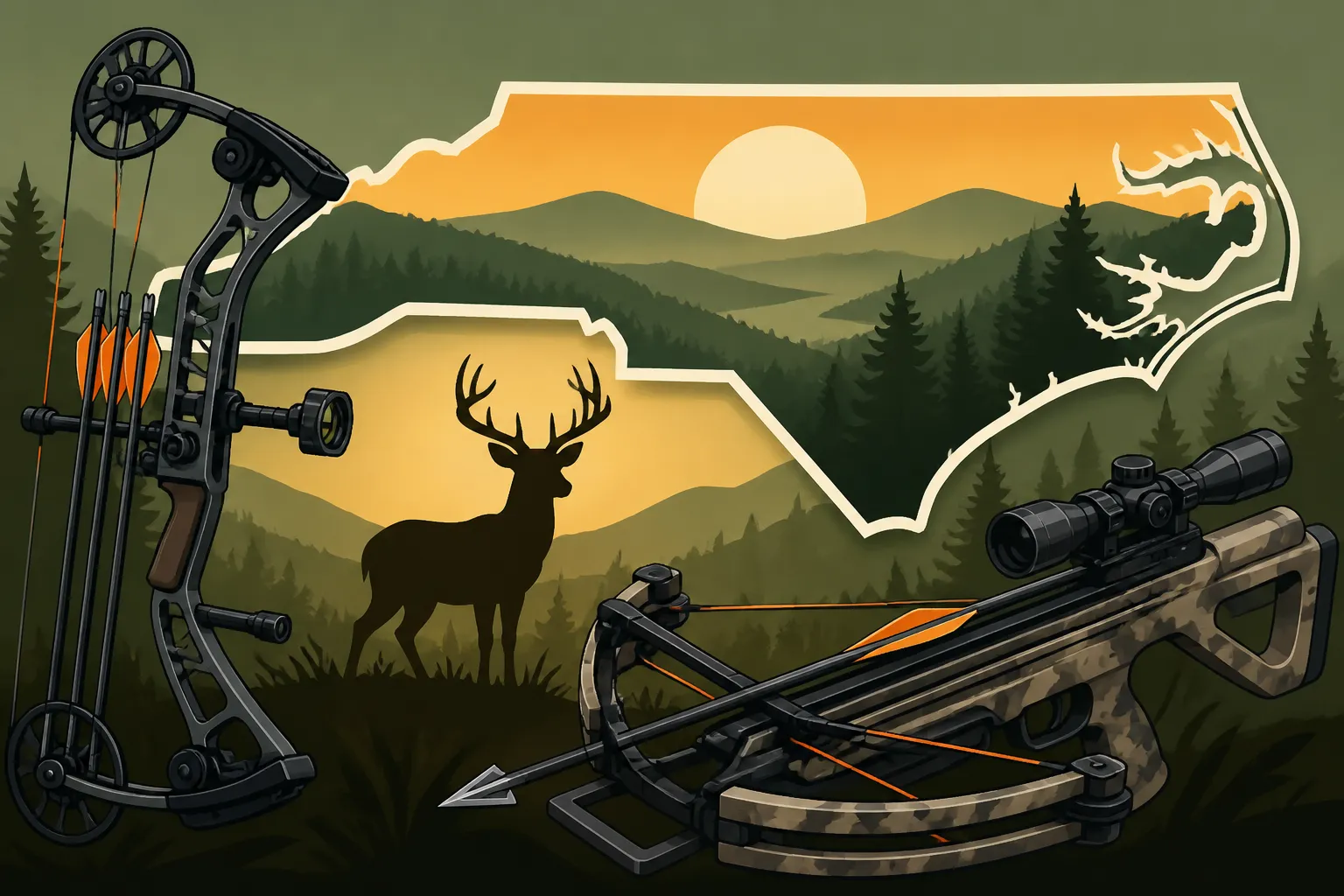
Bow and Crossbow Setups for North Carolina
There's nothing quite like the feeling of the crisp autumn air on your face, the rustle of leaves underfoot, and the quiet tension of waiting for a North Carolina whitetail, especially when you've got a bow or crossbow in hand. But let's be honest, setting up your archery rig for success in our diverse North Carolina landscapes can feel like a daunting task. From the dense mountain coves to the sprawling Piedmont farmlands and the thick, humid coastal pocosins, what works in one spot might fall flat in another. This guide is all about cutting through that confusion, helping you understand the ins and outs of bow and crossbow setups tailored specifically for hunting here in the Old North State, so you can head into the woods with confidence, knowing your gear is dialed in for the challenges ahead.
Understanding North Carolina's Archery Season Nuances
North Carolina's archery season is a special time, kicking off earlier than gun season and offering hunters a unique opportunity to get into the woods before the crowds. However, it's not a one-size-fits-all experience. Our state's varied geography means different hunting pressures, habitat types, and even slight nuances in deer behavior that can impact your gear choices and setup. Ignoring these regional differences can lead to frustration and missed opportunities, which is something no hunter wants after spending hours practicing and scouting.
Archery Season Calendar and Zone Differences
The beauty of North Carolina's archery season is its early start, often beginning well before the leaves turn. This means you're often hunting in warmer, more humid conditions, which has big implications for scent control and how deer move. While the statewide archery season generally starts around the same time, the varying gun season structures across our North Carolina's Four Gun Deer Zones do affect deer behavior and pressure as the year progresses. In the Western Zone, for instance, a later gun opener might mean deer are less pressured by firearms for a longer stretch, potentially making them more receptive to archery tactics further into the fall. Conversely, in the Eastern Zones, with their earlier gun openers, deer might become warier more quickly, demanding even more stealth and precision from bowhunters. Understanding these subtle shifts is crucial for adapting your setup and strategy.
It’s not just about the calendar; it's about what that calendar means for deer activity. Early season hunts might find bucks still in their summer bachelor groups, focused on food sources. As the season progresses towards the rut, especially in zones where gun season overlaps, deer movements become more erratic and territorial. Your early season bow setup for a food plot might differ slightly from a late-archery rut hunt when you're focusing on travel corridors or scrape lines. This requires a dynamic approach to not just where you hunt, but how you prepare your gear for what the deer are doing at that moment.
Legal Equipment: Bows vs. Crossbows
North Carolina is pretty accommodating when it comes to archery equipment, allowing both traditional bows, compound bows, and crossbows during the archery season. This flexibility is fantastic, but it also means hunters have a choice, and that choice should be informed by your personal comfort, physical abilities, and hunting style. For many years, there was a perception that crossbows were only for "special" circumstances, but those days are largely behind us. Crossbows are now fully integrated into the archery season, making them a viable and often preferable option for many.
When it comes to compounds, there's a huge range of options, from super-fast, short axle-to-axle bows perfect for treestands, to longer, more forgiving bows for those who prioritize accuracy. Crossbow Rules During North Carolina Archery Season clarifies any specific regulations you might encounter. The key is to choose a bow or crossbow that you can shoot accurately and consistently, not just one that looks impressive on paper. A bow you can comfortably draw and hold, or a crossbow you can cock and carry effectively, will always outperform a high-tech rig that causes you to struggle. Don't let ego dictate your equipment; let practicality and proficiency guide your decision.
Choosing Your Weapon: Compound Bows for North Carolina
For many, the compound bow is the quintessential archery hunting tool. It's a blend of tradition and modern engineering, offering impressive speed and accuracy. In North Carolina, with our varied terrain and often close-quarters hunting, a compound bow can be an incredibly effective choice. But diving into the world of compound bows means understanding more than just the brand name; it's about fitting the bow to the hunter and the hunt.
Draw Weight, Draw Length, and Comfort
The foundation of a good compound bow setup starts with personalized fit. Your draw weight and draw length aren't just numbers; they're critical to your accuracy and comfort. A draw length that’s too long or too short will force poor form, leading to inconsistent shots and fatigue. Imagine trying to shoot with your arm constantly stretched or cramped—it’s just not going to work well. Most pro shops can measure your exact draw length, which is a game-changer for finding the right bow or setting up your existing one. Many seasoned hunters use resources like GoHunt to compare different bow models and their adjustability before heading to the shop.
Similarly, draw weight needs to be manageable. While there's a minimum draw weight for hunting deer in North Carolina, choosing the maximum weight you can possibly pull is a common mistake. You need to be able to comfortably draw your bow from a seated position in a treestand, or after a long hike up a mountain ridge, without shaking or struggling. Repeatedly drawing a bow that's too heavy will quickly lead to poor form, shoulder strain, and a confidence-sapping experience. It’s far better to shoot a slightly lower draw weight accurately than to strain with a heavier one and compromise your shot. Consistent practice is key, and comfort fuels consistency.
Essential Bow Accessories: Sights, Rests, and Stabilizers
Once you've got the core bow dialed in, it's time to deck it out with accessories that enhance performance. The right sight, rest, and stabilizer can transform your shooting experience. For sights, many North Carolina bowhunters opt for multi-pin sights, allowing for quick adjustments between common hunting ranges, often 20, 30, and 40 yards, which covers most shots in our timbered environments. A single-pin slider sight offers ultimate precision at varied distances but requires more adjustment time, which might be a drawback when a deer steps out unexpectedly.
Arrow rests are another crucial component. A drop-away rest is popular because it provides full containment of the arrow at full draw and then drops completely out of the way upon release, minimizing fletching contact and maximizing accuracy. This is particularly useful in thick cover where an arrow could otherwise be bumped. Stabilizers, while often overlooked, play a vital role in balancing your bow and reducing vibration, leading to a steadier aim and a quieter shot. In the quiet woods of North Carolina, every little bit of noise reduction helps, especially when a mature buck is within earshot.
Crossbows for North Carolina Hunters: Benefits and Considerations
Crossbows have truly come into their own for North Carolina hunters, offering a powerful and precise alternative for those who may have physical limitations, or simply prefer the shooting style. They bridge the gap between traditional archery and firearms in some respects, providing rifle-like accuracy from a shoulder-fired platform. Understanding their advantages and specific gear requirements is essential for a successful crossbow setup.
Speed, Accuracy, and Ease of Use
One of the most compelling benefits of a modern crossbow is its inherent accuracy and impressive speed. Out of the box, many crossbows can group bolts tightly, often rivaling the precision of a scoped rifle at comparable archery distances. This can be a huge confidence booster, especially for hunters who might struggle with the fine motor control and physical exertion required to consistently shoot a compound bow. The ability to simply shoulder the crossbow, aim, and squeeze a trigger, much like a firearm, makes the learning curve significantly shorter for many newcomers.
Moreover, the sheer power of a crossbow means bolts fly with incredible velocity, translating to flatter trajectories and potent kinetic energy for ethical kills. This can be particularly reassuring when hunting larger North Carolina deer or in conditions where a fast, clean shot is paramount. While they excel in these areas, it's vital to remember that a crossbow still demands the same discipline and shot placement as any other archery tool. Speed doesn't negate the need for patience and precision, especially when tracking a deer through the dense undergrowth often found when Hunting Coastal Plain Pocosin Swamps.
Quiver, Scopes, and Cocking Devices
Just like with a compound bow, the right accessories elevate a crossbow setup. A good quiver, securely mounted to your crossbow or carried separately, ensures your bolts are protected and readily accessible. Given the speed and power of crossbows, scopes are practically standard equipment. These allow for precise aiming, often featuring illuminated reticles or multiple aiming points to account for trajectory at different ranges. A quality scope, properly sighted in, maximizes the inherent accuracy of the crossbow. When comparing options, many hunters consult product reviews and specifications on platforms like GoHunt.
Cocking devices are another crucial piece of gear, particularly for higher-draw-weight crossbows. Mechanical cocking aids, either integrated into the bow or used externally, greatly reduce the effort required to draw the string, making the crossbow accessible to a wider range of hunters. Some even offer silent cocking, which can be invaluable when you need to reload quickly and discreetly in the field. Ignoring these accessories would be like buying a sports car without tires; they are integral to the crossbow's performance and the hunter's experience.
Arrows and Broadheads: The Business End of Your Setup
No matter if you're slinging arrows from a compound or launching bolts from a crossbow, what’s on the tip and shaft of your projectile is arguably the most critical component. It’s what actually makes contact with the animal, and selecting the right combination for North Carolina’s whitetails is paramount for ethical and successful hunting. This isn't an area to cut corners or guess; precision here directly translates to your success afield.
Arrow Selection: Weight, FOC, and Spine
Selecting the right arrow or bolt involves a delicate balance of weight, FOC (Front of Center), and spine. The spine is perhaps the most important, referring to the arrow's stiffness. An arrow that’s too stiff or too weak for your bow’s draw weight and length will flex improperly, leading to inconsistent flight and poor accuracy. Getting this dialed in, often with the help of a pro shop or detailed charts, is non-negotiable. Think of it like matching the right bullet weight and powder charge to a rifle; it's essential for optimal performance.
Arrow weight directly impacts speed and kinetic energy. Heavier arrows carry more momentum and are often preferred for larger game or for maximizing penetration, which is a huge advantage when Hunting Piedmont Farmland Deer that can sometimes be surprisingly robust. Lighter arrows fly faster, leading to a flatter trajectory, which can be beneficial for varying shot distances without adjusting your pins as much. FOC refers to how much of the arrow's weight is distributed towards the front. A slightly higher FOC often improves flight stability, especially with broadheads, making it a desirable characteristic for hunting arrows.
Fixed Blade vs. Mechanical Broadheads for NC Game
The debate between fixed blade and mechanical broadheads is a perennial one among bowhunters, and both have their merits for North Carolina deer. Fixed blade broadheads are known for their rugged durability and reliability. They have no moving parts, so they’re less prone to failure on impact, and their robust construction means they can punch through bone and hide with consistent performance. Many traditionalists swear by them for their simplicity and the confidence they inspire. However, they can be less forgiving of tuning issues and may catch more wind in flight, potentially affecting accuracy at longer distances.
Mechanical broadheads, on the other hand, offer a compact flight profile, often flying more like field points, which can be a huge advantage for accuracy, especially for crossbows or less perfectly tuned compounds. Upon impact, blades deploy, creating a large cutting diameter that can lead to massive wound channels and quick, ethical kills. The trade-off is their mechanical nature; there's always a slight chance of failure if blades don't deploy correctly or if they encounter heavy bone. For North Carolina deer, both types are highly effective, but careful consideration of your bow setup, shot distance capabilities, and personal preference should guide your choice. A table comparing common attributes can be helpful:
| Feature | Fixed Blade Broadhead | Mechanical Broadhead |
|---|---|---|
| Flight | Can be sensitive to tuning, may plane in wind | Flies more like a field point, very accurate |
| Durability | Very robust, minimal moving parts, excellent for bone | Blades deploy, potential for failure on heavy bone |
| Cutting Diameter | Typically smaller, consistent, starts cutting immediately | Often larger upon deployment, creates wider wound channel |
| Penetration | Excellent due to minimal resistance on initial impact | Good, but deploying blades can slow initial penetration |
| Reliability | High, simple design | High, but relies on moving parts |
| Maintenance | Sharpening required after use | Replaceable blades often needed |
Ultimately, the best broadhead is one that flies true from your bow and provides a large, ethical wound channel. Always test your broadheads with your hunting setup before heading afield to ensure they fly consistently with your field points.
Treestands and Ground Blinds: Concealment for North Carolina's Diverse Terrain
Once your bow or crossbow is dialed in, the next piece of the puzzle is how you plan to conceal yourself effectively. North Carolina's diverse habitats—from the steep, timbered slopes of the mountains to the flat, open fields of the Piedmont and the dense, swampy lowlands of the coast—demand different concealment strategies. The right treestand or ground blind setup can mean the difference between seeing deer and simply seeing woods.
Public Land Treestand Considerations
Hunting on North Carolina public lands often comes with specific rules and regulations regarding treestands. You might find restrictions on how long a stand can be left up, whether it needs to be marked with your hunter ID, or what type of stands are permitted. It's crucial to consult the North Carolina Wildlife Resources Commission (NCWRC) regulations for the specific Game Land or National Forest you plan to hunt. Ignoring these rules can lead to fines or loss of hunting privileges. Beyond the rules, the sheer amount of hunting pressure on public land means you often need to get further off the beaten path or be more mobile.
For public land hunters, mobility is often key. Lightweight climbing stands, lock-on stands paired with climbing sticks, or even Saddle Hunting in North Carolina Hardwoods setups are popular because they allow you to pack in and out, adapting to changing deer patterns or pressure. When setting up a treestand, focus on areas that offer natural cover for breaking up your outline, like mature hardwoods with plenty of limbs or areas with thick understory. Also, consider your entry and exit routes. You want to be able to get to and from your stand without spooking every deer in the area. A well-placed treestand isn't just about the deer; it's about the entire hunting experience, from the walk in to the shot.
Ground Blind Strategies for Open Country and Thick Cover
While treestands offer a bird's-eye view, ground blinds provide excellent concealment at ground level, which can be advantageous in many North Carolina scenarios. In open fields, cutovers, or along powerline right-of-ways common in Hunting the North Carolina Piedmont, a pop-up ground blind can offer fantastic cover, especially when brushed in properly with natural vegetation. These blinds are easy to set up, provide shelter from the elements, and excel at concealing movement, which is critical for close-range archery shots. Make sure to check the Ground Blind Rules on North Carolina Game Lands if hunting public land, as specific regulations might apply.
In thick cover, such as the dense thickets found on the Coastal Plain, a natural ground blind created from existing vegetation might be more effective and less intrusive. Simply finding a large tree, a downed log, or a natural brush pile and enhancing it with some cut branches can provide incredible concealment without needing to pack in bulky equipment. The key to any ground blind, whether manufactured or natural, is to blend in completely with your surroundings. Take the time to brush it in, break up its outline, and ensure you have clear shooting lanes for both left and right-handed shots. A well-placed ground blind can offer an intimate hunting experience, bringing you eye-to-eye with a North Carolina whitetail.
Scent Control and Camouflage: Beating a Whitetail's Nose and Eyes
In bowhunting, you're trying to get a deer within typically 20-40 yards, sometimes even closer. At those distances, a whitetail's incredible senses, especially their nose, are your biggest challenge. Without a diligent approach to scent control and proper camouflage, all the precision in your bow setup might be for naught. This is where meticulous planning and consistent execution come into play, validating the frustration many hunters feel when they've done everything right, only to be busted by a swirling wind.
Scent Management in Humid Conditions
North Carolina's climate, particularly during the early archery season, can be incredibly humid. This humidity intensifies scent molecules, making them hang in the air longer and spread further. Standard scent control practices, like showering with scent-free soap and washing hunting clothes in scent-free detergent, become even more critical here. But it goes beyond that. Storing your hunting clothes in airtight containers or scent-control bags is essential from the moment they're clean until you put them on at your hunting location. Many hunters utilize technologies like ozone generators for their gear to neutralize scent molecules.
Beyond personal hygiene and clothing, consider your entire system. Your bow, boots, treestand straps, and even your water bottle can carry human odor. Give everything a good wipe down with scent-eliminating sprays or store them in an environment designed to minimize odor absorption. Playing the wind is still your number one scent control strategy, but in shifting North Carolina thermals or swirling swamp breezes, a layered approach to scent management can be the difference between a successful close encounter and an empty stand. Remember, it's about minimizing, not eliminating, scent – every little bit helps.
Camouflage Patterns for North Carolina's Changing Seasons
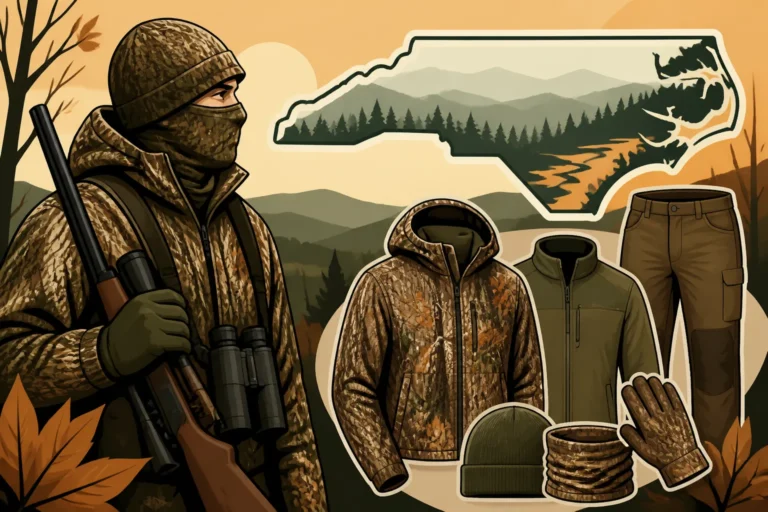
While a deer’s nose is paramount, their eyes are also formidable, especially their ability to detect movement and break up patterns. Choosing the right camouflage for North Carolina means adapting to our dramatically changing seasons. Early season, when foliage is still lush green, calls for patterns with more greens and browns. As fall progresses and leaves turn vibrant yellows, oranges, and reds, switching to a pattern with those hues can make you blend in seamlessly. Finally, once the leaves have fallen and the woods are stark browns and grays, a stick-and-limb pattern or something with a lot of dark, contrasting shadows works best.
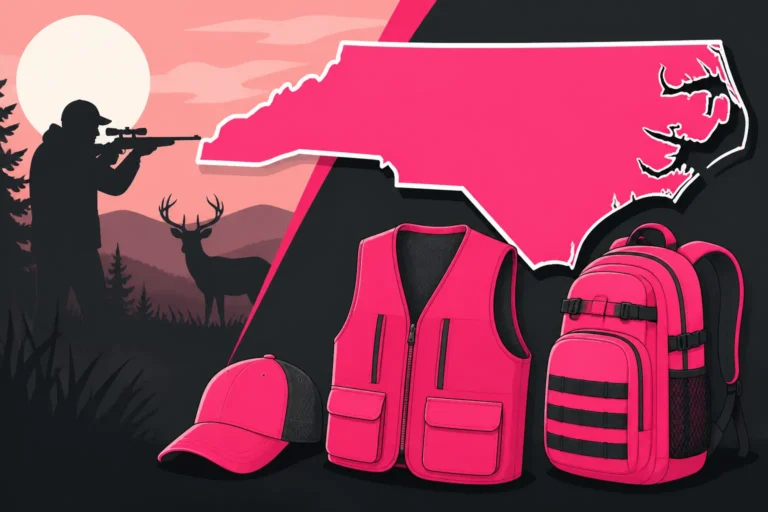
It's not just about the color, but the pattern itself. Too much open space in a pattern, or too few contrasting elements, can make you look like a blob to a deer, especially against a uniform background. Breaking up your silhouette is key. Consider using natural elements around your stand for added concealment. A hunter in a treestand against a bare trunk, no matter how good their camo, will be silhouetted. Utilizing branches, vines, or even a small leafy branch zip-tied to your stand can make a huge difference. Don't forget your face and hands; a face mask or face paint and gloves are often overlooked but crucial for eliminating shine and dark spots. Always ensure your Blaze Orange Requirements are met, even if you’re trying to remain concealed.
Practice Makes Perfect: Sharpening Your Skills
Having the best bow or crossbow setup in North Carolina is meaningless if you can't shoot it accurately under pressure. Consistent, quality practice is the bedrock of ethical and successful bowhunting. It builds muscle memory, refines your form, and instills the confidence you need when that deer of a lifetime steps into your shooting lane.
Range Practice and Ethical Shot Placement
Regular practice on the range is non-negotiable. Don't just fling arrows; practice with a purpose. Focus on perfect form, a smooth draw, and a surprise release. Practice at varying distances, not just your sweet spot, but also closer and further than you expect to shoot in the field. Many public shooting ranges or local archery clubs offer excellent facilities for this. Crucially, practice from hunting positions: from your treestand, kneeling, or even seated if that's how you often hunt. This simulates real-world scenarios, making you more prepared when a shot opportunity arises.
Equally important is understanding ethical shot placement. For deer, the vitals (heart and lungs) are a relatively small target, and a bowhunter’s margin for error is slim. Study deer anatomy diagrams and practice aiming for that critical double-lung shot. Understanding angles is also vital. A broadside shot is ideal, but deer rarely cooperate perfectly. Practice quartering-away shots, knowing where your arrow needs to exit to maximize internal damage. Never take a questionable shot. Your responsibility as a bowhunter is to make a quick, clean kill, and that starts with knowing your limitations and practicing to overcome them. Using resources like GoHunt to find detailed information on shot angles and anatomy can significantly improve your understanding.
Off-Season Maintenance and Readiness
Archery season might be relatively short, but your bowhunting gear needs year-round attention. Off-season maintenance is crucial for ensuring your setup is always ready to perform. This includes checking your bowstring and cables for wear, inspecting cams for any nicks or damage, and lubricating any moving parts on your rest or sight. A worn bowstring can dramatically affect accuracy and is a serious safety concern. Consider having a pro shop give your bow a once-over annually, especially if you shoot a lot.
For crossbows, inspect the string and cables, ensure the scope is securely mounted and still sighted in, and check the integrity of your bolts. Always store your bow or crossbow properly, ideally in a case, to protect it from damage and environmental factors. Beyond the weapon itself, check your broadheads to make sure they're razor sharp. Dull broadheads can lead to poor penetration and a wounded animal. Treat your equipment with respect, and it will serve you well when that critical moment arrives in the North Carolina woods.
Additional Gear for a Successful North Carolina Bowhunt
Beyond the bow or crossbow itself, a few other pieces of gear can significantly enhance your safety, navigation, and overall success during a North Carolina bowhunt. These aren't necessarily "core" to the shot, but they are absolutely critical to the hunt.
Navigation and Tracking Tools
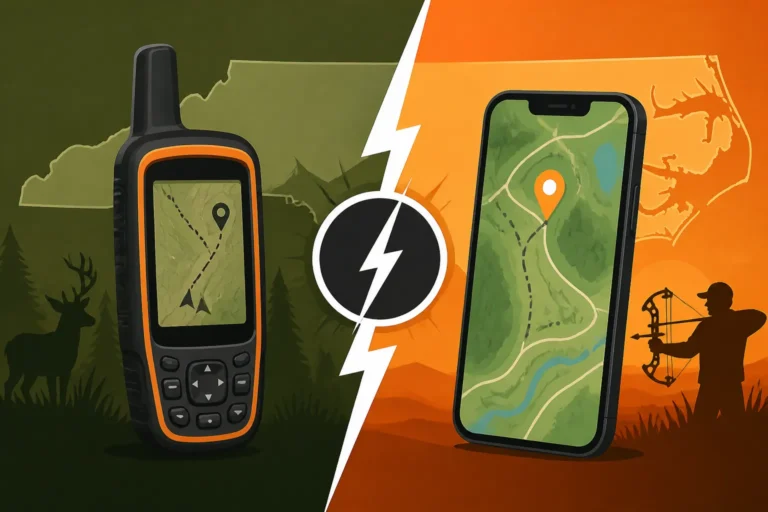
North Carolina's hunting lands, particularly the National Forests like Pisgah and Nantahala or expansive Game Lands, can be vast and disorienting. A reliable navigation system is no longer a luxury, it's a necessity. While a compass and physical map are always wise backups, modern GPS units or robust hunting apps on your smartphone (like GoHunt, which offers detailed maps with property lines and topographic features) have revolutionized how we navigate. These tools allow you to pinpoint your exact location, mark treestand sites, track game trails, and ensure you can find your way back to your vehicle, even in the dark.
Furthermore, these tools are invaluable for tracking. After the shot, marking your last known location of the deer and the direction of travel can be immensely helpful. When Tracking a Deer Through North Carolina Leaf Litter, a GPS track of your own path can prevent you from circling back on yourself. Carry a good headlamp, too. Many tracking efforts extend into Blood Trailing After Dark in North Carolina, and a powerful, reliable light source is essential. It's better to be over-prepared for navigation and tracking than to be lost or lose a deer due to insufficient tools.
Safety First: Harnesses and First Aid
Safety should always be your top priority, especially when hunting from elevated positions. If you hunt from a treestand, a full-body safety harness is non-negotiable. Falls from treestands are a leading cause of hunting injuries and fatalities. Always use your harness from the moment your feet leave the ground until they touch it again. This means using a lifeline or safety rope when ascending and descending. Invest in a quality harness that fits comfortably and practice using it before the season. Your life is worth far more than any deer.
Beyond treestand safety, a well-stocked first-aid kit is another essential item, especially if you're venturing into remote areas. Small cuts, scrapes, snake bites (yes, they're a real concern in some parts of North Carolina), or allergic reactions can happen anywhere. Your kit should include basic wound care supplies, pain relievers, and any personal medications you might need. Consider carrying a tourniquet and knowing how to use it, especially if you're hunting alone. Being prepared for emergencies ensures you can focus on the hunt with peace of mind.
Disclaimer
This article is for general informational purposes only and does not constitute professional advice. Laws, prices and regulations vary by location and change over time. Consult a qualified professional for guidance on your specific situation.