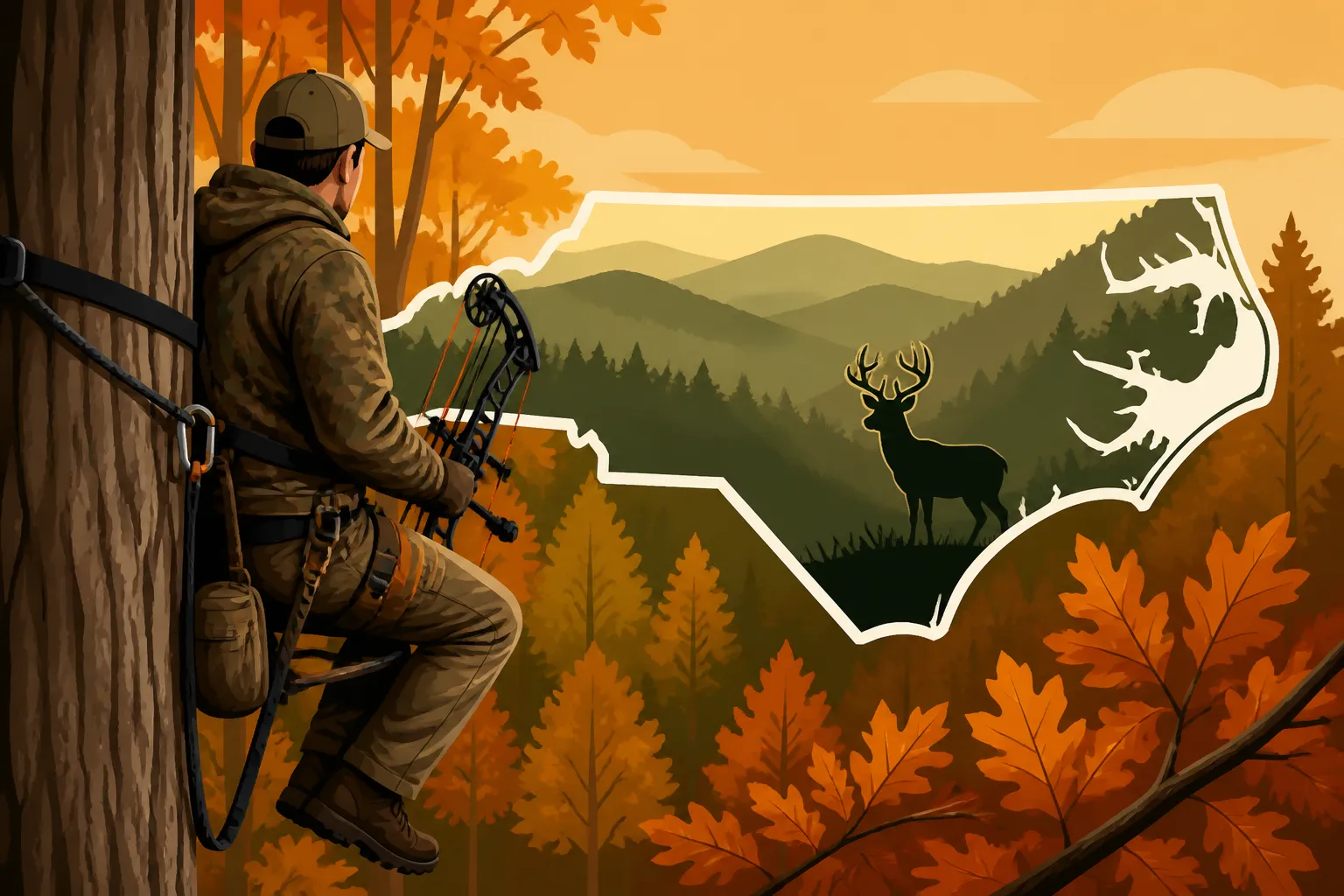
Saddle Hunting in North Carolina Hardwoods
If you've spent any time chasing deer in North Carolina's diverse terrain, you know the frustration of finding that "perfect" tree for a traditional hang-on or climbing stand. Whether you're navigating the steep, gnarled oaks of the mountains, the dense, multi-trunked hardwoods of the Piedmont, or the surprisingly irregular timber in some coastal areas, committing to a single stand location can feel like a huge gamble. This guide is all about embracing the freedom and adaptability of saddle hunting, a method that shines brightest in the kinds of challenging hardwood environments we often encounter right here in our home state.
Why Saddle Hunting Shines in North Carolina's Hardwoods
Let's be honest, trying to force a traditional fixed stand into some of our wilder spots can be a real headache. You might find incredible sign, a fresh scrape line, or a well-used travel corridor, only to be met with a stand of trees that are too small, too crooked, or just plain unhealthy to safely hang a traditional setup. Saddle hunting cuts through a lot of that frustration, offering a level of flexibility that's hard to beat when you're dealing with North Carolina's varied timber.
The Frustration of Fixed Stands in Varied Terrain
I've been there countless times: hiking deep into a promising area, my hang-on stand digging into my shoulders, only to realize the "perfect" ambush point has no suitable trees. Maybe it's a double-trunked oak, or a cluster of pines that are just too flimsy, or perhaps the only mature tree is leaning precariously. It's a gut punch when you've invested the time and effort to get there. Traditional climbing stands are even more limited, requiring a perfectly straight, limb-free trunk. Our hardwoods are rarely so cooperative. You end up either settling for a subpar tree, or worse, having to move on, potentially busting deer in the process, all because your equipment dictated where you could hunt, not where the deer were. It can feel like you're fighting the woods just to get set up.
Unmatched Mobility and Adaptability
This is where saddle hunting truly excels in North Carolina. Instead of needing a specific kind of tree, a saddle system allows you to hunt virtually any tree that's healthy enough to hold your weight. That gnarly old white oak with the low-hanging limbs? Perfect. That cluster of smaller, straight hardwoods creating a natural funnel? You can blend right into one of them. This means you can adapt on the fly. Maybe the wind shifted unexpectedly, or you found a hot scrape line just a few yards from your intended spot. With a saddle, you can quickly and quietly move to a different tree, often within minutes, without lugging a bulky stand. This mobility is a game-changer when you're Scouting North Carolina Public Land Before Season and then finding those prime spots during the hunt itself. It allows you to follow the deer, not just wait for them.
Low Profile and Concealment
One of the biggest advantages of saddle hunting, especially in our dense hardwood forests, is the incredibly low profile it offers. When you're in a saddle, you're literally hugging the tree, using its trunk as natural cover. This makes you significantly harder to spot than someone perched on a large stand platform sticking out from the tree. You can pivot around the tree, using its bulk to block a deer's line of sight as it approaches. This enhanced concealment is particularly effective when Bowhunting North Carolina's Statewide Archery Season, where close encounters are the name of the game and every bit of cover counts. Imagine a buck working a Scrape Lines Along a Logging Road; being able to melt into the tree makes all the difference.
Essential Gear for Your North Carolina Saddle Hunt
Diving into saddle hunting means rethinking your gear a bit, but don't worry, it's not overly complicated. The core idea is lightweight, efficient, and safe. The beauty of it is how adaptable these systems are to the varying conditions you'll face across North Carolina. Whether you're in the steep mountains or the rolling Piedmont, having the right components makes a world of difference.
The Saddle Itself and Core Safety Gear
At its heart, a saddle hunting system consists of the saddle itself, a linemans belt, and a tree tether. The saddle is what you wear, distributing your weight comfortably around your hips and rear. It's designed to be ergonomic, allowing you to lean back into it for hours without discomfort. The linemans belt is a critical safety component used for ascending and descending the tree, keeping you securely attached at all times. The tree tether is what you attach to the tree at hunting height, connecting you to the tree and providing a secure anchor point from which to hunt.
When choosing a saddle, comfort is key. Many companies offer different designs, so try a few if you can. Look for durable materials that can withstand thorns, briars, and the general abuse of the North Carolina woods. Brands like Tethrd, Trophyline, and Cruzr are popular choices, each with their own loyal following. Remember, safety always comes first; ensure your chosen system meets all safety standards and you understand how to use it correctly. This isn't just about comfort; it's about being secure 20 feet up a tree.
Climbing Methods for Hardwoods
Getting up the tree quietly and efficiently is crucial. For North Carolina's diverse hardwoods, you have a few excellent options, each with its pros and cons.
-
Climbing Sticks: These are incredibly popular for a reason. They're individual sections that attach to the tree, allowing you to create a ladder as you ascend. They work exceptionally well on crooked, limby, or multi-trunked trees where a traditional climber would fail. Many saddle hunters opt for lightweight aluminum or carbon fiber sticks to keep their pack weight down. Quiet attachment methods are paramount; nobody wants clanking metal echoing through the still morning woods. These are fantastic for setting up quickly when you're focused on Hanging a Stand on a Pisgah Ridge where terrain can be very irregular.
-
Aider Steps: These are essentially small steps or loops of rope/webbing that you can attach to your climbing sticks, allowing you to get more height out of fewer sticks. This further reduces your pack weight and bulk, making you even more mobile. They take a bit of practice to use smoothly but are incredibly effective for ultralight setups.
-
Stepps/Screw-in Steps: While not as common on public land due to regulations against leaving things in trees, screw-in steps or strap-on individual steps are an option for private land. They are very compact and lightweight, allowing you to carry many in a small pouch. However, they require careful placement and can be noisy if not installed correctly. Always check game lands rules for any restrictions on damaging trees or leaving items overnight.
| Climbing Method | Pros | Cons | Best for NC Hardwoods |
|---|---|---|---|
| Climbing Sticks | Highly versatile, work on most trees, safe | Can be bulky/heavy, multiple attachments needed | Excellent for public land, varied trunks, quick setup |
| Aider Steps | Very lightweight, extend stick height | Requires practice, less stable than full sticks | Enhances mobility with sticks, ultralight setups |
| Screw-in Steps | Extremely compact, silent once installed | Tree damage concern, prohibited on most public land | Private land only, very discreet, permanent if desired |
| Strap-on Steps | Similar to screw-ins, less tree damage | Can be less stable than sticks, still need multiple | Private land, temporary, less impact than screw-ins |
Platforms and Accessories for Comfort and Functionality
Once you're at hunting height, a platform or a set of "ring of steps" provides a stable surface for your feet. This isn't just about comfort; it allows you to shift your weight, turn, and execute shots from various angles. Platforms vary in size and weight, from minimalist designs to larger, more comfortable options. The choice often comes down to personal preference and how much weight you're willing to carry.
Beyond the platform, think about a few key accessories:
- Dump Pouches: These attach to your saddle and are perfect for holding calls, rangefinders, or other small items you need quick access to.
- Gear Hooks/Hangers: Keep your bow, backpack, or other essentials within easy reach without cluttering your platform.
- Bow/Weapon Holders: Many hunters prefer a dedicated bow holder that screws into the tree or attaches to the platform, keeping their weapon ready but out of the way.
Remember, the goal is to be self-sufficient and comfortable enough to sit for extended periods, even during the late season when Cold-Weather Sitting Strategy in the Mountains becomes critical.
Tactics for Success in North Carolina Hardwoods
Saddle hunting isn't just about the gear; it's a different way of thinking about how you approach your hunt. In North Carolina's often challenging hardwood forests, these tactics can truly give you an edge, allowing you to be more stealthy, adaptable, and ultimately, more successful. From finding the perfect tree to making the shot, a little planning goes a long way.
Scouting for the Perfect Hardwood Tree
Scouting is always crucial, but it takes on a slightly different flavor with saddle hunting. Instead of looking for one perfect tree that can hold a bulky stand, you're looking for areas with multiple viable trees that offer good cover and are located strategically. When you're Reading a Ridge for Mountain Zone Deer, look for transition lines, natural funnels, or clusters of mast-producing trees. A good saddle tree should be healthy, reasonably straight for the first 10-15 feet, and ideally have some limbs or surrounding cover to break up your outline.
I often use mapping apps like GoHunt to mark potential setups even before I step foot in the woods. I'll look for terrain features like saddles, creek crossings, or old logging roads that deer might use. Then, during physical scouting, I'm confirming deer sign, but also evaluating the timber. Is there a cluster of oaks dropping acorns? Are there good "hunting trees" nearby? With a saddle, that cluster of four slightly smaller oaks suddenly becomes a viable option where you can blend in perfectly. Don't be afraid to look beyond the obvious "stand trees." Sometimes the most overlooked trees offer the best concealment. Finding Sign in Big Pisgah Timber often reveals these hidden gems.
Setting Up Quietly and Efficiently
One of the biggest advantages of saddle hunting is the potential for an incredibly quiet setup. Since your sticks are lighter and your platform is often smaller than a traditional stand, you can move through the woods with less bulk. Practice at home, starting low to the ground, until your setup is fluid and silent.
Here's a general approach:
- Approach: Move slowly and deliberately to your chosen tree, especially if you're hunting during legal shooting hours.
- Linemans Belt: Secure your linemans belt around the tree at arm's reach. This is your primary safety connection.
- First Stick/Step: Attach your first climbing stick or step just above your comfortable reach, making sure it's stable.
- Ascend and Repeat: Climb onto the first step, then secure your linemans belt higher, and attach the next stick. Repeat until you reach your desired hunting height. Keep all gear tight to your body to prevent clanging.
- Tree Tether & Platform: Once at height, secure your tree tether to the tree, allowing for comfortable lean. Then, attach your platform or ring of steps. Double-check all connections before leaning back.
It sounds simple, but like anything, practice makes perfect. The goal is to get into the tree and be ready to hunt with minimal disturbance. Treestand Setups in Pisgah National Forest often involve steep climbs and irregular timber, making this quiet efficiency invaluable.
Shot Angles and Movement in a Saddle
This is where saddle hunting truly shines during the moment of truth. Unlike a traditional stand where you're often limited to front-on or slightly angled shots, a saddle allows for a full 360-degree range of motion around the tree. You can literally use the tree as your primary cover.
As a deer approaches, you can subtly pivot around the trunk, keeping the tree between you and the animal until the perfect shot opportunity arises. You can lean out to get a clear lane, then lean back into the tree for concealment. This dynamic movement is a game-changer for bowhunters. Practice shooting from various positions in your saddle, mimicking real-world scenarios. Know your comfortable shooting windows and understand how to manage your tether and linemans belt to get a clear line of sight without unnecessary movement. It takes a bit of adjustment, but once you master it, you'll feel incredibly versatile in the tree.
Overcoming Challenges and Maximizing Advantages
No hunting method is without its quirks, and saddle hunting is no different. But for every potential challenge, there's usually a clever workaround or an inherent advantage that makes it worthwhile, especially in the rugged beauty of North Carolina. Embrace the learning curve, and you'll unlock a highly effective and rewarding way to hunt.
Dealing with Thick Undergrowth and Steep Terrain
North Carolina's hardwoods, particularly in areas like the Pisgah National Forest or even some overlooked Piedmont tracts, can be an absolute tangle of grapevines, mountain laurel, and dense regeneration. Carrying climbing sticks and a saddle through this can be a physical workout. The advantage here, however, is that once you reach your chosen tree, the saddle's low profile helps you melt into that thick cover. You're not trying to find a clear shooting lane for a wide stand platform; you're utilizing the tree itself and the surrounding brush for maximum concealment.
For dealing with steep terrain, the lightweight nature of a saddle system is a huge plus. Every ounce counts when you're climbing up and down those Blue Ridge slopes. Focus on staying physically fit, and choose climbing methods that are secure and adaptable to uneven ground. A good pair of boots and a well-fitting pack will be your best friends.
Weathering the Elements in a Saddle
Being "out in the open" on a tree can feel more exposed to the elements compared to sitting in a larger enclosed stand or blind. North Carolina weather can be notoriously fickle, from warm early season archery days to biting cold late-season muzzleloader hunts. Layering becomes absolutely critical when you're in a saddle. Think about multiple thin layers that you can add or shed as temperatures change.
For rain, a quality waterproof shell is essential, as there's less physical overhead cover. During colder hunts, high-quality insulated base layers, mid-layers like fleece or wool, and a quiet, insulated outer shell are a must. A hand muff or chemical warmers can also make a huge difference in your comfort. Remember, staying warm and dry means staying on stand longer, which directly correlates to your success. Check out our guide on Clothing for a North Carolina Late Season for more in-depth advice on staying comfortable.
Learning Curve and Practice
Let's be real: saddle hunting isn't something you just pick up and master on your first try. There's a definite learning curve. Getting comfortable with the various knots, ensuring proper safety setup, ascending and descending smoothly, and learning to shoot from the saddle all take time and practice. Don't let this deter you! Start low to the ground in your backyard, maybe just 5-10 feet up, and practice every aspect of the setup and movement. Get used to the feeling of leaning back into the saddle.
Many online communities and local hunting groups dedicated to saddle hunting exist. These are fantastic resources for tips, tricks, and troubleshooting. Watching videos, reading reviews, and asking questions can accelerate your learning process. The investment in time to learn this method will pay dividends in the field, opening up more hunting opportunities and making you a more versatile hunter in North Carolina's challenging hardwood forests.
Disclaimer
This article is for general informational purposes only and does not constitute professional advice. Laws, prices and regulations vary by location and change over time. Consult a qualified professional for guidance on your specific situation.