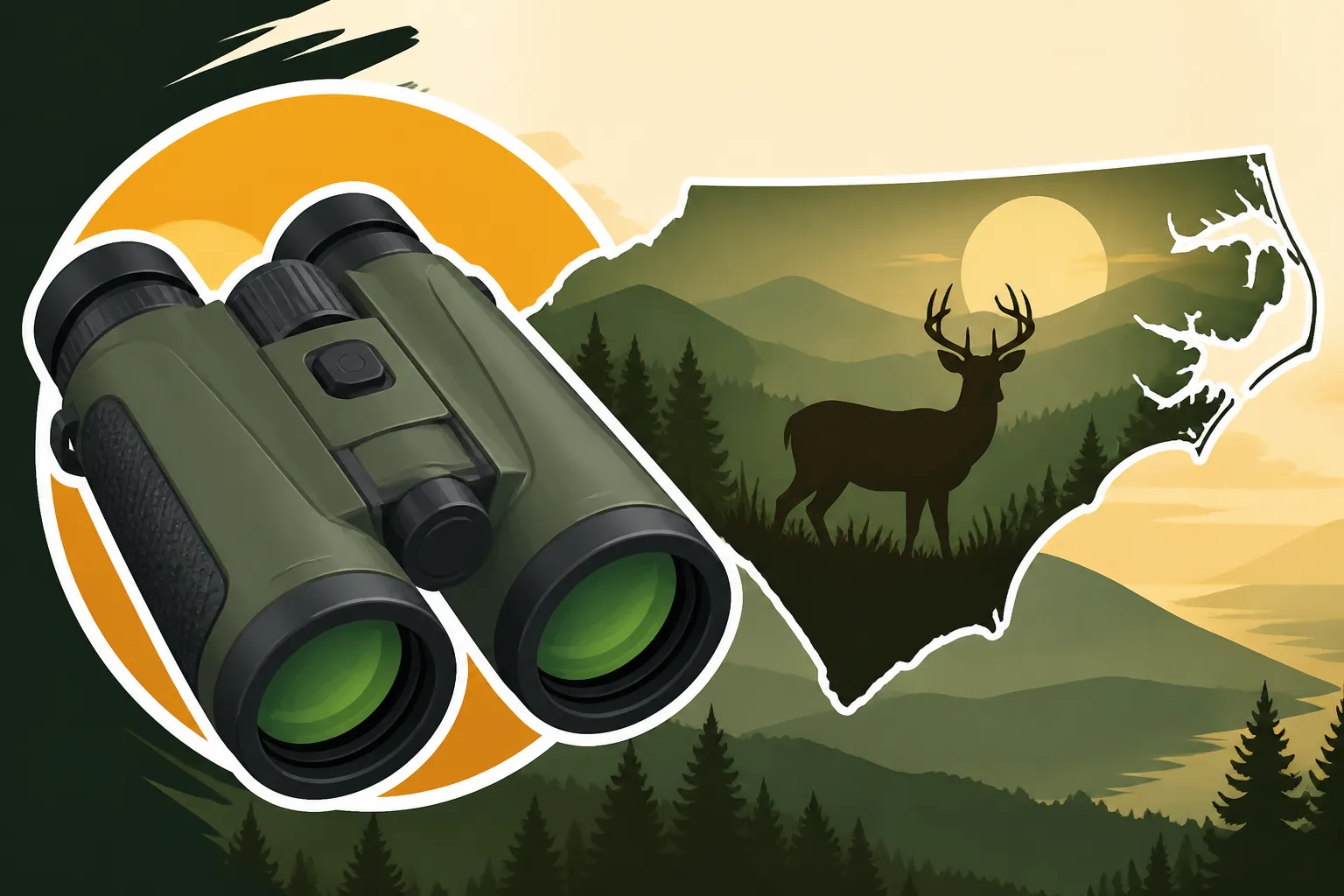
Rangefinding Binoculars Worth the Cost
It's a familiar scenario for many North Carolina hunters: you're glassing a promising hardwood bottom in Uwharrie or peering across a vast Piedmont field edge, and suddenly, a deer steps out. Your binoculars are glued to your eyes, but as soon as you spot it, your hand instinctively reaches for your separate rangefinder, adding a precious few seconds and an extra movement to an already tense situation. We've all been there, fumbling with two pieces of gear when one would be ideal. This guide is all about whether consolidating those essential tools into one—rangefinding binoculars—is truly worth the investment for your hunting adventures in the Tar Heel State.
The Frustration of Separate Optics in the Field
Let's be honest, hunting in North Carolina presents a myriad of challenges, and your gear shouldn't be one of them. The sheer diversity of our landscapes, from the steep, rugged mountains to the dense, rolling Piedmont and the often-soggy coastal swamps, demands versatility and efficiency from a hunter. Carrying separate binoculars and a rangefinder often feels like you're playing a frustrating game of "two steps forward, one step back."
Juggling Gear in North Carolina's Diverse Terrain
Imagine you're still-hunting along a ridge in the Nantahala National Forest, carefully picking your way through fallen leaves and undergrowth. Your binoculars are around your neck, ready to glass the next hollow or bench. Suddenly, movement! A deer, maybe a decent buck, pauses momentarily in a thicket. You bring your binoculars up, quickly identify it, and realize you need a range. Now, you have to lower your binoculars, reach for your rangefinder, bring that to your eye, find the deer again, get a reading, and then either re-shoulder your rifle or get your bow ready. In the mountains, with varying elevations and tricky shot angles, these extra steps can make all the difference between filling a tag and watching a tail wave goodbye.
It's not just the mountains, either. Down in the Coastal Plain, navigating dense pocosin swamps or walking tight timber lines requires constant vigilance. Trying to maneuver through thick briars with two optical devices clanking against each other, or worse, getting snagged, is a recipe for frustration. You're already dealing with the humidity, the bugs, and the endless thick cover; adding gear management to the list just makes things tougher. It often feels like you're carrying a small optics store on your chest, and every piece needs its own attention.
The Time Crunch: Ranging When Seconds Count
Deer, especially mature animals, rarely offer a lengthy photoshoot opportunity. They're often on the move, skittish, and can vanish in a blink. When you're sitting in a Treestand Setups in Pisgah National Forest stand, patiently waiting, and a deer finally appears at the edge of your effective range, those seconds matter. The delay introduced by fumbling for a separate rangefinder can be fatal to your shot opportunity. You see the deer, you glass it, you confirm it's what you're after. Now, you drop your binos, grab the rangefinder, bring it up, acquire the target, press the button, read the distance, put the rangefinder away, and finally get your weapon into position. By then, that buck might have taken two steps and moved behind a thick pine, or worse, bolted entirely.
Consider a spot-and-stalk situation in open country, like some of our larger agricultural areas in the Piedmont. You've spotted a deer bedded down a half-mile away. You make your move, using terrain and cover to get as close as possible. As you crest a subtle rise, the deer is still there, but now it's up and moving. You've got a narrow window. Being able to glass and range simultaneously, without breaking eye contact or reaching for a separate device, can be the critical factor in getting a shot off before it disappears into the next wood line. It's about minimizing movement and maximizing efficiency, especially when the adrenaline is pumping.
How Rangefinding Binoculars Simplify Your Hunt
The beauty of rangefinding binoculars is right there in the name: they combine two essential tools into one seamless unit. This integration isn't just about convenience; it fundamentally changes the flow of your hunt, often for the better.
Streamlined Efficiency and Faster Target Acquisition
The most immediate and obvious benefit is the sheer efficiency they bring. Instead of two separate actions—glassing, then ranging—you perform both with a single piece of equipment. You spot a deer, press a button (or sometimes just hold it for a scan mode), and the distance appears in your field of view. There's no awkward hand-off, no fumbling, and crucially, less movement. This is especially vital when Still-Hunting Nantahala Forest Ridges or trying to remain undetected in a ground blind. Every unnecessary motion is a potential alert for wary game.
Imagine you're trying to gauge the distance to a turkey strutting at the edge of a field. With traditional gear, you'd glass him, lower your binos, grab your rangefinder, find him again, range, then grab your shotgun. With rangefinding binoculars, you're already glassing, so it's a quick button press, and you instantly know the yardage for your shot. This kind of streamlined process reduces mental clutter and allows you to focus purely on the animal and the shot itself, rather than managing your gear. Some advanced units even integrate with mapping apps like GoHunt, allowing you to mark ranged distances directly onto a digital map, a huge advantage for scouting and planning.
Enhanced Optical Performance and Durability
When you invest in quality rangefinding binoculars, you're not just getting a rangefinder attached to a pair of binos; you're often getting a premium optical experience. The glass quality in these units is typically exceptional, on par with high-end traditional binoculars. This means brighter images, superior clarity, and true-to-life color rendition, which are all critical for identifying game in challenging light conditions or dense cover. Binocular Choice for North Carolina Whitetails is crucial, and when it comes to rangefinding models, you're usually getting top-tier performance.
North Carolina's weather can be fickle, to say the least. From early season downpours to late-season damp chills, your gear needs to stand up to the elements. Quality rangefinding binoculars are built to be robust. They are typically fully waterproof and fog-proof, ensuring that a sudden rain shower or a sharp temperature drop won't obscure your view or compromise the ranging function. This ruggedness means you can trust your optics, whether you're battling the morning dew in a Piedmont creek bottom or encountering an unexpected snow flurry in the high country.
The Advantage in Specific North Carolina Hunting Scenarios
The versatility of rangefinding binoculars truly shines across North Carolina's diverse hunting landscapes. In the mountains, where elevation changes and broken terrain make judging distance notoriously difficult, the immediate feedback from your optics is invaluable. You can quickly range across a deep hollow to a bedding area or confirm the distance to a deer moving along a distant ridgeline. This precision helps you make ethical shots and avoids the heartache of a misjudged distance.
On the Coastal Plain, especially when Hunting Coastal Plain Pocosin Swamps, judging distances can also be tricky due to the flat landscape and dense, uniform cover. A deer might appear in a small opening at what looks like 100 yards but is actually 150, or vice versa. Rangefinding binoculars eliminate that guesswork instantly. You can scan an opening, get a range, and quickly assess whether a shot is feasible. Similarly, for those Hunting Piedmont Farmland Deer, these binoculars offer an edge when watching distant field edges, allowing for quick, accurate ranging without a separate device.
Understanding the Cost vs. Value Proposition
There's no getting around it: rangefinding binoculars represent a significant financial commitment. The price tag is often the first thing that makes hunters pause, and for good reason. However, looking beyond the initial sticker shock to the long-term value can often change that perspective.
Breaking Down the Initial Investment
Let's be upfront: rangefinding binoculars are an investment. They are, almost without exception, more expensive than a standalone pair of high-quality binoculars and a separate, high-quality rangefinder combined. This is a common point of contention for many hunters, and it’s a valid concern. You might be able to find a good pair of regular binoculars for a few hundred dollars and a decent rangefinder for another few hundred. But when you start looking at the premium end for both those categories—optics known for their clarity, low-light performance, and reliable ranging—you'll quickly find that the combined cost approaches, or even exceeds, the price of a mid-to-high-tier rangefinding binocular.
The "buy once, cry once" philosophy often applies here. Many hunters, myself included, have gone through multiple iterations of budget-friendly optics, only to upgrade piece by piece as their experience and demands grew. Investing in a top-tier rangefinding binocular from the outset can save you money and frustration in the long run by providing superior performance and durability that will last for many seasons. It means you're investing in reliable equipment that won't leave you second-guessing in the field.
Long-Term Benefits and Durability
Beyond the initial purchase, the long-term benefits of rangefinding binoculars become apparent. These aren't throwaway items; they are precision instruments built to last. The manufacturers of these high-end optics typically stand behind their products with excellent warranties, reflecting their confidence in the durability and longevity of their gear. This means fewer replacements, fewer potential failures, and more time enjoying your hunt rather than troubleshooting equipment.
Think about the wear and tear of carrying two separate devices. Each item has its own case, its own straps, its own potential for being dropped, scratched, or lost. Consolidating to one piece reduces those risks. A single, robust unit is often better sealed and more resilient to impacts than two independent units that might be jostling against each other or repeatedly pulled out and put away. Furthermore, should you decide to upgrade in the future, premium optics tend to hold their resale value much better than entry-level gear. When researching your options, platforms like GoHunt can be invaluable for comparing different models and understanding their features, helping you make an informed decision on such a significant purchase.
Is it Right for Your North Carolina Hunting Style?
While the benefits are clear, rangefinding binoculars aren't necessarily for every hunter. Your personal hunting style, the types of terrain you frequent, and your budget all play a role in determining if this investment makes sense for you.
Consider the following:
| Hunting Style / Factor | Separate Binos + Rangefinder | Rangefinding Binoculars |
|---|---|---|
| Still-Hunting | More fumbling, slower target acquisition. | Streamlined, faster ranging, less movement. |
| Stand Hunting | Manageable, but still an extra step. | Immediate ranging from a fixed position, very efficient. |
| Spot & Stalk | Can be cumbersome, especially when crawling or moving quickly. | Critical advantage for rapid ranging in dynamic situations. |
| Mountain Hunting | Challenging with steep angles and difficult terrain. | Excellent for accurate ranging across varied elevations. |
| Piedmont/Coastal | Often less critical in flatter, denser terrain, but still benefits. | Speed and efficiency still valuable for open fields or quick shots. |
| Budget | Lower initial cost possible. | Higher initial investment, but long-term value. |
| Frequency of Use | Good for occasional hunters. | Ideal for frequent, dedicated hunters seeking peak efficiency. |
If you primarily hunt from a static blind overlooking a food plot in the Piedmont, a separate rangefinder might be perfectly adequate. However, if you're frequently Scouting North Carolina Public Land Before Season, navigating challenging terrain, or engaging in dynamic hunting styles like spot-and-stalk or still-hunting, the efficiency and speed offered by rangefinding binoculars can truly elevate your hunting experience. It's about how much value you place on those saved seconds and streamlined movements in the field.
Key Features to Look For When Buying
Once you've decided that rangefinding binoculars are indeed worth the cost for your North Carolina hunting adventures, the next step is navigating the myriad of options available. Not all rangefinding binoculars are created equal, and understanding the key features will help you make the best choice for your specific needs.
Optical Clarity and Magnification
At the heart of any binocular is its optical quality. Even with a built-in rangefinder, if the glass isn't clear, bright, and sharp, you're not getting your money's worth. Look for models with high-quality glass (often denoted by terms like ED or HD glass), advanced lens coatings that maximize light transmission and reduce glare, and a robust prism system. In North Carolina, where low-light conditions at dawn and dusk are prime hunting times, excellent low-light performance is paramount. Rifle Scopes for Low-Light Mountain Coves are critical, and the same principle applies to binoculars.
Most rangefinding binoculars come in 10x magnification, often with a 42mm or 50mm objective lens. The 10×42 is a great all-around choice, offering a good balance of magnification, field of view, and light-gathering capability without being overly heavy. If you primarily hunt wide-open areas or need maximum light gathering, a 10×50 might be worth the extra size and weight. Test them in varying light conditions if possible, and pay attention to edge-to-edge clarity – a clear image from the center all the way to the rim of the view.
Ranging Performance and Modes
The rangefinding component is what sets these binoculars apart, so its performance is crucial. Consider the maximum effective range advertised. While you might not often take a shot at 1,500 yards, a unit that can consistently range distant objects means it will perform flawlessly at closer, more common hunting distances. Accuracy is also key; look for units that provide readings to the nearest half or even quarter yard.
Many premium rangefinding binoculars offer advanced modes that are incredibly useful for hunters. Angle compensation, often called "true horizontal distance" or "line of sight with angle compensation," is essential for hunting in mountainous or hilly terrain. It calculates the actual horizontal distance to the target, which is what your bullet or arrow will travel, not just the straight-line distance. A "scan mode" is also invaluable, allowing you to continually range multiple targets or a moving animal simply by holding down the range button. Some units even offer ballistic calculations, integrating with proprietary apps or common ballistic programs, to give you holdover points for your specific rifle and load, though this often means an even higher price point.
Ergonomics, Weight, and Field-Ready Design
You'll be carrying these binoculars all day, often in challenging conditions, so ergonomics and weight are critical considerations. Pick them up, feel them in your hands. Do they balance well? Are the controls easy to access and operate, even with gloves on? The ranging button should be intuitive and easily pressed without shifting your grip too much. For Packs for a Pisgah Forest Day Hunt, every ounce matters, and a compact, well-designed unit can make a big difference by the end of a long day.
Ensure they are fully waterproof and fog-proof, which is a standard feature for quality optics today, but still worth confirming. The outer armor should be durable, providing a good grip even when wet. For North Carolina, where we often deal with thick undergrowth and potential scrapes, a robust, rubberized exterior is a must. Also, consider the neck strap or harness system. A comfortable harness is far more practical than a thin neck strap, especially for heavier rangefinding binoculars, keeping them secure and ready for quick deployment. Make sure your North Carolina Blaze Orange Requirements are met by your vest or jacket, as these binoculars won't contribute to the required visibility. When doing your research, GoHunt or similar platforms can be very helpful for comparing specs like weight, dimensions, and user reviews on field performance and feel. Finally, consider what Boots for North Carolina Swamps and Ridges you'll be wearing, as your entire kit needs to work together seamlessly for comfort and efficiency.
Disclaimer
This article is for general informational purposes only and does not constitute professional advice. Laws, prices and regulations vary by location and change over time. Consult a qualified professional for guidance on your specific situation.