Where North Carolina Black Bears Live Today
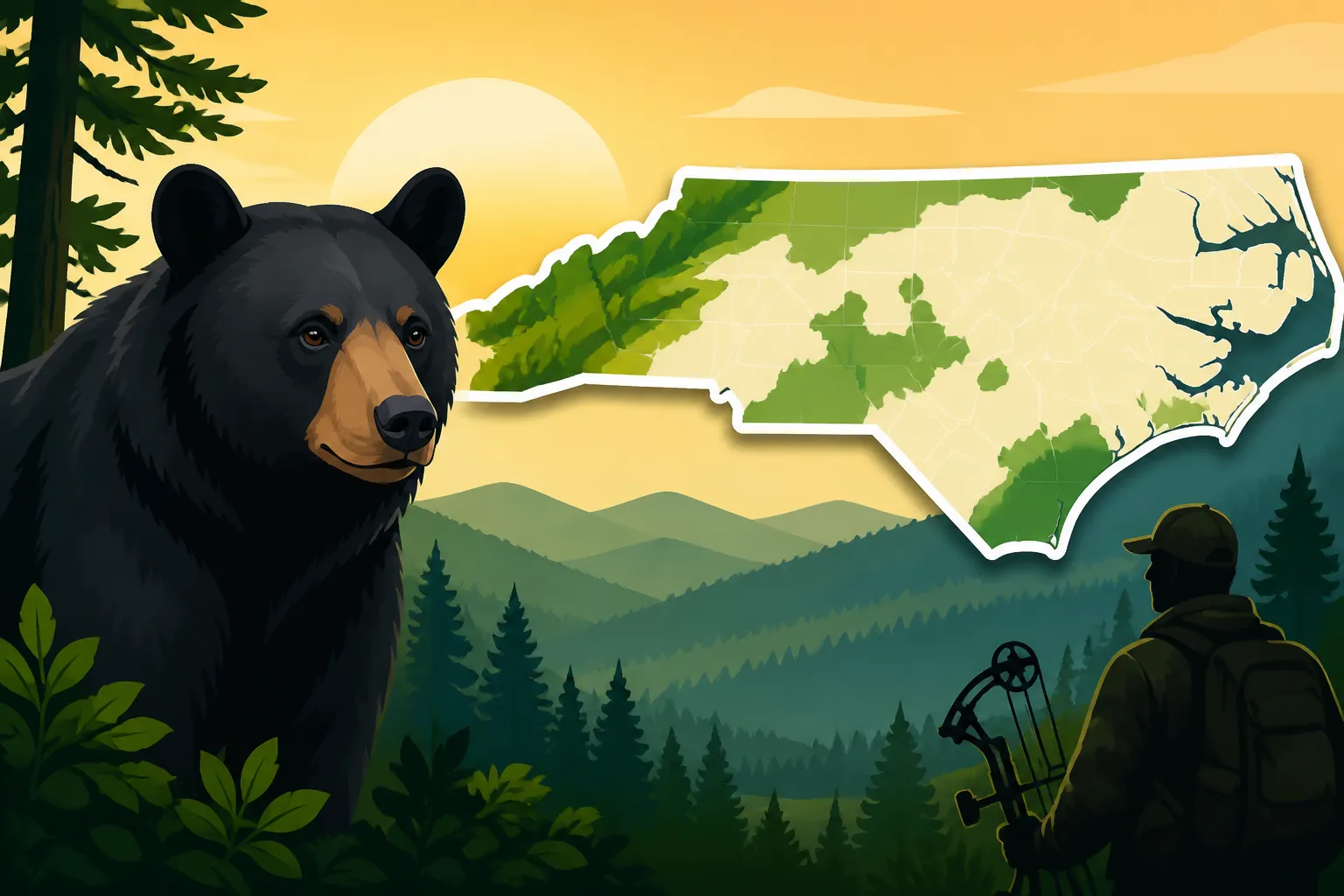
For many years, folks around North Carolina pictured black bears as strictly mountain dwellers, tucked away in the highest elevations, or perhaps deep in the thickest coastal swamps. But if you've been paying attention lately, you know that image is rapidly changing. Bears are showing up in places they haven't been seen in decades, if ever, challenging old assumptions and making hunters and landowners alike rethink their strategies. This guide is going to walk you through the current landscape of North Carolina's black bear population, diving deep into where these magnificent animals truly call home across our diverse state.
The Mountain Strongholds: Western North Carolina's Bear Country
When you think of bears in North Carolina, the rugged, sprawling peaks and valleys of the western part of our state often come to mind first. And for good reason – this is where our bear population has historically been most dense and widespread. The vast tracts of national forest land provide exactly what a bear needs: solitude, dense cover, and an abundance of natural foods.
Habitat in the Appalachian Foothills and Peaks
The western counties, encompassing the Blue Ridge Mountains and the Great Smoky Mountains, offer an ideal environment for black bears. Here, the landscape is a patchwork of mature hardwood forests, dense rhododendron thickets, and steep, remote coves that provide excellent bedding and denning sites. Think about places like Pisgah National Forest Hunting and Nantahala National Forest Hunting; these aren't just names on a map, they're sprawling ecosystems perfectly suited for large, wide-ranging animals like bears. The terrain itself acts as a natural buffer against human disturbance, allowing bears to thrive relatively undisturbed.
Hunting these areas requires a different approach than anywhere else in the state. The sheer scale of the land means bears have massive home ranges, often following mast crops up and down elevations. You'll find them foraging on acorns in oak flats during the fall, or seeking out berries and other soft mast in higher elevations during the summer. Navigating this dense, steep country can be a real challenge, even with modern mapping tools. Hunters often use platforms like GoHunt to scout aerial imagery, identify potential food sources, and map out entry and exit routes in these challenging environments before they ever set foot in the woods. The constant search for food keeps them on the move, utilizing every nook and cranny of these ancient mountains.
Major Bear Zones in the Mountains
Within the greater mountain region, specific areas stand out for their consistent bear populations and the opportunities they present. The highest densities are typically found in the counties bordering Tennessee, such as Swain, Haywood, Transylvania, and Graham. These areas contain some of the most rugged and least developed land in the entire eastern United States, making them perfect sanctuaries. You'll also find healthy populations further east into the foothills, though often in more fragmented habitats.
The bear management zones in the mountains are specifically designed to account for these population dynamics and habitat availability. They ensure that hunting pressure is managed sustainably. Whether you're hunting bears over natural mast in the mountains or trying spot-and-stalk tactics for mountain bears, understanding these specific zones and their unique characteristics is crucial. The bears here are often larger-bodied and have established patterns linked to the seasonal availability of hard and soft mast, creating a truly wild hunting experience unlike any other.
The Coastal Plain: North Carolina's Other Bear Hotbed
It might surprise some folks to learn that North Carolina's coastal plain holds an equally, if not more, impressive black bear population than the mountains. These bears are often physically larger, benefiting from a different, but equally rich, food source and vast, impenetrable cover. This region presents a completely different set of challenges and opportunities for both bears and those who interact with them.
Pocosins, Swamps, and Farmland Edges
The coastal plain is characterized by its vast, low-lying pocosins, extensive river swamps, and a mosaic of agricultural fields. Pocosins are dense, evergreen shrub bogs, often incredibly difficult for humans to traverse but providing ideal, virtually impenetrable cover for bears. These areas, like Holly Shelter Bear Hunting Access or Croatan Forest Pocosin Deer Ground, are prime bear habitat. The bears here utilize the thick cover for bedding and security, venturing out into adjacent farmlands to feed on corn, soybeans, and other crops, especially in late summer and fall.
This unique blend of wild swampland and cultivated fields offers an incredible food supply. While mountain bears rely heavily on acorns and other natural mast, coastal bears have access to both natural foods (berries, palmetto nuts, various aquatic vegetation) and agricultural bounty. This consistent and often high-calorie diet is a major reason why coastal bears tend to be the heaviest in the state. This interplay between wild areas and agricultural land leads to unique movement patterns, which hunters can observe if they spend enough time scouting. For example, understanding how bears use a funnel between two pocosins can be a game-changer for stand placement.
Key Coastal Bear Zones
Major coastal bear populations are found in counties like Tyrrell, Washington, Hyde, Dare, and Pamlico, which are often defined by their immense swamps, pocosins, and access to the vast national wildlife refuges. Areas like the Alligator River National Wildlife Refuge Hunting are famous for their bear populations. These are not just isolated pockets; these are truly expansive areas where bears are plentiful. The managed forests and game lands in these regions, combined with private timberlands, create an unbroken landscape suitable for robust bear numbers.
North Carolina's bear season dates on the coast are often carefully structured around these unique habitats and food sources. Hunters often describe hunting coastal bears in thick pocosin cover as a completely different game than mountain hunting, requiring specialized knowledge of tracking in soft ground, understanding water levels, and being prepared for close-quarters encounters in incredibly dense vegetation. The challenge is immense, but so is the reward, often in the form of truly gigantic bears.
The Expanding Frontier: Bears in the Piedmont
Perhaps the most talked-about development in North Carolina's black bear story is their increasing presence in the Piedmont region. For decades, the Piedmont was considered a "bear desert," a highly fragmented landscape of farms, forests, and burgeoning development that simply couldn't sustain a significant bear population. That's no longer the case.
Adapting to Human-Modified Landscapes
The Piedmont, with its rolling hills, mixed hardwood and pine forests, and growing suburban sprawl, is a challenging environment for bears. Yet, they are proving incredibly adaptable. Bears are venturing further from traditional strongholds, using riparian corridors (river bottoms and creek drainages) as highways to move through developed areas, and finding surprisingly good cover and food in smaller, overlooked woodlots and even suburban greenways. You might hear about bears moving into Piedmont suburbs, a phenomenon that highlights their incredible resilience and capacity to adapt.
This expansion is driven by a combination of factors: thriving bear populations in both the mountains and the coast pushing outward, and increasing maturity of Piedmont forests that provide more cover and food. Bears are opportunistic omnivores, and they've learned to exploit readily available food sources, from backyard bird feeders and garbage cans to fruit trees and agricultural fields. This proximity to humans creates both conflict and a new layer of complexity for wildlife management and public awareness. It means that even if you're not in a traditional "bear county," you might encounter one.
Evidence of Piedmont Bear Resurgence
Reports of bear sightings, once rare in many Piedmont counties, are now commonplace. Counties like Stokes, Surry, and Yadkin, which border the western mountains, have seen a steady increase in bear activity for years. More surprisingly, bears are now being sighted regularly in central Piedmont counties, often miles from any large tracts of traditional bear habitat. This isn't just a few wandering individuals; it indicates that some bears are establishing home ranges and even denning in these areas.
This resurgence is a testament to the success of wildlife conservation efforts but also presents new challenges. Education on living with bears becomes critical, especially in suburban areas. For hunters, it means that while public hunting land in North Carolina's Piedmont might not be traditionally thought of as bear country, opportunities are slowly emerging on game lands and larger private tracts. Tools like the NC Wildlife App can be invaluable for tracking reports and understanding movement patterns, even if you are more familiar with hunting Piedmont farmland deer than bears.
Factors Influencing Bear Distribution and Movement
Understanding where North Carolina's black bears live today isn't just about mapping their historical ranges. It's about recognizing the dynamic forces that shape their distribution and how they adapt to an ever-changing landscape. Several key factors are constantly influencing where bears can be found and how they move across the state.
Habitat Connectivity and Fragmentation
One of the biggest challenges for bears, especially as they expand into more developed areas, is habitat fragmentation. Large, unbroken tracts of forest, like those found in the national forests or vast coastal pocosins, are ideal. However, as development spreads, these large tracts get broken up by roads, subdivisions, and commercial centers. While bears are incredibly adept at navigating these fragmented landscapes, using wooded corridors and creek bottoms, continuous fragmentation can isolate populations and make movement more difficult.
Efforts to maintain and improve habitat connectivity are crucial for the long-term health and expansion of the bear population. This includes preserving riparian buffers, maintaining large blocks of forest, and even creating wildlife crossings over major highways. Understanding these dynamics is something avid hunters are increasingly doing, perhaps using tools from a platform like GoHunt to visualize how a new development might impact a bear's travel corridor or to identify potential pinch points where bears might cross through otherwise unsuitable habitat. This foresight can be invaluable.
Food Availability and Seasonal Shifts
Bears are highly opportunistic, and their movements are heavily dictated by the availability of food. North Carolina's diverse ecosystems offer a wide range of seasonal foods, from spring berries and tender vegetation to summer fruits and fall mast crops (acorns, hickory nuts). A poor acorn year in the mountains, for instance, can cause bears to move down into lower elevations or further out into the Piedmont in search of alternative food sources. This is a natural behavior, but it can lead to increased human-bear conflict when bears venture into populated areas.
The coastal plain's mix of natural foods and agricultural crops provides a very reliable, high-calorie diet, contributing to the impressive size of many coastal bears. In the Piedmont, bears quickly learn to exploit anthropogenic food sources like garbage, pet food, and bird feeders, which can pull them into closer contact with humans than is ideal. This adaptability to different food sources is a key reason for their successful expansion, but also highlights the need for careful management of attractants, especially in new bear territories.
Human-Wildlife Interactions and Management
As bear populations grow and expand, so does the potential for interaction, and sometimes conflict, with humans. Understanding how to manage these interactions is paramount. Wildlife agencies actively monitor bear populations and develop management strategies that include regulated hunting seasons, public education campaigns, and rapid response to nuisance bear complaints. Regulated hunting plays a vital role in managing bear numbers, particularly in areas where populations are thriving and expanding.
For hunters, understanding these management efforts and adapting strategies is key. Whether it's the specific rules for North Carolina bear season dates in the mountains or the coastal bear zones, regulations are designed to maintain a healthy population while minimizing conflict. The growth of North Carolina's black bear population is a conservation success story, but it's one that requires ongoing vigilance and thoughtful management to ensure both bears and people can coexist safely across our beautiful state.
| Region | Primary Habitat | Key Food Sources | Population Trend | Typical Bear Size |
|---|---|---|---|---|
| Mountains | Mature hardwood forests, rhododendron, | Acorns, hickory nuts, berries, natural mast | Stable/Slightly Expanding | Average to Large |
| Coastal Plain | Pocosins, river swamps, agricultural | Agricultural crops (corn, soybeans), berries, palmetto, natural mast | Rapidly Expanding | Very Large, often record-setting |
| Piedmont | Fragmented forests, creek bottoms, woodlots, suburban areas | Natural mast, agricultural crops, human-derived (bird feeders, garbage) | Steadily Expanding | Average to Large |
Disclaimer
This article is for general informational purposes only and does not constitute professional advice. Laws, prices and regulations vary by location and change over time. Consult a qualified professional for guidance on your specific situation.