Run-and-Gun on North Carolina Public Land
The frustration is real: you spend hours meticulously setting up a treestand on public land, only to have other hunters walk right past you, or worse, watch deer skirt your setup from a mile away. Traditional static hunting can feel like a losing battle against hunting pressure and wary game. This comprehensive guide is designed to empower you with the run-and-gun strategy, transforming you into a highly mobile, adaptable hunter who can actively pursue game across North Carolina's diverse public lands.
Why Run-and-Gun Tactics Shine on North Carolina Public Land
North Carolina's public lands are a treasure, offering vast opportunities for hunters, but they also come with unique challenges. The sheer volume of hunters, coupled with the intelligence of game animals accustomed to pressure, means that a "sit and wait" approach often falls short. This is where the run-and-gun strategy truly comes into its own, allowing you to react to conditions and aggressively pursue game rather than passively hoping they walk by.
The Limitations of Static Hunting in High-Pressure Areas
Let's be honest, we've all been there. You scout a perfect pinch point or a promising oak flat, hang your stand with the utmost care, and settle in for a long sit. The sun rises, the woods wake up, and then… nothing. Or maybe you hear footsteps, hope swells, and then a blaze orange vest walks right under your stand, or you hear distant shots that send everything deeper into the thick stuff. Public land deer, especially whitetails, are incredibly sensitive to pressure. They quickly learn escape routes and develop patterns to avoid human contact. A stationary hunter, no matter how well-placed, is often relying on luck or the occasional confused deer.
Furthermore, on North Carolina Game Lands, rules about permanent stands mean you're often putting up and taking down equipment, adding to the workload. Relying on a single stand or a small cluster of stands in one area means you're confined to a specific spot, regardless of changing wind, temperature, or food sources. This lack of adaptability can be the death knell for a successful hunt, leaving you feeling defeated and wondering if the deer even exist. It's not about being unlucky; it's about playing a different game than the deer are expecting.
Capitalizing on Deer Movement and Thermals
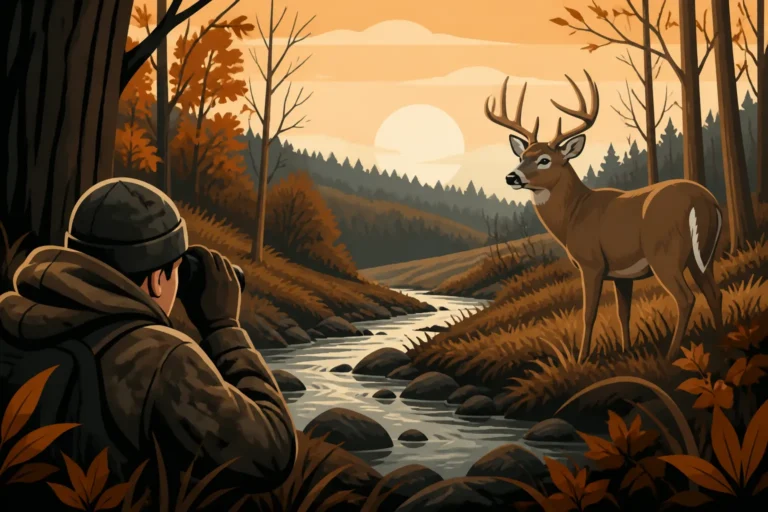
The beauty of the run-and-gun method is that it transforms you from a stationary target into an active predator. Instead of waiting for deer to come to you, you go to them. This involves constant movement, careful observation, and a willingness to adapt on the fly. Imagine stalking slowly through a Piedmont hardwood bottom, checking every drainage and subtle terrain change. You spot fresh tracks, a recently rubbed sapling, or a scrape line along a logging road. With a run-and-gun approach, you can immediately adjust your course, circle downwind, and set up quickly in a new, more promising spot. This flexibility is critical for hunting the North Carolina Rut by Zone, when deer movement becomes more unpredictable and bucks are actively searching for does.
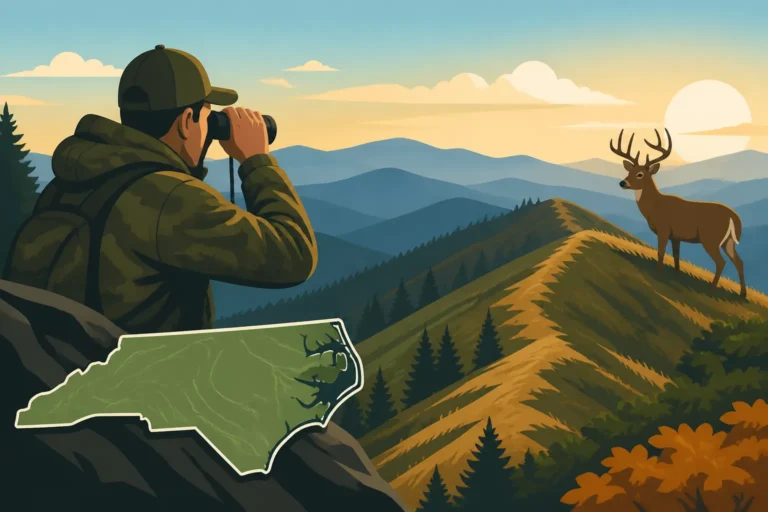
Thermals, especially in the North Carolina Mountains, play a huge role in deer movement and scent dispersal. In the mornings, air currents typically flow downhill as the earth warms. In the evenings, they reverse and flow uphill as the air cools. A static hunter in a fixed stand might have a perfect wind for an hour, only for the thermals to shift and betray their position. With run-and-gun, you're constantly aware of these shifts. You can move with the thermals, using them to your advantage, slipping silently into areas where deer might be bedding or feeding. If the wind suddenly swirls, instead of being busted, you can reposition, making small, calculated movements that keep you in the game. This dynamic approach means you're always trying to maintain the advantage, constantly assessing the situation and moving to optimize your chances.
Essential Gear for the Mobile North Carolina Hunter
Going run-and-gun doesn't mean you go empty-handed, but it definitely means a shift in your gear philosophy. Every item needs to earn its spot in your pack by being lightweight, versatile, and absolutely essential. Leave the kitchen sink at home; you're going to be covering ground.
Lightweight and Versatile Pack Setup
Your pack is your mobile base camp. It needs to hold what you need without becoming a burden. Think minimalist. For a typical day of still-hunting Nantahala Forest Ridges or cruising coastal pocosins, you'll want a small, comfortable daypack, perhaps 15-25 liters. Inside, essentials include a good fixed-blade knife for field dressing, a rope or drag for recovery, and plenty of water, especially during early season hunts when temperatures can still soar. A small first-aid kit, headlamp, and fire-starting materials are non-negotiables for safety, regardless of how short you plan your hunt to be.
Beyond these basics, consider game calls. A quality grunt tube and a set of rattling antlers (or a synthetic rattle bag) are lightweight and can be deadly effective when you're actively searching for a buck. Carrying a compact set of binoculars, like an 8×32 or 10×32, is also smart for spotting distant movement or scrutinizing habitat without exposing yourself too much. Remember the mantra: if you don't absolutely need it, it stays in the truck. You're not setting up a permanent camp; you're a hunting missile. Consider a hydration bladder over bottles for easier access and weight distribution inside your pack. For those longer hauls, a durable, lightweight frame pack can make a world of difference when you need Packs for a Pisgah Forest Day Hunt, ensuring you can comfortably carry both your gear and any harvest.
Stealthy Footwear and Clothing Considerations
Your footwear is arguably the most critical piece of gear for a run-and-gun hunter. You need comfort, support, and most importantly, quietness. Look for boots with soft soles that offer good traction on varied terrain, from the leaf litter of the Piedmont to the muddy edges of a coastal swamp. Lightweight hiking boots or even sturdy athletic shoes can be excellent choices, especially if they’re waterproof. Avoid stiff, heavy boots that will lead to fatigue and make too much noise as you move.
Clothing should also prioritize stealth and layering. Think quiet fabrics like wool or fleece, avoiding anything that rustles or snags loudly. In North Carolina, you can experience all four seasons in a single day, especially in the mountains. Layering allows you to adapt. Start with a moisture-wicking base layer, add an insulating mid-layer (fleece or synthetic down), and top it with a quiet, wind-resistant outer shell. Blaze orange requirements mean you'll need to wear it, but choose vests or jackets that don't restrict movement or create excess noise. For cooler weather, a lightweight, packable jacket can be easily stowed until needed. The goal is to move silently, stay comfortable, and blend into your surroundings as much as possible, always conscious of the rustle and crinkle factor.
Mapping and Navigation Tools
In a run-and-gun scenario, getting lost or not knowing exactly where you are and where you're going is a critical error. Modern technology has revolutionized this aspect of hunting. Gone are the days of relying solely on paper maps, though a physical map and compass are still excellent backups. Today, a robust mapping app on your smartphone is indispensable. Platforms like GoHunt provide incredibly detailed topographic maps, satellite imagery, and public/private land overlays that are crucial for scouting and real-time navigation.
Before you even step foot on public land, use these apps at home to identify potential bedding areas, travel corridors, water sources, and key terrain features like saddles, ridges, or creek bottoms. Mark potential "hot spots" where you might set up for a quick sit. In the field, GoHunt lets you track your movements, mark fresh sign, and quickly identify property lines, helping you avoid accidental trespass. Many hunters find that "Scouting North Carolina Public Land Before Season" using these digital tools gives them an unparalleled advantage. Even without cell service, most modern GPS-enabled apps continue to function, providing your location on downloaded maps. Always ensure your phone is fully charged, and carry a portable power bank for extended hunts. Knowing exactly where you are and where the deer should be is key to making those swift, informed run-and-gun decisions.
Executing the Run-and-Gun Strategy Effectively
This isn't just aimless wandering; it's a calculated, tactical advance through the woods. The success of run-and-gun hinges on your ability to read the landscape, move stealthily, and know when to sit and call.
Reading the Landscape for Hot Sign
The first step in any successful run-and-gun hunt is being able to interpret what the deer are telling you. This means having an eye for fresh sign. As you move, your head should be on a swivel, constantly scanning the ground and trees. Look for:
- Tracks: Are they fresh? Are there multiple tracks moving in a consistent direction? Are they entering or exiting a bedding area? Pay attention to size and depth to gauge the animal.
- Rubs: Fresh rubs, especially large ones, indicate a buck has been in the area recently. The direction of the rub can tell you which way he was traveling.
- Scrapes: Active scrapes are like deer communication hubs. Check for fresh pawed-out earth and an active licking branch above. A hot scrape means deer are present and checking it regularly.
- Droppings: The freshness and consistency of deer droppings can tell you a lot about recent activity and diet.
- Food Sources: Are acorns dropping? Is a particular soft mast fruit ripe? Are deer browsing on honeysuckle or other browse species? Deer will always be near their current preferred food source.
Combining these observations helps you paint a picture of deer movement. For example, if you find fresh rubs and scrapes leading into a thick bedding area, and the wind is favorable, you know you're in a prime position to set up quickly downwind of that travel corridor. This continuous evaluation of the environment is what makes the run-and-gun hunter so effective. In mountain country, this might involve carefully "Reading a Ridge for Mountain Zone Deer," noting elevation changes and how they funnel animals. Conversely, in the coastal plain, you might be "Hunting a Funnel Between Two Pocosins," looking for crossings between dense cover.
Strategic Movement and Calling Sequences
Moving through the woods like a ghost is crucial. This means slow, deliberate steps, always watching where you place your feet to avoid snapping twigs or rustling leaves. Use terrain features like creek beds, ridge lines, or thick cover to break up your silhouette and muffle your sound. Stop frequently, perhaps every 50-100 yards, to glass, listen, and scan. Many deer are spotted when the hunter is stationary, not moving.
When you find promising sign or reach a strategic location (like a saddle, a field edge, or a dense thicket), that's when you consider a calling sequence. Don't overdo it. A few soft grunts, mimicking a deer feeding or moving through, can be enough to pique curiosity. For more aggressive calling, especially during the rut, a series of short, sharp grunts followed by a snort-wheeze can challenge a dominant buck. Rattling volume needs to be adjusted for the environment; "Rattling Volume in Thick Pine Cover" will be different than in open hardwoods. Set up quickly, ideally with some cover at your back, and remain still for 10-15 minutes after calling. If nothing responds, move on to the next promising spot. The key is to be patient during your sits, but impatient with your location; if it's not working, move.
Adapting to Different North Carolina Public Land Habitats
North Carolina's diverse geography means your run-and-gun tactics will need to evolve depending on whether you're in the mountains, Piedmont, or Coastal Plain.
- Mountains: Here, elevation changes dictate everything. Deer often use benches, saddles, and ridge lines for travel. Focus on still-hunting slopes and draws, utilizing the prevailing wind and thermals. Your mobility allows you to climb quickly to advantageous positions to glass, then descend stealthily to follow a fresh track. Understanding "Wind and Thermals on a Blue Ridge Slope" is paramount.
- Piedmont: Rolling hills, scattered agriculture, and mixed hardwoods define this region. Deer will often relate to dense thickets, creek bottoms, and the edges of fields. Your run-and-gun strategy here might involve working a fencerow or slipping through small woodlots, checking for fresh sign where bedding meets feeding. "Entry Routes Through Standing Soybeans" or hunting the edges of a cut cornfield can be highly productive.
- Coastal Plain: This region is often flat, with dense pocosin swamps, pine plantations, and agricultural fields. Movement can be challenging due to thick vegetation and water. Focus on the higher ground, pine islands, and the edges of swamps. Deer often use subtle elevation changes and natural corridors to move through the dense cover. This is where a good pair of rubber boots is essential. Identifying "Hunting Coastal Plain Pocosin Swamps" effectively requires understanding these unique habitats.
Regardless of the habitat, the core principles remain: move slowly, observe constantly, and be ready to adapt. The more you practice this method, the better you'll become at recognizing the subtle clues the landscape offers and making quick, informed decisions.
Common Pitfalls and How to Avoid Them
Even with the best intentions, run-and-gun hunting has its challenges. Being aware of these common mistakes can save you a lot of frustration and increase your success rate.
Over-Calling and Spooking Game
One of the biggest temptations when you're actively hunting is to over-call. It’s easy to think that if a little calling is good, more must be better, right? Wrong. Deer, especially mature animals on public land, are incredibly sensitive to unusual sounds. A hunter blasting out continuous grunt calls or rattling sequences can quickly alert deer to their presence, sending them into the next county.
Instead, practice restraint. Use calls sparingly and authentically. A single, soft grunt every 10-15 minutes can be more effective than a rapid-fire sequence. Listen carefully after each call. Did you hear a twig snap? A distant grunt? Often, deer will circle downwind to investigate, so be ready for a silent approach from an unexpected direction. If you’re using "Grunt Calls in Mature North Carolina Timber," vary the pitch and duration to sound natural. Think of your calls as an invitation, not a command. If a deer is close, even subtle movements or calls can be enough to draw them in without giving away your exact position.
Neglecting Wind and Thermals
This cannot be stressed enough: the wind and thermals are your greatest ally or your worst enemy. In a run-and-gun scenario, where you are constantly moving, it’s even more critical to monitor these conditions relentlessly. Your scent travels, and deer rely heavily on their sense of smell. Ignoring the wind direction, even for a few minutes, can ruin an otherwise perfect stalk.
Always hunt with the wind in your face or quartering to you. This means that as you advance, your scent is blowing away from where you expect the deer to be. In the mountains, remember the thermals: they generally rise in the morning and fall in the evening. This dictates which side of a ridge or hollow you should be on at different times of the day. Carry a small wind checker (a squeeze bottle of powder or a milkweed pod) and use it frequently. Every time you stop, every time you plan your next move, check the wind. If it swirls or shifts unfavorably, either adjust your route immediately or find a new area to hunt. This constant vigilance is the difference between success and a frustrating bust.
The Importance of Post-Shot Strategy
While the focus of run-and-gun is on the active pursuit, a successful shot means your work is far from over. In a mobile hunting style, you might be in unfamiliar territory, possibly deep in cover. This makes your post-shot strategy even more critical. Before you ever pull the trigger, mentally note landmarks around where the deer stood and where it ran. Did it jump? Did it kick? Did you see blood?
After the shot, resist the urge to immediately rush in. Give the animal time, typically 30 minutes to an hour, especially for marginal shots. Mark your shooting location and the last place you saw the deer. Then, begin your blood trailing process slowly and methodically. "Tracking a Deer Through North Carolina Leaf Litter" can be incredibly challenging, so take your time and look for even the smallest speck of blood, disturbed leaves, or broken twigs. Having a good headlamp is non-negotiable, as many recoveries stretch into twilight or darkness. If you lose the trail, back out and try again from the last confirmed sign. Knowing your route back to your vehicle or a main trail is also important, as dragging a deer out of a deep public land thicket can be a monumental task. The run-and-gun might get you to the deer, but a thoughtful recovery plan ensures you get it out.
Run-and-Gun vs. Static Hunting: A Quick Comparison
To help illustrate the differences, here's a quick table comparing key aspects of run-and-gun hunting versus traditional static hunting.
| Feature | Run-and-Gun Hunting | Static Hunting (Treestand/Ground Blind) |
|---|---|---|
| Mobility | High: Constant movement, quick repositioning. | Low: Fixed position for extended periods. |
| Adaptability | Excellent: Reacts to changing conditions, sign, and deer movement. | Limited: Dependent on deer coming to a set location. |
| Hunter's Role | Active predator, initiator. | Passive observer, waiting for opportunity. |
| Gear Weight | Minimalist, lightweight pack, essential items only. | Often heavier, with comfort items, multiple stands. |
| Learning Curve | Requires skill in reading sign, navigation, and stealth. | Requires patience, careful scouting for stand placement. |
| Target Audience | Hunters seeking active engagement, facing pressure. | Hunters preferring comfort, specific ambush points. |
| Success Factor | Strategic movement, quick setups, active calling. | Proper stand placement, scent control, patience. |
| Energy Output | High: Physically demanding. | Moderate: Can involve long periods of sitting. |
While static hunting certainly has its place, especially on private land or in low-pressure areas, the run-and-gun method offers a dynamic and often more rewarding experience for the public land hunter. It allows you to cover more ground during the North Carolina Public Land Hunting Hours, actively seek out game, and adapt to the unpredictable nature of wild animals. Sometimes, using a Ground Blind on North Carolina Public Land can be part of a temporary, quick setup for a run-and-gun hunt, but it's not the core strategy.
Happy hunting!
Disclaimer
Hunting is an inherently dangerous activity. This guide provides information for educational purposes only and is not a substitute for proper training, experience, or adherence to all local, state, and federal hunting laws and regulations. Always prioritize safety, wear appropriate blaze orange, and know your target and what is beyond it. The information contained herein may not be suitable for all individuals or situations.