Working a Creek Bottom for Late-Season Deer
As the late season pushes on in North Carolina, many hunters start to feel the squeeze. The leaves are down, the woods feel bare, and those deer that were so visible during the early archery or even muzzleloader seasons seem to have vanished into thin air. It's a common frustration, feeling like the deer have just gone completely nocturnal or left the property entirely. But often, they haven't disappeared; they've simply shifted their patterns, seeking out specific types of cover and food. This guide is all about one of those critical, often overlooked late-season hotspots: the creek bottom, and how to effectively hunt it when everything else feels dead.
Why Creek Bottoms Are Late-Season Havens
When the temperatures drop and the north winds begin to howl, deer aren't just looking for food; they're actively searching for comfort and security. Creek bottoms, with their unique microclimates and dense vegetation, become absolute magnets for whitetails during these challenging late-season months. It's not just a hunch; there's a biological reason these areas are so productive. Deer are constantly looking for the path of least resistance and the most efficient way to survive, and creek bottoms often provide exactly that when other areas fail.
Consistent Food and Water Sources
Imagine a frigid January day in the Piedmont, with frost clinging to every leaf and the ground as hard as a rock. Where do you think deer are going to find a consistent drink and accessible forage? Creek bottoms, especially those with year-round flow, offer a lifeline. The damp soil retains moisture longer, which can mean green browse is available even when uplands are barren. Often, you'll find thicker undergrowth like honeysuckle, greenbrier, or even pockets of acorns that have rolled down from the slopes above and settled in the fertile banks. These areas are veritable late-season buffets. A deer needs about 2-4 quarts of water daily, and a flowing creek provides an endless supply, often without the need to expose themselves in open fields. It’s not just about the water itself, but the associated vegetation that thrives in that damp environment, offering a consistent, if sparse, food source when other options have long since vanished or been consumed. Understanding these vital food sources is key to success, especially after a poor acorn year.
Thermal Cover and Security
Another huge draw for creek bottoms in the late season is the incredible thermal cover they provide. Deer are constantly trying to conserve energy when it's cold. The dips and rises of a creek bed, combined with thick, often evergreen vegetation like rhododendron, mountain laurel, or thick stands of pine or cedars along the banks, create natural windbreaks. The lower elevation can also mean slightly warmer temperatures than the exposed ridges. Think about a biting wind; a deer lying down on a bare ridge is going to be hammered by it, but tucked into the lee side of a steep creek bank, surrounded by dense saplings, they're much more protected. This isn't just about comfort; it's about survival. They're looking for places where they can bed down, stay out of the wind, and escape the prying eyes of hunters. Creek bottoms provide that sense of security and a break from the elements that open timber simply can't offer in late December and January. You'll often find them bedding just off the main travel corridor of the creek, up a small side draw or on a subtle bench overlooking the water.
Natural Travel Corridors
Deer are creatures of habit and efficiency. They naturally follow paths of least resistance, and creek bottoms frequently serve as superhighways for movement, especially when hunters are pushing them around. Walking through dense, tangled undergrowth on a hillside is energy-intensive; cruising along a relatively open creek bank is far easier. This is particularly true for older, wiser bucks who prefer to move through cover, staying hidden from view. These corridors offer cover, access to water, and sometimes even funnel deer into predictable crossing points.
Consider a large block of public land, perhaps in Pisgah National Forest Hunting, where human pressure might be high. Deer will often use creek bottoms as safe havens, traveling long distances along them to get from bedding areas to feeding zones or to escape pressure. They know these routes offer concealment, reducing their exposure. This makes creek bottoms excellent places for an ambush, as you can often predict where a deer will cross or travel, especially if there's a bottleneck like a fallen tree or a narrow crossing point. These natural funnels are prime spots for a late-season setup.
Reading the Sign: Deciphering Creek Bottom Clues
Finding a creek is one thing; understanding how deer use it is another. Creek bottoms aren't just uniform strips of habitat; they have nuances. Learning to read the subtle (and sometimes not-so-subtle) clues deer leave behind is absolutely vital for success, particularly when dealing with wary late-season animals that have seen it all.
Identifying Core Bedding and Feeding Areas
Once you're in a creek bottom, start looking for concentrated sign. Fresh tracks in the mud, especially larger ones, are a dead giveaway. Pay attention to the direction of travel. Are they headed upstream or downstream? Are they cutting across a sandbar? Don't just look for singular tracks; look for patterns. Areas with multiple tracks, fresh scat, and browsed vegetation indicate active use. Look for evidence of deer actually feeding—tender shoots nipped off, bark rubbed on saplings, or even dug-up roots if they're foraging for something specific. Even in late season, you might find old rubs or scrapes along the edges, indicating that bucks still use these travel corridors, even if their primary rutting activity is long past.
Bedding areas are often found slightly elevated from the creek itself, perhaps on a small knoll or a bench just off the main channel, where deer can see, hear, or smell approaching danger. They'll almost always be on the downwind side of the prevailing breeze or in a spot that maximizes their ability to detect threats. Look for flattened grass or leaves, often with a deer's body impression. The thicker the cover, the more likely it is a bedding area. In many North Carolina creek bottoms, you'll find dense pockets of canebrakes or thickets of greenbrier that provide perfect sanctuaries. Learning to read North Carolina mud for fresh deer movement becomes a crucial skill here, allowing you to pinpoint the most active spots.
Understanding Deer Movement Patterns
Deer movement within a creek bottom isn't random. They'll often parallel the creek, sometimes on one side, sometimes on the other, crossing at the easiest points. These crossing points are critical. Look for places where the bank isn't too steep, where a log has fallen to create a natural bridge, or where the water is shallower. Sometimes, a deer will leave the creek bottom to go up a small ravine or draw to access an upland food source or a more secure bedding area on an adjacent ridge. These "exit ramps" are excellent ambush points.
Using tools like the GoHunt app or other detailed mapping software can be a game-changer here. Zoom in on topography; identify those subtle benches, finger ridges, and converging draws that lead into or out of the creek bottom. These are your choke points, your funnels. Pay attention to how deer move in relation to the wind and thermals, especially in the mountains where they can be tricky. In a creek bottom, thermals often drop down into the bottom in the morning and rise out of it in the evening. This understanding is critical for planning your entry and exit routes, and for determining your stand placement. You want to be set up so your scent blows away from where you expect deer to approach.
Effective Tactics for Creek Bottom Hunting
Once you've identified a promising creek bottom and have a general idea of how deer are using it, it's time to think about tactics. Late-season deer are incredibly wary, having survived weeks or months of hunting pressure. Your approach needs to be calculated and stealthy.
Still-Hunting the Edges
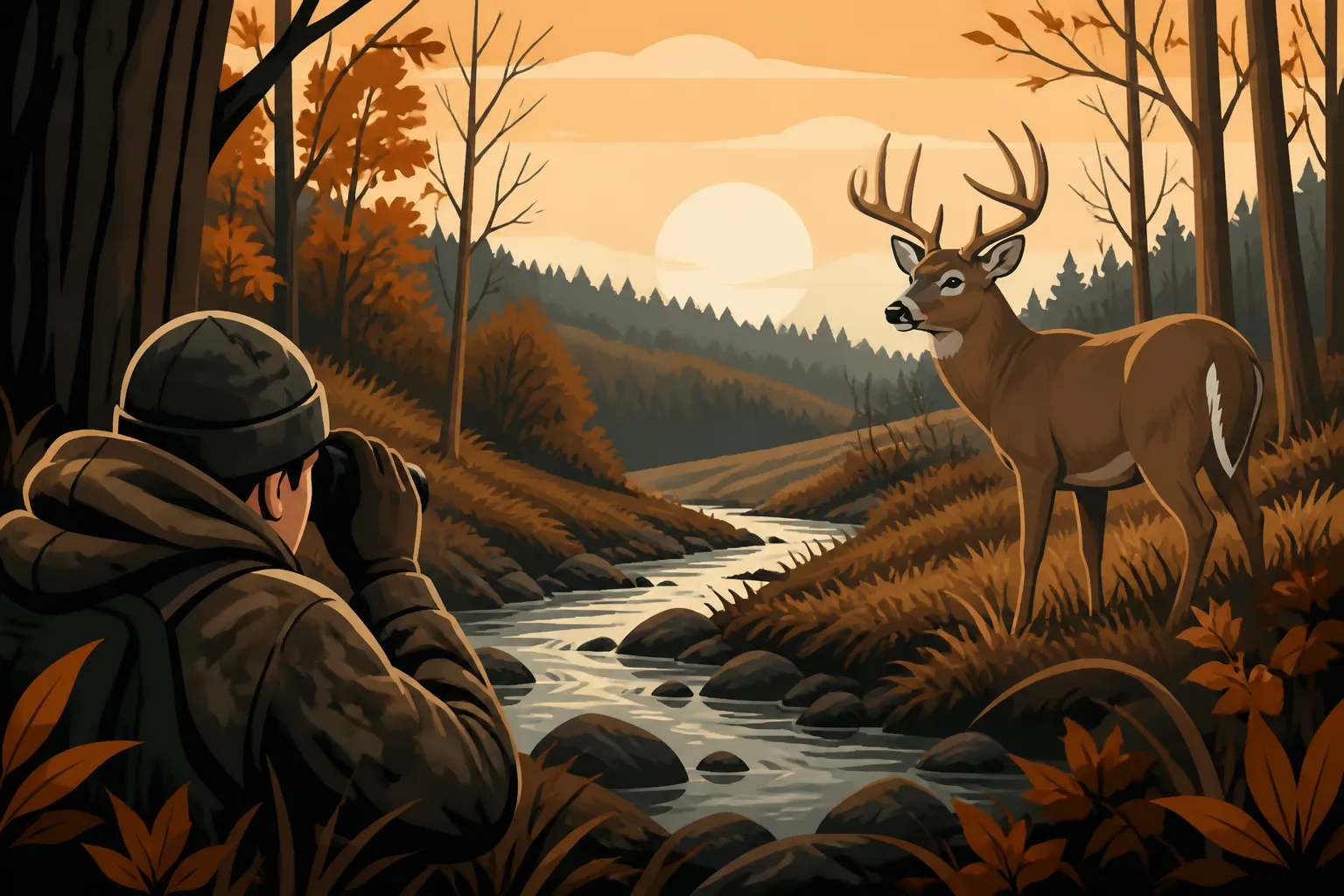
Still-hunting is a highly effective, yet often underutilized, tactic for creek bottoms. This involves moving incredibly slowly, taking a few steps, then stopping and observing for several minutes before moving again. The key is to blend in, become part of the environment, and let the deer come to you, or at least reveal themselves. You're not necessarily stalking a specific animal, but rather moving through the habitat in a way that allows you to detect deer before they detect you. Focus on the edges of the creek bottom—the transitions where the dense cover meets slightly more open timber, or where a side draw empties into the main channel.
Move into the wind or with a quartering wind, always being mindful of your scent. Use every piece of cover available—large trees, thick bushes, changes in elevation—to break up your silhouette. Your eyes and ears are your most important tools. Listen for the rustle of leaves, the snap of a twig, or the soft blowing sound of a deer. Use your binoculars to pick apart every shadow and patch of cover before taking another step. This method works particularly well in the tangled, dense environments common in North Carolina creek bottoms, allowing you to cover ground effectively while maintaining a low profile. If you're on public land, like when still-hunting Nantahala Forest ridges, this slow, deliberate movement is often the only way to catch wary deer off guard.
Setting Up Ambush Points
While still-hunting is productive, setting up an ambush point in a well-scouted location can be even more deadly. The goal is to identify those critical pinch points, funnels, or consistent crossing areas within the creek bottom and position yourself to intercept deer. This could be a stand overlooking a narrow crossing where a creek makes a sharp bend, or a ground blind brushed into a thicket commanding a view of a preferred travel lane.
Consider a natural bottleneck where two small draws converge before hitting the main creek, creating a constricted travel corridor. Or perhaps a fallen log forms a natural bridge over the water, which deer habitually use. These are prime ambush locations. Position your stand or blind on the downwind side, ideally with cover behind you to break up your outline. Remember that late-season deer often move during the warmest parts of the day, seeking sunlight in their bedding areas, so a midday sit can be highly productive. If you're using a ground blind on North Carolina public land, make sure it's well-brushed in and set up days, if not weeks, in advance, to allow deer to get accustomed to its presence.
Incorporating Scent Control
Scent control is always important in deer hunting, but it becomes absolutely critical when hunting creek bottoms. The air currents in these topographical depressions can be incredibly unpredictable. Thermals often shift throughout the day, dropping into the bottom in the morning and rising out of it in the evening. Add in swirling winds, and your scent can be carried in multiple directions, quickly alerting any nearby deer.
Shower with scent-free soap, wash your hunting clothes in scent-free detergent, and store them in airtight containers. Use scent-eliminating sprays on your boots, pack, and clothing before heading into the woods. Even more important than products, however, is your strategy. Always try to approach your stand from a direction that keeps the wind and thermals in your favor, ideally with your scent blowing away from where you expect the deer to be. Scout your entry and exit routes carefully, considering wind direction for each hunt. Sometimes, the only viable approach might involve a much longer walk to ensure you don't contaminate the hunting area. This attention to detail can be the difference between seeing a late-season buck and watching him disappear long before you even knew he was there.
Gear and Preparation for Creek Bottom Success
Hunting creek bottoms, especially in the colder, wetter late season, demands specific gear and preparation. You'll often encounter damp, muddy, or even icy conditions, and being ill-equipped can quickly lead to discomfort, premature exits from the woods, or even safety issues.
Footwear and Clothing for Wet Environments
The most critical gear for creek bottom hunting is appropriate footwear. You absolutely need waterproof boots. Rubber boots for swamp walking are often the best choice, as they not only keep your feet dry but also help contain your human scent. Look for insulated models for late-season hunts to keep your feet warm during long sits. Make sure they fit well and are comfortable for walking, as you might be covering significant distances.
For clothing, layering is key. Creek bottoms can be colder and damper than upland areas. Start with a good moisture-wicking base layer to manage sweat, followed by insulating mid-layers like fleece or wool. Wool for wet snow and quiet movement is an excellent choice, as it retains its insulating properties even when damp and is remarkably quiet when moving through brush. An outer shell that is waterproof and windproof is essential to protect against rain, sleet, or biting winds. Don't forget a warm hat and gloves, as a significant amount of body heat is lost through your head and extremities.
Optics and Navigation Tools
Even in the relatively tight confines of a creek bottom, good optics are invaluable. A pair of 8×42 or 10×42 binoculars can help you pick apart dense cover, identify deer movement, or confirm details before you raise your rifle or bow. Look for models with good low-light performance, as deer are often most active during the dim hours of dawn and dusk, which can feel even darker in a deep creek bottom. A rangefinder is also crucial for confirming shot distances, especially when shooting through trees or across uneven terrain where distances can be deceiving.
For navigation, a reliable GPS unit versus phone apps is a personal choice, but either is indispensable. Apps like GoHunt, onX Hunt, or the NC Wildlife app provide detailed satellite imagery and topographic maps, allowing you to mark waypoints, plan routes, and identify property lines. These are especially useful when scouting or hunting in unfamiliar areas or on North Carolina public land, where it's easy to get disoriented in thick cover. Always carry a portable power bank for your phone, as cold weather can drain batteries quickly. Having a physical map and compass as a backup is also a smart move, just in case technology fails you in a remote area. A good pack for a day on public land should always include these essentials, along with water, snacks, and a small first-aid kit.
Creek Bottom Signpost Summary
To recap, here's a quick reference for the types of sign you'll be looking for in North Carolina creek bottoms during the late season:
| Type of Sign | What to Look For | What it Means | Actionable Advice |
|---|---|---|---|
| Tracks | Fresh, clear impressions in mud or soft soil; varying sizes. | Active deer movement, recent presence. | Note direction, size (buck/doe), and frequency. Focus on areas with multiple tracks. |
| Scat | Fresh droppings, often clumped and dark. | Recent feeding activity, deer using the area regularly. | Look for concentration to pinpoint feeding zones. |
| Browse | Tender twigs, shoots, or leaves nipped off; sometimes bark rubs. | Active feeding area; identifies preferred food sources. | Identify browsed plants to confirm deer diet; indicates active feeding. |
| Beds | Flattened areas in grass or leaves; often in dense cover. | Deer bedding location; seek elevated spots for observation. | Set up downwind of identified beds for an ambush. |
| Rubs/Scrapes | Old rubs on trees, scraped ground (less fresh in late season). | Indicates travel corridors used by bucks, even if not fresh. | Confirms established travel lanes, especially near crossings or funnels. |
| Water Access | Clearly defined paths to water, often with tracks. | Consistent water source and travel to it. | Position stands to overlook easy access points to the creek. |
| Funnels/Crossings | Narrow sections, fallen logs, shallow water, converging draws. | Natural choke points for deer movement. | These are prime ambush locations; prioritize stand placement here. |
| Trail Cameras | Images of deer movement at specific times/locations. | Confirms active deer, identifies travel patterns and times of day. | Deploy cameras strategically to monitor key areas and validate theories. |
Hunting creek bottoms in the late season requires patience, attention to detail, and a deep understanding of deer behavior. But for those willing to put in the effort, these natural sanctuaries can hold the key to punching that late-season tag when other areas have long gone quiet. Don't let the cold or bare woods discourage you; simply shift your focus to where the deer are.
Disclaimer
Hunting involves inherent risks, including but not limited to those associated with firearms, archery equipment, wildlife encounters, and navigating natural terrain. Always prioritize safety, follow all North Carolina Wildlife Resources Commission regulations, and obtain proper landowner permission. The information provided here is for educational purposes and should not replace professional guidance or local regulations.