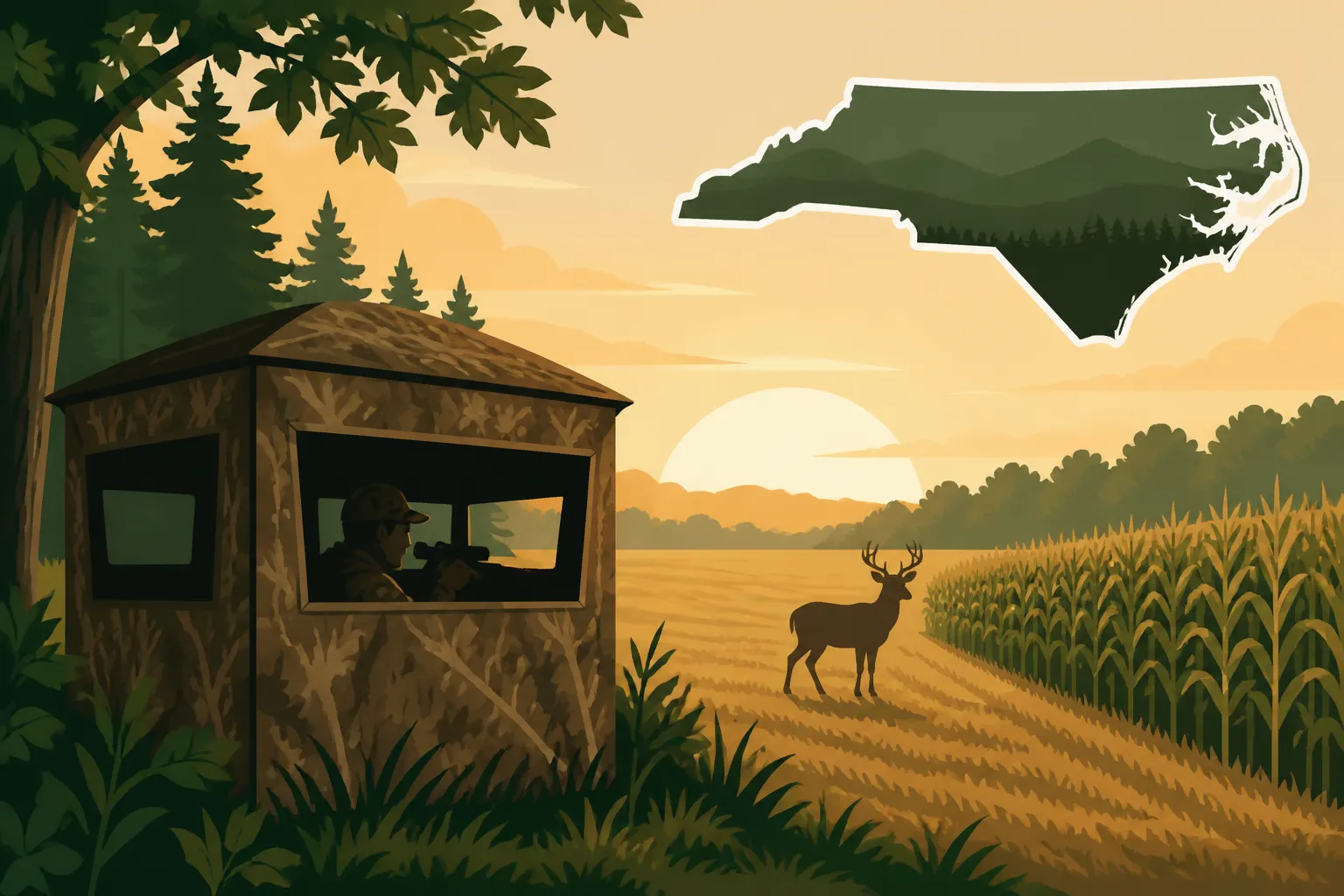
Ground Blinds on North Carolina Field Edges
Hunting open field edges in North Carolina can be incredibly rewarding, offering great visibility and opportunities to intercept deer moving between bedding and feeding areas. However, finding adequate cover for a successful ambush can often feel like an impossible puzzle, especially when mature trees are few and far between. This guide is dedicated to solving that problem, providing an in-depth look at how ground blinds can be your secret weapon for effectively hunting North Carolina's varied field edges, from the sprawling farmlands of the Piedmont to the tucked-away clearings in our national forests.
Why Ground Blinds Are a Game Changer on North Carolina Field Edges
For many North Carolina hunters, especially those of us who grew up in a treestand, the idea of sitting on the ground might feel a bit foreign. But let me tell you, when you’re looking at a vast agricultural field or a recently cut powerline, a ground blind isn't just an option—it's often the best option. These portable fortresses offer incredible advantages that a treestand just can't match in certain scenarios, completely changing how you can approach those hard-to-hunt open areas.
Overcoming the Lack of Tree Cover
Picture this: you’ve found the perfect field edge, deer trails are beaten down, and you know they're coming out into that lush clover plot. The only problem? The closest mature tree capable of holding a treestand is a hundred yards back in the woods, far from where you need to be. This is where the ground blind shines. It liberates you from the dependency on robust trees, allowing you to set up precisely where the deer sign dictates, not where a suitable tree happens to grow. Think about those wide-open cornfields or soybean plots in the eastern part of the state, or the small clearings found deep in game lands where trees are young or scraggly. A ground blind allows you to be right in the action.
You might be hunting a smaller private tract where the landowner has cleared most of the mature timber, or perhaps you're on a public game land edge where the only trees are saplings. In these situations, attempting to hang a stand can be futile, dangerous, or simply impossible. A ground blind means you're no longer restricted by vertical real estate. You can place it along a fencerow, at the corner of a field, or even nestled into a brush pile, giving you access to opportunities you’d otherwise have to pass on. This flexibility is a tremendous asset for any hunter trying to maximize their time in the field.
Flexibility for Changing Conditions
North Carolina weather can be notoriously unpredictable. One day it's seventy degrees and sunny, the next it's forty and raining sideways. A ground blind offers a level of shelter and comfort that's hard to beat. When that unexpected cold front rolls through, or a sudden downpour hits, being tucked away inside a blind can make the difference between a miserable hunt and a productive one. It keeps you out of the biting wind, shields you from rain, and even helps retain a little body heat, which is crucial during those late-season hunts when temperatures really drop.
Beyond personal comfort, ground blinds offer remarkable flexibility in terms of setup and repositioning. If you scout a new deer movement pattern, or the wind shifts unexpectedly for the next few days, moving a lightweight ground blind is far easier than relocating a bolted-in treestand and sticks. This quick adaptability allows you to react to real-time changes in deer behavior or weather patterns. This is especially useful on public lands where scouting might be limited, or deer patterns change often due to pressure. Sometimes, you just need to get in there and see what the deer are doing before committing to a long-term setup, and a blind gives you that trial flexibility. Using a Ground Blind on North Carolina Public Land can open up new areas previously considered unhuntable.
Comfort and Concealment
Let's be honest, hours in a treestand can be physically demanding. Legs cramp, backs ache, and the cold can seep right into your bones. Ground blinds, on the other hand, offer a spacious interior where you can sit on a comfortable chair, stretch your legs, and even bring a small heater on those frosty mornings. This enhanced comfort helps you stay in the field longer, increasing your chances of success. It's a huge benefit, especially for older hunters, those with physical limitations, or even just parents bringing a child along for their first hunting experience.
Moreover, modern ground blinds provide exceptional concealment. Their dark interiors and intricate camouflage patterns make you virtually invisible to passing game, even if you make a slight movement. This is a game-changer when deer are wary and constantly scanning their surroundings. With multiple shooting windows, you can often shoot from a completely blacked-out interior, making it incredibly difficult for deer to pinpoint your location. The ability to shift position, reach for a thermacell, or check your phone without being busted is a luxury that treestand hunting rarely affords.
Choosing the Right Ground Blind for North Carolina
Just like picking the right rifle or the perfect broadhead, selecting a ground blind isn't a one-size-fits-all decision. The diverse hunting environments of North Carolina, from dense coastal pocosins to wide-open Piedmont farmlands, mean that certain features will be more beneficial than others. Investing in a quality blind that suits your specific hunting style and local conditions will pay dividends in comfort and success.
Material, Durability, and Weather Resistance
The material your ground blind is made from is crucial, especially in North Carolina's often humid and occasionally harsh weather. Look for blinds constructed from heavy-duty, waterproof fabrics like 600D polyester. This material is not only durable against tears and snags from briars and sharp branches, but it also provides excellent protection from rain, dew, and even light snow. A good quality blind will have tightly stitched seams, reinforced stress points, and zippers that operate smoothly without snagging. Cheaper blinds might save you a few bucks upfront, but they often tear easily, leak, and become brittle in the sun, leading to a much shorter lifespan.
Weather resistance goes beyond just keeping you dry; it also involves noise. A stiff, crinkly fabric will be a nightmare in even a light breeze, broadcasting your presence to every deer within earshot. Seek out blinds with silent window closures, often magnetic or toggle systems, rather than noisy zippers or velcro. Pay attention to the poles and hubs as well. Fiberglass poles are common, but higher-end blinds may use aluminum for increased strength and reduced weight. Strong hubs are essential for quick setup and takedown, and for holding the blind rigid against North Carolina’s gusty winds.
Size and Hunter Capacity
Consider how many people (and how much gear) will typically be in your blind. Are you a solo hunter who likes to travel light and fast, or do you often hunt with a buddy, a child, or a camera operator? A compact, one-person blind is lighter and quicker to set up, making it ideal for mobile hunters or those Hunting Small Private Tracts in North Carolina. It also offers a smaller profile, making it easier to conceal. However, it can feel cramped, especially if you bring a lot of gear or need room to draw a bow comfortably.
For larger groups, or if you plan to spend all day in the blind with a cooler, extra layers, and perhaps a small stove, a two- or three-person blind is a much better choice. These larger blinds offer more elbow room, allowing for easier movement and a more comfortable experience over long hours. They also provide more space for gear, which is critical during those cold weather hunts when you need extra layers, or when you’re teaching a new hunter and want to ensure they have a good experience. Always check the dimensions when collapsed, too, as a larger blind can be bulkier to transport through thick woods.
Window Configurations and Shooting Lanes
The window setup on your ground blind is paramount for successful hunting. You want versatility. Look for blinds with multiple window options that allow for different shooting heights and angles. Some blinds feature a large main window with smaller shooting ports, while others offer a 360-degree silent-slide window system. The ability to open only specific sections means you can maintain maximum concealment while still having a clear shot. Magnetic window closures are often preferred over zippers or Velcro for their quiet operation, a critical feature when a wary buck is closing in.
Think about your primary weapon. If you're a bowhunter, you'll need windows that open wide enough and high enough to allow for a full draw without snagging your bow limbs or cams on the blind fabric. Rifle hunters might prefer smaller, quieter ports that offer a steady rest. It's also incredibly helpful to have windows that can be adjusted quietly in the dark for optimal shooting lanes as daylight breaks. Some blinds feature a "shoot-through" mesh material, which can offer good concealment, but it’s always a good idea to test your broadheads or bullets with it beforehand to ensure accuracy isn’t compromised. Remember, the goal is to see without being seen, and to have an unobstructed, silent shot.
Strategic Placement on North Carolina Field Edges
Once you have your blind, where you put it makes all the difference. You can have the best blind on the market, but if it’s poorly placed, it’s just an expensive tent. Strategic placement is about understanding deer movement, environmental factors, and how to best blend your setup into the existing landscape. This involves a combination of pre-season scouting and on-the-fly adjustments.
Reading the Wind and Sun
Wind direction is, without a doubt, the most critical factor in ground blind placement. Deer have an incredible sense of smell, and a single whiff of human odor will send them packing faster than anything. Always position your blind so that the prevailing wind carries your scent away from where you expect deer to approach or feed. This often means setting up downwind of trails, bedding areas, and feeding zones. In North Carolina, winds can swirl, especially in hilly terrain or near dense timber, so be vigilant and always check a current wind forecast or use a puffer bottle before heading out. Sometimes, a slight adjustment to a blind’s position can make all the difference in staying undetected.
The sun’s position is another often-overlooked factor. Avoid placing your blind where the morning or evening sun will shine directly into your shooting windows. Not only will this create glare that makes it difficult to see, but it will also backlight your silhouette, making you much more visible to incoming game. Instead, try to position the blind so that the sun is either at your back or to your sides. This keeps you in the shadows, maximizing your concealment and providing a better viewing and shooting experience. Early morning and late evening hunts, especially Hunting Into the January First Close can be greatly affected by sun angle.
Identifying Entry and Exit Routes
Just as critical as where you place your blind is how you get to and from it. Deer are creatures of habit and remarkably sensitive to intrusion. Your entry and exit routes must be carefully planned to avoid disturbing the area you intend to hunt. Try to use natural terrain features like creek beds, drainage ditches, fencerows, or dense timber lines to conceal your approach. Walk quietly, minimize noise, and avoid breaking branches or leaving heavy scent trails on your way in. This is especially true when approaching a prime feeding area like a cut cornfield or a clover plot.
The best entry routes often involve walking with the wind in your face before you even get to the blind, so any scent you do leave is carried away from the deer's likely approach. Likewise, when exiting, try to slip out unnoticed, ideally after legal shooting light, so as not to spook any deer that might be moving in later. If you're hunting public land, consider how other hunters might also be moving around, and choose routes that minimize the chance of encountering them or their scent trails. Entry Routes Through Standing Soybeans can offer excellent cover for discreet access.
Maximizing Natural Cover and Backdrops
A ground blind sticks out like a sore thumb if it’s placed in the middle of an open field. The key to effective placement is integrating it seamlessly into the existing landscape. Look for natural cover that can help break up the blind’s outline, such as thick fencerows, dense briar patches, the edge of a timber line, or even large hay bales (with landowner permission, of course). The goal is to make the blind disappear. Don't just place it near cover; place it in cover. The less it stands out, the less likely deer are to become suspicious.
Think about the backdrop as well. A dark, dense tree line behind your blind will help it melt into the shadows, especially with the dark interior. Avoid placing it against a bright, open sky, as this will silhouette the blind and any movement inside. When you're scouting with a tool like GoHunt, look for areas with existing brush, low-hanging limbs, or natural depressions that can offer an immediate advantage. Even a slight rise in elevation or a small clump of pines can make a significant difference in how well your blind is concealed from a deer's keen eyesight.
Brushing In Your Blind for Ultimate Concealment
Once your ground blind is strategically placed, the next crucial step is to "brush it in." This isn't just an optional nicety; it's absolutely essential for convincing deer that your blind is just another part of their natural environment. A naked ground blind, no matter how well camouflaged, can still look unnatural to a discerning whitetail.
Using Local Vegetation
The best brushing material is always what’s locally available. This helps your blind blend in perfectly with the surrounding habitat. If you're hunting a field edge lined with cedars, gather cedar branches. If it's a mix of hardwoods and pines, use branches from those species. Cut small branches, tall grasses, weeds, or even corn stalks from nearby. Don't go overboard and strip the entire area, as that will create a new unnatural look. The idea is to add to the existing cover, not replace it. Start by tucking branches into the blind's loops (most blinds have them) or simply piling them around the base and sides.
The goal is to soften the blind's harsh, geometric lines. Think about how deer see: they're looking for patterns and things that don't belong. A square object in a rounded, natural landscape screams danger. By breaking up the outline with natural vegetation, you make the blind appear less threatening and more like a dense thicket or a fallen tree. Take your time with this step, stepping back frequently to assess how well it blends from different angles, particularly from where deer are expected to approach. Brushing In a Blind on a Field Edge is an art, not a chore.
Creating a Natural Silhouette
Beyond just piling on branches, think about the overall silhouette. You want to avoid a perfectly symmetrical, boxy shape. Use taller branches or small saplings to create varying heights around the top of the blind, mimicking natural tree lines or thickets. Let some vegetation drape over the top and down the sides. If you’re using a blind on a field edge where deer are accustomed to seeing brush piles, consider creating a more substantial pile around your blind. The more irregular and natural it looks, the better.
Sometimes, simply placing the blind against a thick, dark background isn't enough. You need to pull the natural elements into the blind's immediate vicinity. This might involve creating a small, low-lying fence of branches in front, or leaning larger pieces of deadfall against the sides. The idea is to make the blind appear as if it has always been there, part of the landscape’s natural evolution. When scouting with GoHunt, pay attention to the types of natural cover already present and plan how to best mimic or integrate with them. This attention to detail will greatly reduce a deer's suspicion.
Dealing with Scent Management
Even with the best brushing in, scent management remains paramount, especially in the close quarters of a ground blind. Your blind contains your scent, and that scent can linger. Always approach your blind with clean clothes, rubber boots, and a strict adherence to scent control. Consider spraying down the interior of your blind with an odor eliminator before and after each hunt. During the hunt, minimize activities that create excessive scent, like eating strong-smelling foods or fidgeting constantly.
Another often-overlooked aspect is residual human scent on the blind itself, particularly if it's been set up for a while. Airing out your blind between hunts or using an ozone generator (if permissible and safe) can help. When you brush in your blind, handle the vegetation with gloves to avoid transferring your scent onto the natural cover you're using. Remember, deer are primarily relying on their nose, and a well-brushed-in blind is useless if your scent is announcing your presence. Scent Control Gear for Humid Coastal Hunts is vital, especially when you're confined to a blind in warm weather.
Tactics for Hunting From a Ground Blind
Once your ground blind is perfectly placed and brushed in, the real hunting begins. There are specific tactics that will maximize your success when hunting from a blind, especially on those open field edges where deer can be particularly cautious. It's not just about sitting and waiting; it's about being prepared and understanding the unique advantages and limitations of blind hunting.
Patience and Minimal Movement
Perhaps the most critical tactic when hunting from a ground blind is patience combined with absolute minimal movement. Inside the dark confines of a blind, you are incredibly well concealed, but any sudden, unnatural movement near a window can instantly blow your cover. Deer, especially mature bucks, have an uncanny ability to pick up on even the slightest anomaly. Take your time, move slowly, and make every movement deliberate. Avoid fidgeting, checking your phone constantly, or moving your head around excessively. If you need to shift position, do it when a deer’s head is down feeding or when it’s looking away.
This often means sacrificing some immediate comfort for ultimate concealment. Train yourself to be still for extended periods. When you bring new hunters, especially children, into a blind, emphasize the importance of quiet and stillness. The enclosed space can actually help them focus and reduce distractions, but constant reminders of "deer eyes are everywhere" are important. This stillness also applies to sound. Keep your voice low, your gear from clanking, and any snacks you bring easy to open silently.
Shot Opportunities and Angles
Hunting from a ground blind inherently changes your shot angles compared to a treestand. Instead of shooting down at a steep angle, you'll typically be shooting more horizontally. This means you need to be acutely aware of your backdrop and what lies beyond your target. Always ensure a safe shooting lane and confirm your target is clear of any obstacles, both close and far. When bowhunting, a horizontal shot means your arrow will be traveling through more air, so range estimation becomes even more critical. Practice shooting from a seated position with your chosen weapon to understand how your blind's windows and the horizontal angle affect your aim.
Many blinds feature multiple windows, allowing you to take shots from different directions. However, be mindful of which windows are open. Keeping unneeded windows closed maximizes concealment and helps contain your scent. When a deer approaches, quietly open only the window necessary for your shot. Before the season, clear any small twigs or grass in your anticipated shooting lanes outside the blind. Even a small blade of grass can deflect an arrow or bullet at close range. Understanding the limitations of your blind's windows and practicing realistic shooting scenarios will greatly increase your confidence when the moment of truth arrives.
Public Land Considerations
Hunting field edges on North Carolina public lands with a ground blind presents unique challenges and opportunities. First, always check specific game land regulations regarding ground blinds. Some game lands have rules about how long blinds can be left up, requiring them to be removed daily, while others have specific flagging or labeling requirements. The GoHunt app can be very useful for reviewing specific game land rules and boundaries, ensuring you're compliant. Also, remember that on public land, other hunters might be moving through the area. Be extra visible when entering and exiting, perhaps wearing North Carolina Blaze Orange Requirements more prominently, even if not strictly required in the blind itself.
On public land, deer are often more pressured and wary. This makes brushing in your blind even more crucial. Avoid obvious locations, and try to find those subtle edges or overlooked corners that others might pass by. Look for pinch points, funnels, or small pockets of cover that act as natural travel corridors along a field edge. Consider setting your blind up a few days in advance to allow deer to get accustomed to its presence, if regulations permit. Hunting Pressure on North Carolina Public Land means you need to be extra meticulous with your setup and tactics to succeed.
Table: Ground Blind Placement Scenarios on North Carolina Field Edges
Here's a quick look at common field edge scenarios and how a ground blind might fit in:
| Field Edge Scenario | Optimal Blind Placement | Key Considerations |
|---|---|---|
| Open Agricultural Field | Against a fencerow, thick hedgerow, or large brush pile. | Break up outline aggressively. Wind direction is paramount. Long shooting lanes. |
| Piedmont Pasture/Clover Plot | Tucked into a cedar thicket, wooded finger, or creek bank. | Sun angle for morning/evening. Approach/exit routes to avoid spooking bedding deer. |
| Coastal Plain Clear-cut | Nestled into a pine regeneration line or standing timber edge. | Focus on brushing in with pines/hardwoods. Prepare for thick cover at close ranges. |
| Mountain Food Plot/Opening | Against a steep hillside, large rock outcropping, or dense laurel thicket. | Wind thermals can be tricky. Ensure stable ground. Be aware of uphill/downhill shooting angles. |
| Powerline or Pipeline Cut | At a bend in the cut, or where a wooded finger meets the edge. | Anticipate long-distance shots. Use topography to hide entry. Very exposed, so heavy brushing is key. |
| Transition Line (Woods/Field) | Directly on the edge, inside the woods slightly, or where a trail enters. | Maximum concealment, often requires less brushing. Great for intercepting deer moving from cover to food. |
This table highlights that while the general principles remain, each specific field edge requires a slightly different approach. Always adapt your setup to the micro-terrain and vegetation.
Advanced Strategies and Long-Term Success
Mastering ground blind hunting on North Carolina field edges goes beyond basic setup. It involves understanding seasonal patterns, long-term blind management, and employing advanced tactics that can turn a good hunt into a great one. These strategies help you remain consistently successful throughout the entire hunting season.
Seasonal Adjustments and Scouting
Deer patterns on field edges change significantly throughout the hunting season in North Carolina. Early archery season (September to early October) might see deer hitting protein-rich clover or alfalfa fields. As crops like corn and soybeans mature, Hunting a Standing Cornfield in Farm Country becomes a prime tactic. During the rut (late October through November, depending on the zone), bucks will cruise field edges looking for does. Hunting the Rut in the Eastern Zones from a well-placed blind can be extremely effective. Late season (December and January) often brings deer back to agricultural fields for leftover grains or brassicas.
This means your blind placement shouldn’t be static. Use off-season scouting with tools like GoHunt to identify key food sources, bedding areas, and travel corridors for each season. Mark potential blind locations and monitor them with trail cameras. Having a few different blind locations pre-scouted and pre-brushed for different wind directions and seasonal food sources will drastically increase your success. Don't be afraid to pull up a blind and move it if the deer have shifted their patterns. The mobility of a ground blind is one of its greatest assets. Late-Season Food Sources for North Carolina Whitetails are often found on field edges, making blinds ideal.
Long-Term Blind Management
If you plan to leave your ground blind set up for an extended period, or even for an entire season (where regulations permit), long-term management is crucial. This means reinforcing the brushing in periodically as vegetation wilts or shifts. Check for wear and tear, especially after heavy rains or strong winds, and repair any tears or broken poles promptly. Secure the blind against strong gusts by using stakes and tie-down ropes – a common oversight that leads to blinds flying across fields.
Critters can also become an issue. Mice, squirrels, and even insects can take up residence in a blind left unattended. Consider placing rodent repellent or mothballs inside (being mindful of your scent control efforts) to deter unwanted guests. Clean out your blind regularly to prevent lingering human or animal odors from building up. If you're hunting private land, communicate with the landowner about your blind's presence and ensure it's not interfering with any farming operations. A well-maintained blind will last longer and be far more effective than one left to deteriorate.
Combining Blinds with Other Tactics
Ground blinds don't have to be used in isolation. They can be incredibly effective when combined with other hunting tactics. For instance, if you're doing Deer Drives With Three or Four Hunters on public land, a hunter in a well-concealed ground blind on a field edge can act as a blocker, intercepting deer pushed out of the woods. For bowhunters, setting up a mock scrape line or small decoy spread near your blind can often draw curious deer closer, offering better shot opportunities.
On private land, working with a landowner to plant a small food plot directly in front of your blind, or creating a subtle funnel with cut brush leading to your setup, can greatly enhance its effectiveness. Similarly, if you are hunting with a mentor or teaching a new hunter, a ground blind allows for quiet communication and instruction that's impossible in a treestand. The versatility of ground blinds means they can integrate into almost any hunting strategy, making them a valuable tool in any North Carolina hunter's arsenal.
Disclaimer
This article is for general informational purposes only and does not constitute professional advice. Laws, prices and regulations vary by location and change over time. Consult a qualified professional for guidance on your specific situation.