Slate and Glass Calls in Wet Weather
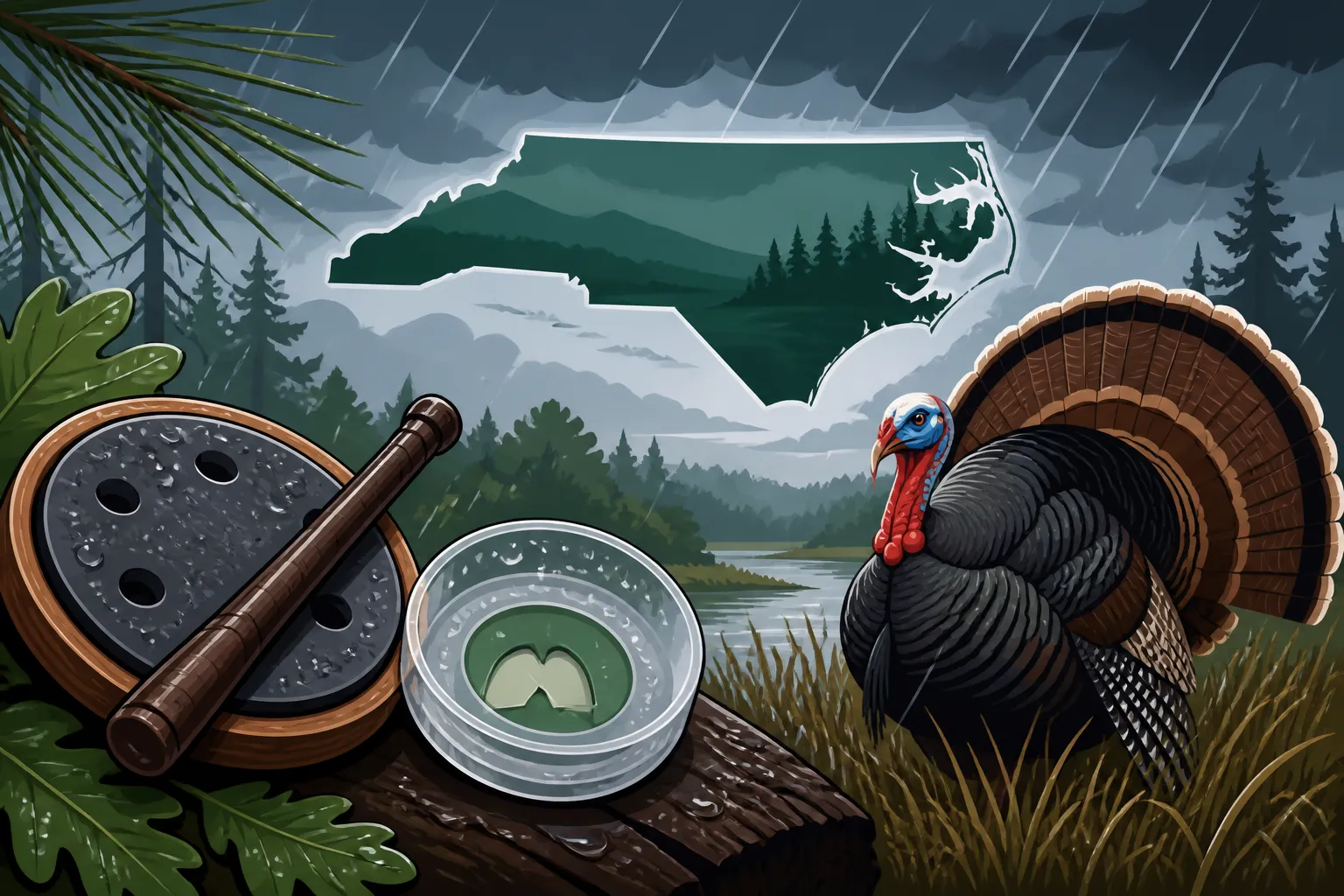
There’s a special kind of dread that washes over a turkey hunter when the morning air feels heavy with dampness, or worse, when a light drizzle starts to fall just as that gobbler starts sounding off in the distance. You reach for your trusty slate or glass call, the one that perfectly mimics that seductive hen yelp, only to find it's gone silent, or worse, just producing a sad, squeaky whisper. That beautiful friction, the heart and soul of these calls, vanishes with the moisture, leaving you feeling frustrated and that gobbler possibly heading in the opposite direction. This guide is all about conquering that common North Carolina hunting challenge, ensuring your friction calls perform reliably, even when Mother Nature decides to add a little dampness to your spring turkey hunt.
The Frustration of Friction Calls in Wet Conditions
If you've spent any time chasing turkeys, you know that friction calls – slates, glass, crystal, or even aluminum – are staples in most hunters' vests. They produce incredibly realistic sounds, from soft purrs and clucks to loud yelps and cutts, which are often irresistible to a lovesick tom. But the magic of these calls lies entirely in the friction created between the striker and the call's surface. When moisture, be it heavy dew, fog, or outright rain, enters that equation, the game changes entirely.
Imagine this: you’ve been patiently working a bird, and he’s finally closing the distance. You go to make a soft tree yelp on your favorite slate, but instead of the smooth, clear notes, you get a hesitant, rough sound, or the striker just glides across the surface with almost no noise at all. It's deflating, to say the least. The moisture creates a barrier, reducing the grab that the striker needs, and it can absorb into the wood of your striker, making it swell and change its acoustic properties. This isn't just an annoyance; it can be the difference between tagging out and going home empty-handed. Hunters often lament losing that critical moment because their calls fail when it matters most, and North Carolina's humid springs and sudden showers make this a very real concern.
Preparing Your Calls for Inclement Weather
The key to success with friction calls in wet conditions often starts long before you ever step foot in the woods. Proactive preparation can make a huge difference, turning a potential disaster into a manageable situation.
Conditioning Your Call Surface
The surface of your slate or glass call needs to be properly conditioned to provide optimal friction. Think of it like a finely tuned musical instrument – it needs care. For slate calls, you'll typically use a small piece of sandpaper (often 100-150 grit) or a specialized conditioning pad. You want to lightly scuff the surface in a circular or cross-hatch pattern. This creates tiny peaks and valleys that help the striker "grab" the surface. For glass or crystal calls, the same principle applies, but you might use a finer grit sandpaper or a dedicated conditioning stone. The goal is to remove any oils, dirt, or accumulated moisture and restore that essential rough texture.
It's a good habit to recondition your call at home before each hunt, especially if you anticipate damp conditions. Some hunters even carry a small conditioning pad in their vest, tucked away safely in a waterproof pouch. This way, if a call starts to fail due to moisture or oils from your hands, you can quickly refresh the surface right there in the field. Don't go overboard and grind away at the call, though; a light touch is all that's needed to restore that crucial friction.
Choosing and Protecting Your Strikers
Your striker is just as important as the call surface itself. Different materials react to moisture in various ways. Wooden strikers, such as those made from hickory, purple heart, or osage orange, can absorb moisture and swell, changing their weight, balance, and the way they interact with the call. When a wooden striker gets damp, it can feel sticky or simply refuse to make clean contact. Synthetic strikers, often made from carbon, fiberglass, or plastic, are far less susceptible to moisture absorption. Many experienced hunters carry at least one synthetic striker specifically for wet weather.
To protect your wooden strikers, consider keeping them in a waterproof tube or a plastic baggie inside your vest. Some hunters even lightly sand the tips of their wooden strikers before a wet weather hunt, just like conditioning the call surface, to ensure they're free of oils and ready to grab. Having a variety of strikers on hand is always a good idea. That way, if your favorite wooden striker starts to fail, you can quickly switch to a synthetic option or a different wood that might perform better in the prevailing conditions. Before heading out, a quick check of the weather forecast, perhaps using a reliable source like the GoHunt app, can give you a heads-up on precipitation, allowing you to choose your primary and backup strikers wisely.
Waterproofing and Storage Solutions
While you can't truly "waterproof" a friction call and expect it to work, you can certainly protect it from getting wet in the first place. The simplest method is a small, heavy-duty Ziploc bag. Place your call and a few strikers inside, squeeze out the air, and seal it tight. Keep this bag tucked deep inside a waterproof pocket of your hunting vest. Many North Carolina hunters swear by carrying a small, waterproof case for their most prized calls, a tip you might even pick up from seasoned pros sharing insights on forums or resources like those found through GoHunt. These cases not only keep moisture out but also protect your calls from damage while you're trekking through thick woods.
Another clever trick is to use a small balloon or a piece of thin rubber cut from a glove to cover the call's surface when not in use. This provides a temporary, elastic barrier against rain and humidity. For wooden pot calls, some hunters apply a light coat of waterproofing wax to the pot itself (avoiding the playing surface, of course) to prevent the wood from swelling. Regardless of your method, the goal is to keep the playing surface and striker tip as dry as possible until the moment you need to make that critical call. Remember, even a small amount of moisture can compromise performance, so diligence in protection is key.
Tactics for Using Friction Calls in the Rain
Okay, so you've done all the prep work, but now you're out there, and the sky is weeping, or the humidity is so thick you could swim through it. Don't despair! There are still ways to effectively use your slate and glass calls.
Finding Shelter and Staying Dry
The most obvious, yet often overlooked, tactic is to find shelter. If you're on public land in the mountains or piedmont, this might mean setting up under the thick canopy of a large pine or cedar, or nestled against the massive trunk of a broadleaf oak that offers some overhead protection. In coastal pocosins, you might look for dense thickets or the overhang of a particularly large cypress. The goal is to create a small, dry microclimate for yourself and your calls.
Beyond just staying dry yourself, actively try to keep your calls out of direct rain or heavy condensation. This means pulling them out of your pocket only when you're ready to call, and putting them away immediately after. If your hands are wet, dry them on a towel or a piece of cloth you've stashed in your pack before handling your call. A wet hand can transfer enough moisture and oils to ruin the call's surface. Think about how you would protect your Rifle Scopes for Low-Light Mountain Coves or Binocular Choice for North Carolina Whitetails from the elements; your calls deserve the same consideration.
In-Field Drying and Reconditioning
Sometimes, despite your best efforts, your call or striker will get damp. This is where your in-field tools come into play. A small, clean, lint-free cloth or a piece of chamois leather can quickly wipe away surface moisture from your call and striker. Many hunters carry a dedicated piece of fabric for this purpose, keeping it dry in a separate baggie. After wiping, you can often restore some friction by quickly re-scuffing the call's surface with your conditioning pad. A few quick rubs can remove the wet film and give the striker something to grab.
For your striker, if it's wooden and has absorbed moisture, it might be tough to get it fully dry in the field. Blowing on it can help a little, but the best strategy is to switch to a different, dry striker, especially a synthetic one. This is why carrying multiple strikers, prepared for various conditions, is so critical. You might find that a short, aggressive striker works better than a longer one in damp conditions, as it applies more direct pressure to the call surface. Being able to adapt your calling strategy in the field, much like planning your hunt with detailed mapping tools like GoHunt, is key to success.
Utilizing Other Call Types
Let's be real: sometimes, no matter what you do, a friction call just won't cut it in truly torrential rain. This is when you lean on your other call types. Mouth calls (diaphragm calls) are completely impervious to water and can produce a full range of turkey sounds, from soft purrs to aggressive cutts. They're excellent for close-in work, even when you're soaking wet. Learning to master a few different mouth calls can be a game-changer for Spring Turkey Hunting in North Carolina.
Box calls can also work in damp weather, though they too can suffer if they get completely saturated. Their wooden paddles can swell, changing the tone. If you anticipate heavy rain, keep your box call in a waterproof bag and only pull it out for quick sequences, then put it right back. Some hunters apply a light coat of beeswax to the outside of their box call and the pivot point of the paddle to help shed water. Having a diverse array of calls, including a reliable mouth call, ensures you always have a tool to communicate with that gobbler, no matter what the North Carolina Spring Turkey Season Rules throw at you weather-wise.
Post-Hunt Care and Long-Term Maintenance
Your calls work hard for you during the hunt, and giving them proper care afterward, especially after exposure to moisture, ensures they'll be ready for your next adventure. Neglecting them can lead to warping, mildew, or permanent damage.
Thorough Drying and Inspection
Once you're back from the woods, even if your calls felt dry, take them out of their protective cases or bags and let them air dry completely. Don't just toss them in your hunting vest to sit for weeks. Lay them out on a clean, dry surface indoors, away from direct heat sources that could cause wood to crack or warp. This allows any hidden moisture in the call's pot or striker to evaporate naturally.
While they're drying, take the opportunity to inspect them closely. Look for any signs of mold or mildew, especially on wooden parts. Check for any swelling or warping of wooden strikers or box call paddles. Examine the call surfaces for any damage or excessive wear that might need more aggressive reconditioning. This meticulous post-hunt inspection is crucial for the longevity of your gear, much like checking your Turkey Shotguns and Chokes after a long day in the field.
Reconditioning and Storage for Longevity
After your calls are thoroughly dry, it's time for another round of conditioning. Use your sandpaper or conditioning pad to rough up the slate or glass surfaces, just as you did before the hunt. This removes any lingering residue and prepares the call for its next outing. For wooden strikers, a light sanding of the tip can help restore their crispness.
Proper storage is paramount for call longevity. Keep your friction calls in a clean, dry environment. Many hunters store their calls in dedicated call boxes or cases, often with individual compartments, to prevent them from knocking against each other and to keep dust and debris off the playing surfaces. Avoid storing them in extreme temperatures, such as a hot attic or a freezing garage, as this can cause materials to expand and contract, leading to warping or cracking over time. By taking these simple, consistent steps after every hunt, you ensure your calls remain in top condition, ready to help you call in that gobbler, whether you're Calling a North Carolina Gobbler Off the Roost or trying to tempt one on a Turkey Tactics for Piedmont Field Edges hunt.
Call Material and Wet Weather Performance
To help you make informed decisions about your call selection and field tactics, here's a quick overview of how common friction call materials typically perform in wet weather and how to manage them:
| Call Material | Wet Weather Performance | Prep for Wet Weather | On-Hunt Tip | Post-Hunt Care & Longevity |
|---|---|---|---|---|
| Natural Slate | Significantly degraded, slick, soft sound | Recondition surface frequently, keep in waterproof pouch. | Wipe surface dry, use a conditioning pad, switch to synthetic striker if wooden one gets wet. | Air dry thoroughly, recondition, store in dry, cool place. |
| Glass/Crystal | Similar to slate, becomes very slick quickly | Recondition with fine grit, keep in waterproof pouch. | Wipe surface dry, use conditioning stone, switch to synthetic striker. | Air dry, recondition, prevent scratches to surface. |
| Aluminum | Better than slate/glass, but still affected by moisture on surface. | Keep surface clean and conditioned. | Wipe surface dry, often more forgiving with damp strikers. | Air dry, check for oxidation, store dry. |
| Ceramic | Generally good, less prone to moisture issues than slate/glass. | Still wise to keep dry, recondition as needed. | Wipe surface, often performs well even with slight dampness. | Air dry, recondition, handle carefully to avoid chips. |
| Wood (Box Call) | Swells, changes tone, can stick or bind. | Apply wax to hinge and outside of box, keep in waterproof bag. | Use in brief bursts, keep lid closed, protect from direct rain. | Air dry fully, re-wax hinge, check for warping. |
| Diaphragm/Mouth Call | Unaffected by water. | None specific for wet weather. | Use as primary call in heavy rain or high humidity. | Rinse with water, air dry, store in breathable case. |
This article is for general informational purposes only and does not constitute professional advice. Laws, prices and regulations vary by location and change over time. Consult a qualified professional for guidance on your specific situation.