North Carolina State Park Deer Quota Hunts
It's no secret that finding quality deer hunting opportunities in North Carolina, especially on public land, can feel like a real challenge. You scout endlessly, pour over maps, and still end up elbow-to-elbow with other hunters on opening day. But there's a unique avenue many overlook, one that offers a chance at less pressured deer in beautiful, well-managed settings: North Carolina's State Park deer quota hunts. This guide will walk you through what these hunts entail, how to navigate the application process, and strategies to maximize your chances of success once you draw that coveted tag.
Understanding North Carolina's State Park Deer Quota Hunts
When you think of state parks, you might picture hiking trails, picnic areas, and scenic overlooks, not necessarily a prime spot for deer hunting. However, many of North Carolina's state parks play a vital role in wildlife management, and sometimes that includes special, limited-entry deer hunts. These aren't your typical walk-in hunting experiences; they're highly structured and sought after for a reason.
What Exactly Are Quota Hunts?
Quota hunts are precisely what they sound like: hunting opportunities where the number of participants is strictly limited, or "quota'd." Instead of an open-access season, hunters must apply for a permit and are chosen through a lottery system. This limitation is a deliberate management tool, allowing park staff to control deer populations within sensitive ecosystems, prevent overbrowsing, and maintain healthy herds. For the hunter, it means significantly less pressure than you might find on regular game lands. Imagine hunting a beautiful tract of land where you might only encounter a handful of other hunters all day, rather than dozens. It's a game-changer for folks who cherish a more solitary, strategic hunt. These hunts often have specific dates, weapon restrictions, and bag limits tailored to the particular park's needs.
Why State Parks? Unique Opportunities for Hunters
Hunting in a state park offers a truly distinct experience compared to traditional game lands or private property. First off, the habitat within many parks is often pristine and undisturbed, providing excellent cover and food sources for deer. These areas might be adjacent to developed areas or even surround urban centers, creating pockets of relatively untouched deer sanctuary. For a deer, a state park can be a haven, offering security from daily disturbance, and for a hunter, this can translate to opportunities for encountering mature animals that have grown accustomed to relative peace. Secondly, the controlled access means significantly less hunting pressure. While you still need to scout and hunt smartly, you're not constantly competing with a crowd, which can be incredibly frustrating during peak seasons. Hunting Pressure on North Carolina Public Land is a real issue for many, and quota hunts offer a respite from that.
The goals of state park deer management often align with conservation principles. They're not just about harvesting animals; they're about maintaining ecological balance. This means the deer herds you encounter are generally healthy, and the land itself is typically well-maintained, sometimes offering better trail systems and access points than more rugged game lands.
The Application Process: Getting Your Foot in the Door
The biggest hurdle for state park quota hunts is often simply getting drawn. It's a competitive process, but don't let that deter you. The first step is always to monitor the North Carolina Wildlife Resources Commission (NCWRC) website. They are the governing body, and they'll publish the list of available hunts, application periods, and specific rules for each. You'll typically apply through their online portal.
Here's a general breakdown of the process:
- Check for Hunt Opportunities: Keep an eye on the NCWRC's "Controlled Hunting Opportunities" or "Quota Hunts" section. This usually updates annually, well in advance of the hunting season. You'll see which state parks are participating, the dates, allowed weapons (archery, muzzleloader, shotgun, or rifle), and the number of available permits.
- Understand the Requirements: Each hunt will have specific requirements. These might include age limits, hunter education certifications (which you can learn about in North Carolina Hunter Education Requirements), and specific license types. Make sure you meet all criteria before applying.
- Apply Online: The application window is usually a defined period, and missing it means you're out of luck for that year. The application often involves a small, non-refundable fee. You'll select your preferred hunts, ranking them in order of priority if multiple options are available. This is where you need to be strategic. Do you put your dream hunt as number one, knowing it's highly competitive, or a slightly less popular one to boost your odds?
- Wait for the Draw Results: This is the nerve-wracking part! The NCWRC will conduct a random draw, and results are typically posted online. If you're selected, you'll receive a notification and further instructions, usually requiring you to confirm your spot and pay any remaining permit fees.
- Permit in Hand: Once you have that permit, congratulations! You've won the golden ticket. Now the real work (and fun) begins: preparing for your hunt.
A Glimpse at Hypothetical State Park Quota Hunt Features
Here’s an example of how different state parks might structure their quota hunts, just to give you an idea of the variety you might encounter. Remember, these are illustrative and not real hunt offerings or dates. Always check the official NCWRC listings.
| Park Name (Hypothetical) | Primary Target | Weapon Type | Typical Terrain | Key Features | Special Rules (Hypothetical) |
|---|---|---|---|---|---|
| Blue Ridge Foothills SP | Deer | Archery Only | Rolling hills, mature hardwoods, creek bottoms | Isolated coves, dense laurel thickets | No ground blinds, tree stands only |
| Coastal River SP | Deer | Shotgun/Muzzleloader | River bottomland, cypress swamps, pine stands | Hydric soils, high deer density, limited access points | Mandatory harvest check-in by 2 PM daily |
| Piedmont Farm SP | Deer | Archery/Shotgun | Mixed farmland edges, small woodlots, old fields | Transition zones, high deer activity near agriculture | Only doe harvest allowed, no antlered deer |
| Mountain Ridge SP | Deer | Archery/Muzzleloader | Steep slopes, oak ridges, rhododendron thickets | Challenging terrain, older deer potential, low hunter density | Specific entry/exit points, sign-out required |
Common Challenges and How to Overcome Them
Getting drawn for a state park quota hunt is just the first step. These hunts come with their own set of unique challenges that require careful planning and adaptation. It's not like your typical deer drive on private land or a casual walk through the woods.
The Low-Odds Lottery: Managing Expectations
Let's be real: applying for quota hunts can feel like playing the lottery, and sometimes the odds are stacked against you. Many hunters get frustrated after years of applying without success. It's easy to get discouraged and think, "What's the point?" But here's the thing: someone does get drawn every year. If you don't apply, you definitely won't get picked.
My advice? First, accept that it's a numbers game. Second, be persistent. Don't give up after one or two tries. Third, consider applying for hunts that might be slightly less popular. Maybe there's a park further from a major city, or one with a later season date, that sees fewer applications. While the ultimate goal might be a specific high-demand hunt, diversifying your applications across several options might increase your overall chances of drawing a tag. Remember, a successful hunt on any new ground is a learning experience, even if it wasn't your first choice.
Scouting Restricted Areas: Making the Most of Limited Access
One of the biggest differences with state park hunts is that you often can't just wander in and scout anytime you please. Many parks have strict off-season access rules, or certain areas might be permanently closed to foot traffic outside of designated trails. This can feel like a huge disadvantage, especially when you're used to Scouting North Carolina Public Land Before Season with boots on the ground.
So, how do you scout?
- Virtual Scouting is Key: This is where modern tools like onX Hunt become invaluable. You can virtually walk the entire park from your living room. Look for terrain features that naturally funnel deer: saddles, draws, creek crossings, pinch points between elevation changes or dense cover. Identify food sources (oak ridges, old fields, transition lines) and potential bedding areas (thick briar patches, laurel thickets, deep timber). Pay close attention to boundary lines; deer often feel safe right along the edge of hunting property. Reading Aerial Photos for Piedmont Deer can be incredibly effective here.
- Leverage Public Access Trails: If the park has public hiking trails, use them! Even if they aren't in the exact hunting zone, they can give you a feel for the terrain, the type of timber, and general deer activity. Look for tracks crossing trails, rub lines along the edges, or old scrapes. This provides crucial intel on how deer are using the general area.
- Use Available Data: Sometimes, park staff or the NCWRC will release basic information about the hunt areas, or even historical harvest data. While it won't give you exact stand locations, it might indicate areas of higher deer density or common travel corridors. Hunters also share experiences on forums (though always take anecdotal evidence with a grain of salt).
- The "Pre-Hunt Walk-Through": If allowed, try to visit the park a few days or a week before your hunt. This might be your only chance to put boots on the ground and verify your virtual scouting. Focus on confirming bedding areas, understanding wind directions in specific funnels, and identifying fresh sign. Don't try to cover too much ground; be efficient and strategic.
Adapting to Unique Park Regulations
State parks aren't just patches of woods; they are managed ecosystems with specific rules designed to protect both the natural resources and the public. These regulations often go beyond standard statewide hunting laws, and failing to adhere to them can lead to immediate expulsion from the hunt and potential legal trouble.
Common unique regulations you might encounter include:
- Weapon Restrictions: Some parks might be archery-only, even if they're in a zone that typically allows firearms. Others might restrict ammunition types (e.g., shotgun slugs only, no buckshot). Always confirm the allowed weapon for your specific hunt. North Carolina Crossbow Equipment Requirements or North Carolina Legal Firearms for Deer Hunting will give you the statewide baseline, but the park rules take precedence.
- Access Times and Points: Parks often have designated entry and exit times, and specific gates or parking areas you must use. You can't just hop a fence at 4 AM.
- Tree Stand/Ground Blind Rules: Many parks prohibit screwing into trees or require portable stands that must be removed daily. Some might disallow ground blinds entirely or require specific blaze orange on them. Be sure to check Treestand Rules on North Carolina Public Land and Ground Blind Rules on North Carolina Game Lands but prioritize the park's specific guidelines.
- Deer Recovery Procedures: If you make a harvest, there might be specific steps you need to follow immediately, such as contacting park staff before retrieving the animal, or using designated drag routes. This is especially true for large animals like deer.
- No Baiting or Feeding: While often prohibited statewide on public lands, it's worth double-checking that these rules are explicitly clear for the park hunt.
- Blaze Orange Requirements: Even for archery hunts, some parks might require blaze orange, regardless of state law. Check How Much Blaze Orange North Carolina Requires and follow the park's directive.
My best advice here is to read every single detail of the hunt information packet or rules sheet you receive. Don't skim. Ask questions if something is unclear, usually to the park manager or the NCWRC contact listed for the hunt.
Strategies for a Successful Quota Hunt
You've done the hard work of applying and getting drawn, and you've familiarized yourself with the rules. Now, let's talk about strategies to actually tag a deer when your hunt dates arrive.
Pre-Hunt Intelligence: Leveraging Technology and Local Knowledge
Success on a state park quota hunt often hinges on the quality of your pre-hunt preparation. Since your time on the ground might be limited, every piece of information counts.
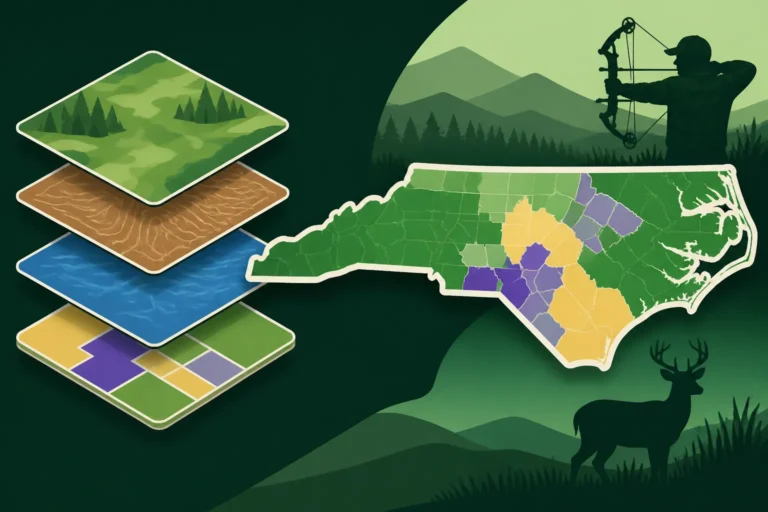
- Map Study with onX Hunt: I can't stress this enough. An app like onX Hunt is an absolute game-changer. Use it to mark potential bedding areas (dense, dark cover), feeding zones (old fields, mast trees, areas near agriculture), and most importantly, the travel corridors between them. Look for pinch points created by elevation, water, or dense thickets. Identify logging roads, old fence lines, or subtle creek bottoms that deer will naturally follow. You can overlay different map layers to see topo, satellite imagery, and even public/private land boundaries, which are crucial for understanding deer movement near park borders.
- Topo Maps for Elevation and Funnels: Understanding the terrain is paramount, especially in parks with varied topography. Deer often use the easiest path, so look for saddles on ridges, benches on steep slopes, or draws that provide cover. These are natural funnels. Consider how Wind and Thermals on a Blue Ridge Slope might affect deer movement in similar, hilly park settings.
- Historical Weather Data: What was the weather like in the weeks leading up to your hunt? Heavy rains? A cold snap? This can influence deer behavior, food availability, and even what routes they use.
- Scout from Afar (if possible): If the park borders private land you have access to, or even public roads with good sight lines, use binoculars or a spotting scope to observe deer movement outside the park boundaries. This can give you clues about where deer are entering and exiting, and what their general patterns are.
- Talk to Park Staff (Respectfully): While park rangers can't give you "honey holes," they might offer general insights into deer activity, mast crop conditions, or recent observations. Ask polite, specific questions, like "Have you seen much acorn production this year?" or "Are deer mostly in the lowlands or up on the ridges lately?"
On-Site Tactics: Hunting Smart in a Park Environment
When your hunt day finally arrives, it's time to execute your plan, but always be ready to adapt. Park deer are still wild animals, but they might react differently due to the unique environment.
- Arrive Early, Stay Late: Maximize your limited hunting time. Be in your stand well before first light, and stay until legal shooting hours end. These critical low-light periods are when deer are most active, and often when the biggest bucks move.
- Hunt the Edges: Deer living in parks, especially those near human activity, often become masters of the edge. They'll use the fringes of dense cover, the transition lines between different habitat types, or the boundaries with non-hunting areas as security. A strategic stand setup Setting Up on a Piedmont Field Edge or Hunting a Funnel Between Two Pocosins can be deadly.
- Minimize Your Impact: With limited hunter numbers, deer in state parks can be less tolerant of human intrusion. Practice good scent control, move slowly and quietly, and use established entry and exit routes that minimize disturbance. The less you spook deer, the more likely they are to stick around.
- Still-Hunting and Spot-and-Stalk: If allowed and appropriate for the terrain, consider still-hunting or spot-and-stalk tactics, especially if you're in an unpressured area. Moving slowly through the woods, stopping frequently to glass, can be incredibly effective, particularly if you have good visibility. Still-Hunting Nantahala Forest Ridges is a great example of this approach.
- Hunt Bed-to-Feed Patterns: Focus your efforts on intercepting deer as they move from their bedding areas to their food sources, or vice-versa. This means understanding the wind direction and setting up downwind of likely travel paths.
Post-Harvest: Logistics and Reporting
So, you've made a successful shot! Congratulations! Now comes the crucial final steps, and this is where those specific park regulations will come back into play.
- Contact Park Staff Immediately: Most state park quota hunts require you to notify park staff or a designated contact person immediately after harvesting a deer. This is often a mandatory step before you can even begin field dressing or moving the animal. They might need to inspect the animal, tag it, or provide specific instructions for egress.
- Field Dressing and Retrieval: Be prepared to field dress your deer quickly and efficiently. Given the often-challenging terrain and potential for long drags, having a sturdy knife, game bags, and perhaps a deer sled or cart is essential. Check if the park has specific rules for removing offal or if gut piles need to be placed in certain areas. Also, be aware of warm weather; if it's early season, plan for immediate cooling of the meat. Field Dressing a Deer in Cold Weather or Dragging a Deer Out of a Coastal Swamp offer tips, but remember park-specific rules.
- Mandatory Reporting: You will absolutely need to report your harvest to the NCWRC. This is standard for all big game in North Carolina. The park might have a check station, or you might need to use the Reporting a Deer Through North Carolina's App or online portal. Make sure you understand the deadline for reporting.
- Carcass Movement Restrictions: If the state park happens to be in or near a North Carolina's Chronic Wasting Disease Areas, there might be additional rules about carcass movement. You may need to debone the deer or leave certain parts behind to prevent the spread of CWD. Always verify North Carolina Carcass Movement Restrictions if you're in a CWD-affected county.
North Carolina State Park deer quota hunts offer an unparalleled opportunity for hunters seeking a quality experience away from the crowds. While they demand patience, diligent preparation, and strict adherence to rules, the reward of hunting in these unique, beautiful settings is truly something special. Good luck with your application, and tight lines!
Disclaimer
This article is for general informational purposes only and does not constitute professional advice. Laws, prices and regulations vary by location and change over time. Consult a qualified professional for guidance on your specific situation.