North Carolina Rabbit Season Opening Day
There’s nothing quite like the crisp air of late fall, the rustle of dry leaves underfoot, and the eager yelps of beagles hitting a fresh scent. For many North Carolina hunters, the opening day of rabbit season isn't just a date on the calendar; it's a cherished tradition, a chance to enjoy fast-paced action and the camaraderie of friends and family. This guide is here to clear up any confusion about when you can hit the fields and woods, ensuring you’re ready for a fantastic rabbit hunting season.
Understanding North Carolina's Rabbit Season Opening Day
Getting out for rabbit hunting can feel like a breath of fresh air after the intensity of deer season, or a fantastic warm-up to it, depending on where you hunt. It's a different pace, often more social, and always full of unexpected flushes. But before you can enjoy those moments, you need to know when the season actually kicks off.
Statewide Opening and Closing Dates
In North Carolina, the rabbit season generally opens in mid-November, typically the Saturday before Thanksgiving, and runs through late February. For the 2023-2024 season, that meant an opening day of November 18th, with the season concluding on February 29th, 2024. These dates are pretty consistent year-to-year, but it's always a good idea to double-check the North Carolina Wildlife Resources Commission (NCWRC) regulations annually, just in case there are minor adjustments. The consistency helps hunters plan their outings, coordinate with friends, and even schedule their trips around other hunting seasons.
The idea behind this timing is to allow rabbits ample time to reproduce throughout the spring and summer, ensuring a robust population for hunters in the fall and winter. By the time mid-November rolls around, the young of the year are mature enough to be hunted, and the cooler weather means fewer worries about heat stress for hunting dogs and better conditions for hunters navigating thick cover. Plus, with leaves falling, visibility in dense briar patches and fencerows greatly improves, making those quick shots at a darting cottontail a bit more feasible.
Daily Bag Limits and Possession
When you're out there, enjoying the chase, it's easy to get caught up in the moment. But it's crucial to remember the daily bag limits and possession limits. For rabbits in North Carolina, the daily bag limit is 5 rabbits per hunter. This means you can only harvest five rabbits in a single day. The possession limit, which is the total number of rabbits you can have on hand (including those from previous days that haven't been consumed or processed), is also generally set at two times the daily bag limit. So, if you have a great opening day and harvest your limit, you can store them, but you can't go out and harvest another five until you've reduced your possession to below ten.
These limits are set by the NCWRC to ensure sustainable hunting practices and to help maintain healthy rabbit populations across the state. They're a vital part of conservation, allowing future generations of hunters to enjoy the same traditions we do today. Always make sure you're familiar with the current year's regulations for North Carolina Squirrel and Rabbit Season Rules before heading afield, as rules can sometimes be tweaked slightly.
Here's a quick reference for the general season structure:
| Season | Opening Date (Typical) | Closing Date (Typical) | Daily Bag Limit | Possession Limit |
|---|---|---|---|---|
| Rabbit | Mid-November | End of February | 5 | 10 |
Note: Always verify current dates with the official NCWRC regulations each hunting season.
Traditional Rabbit Hunting Methods and Tactics
Rabbit hunting isn't usually about sitting still in a blind; it's an active, engaging pursuit that often involves covering ground and listening intently. The methods employed can vary, but some traditions are timeless, especially here in North Carolina.
The Art of Hunting with Beagles
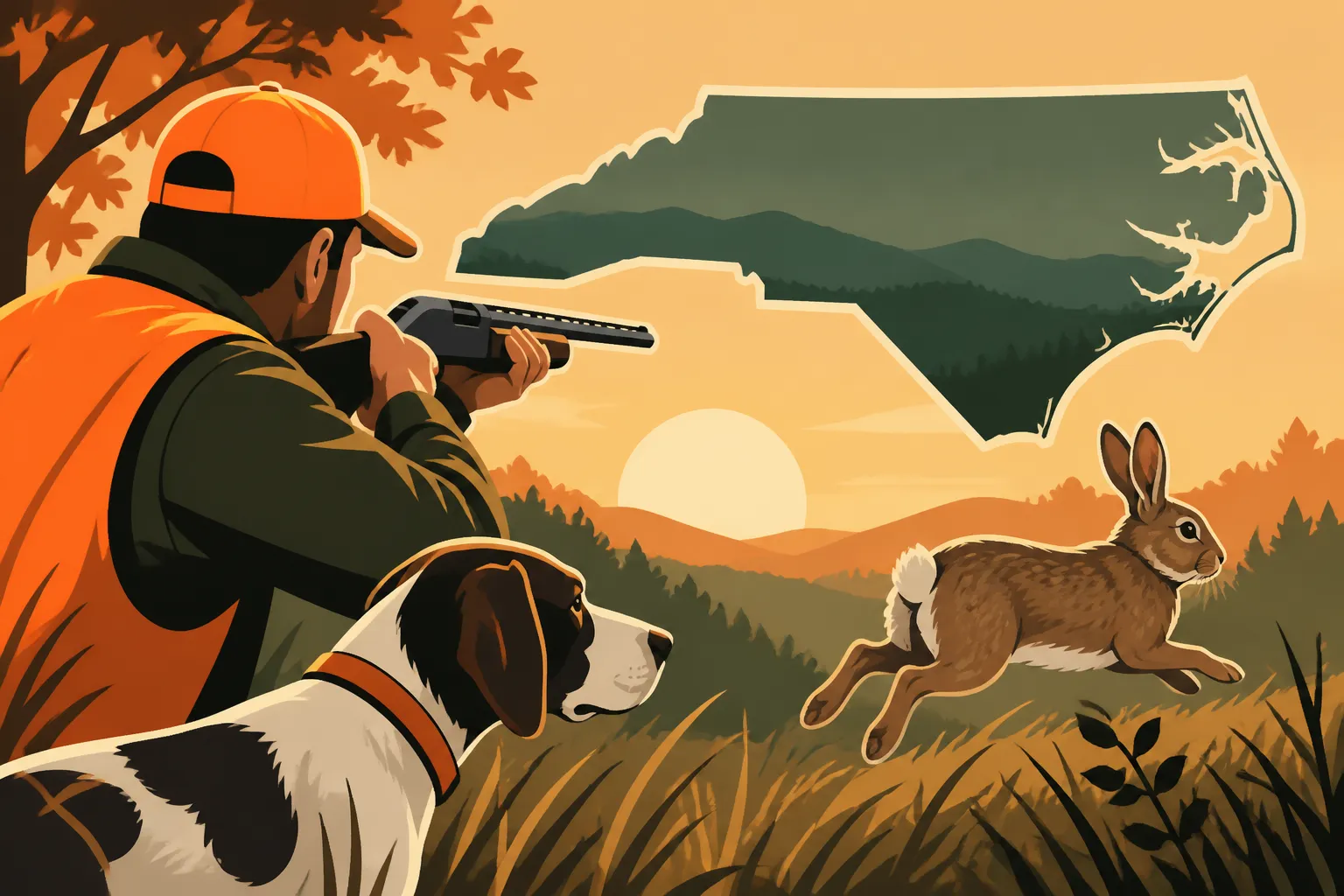
For many, rabbit hunting is beagle hunting. The melodic baying of a pack of beagles on a hot trail is one of the most iconic sounds in the North Carolina woods. These tenacious little hounds are bred for this exact purpose: to sniff out rabbits from dense cover, push them in circles, and drive them past waiting hunters. It’s an immersive experience where you become part of the chase, moving through the woods, listening to the dogs, and anticipating where the rabbit will pop out.
The typical scenario involves hunters spreading out around known rabbit cover—think thick briar patches, honeysuckle tangles, fencerows, and overgrown field edges. The beagles are released, and once they pick up a scent, the chase is on. Rabbits, in their instinct to escape, will often run in large circles. The trick for hunters is to stay put, or move cautiously to intercept the rabbit as it loops back towards its original bedding area. Patience is key, as is good hearing to track the dogs and understand the rabbit's likely path. If you're new to this, finding experienced hunters to join can teach you volumes about Running Hounds Where North Carolina Allows It and the nuances of interpreting dog work.
Finding Prime Rabbit Habitat on Opening Day
Rabbits are creatures of edge habitat. On opening day, and throughout the season, you'll want to focus your efforts on areas where different types of cover meet. Think about where a field of cut corn borders a thick wood line, or where a dense briar thicket transitions into a more open stand of pines. These transition zones provide food, escape cover, and travel corridors, making them rabbit magnets. Rabbit Hunting North Carolina Fencerows is a classic tactic for a reason; fencerows provide linear cover that rabbits use for safety and travel between feeding areas.
Look for signs of rabbit activity, even if it's just fresh droppings or clipped vegetation. Clear-cuts that are a few years old and have grown into dense, thorny thickets are goldmines. Old logging roads and powerline cuts that have revegetated with thick brush and briars are also prime spots. The key is finding areas with incredibly dense, often thorny, cover where rabbits can hide from predators and the elements. Early season rabbits will be especially keen on staying hidden as hunting pressure increases. Using mapping tools like GoHunt can help you identify these types of edge habitats and dense cover on public lands or properties where you have permission.
Essential Gear and Hunter Safety
Being prepared for rabbit season means more than just knowing the dates. It involves having the right gear and, most importantly, prioritizing safety for yourself and your hunting partners.
Shotguns and Ammunition Choices
For rabbit hunting, a shotgun is king. The fast-flushing nature of rabbits means you need a pattern of shot rather than a single projectile. Most hunters opt for a 12-gauge or 20-gauge shotgun. A 20-gauge is often favored for its lighter weight and reduced recoil, making it ideal for younger hunters or those who will be carrying it all day through thick brush. As for choke, an improved cylinder or modified choke is generally preferred, providing a good balance of spread for close-range shots in thick cover while still having enough density for slightly longer shots.
When it comes to ammunition, #6 shot is the go-to for rabbits. It has enough pellet energy to dispatch a rabbit cleanly but isn't so large that it damages too much meat. Some hunters might use #7.5 or #5 shot, but #6 is a solid all-around choice. Remember to choose lead-free shot if you are hunting in areas where it is required, though this is less common for upland game than for waterfowl. Ensure your shotgun is clean and well-maintained before hitting the woods. For more on selecting the right scattergun, you might find this guide helpful: Shotguns for North Carolina Grouse and Dove.
Licensing, Regulations, and Blaze Orange Requirements
Before you even think about stepping into the field, ensure all your licensing is up to date. In North Carolina, you'll need a basic hunting license, and if you're hunting on Game Lands, you'll also need a Game Lands Permit. You can easily purchase these online through the NCWRC website or at a local sporting goods store. Familiarize yourself with North Carolina Resident Hunting License Options or North Carolina Nonresident Hunting License Options depending on your residency status.
Safety is paramount, especially when hunting with a group and dogs. Blaze orange is not just a recommendation; it's a requirement in North Carolina for big game hunting, and while not always strictly mandated for small game on private land, it is highly recommended, especially when hunting with dogs and other hunters. If you're on public Game Lands during a time when big game season is open, blaze orange is required. The NCWRC generally states that hunters must wear at least an outer garment of blaze orange (hat, vest, jacket, etc.) visible from all sides. A blaze orange vest and hat are standard practice for rabbit hunters to ensure maximum visibility and safety among fellow hunters. This bright color helps prevent accidents by making you highly visible to other hunters, particularly when rabbits are scurrying through dense vegetation and shots might be taken quickly.
Utilizing Modern Tools for a Better Hunt
While rabbit hunting is a traditional pursuit, modern technology can significantly enhance your experience. Mapping applications on your smartphone or a dedicated GPS unit can be incredibly useful. Tools like GoHunt allow you to view property boundaries, topographic maps, and aerial imagery, which are invaluable for scouting potential rabbit cover and ensuring you stay on accessible land. You can mark promising briar patches, fencerows, or old clear-cuts from home, then navigate directly to them in the field. This prevents accidental trespassing, which is a major concern when Hunting Small Private Tracts in North Carolina or on the edges of public game lands.
Furthermore, these apps can help you track your movement, mark where rabbits were flushed, and even identify potential escape routes. Knowing the terrain and property lines clearly empowers you to hunt more efficiently and confidently. Keeping your phone charged or carrying a portable power bank is a smart move when relying on these digital aids.
Making the Most of Early Season Rabbit Opportunities
Opening day and the early weeks of rabbit season are often prime times to fill your bag limit. Rabbits are abundant, and while they've been subject to some predation, they haven't experienced the consistent pressure of hunters and dogs yet.
Scouting Productive Cover and Access Points
Just like with deer or turkeys, a little bit of scouting before opening day can pay huge dividends. You're looking for those aforementioned briar thickets, honeysuckle patches, dense plum thickets, and overgrown areas that provide both food and protection. Drive rural roads slowly, looking for promising-looking fencerows and wood lines. If you have access to private land, walk the edges of fields that have been harvested, paying close attention to any ditches or brush piles.
For public land, use your mapping apps to identify areas of thick regrowth, especially older clear-cuts or sections of Game Lands that might not see as much deer hunting pressure but offer fantastic rabbit cover. Remember that rabbits don't travel far from their cover, so focus on small, dense pockets rather than expansive, open woods. Identifying good access points that allow you to park safely and get into the hunting area without disturbing too much ground is also crucial. For broader information on small game populations, refer to North Carolina Squirrel and Rabbit Populations.
Post-Hunt Care for Delicious Table Fare
Once you’ve successfully harvested a rabbit, proper field care is essential to ensure you get the best possible table fare. Rabbits are small, so they cool down quickly, but in warmer early season conditions, it's still best to gut them as soon as possible. This removes internal heat and helps prevent spoilage. Many hunters simply remove the entrails in the field, which also lightens the load for the walk back to the vehicle.
Once you get home, skinning and butchering a rabbit is a relatively straightforward process. Many people find it easiest to make an incision around the middle of the rabbit, then peel the hide off in two directions. Once skinned, you can either cook the rabbit whole or break it down into smaller pieces (front legs, back legs, and saddle). Rabbit meat is lean and mild, taking well to a variety of cooking methods, from frying to stewing. It’s a truly underrated wild game protein, and the effort of the hunt is often rewarded with a delicious meal.
Disclaimer
Hunting is an activity that carries inherent risks. Always prioritize safety, adhere to all local, state, and federal regulations, and obtain proper licensing. This guide is for informational purposes only and should not replace official regulations or professional safety instruction. Always verify current hunting seasons, bag limits, and licensing requirements with the North Carolina Wildlife Resources Commission (NCWRC) before engaging in any hunting activities.