Meat Care Gear for North Carolina Hunters
You've just dropped a deer, a turkey, or even a bear, and the adrenaline is pumping. That's the moment every North Carolina hunter lives for, right? But what comes next can make or break the entire experience, turning a triumphant harvest into a potential heartache if not handled correctly. We're talking about proper meat care – from the moment your animal hits the ground until it's safely in your freezer. This guide is all about equipping you with the knowledge and gear to ensure every ounce of your hard-earned wild game is handled with the respect it deserves, preserving its quality for the dinner table.
The Critical Importance of Proper Meat Care in North Carolina
In North Carolina, the elements are often against us when it comes to preserving wild game meat. From the sweltering heat of an early archery season in the Piedmont to the surprising humidity of a late-season hunt in the coastal plain, conditions can change rapidly and dramatically. Ignoring proper meat care isn't just a missed opportunity; it's a direct path to spoilage, waste, and even potential health risks. Every hunter knows the frustration of putting in countless hours, only to have a mistake in the field ruin the reward.
Why Temperature is the Enemy, Especially Here
North Carolina's climate presents unique challenges. We might have mild December days that feel more like autumn, or an unseasonably warm spell in late January. And then there's the August 22 special season weekend, where temperatures can easily still be in the 90s. When an animal is harvested, its internal temperature is high, creating a perfect breeding ground for bacteria if not cooled rapidly. The longer that meat stays warm, the faster bacteria multiply, leading to souring, off-flavors, and ultimately, spoilage. This is where the race against time truly begins for North Carolina hunters.
The humid air that often blankets our state, especially in the low country or after a rain shower, only exacerbates the problem. High humidity means less evaporative cooling for the carcass, trapping heat inside. This makes prompt field dressing and air circulation even more critical than in drier, colder climates. Understanding the precise relationship between ambient temperature, body heat, and bacterial growth is foundational to preserving your harvest effectively.
It's not just about losing an entire deer; even a portion of a valuable animal like a black bear can be compromised if not cooled aggressively. Imagine finally getting that big coastal bear out of a pocosin, only to realize that the heat and moisture of the swamp environment have already started to take their toll on the meat quality. This scenario is why being prepared with appropriate cooling strategies is non-negotiable for success in North Carolina's varied conditions.
Preserving Quality from Field to Freezer
The goal of proper meat care is to maintain the highest possible quality of the meat, from its texture and flavor to its nutritional value. This process begins literally seconds after the shot, and it doesn't end until the meat is sealed and frozen. Every step, from gutting to chilling to packaging, plays a crucial role in preventing contamination, drying out, or freezer burn down the line. A little effort upfront saves a lot of disappointment later.
Think about the difference between a venison steak that melts in your mouth and one that tastes "gamey" or tough. Often, that difference isn't just about the cut or the cooking method; it's about how the animal was handled in the field. Rapid cooling, clean cuts, and protecting the meat from dirt, insects, and moisture are all components of a quality assurance program that you, the hunter, are solely responsible for executing. It's a testament to your respect for the animal and the food it provides.
This meticulous approach ensures that the wild game you bring home from the North Carolina's Four Gun Deer Zones or a remote corner of Pisgah National Forest truly honors the experience. It means you can enjoy delicious, healthy meals for months to come, sharing stories of the hunt around the dinner table without any lingering doubts about the meat's condition. The pride of a successful hunt extends far beyond the moment of the shot; it's in every perfectly prepared meal.
The Risk of Spoilage and Disease
Beyond simple taste and texture, improper meat care can lead to outright spoilage, making the meat unfit for consumption. Bacterial contamination from intestinal contents during field dressing, or allowing the meat to remain in the "danger zone" (between 40°F and 140°F) for too long, can promote the growth of harmful pathogens. While many of us have eaten slightly "gamey" meat, truly spoiled meat is a health risk that no hunter should ever take.
Furthermore, hunters in North Carolina need to be acutely aware of Chronic Wasting Disease (CWD). While CWD doesn't affect humans, precautions are critical. Proper handling of carcasses, especially in CWD management areas, is essential to prevent the spread of the disease within the deer population. Understanding rules like those around Handling Venison From a CWD Management Area becomes not just a matter of personal meat quality, but also of wildlife conservation. It’s part of our responsibility as ethical hunters.
It’s crucial to remember that certain diseases in animals, though rare, can potentially be transmitted to humans through improper handling, such as tularemia or brucellosis. While CWD isn't one of these, basic hygiene—like wearing gloves and washing hands—is a universal best practice that protects both you and the quality of your meat. Never underestimate the importance of cleanliness and speed when dealing with any harvested animal.
Essential Field Dressing Tools and Techniques
Field dressing is the immediate, critical step after a harvest. Its primary purpose is to remove the animal's internal organs to allow the carcass to cool down rapidly and prevent contamination from digestive contents. Doing this quickly, cleanly, and efficiently is paramount, and having the right tools makes all the difference, especially when you're working against the clock in North Carolina's varied environments. Whether you're in a thick coastal pocosin or on a steep mountain ridge, these tools are your first line of defense against spoilage.
Knives: More Than Just a Sharp Edge
A good field dressing knife is arguably the most important tool a hunter carries. It needs to be razor-sharp, easy to handle, and capable of holding an edge through the entire process. While many hunters prefer a traditional fixed-blade knife for its strength and reliability, others swear by replaceable-blade knives, which offer unparalleled sharpness without the need for sharpening in the field. The key is to find a knife that fits your hand well and that you can use confidently and safely.
For deer, a sturdy fixed blade with a 3-4 inch drop-point or gut-hook design is a popular choice. The gut hook, in particular, can be incredibly useful for opening the body cavity without puncturing the intestines, minimizing the risk of contamination. Regardless of your choice, a quick pass on a sharpening steel or ceramic rod before and even during the process can keep it performing at its best. Remember, a dull knife is more dangerous than a sharp one because it requires more force, increasing the chance of slips and accidents. Check out Field Dressing Knives Worth Carrying for more details on selecting the right one.
When field dressing larger game like a black bear, you might want a slightly larger, more robust blade, or even a second knife for different tasks. Bears have thicker hides and more robust bone structures than deer. Having a dedicated skinning knife with a rounded tip, in addition to your gutting blade, can make the process smoother and safer. Always have a backup, or at least a sharpening tool, to maintain that crucial edge.
Gloves and Wipes: Hygiene is Key
Hygiene is often overlooked but is absolutely paramount in field dressing. A good supply of disposable nitrile gloves is non-negotiable. They protect your hands from blood, fluids, and potential pathogens, and they keep your hands clean so you don't contaminate the meat with dirt or other debris. Imagine trying to handle a carcass in a muddy bottomland after a rain; gloves save you a lot of hassle and potential contamination.
Beyond gloves, carrying a roll of paper towels or a pack of scentless, biodegradable wet wipes is incredibly useful. These allow you to clean your knife blade periodically, wipe away excess blood, and keep your hands as clean as possible, even with gloves on. This attention to detail reduces the risk of transferring bacteria from the outer hide or intestinal contents to the clean muscle tissue. After all, the goal is food, not just a trophy.
Many hunters also carry a small bottle of hand sanitizer. While it won't replace a good hand wash, it's excellent for a quick clean-up after gloves are removed, especially before handling anything else like your phone or snacks. Maintaining a sterile work environment as much as possible, even in the wilds of North Carolina, is a cornerstone of quality meat care and personal safety.
Bone Saws and the Gutless Method: When and Why
While a sharp knife handles most field dressing tasks, a bone saw can be incredibly helpful for specific situations. For deer, a compact, foldable bone saw is useful for splitting the sternum to access the chest cavity or, more commonly, for splitting the pelvis to make cleaning easier, especially if you plan to keep the hindquarters intact. This tool makes quick work of bone that would quickly dull a knife. Bone Saws Versus the Gutless Method covers this in more detail.
The "gutless method" of field dressing is another technique gaining popularity, especially for large animals or in situations where you need to get the meat off the mountain quickly and cleanly. Instead of opening the body cavity, you skin the animal and remove the quarters, backstraps, and other prime cuts directly from the bones, leaving the guts largely undisturbed within the carcass. This method minimizes contact with intestinal contents and is a fantastic option when packing out heavy game from remote areas.
For a hunter deep in the mountainous terrain of the Nantahala National Forest, the gutless method can be a game-changer. It means less weight to pack out initially, and it concentrates the meat into manageable, cleaner pieces that fit easily into a frame pack. While it requires different knife skills and a bit more initial practice, it’s an invaluable technique for hunters tackling challenging North Carolina public lands. However, be aware of reporting requirements for CWD areas, as the head (for sampling) usually needs to be intact.
Getting Your Harvest Out of the Woods: Transportation Gear
Once the initial field dressing is done, the next challenge is getting your game out of the woods and back to your vehicle, camp, or home. This can range from a relatively easy drag across a field edge in the Piedmont to an absolute grunt-and-groan struggle through a coastal swamp or down a steep mountain face. The right transportation gear can transform a grueling ordeal into a manageable task, saving your back and preserving the meat from unnecessary damage or contamination.
Deer Drags and Sleds: For Flats and Hills
For many North Carolina deer hunters, a simple deer drag or sled is the workhorse of game retrieval. A drag is essentially a heavy-duty strap or rope that attaches to the deer's head or antlers, allowing you to pull it more easily. Some drags include a padded harness that goes over your shoulders, distributing the weight and reducing fatigue. These are most effective on relatively flat terrain or gentle slopes, through open woods or fields.
When dealing with slightly rougher ground, rocky trails, or even thick brush, a plastic deer sled can be a lifesaesaver. These sleds are designed to protect the carcass from abrasion and keep it cleaner, as it glides over obstacles rather than dragging directly on the ground. They're especially useful for protecting the hide if you plan to get the animal tanned. Whether you're coming off a ridge in Uwharrie or crossing a cut-over, a sled keeps dirt and debris off the meat. Deer Sleds for Mountain Country offers specific considerations for our varied terrain.
Even in situations where you might quarter an animal, a small sled can be useful for hauling out heavy quarters or the head and cape. The goal is always to reduce friction and lift, making the work easier and keeping the meat in prime condition. Consider the terrain you hunt most often; if it's generally flat and open, a simple drag might suffice. If it's rugged or brushy, invest in a good quality sled.
Game Carts: A Back Saver on Trails
If your hunt takes you along established trails, logging roads, or relatively open terrain, a game cart can be an absolute back-saver. These two-wheeled or sometimes single-wheeled carts are designed to carry significant weight, allowing you to push or pull a whole deer with much less effort than dragging. They keep the animal elevated, preventing contamination and allowing for better airflow around the carcass, which is crucial on warmer days.
Game carts come in various designs, from simple folding models that fit in a trunk to more robust designs with larger wheels for navigating rougher ground. The larger the wheels and tires, the easier it will be to pull over roots, rocks, and uneven terrain common on many North Carolina game lands. For hunters targeting the Hunting Piedmont Farmland Deer, a cart can be invaluable for crossing fields and managing the distance back to the truck.
However, game carts do have their limitations. They are generally not suited for very steep, rocky, or heavily treed terrain where their width and bulk become an impediment. Trying to navigate a game cart through a dense rhododendron thicket in the mountains or a thick coastal swamp is often more trouble than it's worth. Always match your retrieval tool to the specific challenges of your hunting area.
Frame Packs and Quartering: When Distance Matters
For truly remote hunts, especially in mountainous regions like Pisgah and Nantahala National Forests, or when pursuing large game like a black bear far from any access roads, quartering the animal and packing it out in a frame pack is often the only viable option. This method involves breaking the animal down into manageable pieces – usually the four quarters, backstraps, tenderloins, and sometimes the neck and rib meat – and carrying them out in a robust pack frame. This is where a good Packs for a Pisgah Forest Day Hunt comes into play.
A high-quality frame pack designed for carrying heavy, awkward loads is essential. Look for packs with sturdy frames, comfortable suspension systems, and ample lashing points to secure the meat bags. Each quarter should be placed in a breathable game bag to protect it from dirt, insects, and to allow it to cool further. This is a labor-intensive method, but it ensures that every ounce of valuable meat makes it out of the woods, even when facing extreme distances or difficult terrain.
The decision to quarter an animal in the field is usually made before the hunt even begins, based on your scouting and the anticipated challenges of the area. Using mapping tools like GoHunt can help you visualize the terrain and potential extraction routes, informing your decision on whether to plan for a drag, a cart, or a pack-out. Having a detailed plan, including a buddy system for packing out heavy loads, can significantly increase your success and enjoyment on these more challenging hunts.
Keeping It Cool: Temporary Storage Solutions
Once your game is field dressed and out of the primary hunt area, the next critical step is rapid and sustained cooling. This is particularly important in North Carolina, where early season temperatures can quickly compromise your meat. Temporary storage isn't just about protection; it's about actively bringing down the core temperature of the meat to inhibit bacterial growth and preserve quality. Ignoring this stage can undo all your hard work in the field.
Game Bags: Breathable Protection
Game bags are an indispensable part of a North Carolina hunter's meat care kit, especially when quartering an animal or leaving a whole carcass to cool overnight (where legal and safe). These aren't just glorified trash bags; proper game bags are made from a breathable, synthetic material that protects the meat from flies, dirt, and debris while still allowing air to circulate. This air circulation is vital for dissipating heat and allowing the meat to form a protective "rind" that minimizes bacterial penetration.
Imagine harvesting a deer on a warm September day in the Piedmont. After field dressing, you need to hang that animal in the shade if possible, or at least get it into game bags. The bags keep blowflies from laying eggs on the meat, a common frustration for early season hunters. They also protect against dust and leaves, which might otherwise cling to the sticky surface of the meat. Game Bags for Warm September Days are specifically designed for these types of conditions.
When quartering, each piece of meat should go into its own game bag. This not only keeps the meat clean but also makes it easier to pack and handle. Don't skimp on quality here; cheap cotton bags can tear, absorb moisture, and actually hinder cooling. Invest in durable, reusable synthetic bags that can withstand the rigors of the field and be washed for future hunts.
Coolers and Ice: The North Carolina Hunter's Best Friend
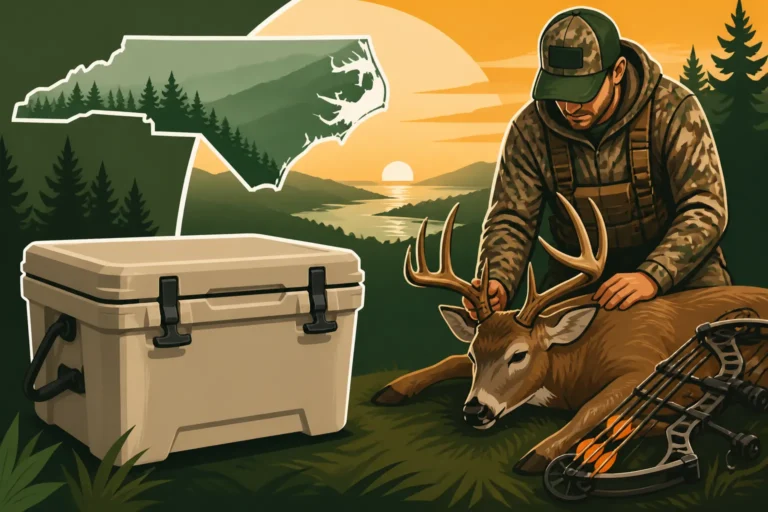
For many North Carolina hunters, especially after a successful deer hunt, a high-quality cooler packed with ice is the ultimate temporary storage solution. Once you have your deer or quarters back to your vehicle, getting them into a cooler with ice is the fastest way to bring down the core temperature. This is especially true for early season harvests in the coastal plain or Piedmont where ambient temperatures remain high.
When packing a cooler, layering is key. Place a layer of ice on the bottom, then a layer of meat (preferably in game bags to keep it from getting waterlogged), then more ice, and so on. Drain any melted water periodically and replenish the ice as needed. The goal is to keep the meat constantly in an ice bath or surrounded by ice, bringing it down to a safe temperature quickly. This technique is detailed in Coolers and Game Bags for Early Archery.
| Cooling Method | Best For | Pros | Cons |
|---|---|---|---|
| Whole Carcass | Short distances, cool weather | Minimal processing in field, traditional | Hard to cool fast, heavy, susceptible to flies in warm weather |
| Quartered | Long distances, warm weather, large game | Faster cooling, lighter to pack, less field contamination | More field work, requires a frame pack or multiple trips, more storage containers needed |
| Cooler with Ice | Any condition, post-retrieval | Rapid cooling, excellent preservation, controlled environment | Requires large cooler and ample ice, meat can get waterlogged if not bagged, heavy to transport |
| Game Bags | Any condition, immediate post-dressing | Protects from bugs/dirt, allows airflow, lightweight | Not a cooling method itself, requires secondary cooling, can attract scavengers if left unattended |
For longer drives back home from a remote hunt, say from the mountains to the coast, you'll need a cooler that can hold ice for days. Rotomolded coolers, while heavy, excel at this. For shorter trips or smaller game, a standard insulated cooler may suffice. Always estimate how much ice you'll need and then double it, especially in North Carolina's often surprisingly warm weather.
Specialized Cooling Vests and Wraps
While less common for the average deer hunter, some serious backcountry hunters or those targeting extremely remote areas might consider specialized cooling vests or wraps. These products are designed to circulate cool air or water around game meat, providing active cooling in situations where ice is not feasible or limited. Think of an elk hunter in the Rockies, but the principles can apply to a multi-day bear hunt in a remote section of the Croatan National Forest.
These systems are generally expensive and require power sources (batteries) or a way to recharge/replenish cooling agents. For most North Carolina deer hunting, a cooler full of ice is far more practical and efficient. However, for specialized scenarios, they represent the extreme end of meat preservation technology.
The primary takeaway here is that getting the meat cold, and keeping it cold, is the single most important factor after field dressing. Whether you're hanging a whole carcass in game bags in a walk-in cooler or submerging quarters in ice water, the objective remains the same: stop bacterial growth dead in its tracks.
Processing at Camp or Home: Tools for the Next Steps
The work doesn't stop once the game is out of the woods and cooled. The next phase, processing your harvest into table-ready cuts, is where you truly realize the value of your efforts. Whether you choose to do it yourself at a deer camp or in your home kitchen, having the right tools makes the job efficient, clean, and ultimately, more rewarding. This stage ensures that all your diligent work in the field translates into delicious meals.
Butchering Tools: From Knives to Grinders
A good set of butchering knives is indispensable for breaking down a carcass. This typically includes a boning knife (flexible, thin blade for separating meat from bone), a skinning knife (often with a curved, rounded tip for peeling hide), and a larger breaking knife or cimeter for larger cuts. Keeping these knives razor-sharp is crucial, not just for efficiency but for safety – a sharp knife cuts predictably. Many hunters also appreciate a sturdy meat cleaver for splitting ribs or handling tough joints.
Beyond knives, a quality cutting board – preferably a large, easy-to-clean plastic or composite one – is essential. You'll also want a meat saw for splitting the spine or larger bones if you're not planning to debone everything. For those who enjoy making their own sausages or ground meat, an electric meat grinder is a fantastic investment. It turns trim and less desirable cuts into versatile ground venison that can be used in countless recipes. Butchering a Deer at Camp further explores how to set up for this task.
For larger game like bears, you might find specific tools more useful. A bear's fat layer can be substantial, requiring very sharp knives and careful handling to separate meat from fat if you choose to render it or trim it meticulously for leaner cuts. Thinking ahead about what you want to make – steaks, roasts, ground, sausage – will help you decide which tools are most critical for your home processing setup.
Vacuum Sealers: Long-Term Preservation
Once your meat is cut and trimmed, the next step is packaging it for long-term storage, and for this, a vacuum sealer is truly a game-changer. While freezer paper and heavy-duty freezer bags work, a vacuum sealer removes all the air from the package, preventing freezer burn and extending the shelf life of your wild game by months, sometimes even over a year. This means your harvest from North Carolina's Statewide Archery Season can taste just as fresh next summer as it did last fall.
Vacuum-sealed meat also takes up less space in the freezer, which is always a bonus for hunters who fill their freezers each season. The process is simple: place your cuts into a specialized bag, seal one end, use the machine to suck out the air, and then seal the other end. It's an investment, but one that quickly pays for itself in preserved quality and reduced waste.
When choosing a vacuum sealer, consider the volume of meat you typically process. A heavy-duty model might be overkill for one deer a year but essential for someone processing multiple animals or large bears. Also, remember to label each package with the cut and date – it's easy to forget what's what after a few months in the freezer! Freezing and Shipping Game Meat has more tips on maximizing freezer life.
Cleaning Supplies for Processing Areas
Maintaining a clean workspace during processing is just as important as cleanliness in the field. You'll need plenty of hot water, soap, and sanitizer. Designate specific towels or rags for cleaning, and use a food-safe disinfectant spray for all surfaces that come into contact with meat. This minimizes the risk of cross-contamination and ensures a hygienic environment for your valuable protein.
Before you even start processing, clear and clean your workspace. Remove clutter, sanitize countertops, and have a designated area for raw meat, clean tools, and packaged finished product. Having separate bins for bones, fat, and trimmings also helps keep the area organized and reduces mess. A tidy workspace is an efficient workspace, and it greatly contributes to the safety and quality of your final product.
After processing, thoroughly clean all knives, cutting boards, grinders, and surfaces immediately. Blood and meat residue can become very difficult to remove once dry. A good scrub with hot soapy water, followed by a rinse and sanitizing solution, will prepare your gear for the next use. This ensures longevity for your tools and prevents unwanted odors or bacteria from lingering.
Understanding Regulations and Reporting for Meat Care
As North Carolina hunters, we have responsibilities that extend beyond the shot. Proper meat care also includes adhering to state regulations regarding reporting, carcass movement, and even donation. These rules are in place not just for data collection but, crucially, for wildlife health and public safety, especially concerning issues like Chronic Wasting Disease. Being informed and compliant is a non-negotiable aspect of ethical hunting in our state.
North Carolina Deer Reporting and CWD Considerations
In North Carolina, all harvested deer, turkey, and bear must be reported to the NC Wildlife Resources Commission (NCWRC) within a specific timeframe. This is often done online via the NCWRC website or through their mobile app. This data is vital for wildlife biologists to monitor populations, assess harvest trends, and make informed management decisions. It’s a simple but crucial step in the overall hunting process. Checking a North Carolina Deer Harvest Online provides detailed instructions.
However, CWD adds another layer of responsibility to reporting and carcass handling. North Carolina has established CWD Management Areas (CWDMAs) in certain counties where the disease has been detected. Within these areas, there are specific rules about how you can transport certain parts of a deer carcass out of the CWDMA. Typically, only deboned meat, cleaned skull plates, or fully taxidermied mounts can leave the area to prevent the potential spread of CWD.
If you harvest a deer in a CWDMA, you may also be required or encouraged to submit the head for CWD testing. This helps the NCWRC monitor the prevalence and spread of the disease. Knowing where these areas are (you can often find this information easily via the GoHunt app or NCWRC website) and understanding the rules is critical for any hunter planning to hunt in or near those counties. It's a key part of our collective effort to manage this threat to our deer herd.
Transporting Carcasses Across County Lines
Beyond CWD-specific rules, simply transporting a whole deer carcass across multiple county lines, especially if it's not field dressed, can attract unwanted attention or questions. While North Carolina generally allows the transport of legally harvested game, being mindful of the state's efforts to curb disease spread is important. Field dressing an animal at the harvest site, or at least before significant travel, is always the best practice.
For larger game like bears, or even very large deer, transporting a whole carcass can be a logistical challenge anyway. Many hunters will quarter their bear in the field, making transport significantly easier and safer. This also allows for faster cooling, which, as we've discussed, is paramount for meat quality. Thinking ahead about your route and potential stops can save you headaches.
It’s always a good idea to keep your hunting license and proof of harvest (such as a tag, if applicable, or confirmation number) readily accessible when transporting game. While not strictly a meat care issue, it ties into the legality of your harvest and can simplify any interactions with law enforcement or wildlife officials. Responsible hunters are prepared for every step of the journey, not just the hunt itself.
Donating Meat: Giving Back to the Community
For many North Carolina hunters, a successful season means more venison than their family can consume. This is where donating your meat can be a fantastic option. Several organizations, like Farmers and Hunters Feeding the Hungry, work with local meat processors to accept donated venison and distribute it to food banks, homeless shelters, and other charitable organizations. It's a wonderful way to give back to the community and ensure no valuable wild game goes to waste.
When considering donation, it's crucial that the meat has been handled properly from the moment of harvest. Donated venison must meet strict health and safety standards, so impeccable field dressing, rapid cooling, and clean processing are absolutely essential. A spoiled or poorly handled carcass will not be accepted, and rightly so. This reinforces the importance of all the meat care steps we've discussed. Donating Venison in North Carolina details the process and requirements.
Donating also helps reinforce the positive image of hunters as conservationists and providers. It demonstrates our commitment not only to wildlife management but also to contributing to our communities. If you're fortunate enough to fill your tags and have extra meat, consider this incredibly rewarding option to share your harvest with those in need.
Advanced Strategies for Challenging North Carolina Conditions
North Carolina offers a vast array of hunting environments, each with its unique challenges for meat care. From the humid lowlands of the coast to the steep, cool elevations of the mountains, conditions can test a hunter's ability to preserve their harvest. Being prepared with advanced strategies can be the difference between premium table fare and a disappointing loss.
Warm Weather Meat Care: The Race Against Time
Warm weather hunting in North Carolina is perhaps the most challenging scenario for meat care. Early archery season, usually starting in September, often sees temperatures well into the 80s or even 90s, especially in the Piedmont and Coastal Plain. In these conditions, time is truly of the essence. You have a very narrow window – often just a few hours – to get that carcass cooled down before bacteria begin to rapidly multiply.
The moment an animal hits the ground in warm weather, the clock starts. Immediate, thorough field dressing is non-negotiable. Get those guts out as quickly as possible to allow the body cavity to cool. If you can, get the carcass or quarters into the shade immediately. Spreading the body cavity open with a stick or prop will enhance airflow and cooling. In very warm conditions, many experienced North Carolina hunters will quarter a deer in the field and immediately get the quarters into game bags and onto ice in coolers. This proactive approach helps to preserve the meat.
Another strategy in warm weather, especially for larger game or if you're a long walk from your vehicle, is to remove the hide in the field. Skinning the animal as soon as possible allows heat to radiate away from the muscle tissue much more quickly than if the insulating hide remains on. This exposes the meat to air, facilitating evaporative cooling, and drastically speeds up the chilling process. Combine this with breathable game bags, and you significantly increase your chances of saving your meat.
Dealing with Water Crossings and Swamps
North Carolina's Coastal Plain is famous for its vast pocosin swamps, river bottoms, and intricate creek systems. Hunting Coastal Plain Pocosin Swamps can be incredibly productive, but getting a harvested animal out of these wet environments presents unique challenges for meat care. Water can be a double-edged sword: it can help cool a carcass, but it can also contaminate the meat with mud, debris, and microorganisms if not handled correctly.
If you harvest an animal that falls into a creek or swamp, your first priority (after recovery) is to get it out of the water quickly. While cold water might seem to cool the animal, it can also saturate the meat, making it prone to spoilage and difficult to keep clean. Once out, immediate field dressing is crucial. Avoid dragging the animal through deep mud or water if possible. Use a sled or a game cart if the terrain allows for it once you're on drier ground.
For truly challenging water extractions, like from a deep cypress swamp, quartering the animal is often the only realistic option. Place the quarters into heavy-duty game bags and carry them out. If you absolutely must cross water with a whole carcass, consider wrapping it in a heavy-duty tarp or plastic sheeting to minimize direct contact with potentially contaminated water. This takes forethought, but can make a huge difference in meat quality.
Aging Venison Safely
Aging venison is a practice that can significantly improve its tenderness and flavor. This involves holding the meat at a controlled temperature (typically just above freezing, around 34-40°F) for a period, usually anywhere from a few days to two weeks. During this time, natural enzymes in the meat break down muscle fibers, resulting in a more tender product. While common in butcher shops, safely aging venison at home requires precision.
For most North Carolina hunters, the safest way to "age" venison is through controlled wet aging in vacuum-sealed bags in a refrigerator. The vacuum-sealed meat ages in its own juices, becoming tender without the risk of spoilage or excessive drying. Dry aging, which involves hanging a whole carcass or large cuts in a carefully controlled environment with specific temperature and humidity, is much more difficult to achieve safely at home without specialized equipment.
If attempting dry aging, even for a short period, you must have a clean, temperature-controlled space, such as a dedicated walk-in cooler. The ambient temperature needs to be consistently low, and humidity needs to be monitored to prevent excessive drying or mold growth. For the average hunter in North Carolina, especially considering our often fluctuating temperatures and humidity, wet aging in a refrigerator or simply butchering and freezing promptly after adequate cooling is the most practical and safest approach.
Conclusion
The journey of a North Carolina hunt is filled with anticipation, challenge, and ultimately, reward. But that reward—the delicious, organic protein that is your wild game—is only as good as the care you give it after the shot. From the immediate urgency of field dressing to the careful consideration of transportation, cooling, and home processing, every step contributes to the final quality on your plate.
By investing in the right meat care gear, understanding the unique climatic challenges of our state, and committing to best practices, you're not just preserving meat; you're honoring the animal, respecting the land, and ensuring that every memory of the hunt is accompanied by a flavorful meal. So, the next time you're heading into the North Carolina woods, make sure your meat care plan is as solid as your hunting strategy. Your freezer, and your taste buds, will thank you for it.
Disclaimer
This article is for general informational purposes only and does not constitute professional advice. Laws, prices and regulations vary by location and change over time. Consult a qualified professional for guidance on your specific situation.