Hunting a Green Field Planted for Deer
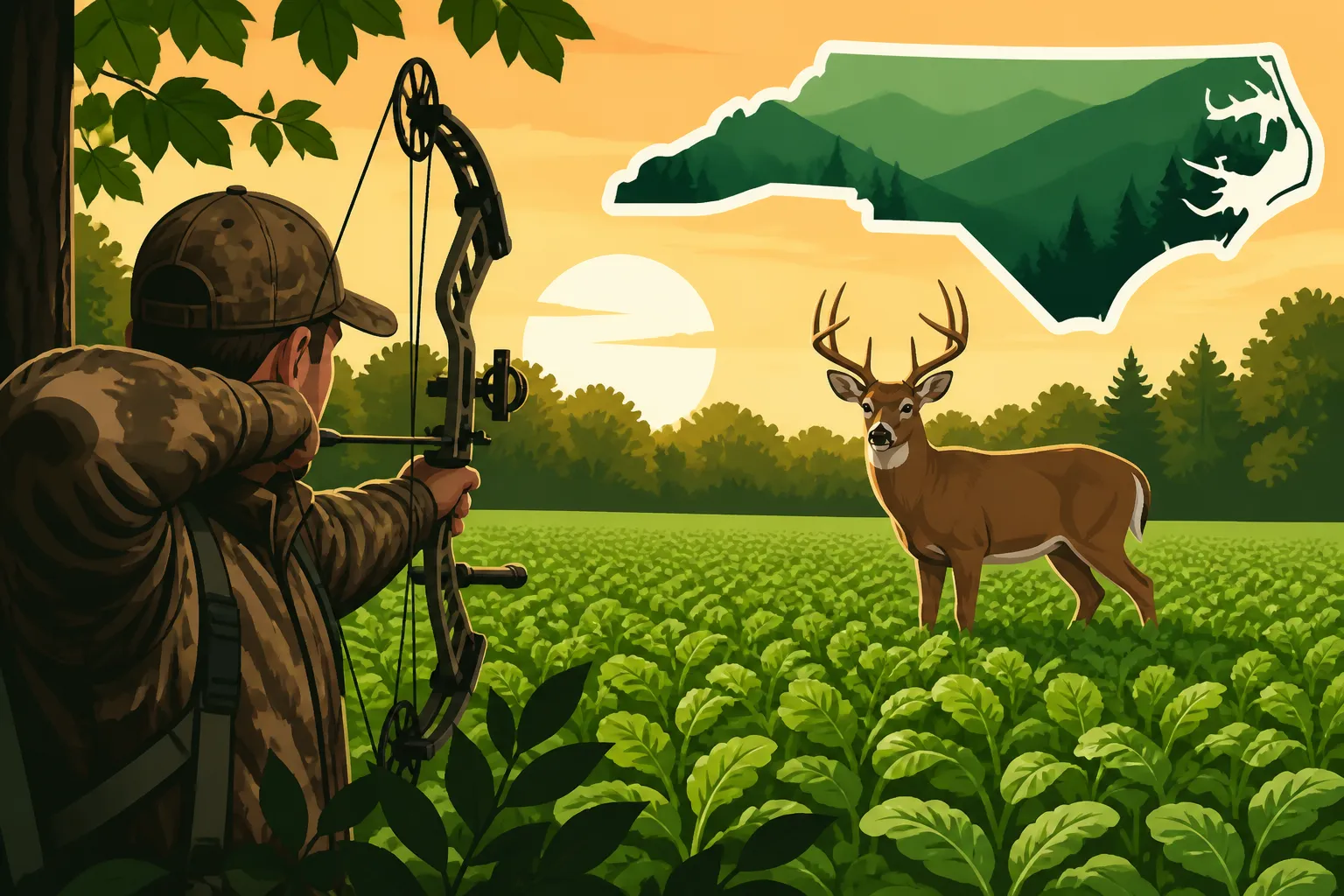
There's nothing quite like the sight of a lush green field, especially as the woods around it start to turn brown in the fall or are still barren in the early spring. For many North Carolina deer hunters, this vision isn't just about pretty scenery; it represents a strategic hub, a beacon where deer activity is often concentrated. When you're out there, seeing sign everywhere but not connecting with deer, a well-placed green field can feel like a lifeline, offering a distinct advantage by drawing deer out into more open, predictable areas. This guide will help you understand the dynamics of hunting these planted oases, from scouting to execution, ensuring you maximize your chances of success.
Why Green Fields Become Deer Magnets in North Carolina
Green fields, often referred to as food plots, are specifically cultivated areas designed to attract and hold deer by providing a concentrated, high-quality food source. In North Carolina's diverse landscape, from the coastal plains to the mountains, these plots can offer a significant nutritional boost to the deer herd, especially when natural forage is scarce or less nutritious. Deer, being creatures of opportunity and efficiency, quickly learn to frequent these reliable buffets.
Seasonal Appeal of Different Forages
The type of forage planted in a green field dictates its appeal throughout the year. Understanding this seasonality is key to timing your hunts effectively.
During the warmer months, perennial plantings like clover and chicory are incredibly popular. Clover, in particular, offers a protein-rich diet that is crucial for antler development in bucks and milk production for does raising fawns. It's often grazed heavily from spring through late summer. As fall approaches, hunters and land managers often shift to cool-season annuals. Think of plantings like oats, wheat, rye, and brassicas such as turnips, radishes, and rape. These really start to shine as temperatures drop. The young, tender shoots of cereal grains are highly palatable in the early to mid-fall, acting as prime draws when acorns might be hit or miss. Then, as the first hard frosts arrive, brassicas undergo a magical transformation, converting starches into sugars, making them incredibly sweet and irresistible to deer right through the late season. It’s like nature's candy store for whitetails.
Nutritional Value and Deer Health
The allure of green fields goes beyond just convenience; it's deeply rooted in the nutritional needs of deer. North Carolina's varied soils and habitats mean that natural forage quality can fluctuate, sometimes drastically. A well-maintained food plot fills these gaps, providing essential vitamins, minerals, and proteins that are vital for overall deer health.
For bucks, a diet rich in protein and minerals directly correlates with better antler growth. It's why hunters spend so much time and money on food plots – they want to grow bigger, healthier deer. For does, robust nutrition means healthier fawns and higher survival rates through the winter. This improved health translates into a more resilient deer population, capable of withstanding the stresses of breeding season and colder months. When you plant a field, you’re not just creating a hunting spot; you're actively contributing to the local herd's well-being. This investment in the deer's health ultimately benefits the hunter with more active and healthier animals.
Strategic Scouting for Green Field Success
Successfully hunting a green field isn't about setting up a stand overlooking a pretty patch of clover and hoping for the best. It requires meticulous scouting and understanding how deer interact with that specific area. This isn't just a simple observation; it's detective work. You're looking for patterns, habits, and the subtle clues deer leave behind.
Reading Sign Around the Edges
Deer rarely just materialize in the middle of a food plot; they use specific entry and exit routes, funneling from bedding areas or travel corridors. Your job as a hunter is to find these pathways. Start by walking the perimeter of the green field, paying close attention to where deer enter and leave the plot. Look for well-worn trails, fresh tracks in the mud or soft soil, and disturbed leaf litter. These are often indicators of high traffic areas.
Beyond just the main trails, keep an eye out for other deer sign. Fresh scrapes along the edges, especially under low-hanging branches, signal active buck communication during the rut. Rubs on saplings and small trees indicate that bucks are in the area and asserting their presence. Browse lines on nearby shrubs or young trees, where deer have nipped off leaves and twigs, tell you they are feeding extensively in the vicinity. If you can identify the most used entry points, you're halfway to picking a stand location that will put you in the right place when a deer decides to step out. It's about intercepting them before they hit the buffet.
Trail Camera Placement and Interpretation
Trail cameras are invaluable tools for scouting green fields. They provide intelligence 24/7 without putting human pressure on the deer. The key is strategic placement. Don't just stick a camera on the first tree you see. Focus your cameras on the primary entry/exit trails you identified during your initial walk-through. Placing them about 10-15 yards off the field edge, angled to capture the trail, will give you clear photos of deer as they move in and out. If the field has a pinch point or a distinct funnel leading into it, that's another prime camera location.
The real art, however, is in interpreting the data. Don't just scroll through pictures; look for patterns. What time are the deer using the field? Are certain bucks consistently appearing at specific times? Are they traveling alone or in groups? What's the buck-to-doe ratio? This information is gold for planning your hunt. Tools like the GoHunt app can be incredibly helpful here, allowing you to mark camera locations, categorize photos, and overlay deer activity onto detailed mapping. This helps you identify key terrain features and travel routes that might not be obvious from the ground. Understanding these patterns, like when mature bucks prefer to visit versus does and fawns, will help you decide the best window to be in your stand. You might even find that you can dial into specific times like the deer's primary feeding times or even during key phases of the North Carolina Rut by Zone.
Wind and Thermal Considerations
When hunting any open area like a green field, wind direction is paramount. Deer have an incredible sense of smell, and a misplaced stand on the wrong wind can blow your entire hunt. Always know the prevailing wind direction for your chosen hunting day and select a stand location that keeps your scent blowing away from where you expect deer to approach and enter the field. This might mean having multiple stand locations around a single field, each designed for a different wind.
Beyond simple wind direction, you need to consider thermals, especially in the undulating terrain found in some parts of North Carolina, like the Piedmont or mountains. Thermals are air currents that rise as the ground warms in the morning and fall as it cools in the evening. In the morning, your scent will rise with the warming air, making an elevated stand on a ridge effective. In the evening, your scent will fall with the cooling air, so a stand lower down might be safer. Ignoring thermals can lead to deer busting you from downwind, even if the general wind direction seems favorable. Always factor in how air currents will carry your scent into the deer's travel lanes. This is a critical component of any effective Treestand Setups in Pisgah National Forest or any other public land, even if it's not a green field.
Effective Hunting Tactics for North Carolina Green Fields
Once you've done your scouting homework, it's time to put a plan into action. Hunting green fields effectively isn't about pure luck; it's about making smart choices with stand placement, timing, and entry/exit strategies.
Optimal Stand and Blind Placement
Where you set up your stand or blind is arguably the most crucial decision. For treestands, aim to place them along the most active entry/exit trails, not necessarily directly overlooking the middle of the field. You want to intercept deer before they feel completely safe in the open. Look for trees that offer good concealment, ideally with a messy background to break up your silhouette. Consider the sun's position – you don't want to be staring directly into it during prime hunting hours, nor do you want it silhouetting you for approaching deer. An ideal setup might be 15-30 yards off the field edge, offering clear shooting lanes to the trail and into a portion of the field.
If a treestand isn't feasible or desired, a well-brushed-in Using a Ground Blind on North Carolina Public Land can be incredibly effective, especially if you can get it set up a few weeks before the season starts to allow deer to get used to it. Place ground blinds in thick cover along the field edge, again focusing on those primary entry points. Make sure you have clear shooting lanes but maintain enough cover to remain hidden. The goal is to blend into the environment so seamlessly that deer don't even know you're there until it's too late.
Timing Your Hunts
Deer use green fields differently depending on the time of day, season, and even specific weather patterns. Generally, the two most productive times to hunt green fields are the first hour or two after sunrise and the last hour or two before sunset. Deer often venture into fields to feed after bedding down for the night or just before heading to their night bedding areas.
However, during the rut, patterns can change dramatically. Bucks, in particular, might cruise field edges at any time of day, scent-checking for does. If you're Hunting the Rut in the Eastern Zones or Western Zones, an all-day sit near a green field could pay off, especially if it's a known cruising area for mature bucks. Cooler temperatures, especially after a cold front, often stimulate deer movement and feeding activity, making these prime times to be in your stand overlooking a green field. Conversely, extremely warm or windy days might see reduced daytime activity in open fields, pushing deer into thicker cover. Always consider the current conditions and historical patterns from your trail cameras to decide when to commit your time.
Mastering Entry and Exit
This is perhaps the most overlooked, yet critical, aspect of hunting green fields. It doesn't matter how perfect your stand is or how good your timing is if you spook deer on your way in or out. Your entry and exit routes must be as quiet and scent-free as possible.
Plan your approach to use natural cover – creek bottoms, thick pine stands, or elevation changes – to conceal your movement and contain your scent. Avoid walking directly through known deer bedding areas or across open ground that deer frequent. For an evening hunt, aim to get into your stand at least an hour before you expect deer to show up. For a morning hunt, get in well before first light, using a headlamp on a low red setting to navigate. When leaving, if deer are still in the field, wait until it's completely dark, or until they have moved off, if possible. Sometimes, you might have to accept a difficult exit to avoid bumping deer and educating them for future hunts. Consider your routes with the same precision you'd use for Entry Routes Through Standing Soybeans, keeping concealment and scent control top of mind. Always think a few steps ahead to ensure your presence remains a secret.
Addressing Common Challenges and Adaptations
Even with the best planning, hunting green fields in North Carolina presents unique challenges. Deer are wild animals, and their behavior can be unpredictable. Adapting to these changes and challenges is what separates consistently successful hunters from those who just get lucky.
Dealing with Hunting Pressure
Green fields, by their very nature, concentrate deer, which unfortunately also tends to concentrate hunters. High hunting pressure can quickly make a prime green field unproductive during daylight hours. Deer are smart, and they quickly learn that these open food sources are dangerous during daylight.
When pressure is high, deer often become nocturnal in their use of green fields. They'll wait until well after dark to enter, making them almost impossible to hunt directly. In such scenarios, you need to adapt. Instead of setting up right on the field edge, back off 75-150 yards into the timber, focusing on pinch points, funnels, or thick cover along the trails leading to the field. This allows you to intercept deer as they are traveling to or from the field, often while there's still legal shooting light. You might also want to explore hunting methods like still-hunting through thick cover or even considering Deer Drives With Three or Four Hunters on larger tracts to push deer towards waiting standers around the field. Always be ready to Scouting North Carolina Public Land Before Season to understand pressure points.
Weather's Impact on Field Usage
North Carolina weather can be notoriously fickle, and changing conditions significantly impact how deer use green fields. A sudden cold front, for instance, often triggers increased feeding activity, making the days immediately following a front excellent times to hunt. Deer need to consume more calories to stay warm, and a lush green field provides that energy boost.
Conversely, warm, sunny days in the middle of fall or winter might see deer holding tight in shaded bedding areas, only venturing out into open fields closer to dark. Heavy winds can also make deer uneasy in open fields, as their hearing is compromised, and they feel exposed. They might opt for more sheltered feeding spots in the woods or stick to thick cover. Rainy days can be hit or miss; light rain might have deer moving, but a torrential downpour will likely keep them bedded down. Always check the forecast and adjust your hunting plans accordingly. The GoHunt app's weather overlays can provide invaluable, real-time data to help you make informed decisions about when and where to hunt.
Adjusting to Changing Deer Behavior
Deer behavior isn't static; it evolves throughout the season and in response to environmental changes. A green field that was a hot spot in early October might be nearly barren by late November. This could be due to increased hunting pressure, a shift to other food sources (like a new acorn drop), or simply that the preferred forage in the field has been grazed down.
Be observant and willing to adapt. If your trail camera pictures show a significant drop in activity, or if the deer are consistently showing up only at night, it’s time to change your strategy. This might mean moving your stand to a different entry point, exploring nearby bedding areas, or even shifting your focus to different Late-Season Food Sources for North Carolina Whitetails elsewhere on your property. It could also mean revisiting your North Carolina Deer Season Structure Explained to consider other tactics during specific seasons. Sometimes, the best adaptation is to abandon the green field for a few days or weeks and let the pressure ease, allowing deer to return to their normal patterns. Flexibility and an open mind are your best assets when hunting these cultivated magnets. Regularly checking your deer harvest and activity via the Checking a North Carolina Deer Harvest Online system can also give you broader insights into deer movement and population trends in your area.
| Forage Type | Primary Attractiveness | Ideal Planting Time (NC) | Key Benefits for Deer |
|---|---|---|---|
| Clover (Perennial) | Spring/Summer, early Fall | Early Spring or Late Summer | High protein, year-round appeal |
| Chicory (Perennial) | Spring/Summer, early Fall | Early Spring or Late Summer | Drought-resistant, high minerals |
| Oats/Wheat/Rye (Annuals) | Early to Mid-Fall | Late Summer/Early Fall | Quick growth, palatable early season |
| Brassicas (Annuals) | Late Fall/Winter (post-frost) | Late Summer/Early Fall | Cold-hardy, high sugar content (post-frost) |
| Winter Peas (Annuals) | Fall/Early Winter | Late Summer/Early Fall | High protein, deer love them |
Disclaimer
Hunting involves inherent risks, and conditions in North Carolina can be unpredictable. Always prioritize safety, understand and adhere to all North Carolina Wildlife Resources Commission regulations, and obtain the appropriate North Carolina Resident Hunting License Options before heading into the field. This guide is for informational purposes only and does not replace official hunting education or professional guidance.