Shot Placement on a North Carolina Black Bear
The sheer size and formidable nature of North Carolina black bears can make the moment of truth in the field incredibly intimidating, often leading to second-guessing or rushed decisions when a shot opportunity finally arises. Many hunters struggle with pinpointing the exact location for a clean kill, given a bear's thick hide, dense muscle, and unique anatomy. This comprehensive guide will meticulously break down optimal shot placement for North Carolina black bears, ensuring you're prepared to make a swift, ethical kill when that magnificent animal steps into your shooting lane.
Understanding Black Bear Anatomy for Ethical Shots
Before you even raise your rifle or draw your bow, having a rock-solid understanding of a black bear's internal anatomy is paramount. Unlike deer, bears have a somewhat different build that can easily fool an unfamiliar eye. Their dense, shaggy fur and substantial fat layers can obscure their actual body shape, making vitals seem higher or further back than they truly are. A common mistake hunters make is aiming as they would for a whitetail, which often results in a non-lethal hit or a long, difficult tracking job.
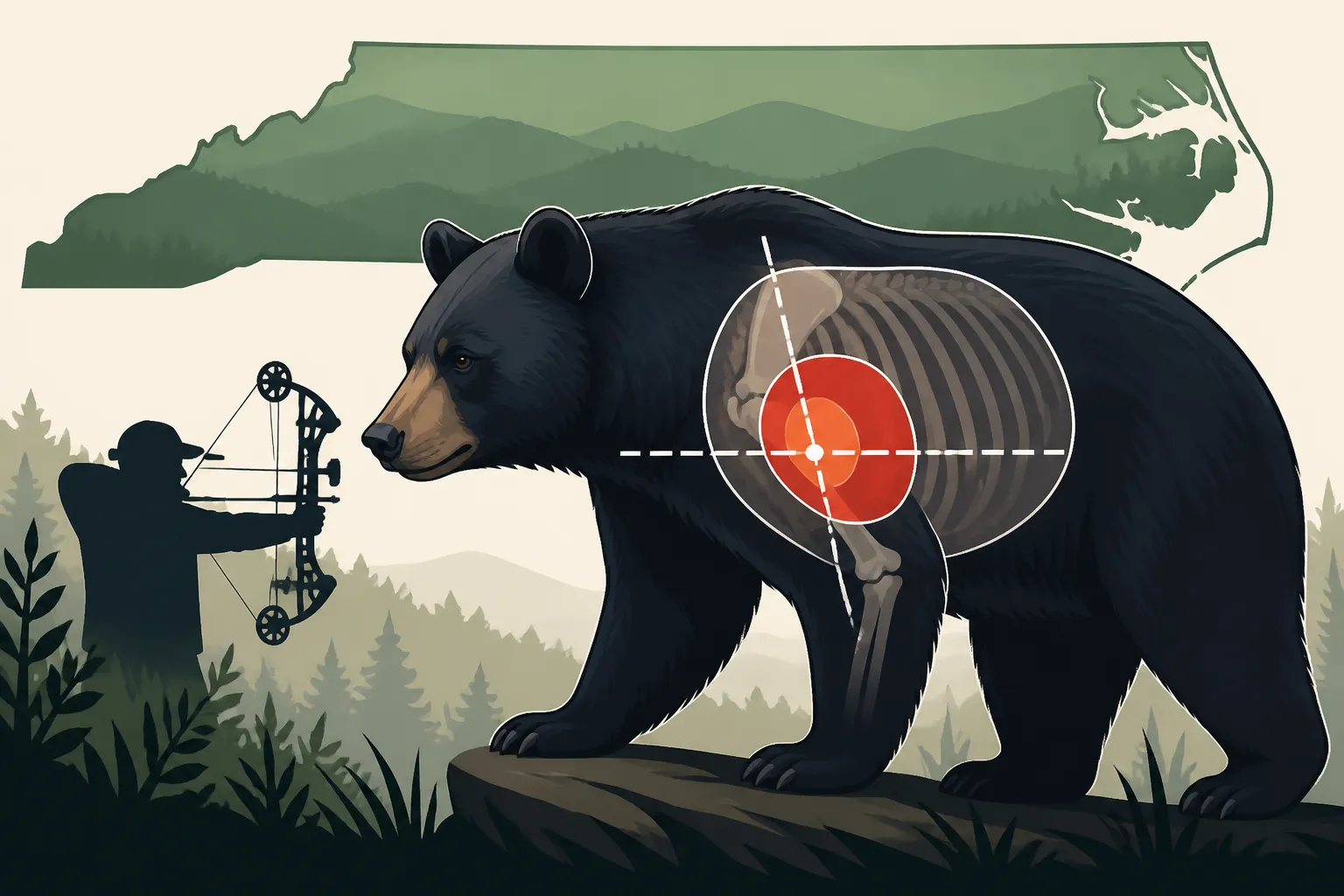
A bear's vital organs—the heart and lungs—are located lower and more forward in the chest cavity than many hunters expect. They are tucked behind the shoulder, extending slightly into the "armpit" area when the bear is broadside. The shoulder bone itself, often called the "shoulder shield," is very thick and can stop many projectiles if hit directly. Aiming too high or too far back will likely result in a muscle hit or a gut shot, both of which are scenarios we desperately want to avoid for the sake of the animal and a successful recovery.
The brain and spinal column are also technically vital, but head-on or spine shots are generally considered extremely high-risk for hunting applications, especially on a moving animal. The target area is small, and a slight miss can lead to a wounded bear with a broken jaw or a blinded eye, causing immense suffering. For ethical hunting, the focus should almost exclusively be on the heart-lung cavity, which offers the largest, most forgiving, and most lethal target. Familiarize yourself with diagrams of bear anatomy, paying close attention to the skeletal structure and organ placement. Many seasoned hunters even recommend studying detailed anatomical charts before heading into the mountains or coastal pocosins where bears thrive. This foundational knowledge is the first, most crucial step in ensuring an ethical harvest.
Optimal Shot Angles and Aiming Points
Getting a clean, ethical shot on a black bear often comes down to patience and understanding the best angle presented. Bears rarely stand perfectly broadside, and you’ll need to adjust your aiming point based on their body orientation. Rushing a shot from a poor angle is one of the biggest contributors to wounded game.
Broadside Shot Placement
A broadside shot offers the largest and most accessible target for the heart and lungs. When a bear is standing perfectly perpendicular to you, you want to aim for the lower third of the body, just behind the front leg. Envision a line running vertically up the back of the leg and a line horizontally through the bottom third of the chest. The intersection of these lines is your sweet spot. This placement should hit both lungs and, ideally, the top of the heart, resulting in a rapid, humane kill. The key is to resist the urge to aim directly at the center of the visible chest, which can lead to a high hit that misses the vitals or impacts the formidable shoulder blade. Many experienced hunters visualize aiming for the opposite elbow when taking a broadside shot, as this helps to drive the projectile through the entire chest cavity.
Quartering-Away Shot Placement
The quartering-away shot is often considered one of the most effective angles for bear hunting. In this scenario, the bear is angled away from you, exposing more of its flank. Your goal is to aim for the exit point on the opposite side, which means your bullet or arrow will travel diagonally through the vitals. For a bear quartering away, you should aim slightly further back than a broadside shot, aiming towards the opposite shoulder blade. This ensures the projectile passes through both lungs and potentially the heart, maximizing damage to the vital organs. The specific aiming point will shift slightly depending on how steeply the bear is quartering. Imagine the trajectory: if the bear is slightly quartering, aim a few inches behind the near shoulder, driving toward the far-side vitals. If it's heavily quartering, you might need to aim further back, closer to the mid-body, to ensure a path through the chest. This angle helps avoid the thick shoulder bone on the near side, allowing for a cleaner path to the vitals. When utilizing a powerful cartridge, like those discussed in Best Rifle Caliber for North Carolina Bear, a well-placed quartering-away shot can be devastatingly effective.
Quartering-Toward Shot Considerations
A quartering-toward shot is one of the riskiest angles and generally should be avoided if possible, especially with archery equipment. In this scenario, the bear is angled towards you, presenting less of its vital area and more of its dense shoulder and brisket. If you absolutely must take this shot due to a limited window, your aiming point would be the prominent crease where the neck meets the shoulder, driving the projectile into the chest cavity. However, the margin for error is significantly smaller, and a slight miscalculation can result in a non-lethal wound to the shoulder, neck muscle, or gut. Many veteran hunters will tell you that if a bear is quartering severely towards you, it's best to wait for a better opportunity. Your patience will be rewarded with a cleaner shot and a quicker recovery. For bear hunting in North Carolina, whether you're Hunting the Mountain Bear Zones or dealing with thick cover in the coastal swamps, patience is a virtue, and waiting for the right shot is always the most ethical choice.
Here's a quick reference table for optimal shot placement:
| Shot Angle | Aiming Point | Target Organs | Considerations |
|---|---|---|---|
| Broadside | Lower third of chest, directly behind front leg. | Heart, Both Lungs | Visualize aiming for the far-side elbow. Avoid aiming too high or directly on the shoulder. |
| Quartering-Away | Aim for the opposite shoulder (near the mid-body). | Both Lungs, Heart | Excellent angle, avoids thick shoulder bone. Visualize bullet exiting far shoulder. |
| Quartering-Toward | Crease where neck meets shoulder, driving into chest. | Lungs, Major Vessels | High-risk shot, generally avoid. Small margin of error, easily deflects off bone. |
| Frontal | Center mass of chest, low in the brisket. | Aorta, Lungs | Extremely high-risk, avoid if possible. Bullet can deflect off sternum; difficult tracking. |
| Rear | N/A | N/A | Never take. Highly unethical, low chance of vital hit, guaranteed suffering. |
The Role of Gear and Scouting in Shot Success
Achieving a precise shot isn't just about knowing anatomy; it's heavily influenced by your preparation and the gear you use. When you're out Bear Hunting North Carolina's Coast and Mountains, having the right setup can make all the difference in that critical moment. Your rifle or bow, ammunition, and even your scouting tools play a direct role in your ability to place a shot accurately and confidently.
Firstly, your weapon needs to be properly sighted in and capable of delivering enough energy to penetrate a bear's thick hide and bone. This means selecting appropriate calibers and bullet construction for firearms, or a bow with sufficient draw weight and sharp, durable broadheads for archery. Trying to hunt bear with an underpowered setup is a recipe for disaster, increasing the risk of wounding rather than killing. For many hunters, this means a reliable .30-caliber rifle or higher, paired with a stout bullet designed for deep penetration. If you're pondering specific options, resources like Rifle Setups for North Carolina Deer Hunting can offer insights that apply to bears as well, particularly regarding bullet energy and accuracy.
Secondly, optics are crucial for precise shot placement, especially in varying light conditions typical of North Carolina's diverse terrains. A high-quality scope on your rifle allows for clear target acquisition and a precise aiming point. For bowhunters, a clear sight picture with pin accuracy is non-negotiable. Binoculars or a spotting scope are also invaluable for identifying bears, assessing their size, and more importantly, observing their behavior and positioning to anticipate a clean shot opportunity. A good pair of binoculars can help you range the animal and confirm the exact angle before you even think about raising your weapon.
Finally, effective scouting is often overlooked as a component of shot placement, but it's incredibly important. Knowing the terrain, likely travel routes, and potential shooting lanes helps you anticipate where and how a bear might present itself. Utilizing digital mapping tools, like those offered by GoHunt, can help you pre-plan stand locations or stalking routes that offer the best visibility and clear shooting lanes. With GoHunt, you can analyze topography, vegetation, and access points, which directly influences your ability to get into a position for an optimal shot. Understanding the local North Carolina's Black Bear Population and their habits in your hunting area through thorough scouting provides the confidence needed to remain patient for that perfect shot. This pre-season work drastically reduces the chances of a hurried, poor-angle shot in the heat of the moment, making your actual hunting experience far more effective and ethical.
Post-Shot Protocol and Ethical Recovery
The moment you pull the trigger or release the arrow, your responsibilities as an ethical hunter are far from over. In fact, what you do immediately after the shot can be just as crucial as the shot placement itself. Many seasoned bear hunters will tell you that recovering a bear is often harder than recovering a deer due to their sheer tenacity, thick hide, and habit of seeking the densest cover when wounded.
First, observe the bear’s reaction intently. Did it buckle, run off, or stand in shock? Pay close attention to how it reacts, the direction it runs, and listen for any sounds like crashing or a death moan. These immediate cues provide vital information for tracking. Mark the exact spot where the bear was standing and the direction it fled. Many hunters use flagging tape or even a distinct natural landmark. Don’t rush in; give the bear time. For a good vital hit, especially with a rifle, waiting 30 minutes to an hour is usually sufficient. However, if you suspect a questionable hit (gut, leg, or high muscle), extending that wait to several hours, or even overnight if conditions allow (cool weather, no rain), dramatically increases your chances of a successful recovery. A wounded bear often travels a shorter distance if it's left undisturbed immediately after the shot.
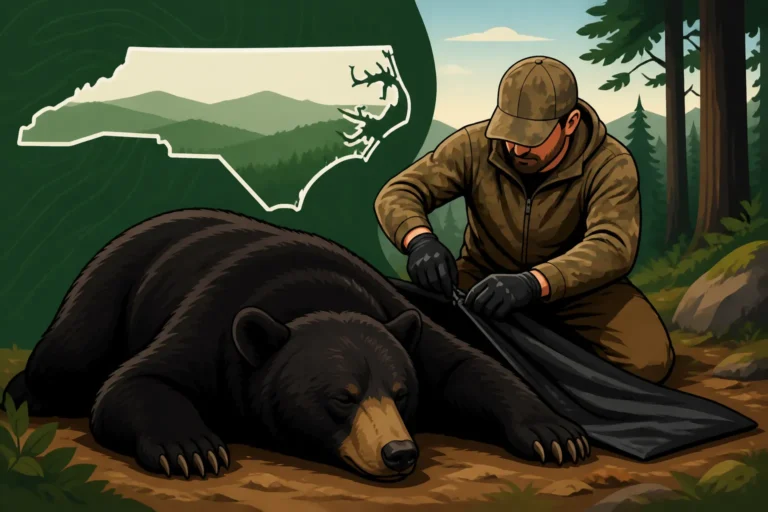
When you begin tracking, move slowly and deliberately. Look for blood, broken branches, disturbed leaves, and tracks. Bears can bleed externally or internally, so don't be discouraged by a lack of immediate blood sign if you felt confident in your shot. Look for clues like hair at the shot site. If you're tracking in challenging terrain, perhaps in a thick coastal swamp, having a reliable GPS or a mapping app like GoHunt on your phone can be invaluable for marking your trail and the last sign. It’s a tool that can save you hours of frustration and potentially prevent a lost animal. Remember, Handling a Bear After the Shot correctly also involves careful field dressing and transportation, which becomes far easier with a quick, clean kill.
If you are hunting with dogs, as allowed in certain areas of North Carolina under specific rules, understanding North Carolina Bear Dog and Bait Rules is important, and your dogs will often take the lead on tracking. However, even with dogs, knowing shot placement and immediate post-shot protocol enhances their effectiveness and safety. Always bring adequate recovery gear: bright flagging tape, a good flashlight or headlamp (even if hunting during the day, recovery can extend into dusk or dark), sharp knives for field dressing, and potentially a game cart or sled for extraction. Recovering a black bear is a challenging but incredibly rewarding part of the hunt, and proper preparation and patience are your best allies for an ethical outcome and to meet North Carolina Bear Checking Requirements.
Disclaimer
This article is intended for informational purposes only and does not constitute legal advice. Hunting regulations and laws in North Carolina are subject to change. Always consult the latest North Carolina Wildlife Resources Commission (NCWRC) regulations before hunting. Ethical hunting practices and hunter safety should always be your top priority.