How Many Feral Hogs North Carolina Has
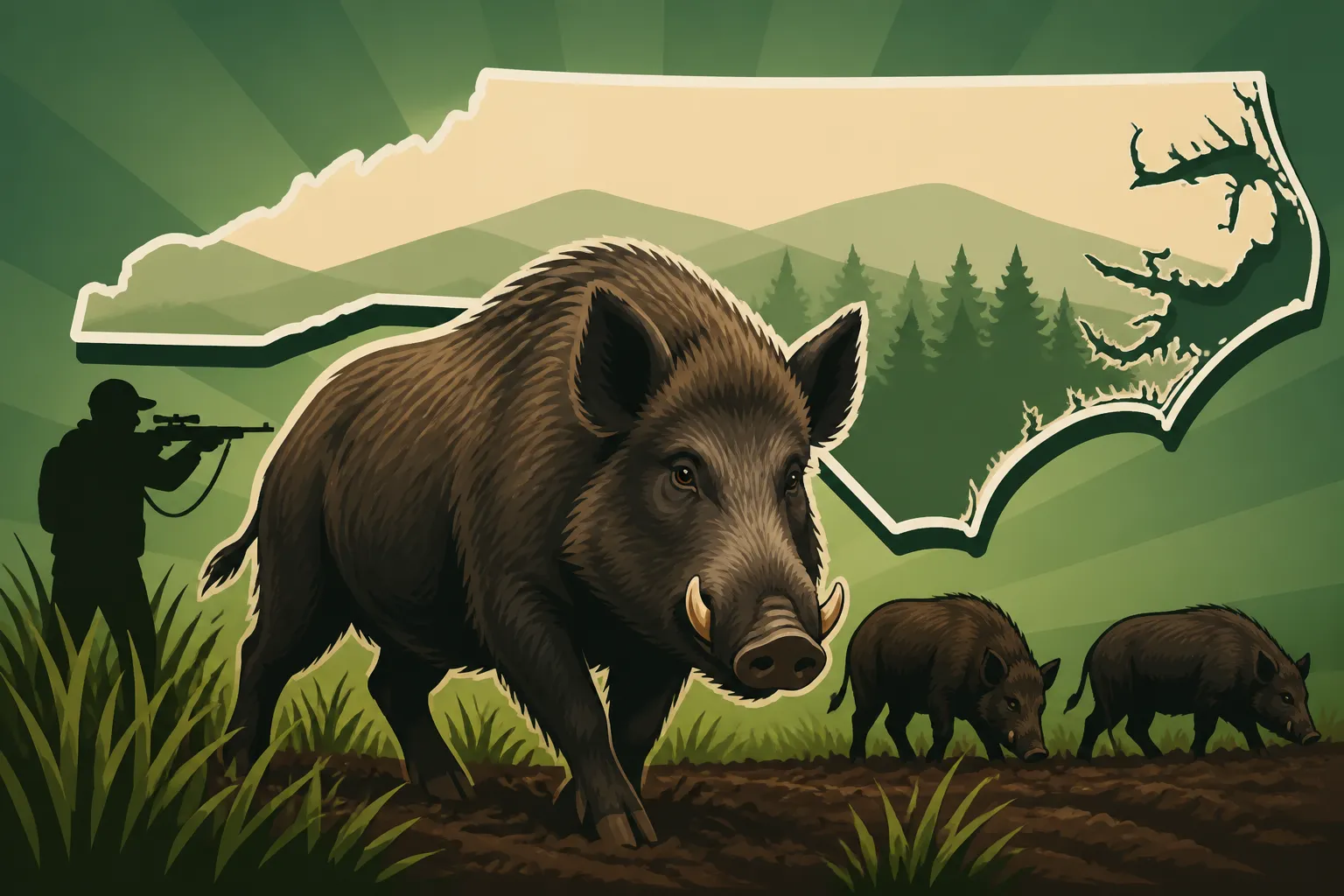
If you've spent any time in rural North Carolina, you've likely seen the tell-tale signs: rooted-up fields, torn-apart creek bottoms, or a quick glimpse of a dark shape. Feral hogs are a growing problem, and many wonder just how many of these destructive animals are roaming our state. Understanding their numbers, habits, and impact is crucial for North Carolina's land and native wildlife, a challenge we'll explore in this guide.
The Elusive Numbers: Why Counting Feral Hogs is So Hard
Let's be real, trying to get an exact headcount on North Carolina's feral hog population is like trying to count individual grains of sand on the Outer Banks – it's practically impossible. These aren't creatures that stand still for a census, nor do they live in neat, easily surveyed groups. They're constantly on the move, highly secretive, and masters of evading detection, especially in our dense pocosin swamps, river bottoms, and vast tracts of pine. This makes any definitive number extremely difficult to pin down.
Understanding the Challenges of Population Estimation
The biggest hurdle in knowing precisely How Many Feral Hogs North Carolina Has is their behavior. Feral hogs are nocturnal for much of the year, especially in areas with human activity. They move primarily at night, using the cover of darkness to forage and travel. They also possess incredible reproductive rates, with sows capable of having multiple litters in a single year, and piglets maturing quickly. This means that even if you could somehow get a snapshot of their numbers today, that count would be wildly different just a few months down the road. Their ability to hide in thick cover, coupled with their intelligence and adaptability, makes aerial surveys or ground counts inherently unreliable for a precise figure. Instead, wildlife agencies and researchers rely on estimations derived from various data points, like harvest reports, damage complaints, and anecdotal evidence from landowners and hunters. This means we're dealing with educated guesses, not hard facts, which can be frustrating when you're trying to grasp the scale of the problem.
General Trends and the Unmistakable Growth
While an exact figure remains elusive, the undeniable truth is that North Carolina's feral hog population is growing, and has been for decades. Every indication, from hunter observations to increasing reports of agricultural damage, points to a steady and significant increase in their numbers and their geographical spread. What started as scattered populations in specific regions has blossomed into a widespread presence across much of the state, particularly in the Coastal Plain and parts of the Piedmont. It's not a question of if their numbers are increasing, but how rapidly. Hunters who have been afield for years will tell you they're seeing more hog sign than ever before, even in areas where they were historically rare or absent. This trend is consistent with what's observed in many other southern states facing similar challenges, indicating a deeply entrenched and expanding problem rather than an isolated issue. The ability of sows to Why Coastal Plain Hogs Reproduce So Fast contributes significantly to this relentless upward trend.
The Unstoppable Spread: How Hogs Colonized North Carolina
The story of how feral hogs spread across North Carolina is a complex one, involving historical practices, natural migration, and, unfortunately, deliberate human intervention. They didn't just appear overnight; their colonization has been a gradual process, but one that has picked up significant speed in recent decades, leading to the situation we face today. Understanding this history is key to comprehending why they are so prevalent now.
Tracing Their Path Across Our State
The origins of feral hogs in North Carolina trace back centuries, primarily to domestic pigs brought over by European settlers. Some of these animals escaped or were allowed to range freely, establishing wild populations. Over time, these domestic escapees interbred with wild boars introduced for sport hunting in some areas, creating the hybrid "feral hog" we know today. Initially, populations were localized and relatively stable. However, in more recent times, their expansion has been accelerated. Natural migration from neighboring states, particularly from the south and west, has played a role. Hogs are excellent travelers, able to cover significant distances in search of food and new territory. They often follow river systems and creek bottoms, using these natural corridors to move into new areas, slowly but surely extending their range. This natural spread, combined with their incredible adaptability, has allowed them to establish a foothold in nearly every corner of the state where suitable habitat exists.
Factors Fueling Their Rapid Expansion
Beyond natural migration, several factors have significantly fueled the rapid expansion of feral hogs in North Carolina. Perhaps the most impactful is their prolific breeding. As mentioned, a sow can breed at a very young age and produce multiple litters per year, often with many piglets in each. This exponential growth rate means that even a small founding population can quickly explode in numbers if left unchecked. Another critical factor is their omnivorous diet and adaptability. Feral hogs will eat almost anything—acorns, roots, crops, insects, eggs, small mammals, even fawns. This flexible diet allows them to thrive in diverse habitats, from mountain forests to coastal swamps and agricultural fields, enabling them to find sustenance wherever they go. Furthermore, a lack of natural predators large enough to control their numbers effectively in many areas, coupled with their intelligence and wariness of humans, makes them incredibly difficult to manage. Some of their spread has also been attributed to illegal translocation—the misguided practice of moving hogs to new areas for hunting purposes—which has directly contributed to new populations appearing far from established ones. How Wild Hogs Spread Across North Carolina is a testament to their resilience and reproductive prowess.
Devastation on the Landscape: The Impact of Feral Swine
The sheer numbers of feral hogs, coupled with their destructive habits, translate into significant negative impacts across North Carolina. Their presence isn't just an inconvenience; it's a serious threat to agriculture, native ecosystems, and even the health of other wildlife, creating a cascade of problems that affect many aspects of our natural and economic well-being.
Agricultural Losses and Property Damage
For North Carolina's farmers, feral hogs are an absolute nightmare. They cause immense Crop Damage Hogs Cause in North Carolina, rooting up fields of corn, soybeans, peanuts, and other valuable crops. This isn't just about eating some produce; their rooting behavior destroys entire swathes of cropland, making it impossible to harvest and incurring substantial financial losses for farmers. They also damage irrigation systems, fences, and farm equipment, adding to the economic burden. Beyond agriculture, homeowners, especially in rural or semi-rural areas, can experience significant property damage. Hogs will root up lawns, golf courses, and gardens in their relentless search for food, turning manicured landscapes into muddy, tilled-up messes overnight. I've heard countless stories from folks waking up to find their yard completely destroyed, feeling helpless against these powerful, destructive animals. The scale of the damage is often surprising, revealing just how much impact a sounder of hogs can have.
Ecological Harm and Disease Concerns
The ecological harm caused by feral hogs is just as severe, if not more so, than their agricultural damage. Their rooting behavior disrupts soil structure, destroys delicate native plant communities, and creates erosion, especially along streambanks. They compete directly with native wildlife, like deer, turkeys, and squirrels, for critical food sources such as acorns and other mast. They also prey on ground-nesting birds, like quail and turkeys, and can even target fawns, significantly impacting native populations. The presence of hogs can alter entire ecosystems, changing vegetation composition and reducing biodiversity. On top of this, feral hogs are known carriers of numerous diseases, many of which can be transmitted to livestock, pets, and even humans. Diseases like brucellosis, leptospirosis, and pseudorabies are significant concerns. For instance, hunters need to be aware of proper handling and cooking practices to avoid potential exposure. This disease vector aspect adds another layer of complexity and risk to their unchecked population growth, emphasizing why their management is so critical for the overall health of North Carolina's wildlife and agricultural industries.
The Role of Hunters and Landowners in Management
Given the immense challenges posed by North Carolina's feral hog population, effective management is a multi-faceted endeavor that relies heavily on the active participation of hunters and landowners. While there's no silver bullet, a combination of strategies, executed consistently, can help mitigate their impact and, in some areas, reduce their numbers. It’s a constant battle, but one where every effort counts.
Current Strategies and Hunter Involvement
North Carolina recognizes feral hogs as a destructive invasive species, not traditional game animals. This classification is crucial because it allows for year-round hunting on private land with no bag limits, making hunters a vital part of the control effort. Many dedicated hunters spend considerable time pursuing hogs, not just for the challenge or meat, but as a direct service to the land. Tactics like still-hunting, ambushing at feeding or watering sites, and even using dogs where legal, are all employed. Hunting North Carolina's Year-Round Feral Hogs is a passion for many, and a necessity for the state. Hunters contribute invaluable data through their observations and harvests, helping wildlife managers understand hog movements and population hotspots. However, hunting alone typically isn't enough to control widespread populations due to their rapid reproductive rate and evasive nature. It's an important piece of the puzzle, but not the whole solution.
Tools and Resources for Feral Hog Control
Effective hog control often requires a comprehensive approach, and landowners have several tools at their disposal beyond just hunting. Trapping is widely considered one of the most effective methods for reducing feral hog numbers, especially for capturing entire sounders (groups of hogs) at once. Large, corral-style traps equipped with remote triggers, sometimes paired with cellular cameras, allow landowners to capture multiple animals efficiently. Understanding Trapping North Carolina Feral Hogs is a specialized skill that can yield significant results.
For those looking to get serious about hog control on their property, technology can be a huge asset. Mapping tools, like those offered by GoHunt, can help identify hog travel corridors, rooting areas, and bedding locations. By analyzing aerial imagery and property lines, hunters and landowners can strategically place traps or plan their hunting routes more effectively. Using such platforms to understand terrain, water sources, and potential food plots can significantly improve success rates. Additionally, some landowners might consider night hunting with lights on private land, which is a legal and effective method when used responsibly, allowing hunters to target nocturnal hogs. This requires careful planning and coordination to ensure safety and compliance with local regulations. Night Hunting Hogs With Lights on Private Land can be highly effective because hogs are often most active during these hours.
Here's a quick look at some common hog control methods:
| Method | Description | Effectiveness | Best Use Case |
|---|---|---|---|
| Hunting | Pursuing hogs with firearms or archery equipment. Often done opportunistically or by specific targeting. | Moderate | Immediate removal, recreational, population suppression |
| Trapping | Using large, enclosed traps (e.g., corral traps) to capture multiple hogs simultaneously. | High | Reducing sounders, persistent problems, large areas |
| Snaring | Using wire snares to capture individual hogs. | High (for individuals) | Targeted removal, smaller populations |
| Exclusion Fencing | Building strong fences to prevent hog access to specific areas (e.g., crops, gardens). | High (local) | Protecting valuable assets, limited areas |
| Coordinated Drives | Organized groups of hunters driving hogs towards waiting shooters. | Moderate | Public lands, thick cover, with multiple participants |
Ultimately, managing feral hogs in North Carolina is an ongoing battle that requires vigilance, persistence, and a multi-pronged approach. Hunters and landowners, armed with knowledge and the right tools—from traditional methods to modern mapping technologies like GoHunt—are at the forefront of this crucial conservation effort.
Disclaimer
This article is for general informational purposes only and does not constitute professional advice. Laws, prices and regulations vary by location and change over time. Consult a qualified professional for guidance on your specific situation.