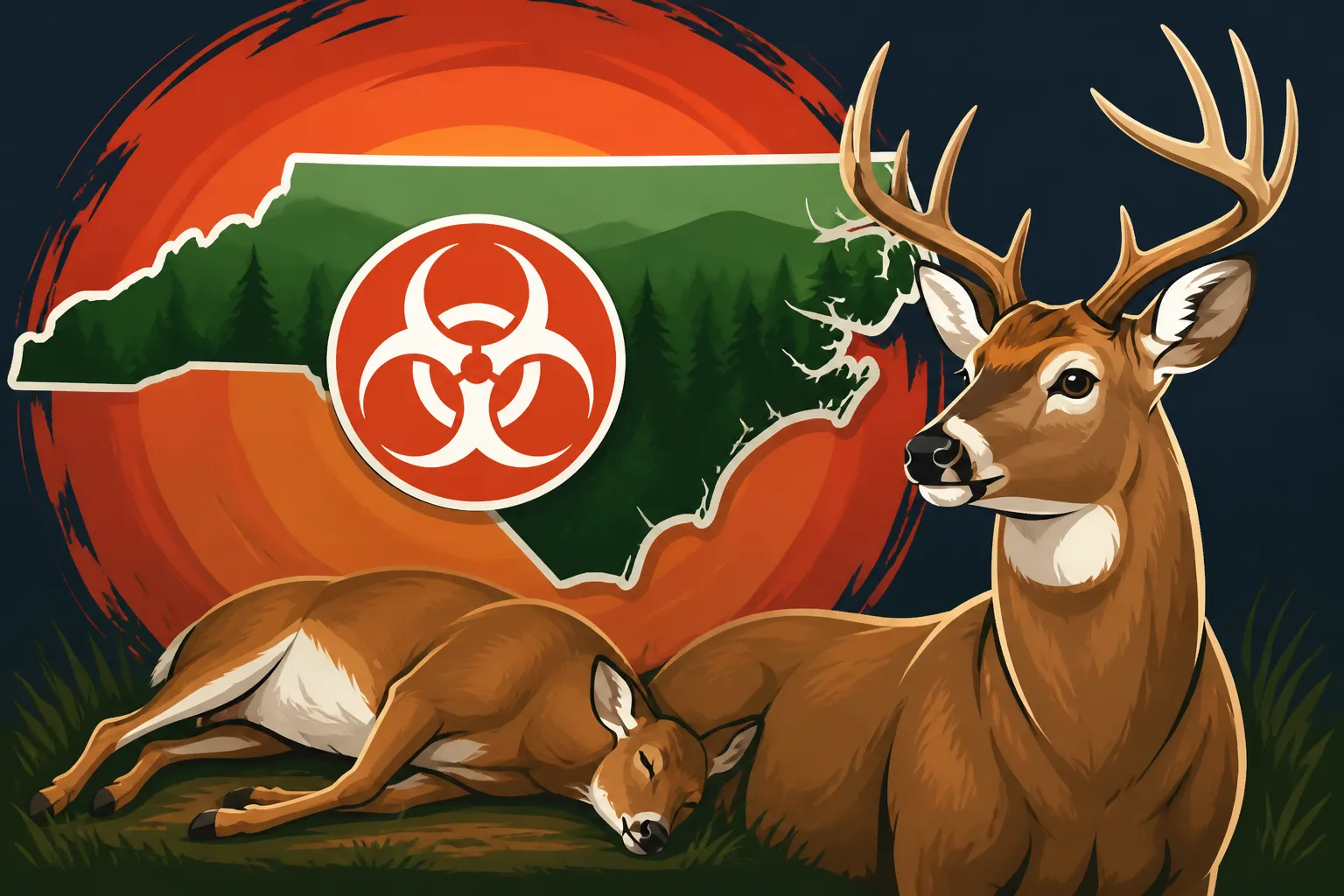
EHD Die-Offs in North Carolina Deer
Finding dead deer, especially multiple carcasses, can be incredibly unsettling for any hunter or outdoors enthusiast. It immediately sparks worry about the health of the local herd and what it might mean for the upcoming season or the ecosystem. This guide will cut through the confusion and explain what Epizootic Hemorrhagic Disease (EHD) is, how it affects North Carolina's deer population, and what you, as a hunter, can do to understand and respond to an outbreak.
Understanding Epizootic Hemorrhagic Disease (EHD)
EHD, or Epizootic Hemorrhagic Disease, is one of those terms that can strike fear into a deer hunter's heart. It sounds serious, and it certainly can be for localized deer populations. But what exactly is it? At its core, EHD is a viral disease primarily affecting white-tailed deer, and it's spread by tiny biting insects you probably know as "no-see-ums" or biting midges (specifically, species of the genus Culicoides). These minuscule pests act as vectors, picking up the virus from an infected deer and transmitting it to others when they feed.
The disease isn't new to North Carolina, or to the broader deer hunting landscape for that matter. Outbreaks tend to be cyclical, often flaring up in late summer and early fall, particularly during periods of drought followed by heavy rains, which create ideal breeding conditions for the midges. When you hear about EHD die-offs, it's usually in this seasonal window, before the first hard frost arrives to kill off the midge population, effectively ending the transmission cycle for the year. It's important to remember that EHD is a deer-specific disease and poses no known health risk to humans, so there's no need to panic about handling venison from a healthy-looking deer.
The EHD Virus and Its Transmission
The EHD virus itself is a nasty piece of work for a deer. Once a deer is bitten by an infected midge, the virus enters its bloodstream and begins to replicate. The disease causes internal hemorrhages, or bleeding, throughout the deer's body. This internal damage is what leads to the severe symptoms and, unfortunately, often death. There are different strains of the EHD virus, and a deer that survives an infection from one strain will develop immunity to that specific strain. However, it can still be susceptible to other strains in the future, which explains why we can see recurring outbreaks in the same areas over time.
The transmission cycle is straightforward but relentless during peak midge season. An infected midge bites a deer, transferring the virus. That deer then becomes a host for a period, and if another midge bites that infected deer, it too becomes a carrier. This creates a chain reaction that can spread rapidly through a localized herd. You'll often find outbreaks concentrated near water sources because that's where the midges tend to breed. Hunters often encounter dead deer near ponds, creeks, or riverbeds, not because the water itself is the problem, but because sick deer, suffering from fever, will seek out water to cool down before succumbing to the disease.
Common Symptoms of EHD in Deer
Recognizing the signs of EHD is crucial, not just for understanding the disease but also for reporting sick or dead animals to the North Carolina Wildlife Resources Commission (NCWRC). When EHD strikes, it can manifest in a variety of ways, from subtle behavioral changes to obvious physical ailments. One of the most common early indicators is a high fever, which drives infected deer to seek out water sources. You might find deer acting unusually tame, appearing lethargic, or showing no fear of humans, a stark contrast to their normal wary nature.
Physically, EHD can cause significant swelling. Look for swollen heads, necks, tongues, or eyelids. The hooves might also be affected, sometimes sloughing off in severe cases. Internally, the disease causes widespread hemorrhaging, which can lead to lesions in the mouth, on the tongue, and in the lining of the stomach. Some deer might also develop a "blue tongue" due to a lack of oxygen, though this is less common with EHD than with its close relative, Bluetongue virus. These symptoms progress rapidly, often leading to death within a few days of infection. If you encounter deer exhibiting these signs, especially during the late summer and early fall, it's a strong indicator that EHD may be active in the area.
EHD's Impact on North Carolina Deer Populations
When an EHD outbreak sweeps through an area, the immediate impact can be visually dramatic and concerning. You might stumble upon several dead deer in a short period, leading to understandable alarm about the local herd's future. However, it's important to differentiate between localized, intense die-offs and the overall health and resilience of the statewide deer population. While EHD can be devastating in certain pockets, North Carolina's white-tailed deer herd is generally robust and capable of recovering over time.
The severity of an EHD outbreak can vary significantly from year to year and from one region to another within the state. Factors such as midge population density, local deer density, and the level of immunity within a specific herd all play a role. A region that experienced a severe outbreak a few years prior might see a less intense one if many of the surviving deer developed immunity. Conversely, an area with a high deer population and no recent exposure could be hit harder. It's a complex dance between the virus, the vector, and the deer, constantly shifting with environmental conditions.
Localized Die-Offs Versus Statewide Impact
One of the most frustrating aspects of EHD is its seemingly arbitrary nature. You might hear reports of significant die-offs in one county, only for the next county over to be largely unaffected. This is the nature of localized outbreaks. In a heavily impacted area, particularly smaller, isolated tracts of timber or river bottoms where deer density is high and midge breeding grounds are prevalent, you can certainly see a substantial reduction in the local deer population. Hunters might feel the impact directly, seeing fewer deer or noticeably absent mature bucks during the upcoming hunting season.
However, these localized events rarely translate into a significant long-term impact on the entire North Carolina deer population. The state's diverse geography, from the mountains to the coast, means that EHD doesn't usually sweep across all regions uniformly. Deer herds are dynamic, and given time, healthy does will continue to reproduce, and deer from less affected adjacent areas will naturally expand their range to fill in voids. Wildlife biologists closely monitor these events, understanding that while tough for local hunters, the overall herd generally bounces back. Tracking the overall North Carolina Deer Population Estimate and harvest records can provide a broader perspective on the herd's health.
Deer Immunity and Herd Recovery
For those deer fortunate enough to survive an EHD infection, a silver lining exists: they develop antibodies and immunity to that specific strain of the virus. This immunity is crucial for herd recovery. Over time, as more deer are exposed and either succumb or survive, the herd's overall resistance to EHD can increase. This means that future outbreaks of the same viral strain in that area might be less severe, as a larger portion of the population is already immune.
Herd recovery is a testament to the resilience of North Carolina's whitetails. While it might take a few years for a severely impacted local area to return to its previous deer density, the process is generally steady. Younger deer mature, does continue to have fawns, and the herd rebuilds itself. It’s a natural, albeit sometimes harsh, culling process that strengthens the gene pool by favoring those individuals with greater natural resistance. Understanding this recovery process can help temper the immediate concerns caused by visible die-offs.
Identifying EHD Versus Other Deer Health Issues
When you're out in the woods, finding a sick or dead deer naturally raises questions. Is it EHD, or something else? North Carolina's deer can face a variety of health challenges, and it's important to be able to distinguish EHD from other issues that might present similar symptoms or merely be coincidental. Misidentifying EHD could lead to unnecessary panic or, conversely, overlooking another serious problem.
While EHD is the primary focus of this guide, deer can also suffer from other conditions like vehicle collisions, injuries from fighting, malnutrition, or other diseases. In some rare cases, other diseases such as Chronic Wasting Disease (CWD) could be a concern, though CWD presents very different, neurological symptoms over a much longer period. Being observant and knowing what to look for can help you make a more informed assessment of what you're seeing.
EHD Signs Versus Physical Injuries or Malnutrition
It's easy to jump to conclusions when you find a dead deer, especially during late summer or early fall. But sometimes, the cause is far less exotic than a viral disease. A deer found near a road, for example, might be a victim of a North Carolina Deer Vehicle Collisions. You might see visible signs of trauma, broken bones, or internal bleeding if the carcass is recent enough. Similarly, a deer that died from fighting with another buck during the rut might have puncture wounds or broken antlers.
Malnutrition can also lead to a deer's demise, particularly during harsh winters or periods of extreme drought when food sources become scarce. A deer that died from malnutrition will typically appear emaciated, with sunken flanks and a dull coat. These physical injuries or signs of starvation are generally quite distinct from the symptoms of EHD, such as widespread hemorrhages, swelling of the head or tongue, and seeking water before death. Keep these possibilities in mind when assessing a carcass.
Differentiating EHD From CWD and Brainworm
While EHD is acute and causes rapid death, other significant deer diseases operate differently. Chronic Wasting Disease (CWD), for instance, is a progressive, fatal neurological disease that affects cervids. The symptoms of CWD are vastly different, primarily neurological: extreme weight loss, drooling, excessive urination and thirst, and abnormal behavior like a lack of coordination or listlessness. Crucially, CWD progresses slowly over months or even years, whereas EHD can kill a deer in days.
Brainworm (Parelaphostrongylus tenuis) is another parasite that can cause neurological symptoms in deer, though it's more common in the northern states where moose are present. Infected deer might show disorientation, circling, or paralysis. However, these symptoms are typically not accompanied by the widespread internal hemorrhaging and swelling characteristic of EHD. If you find a sick animal exhibiting neurological signs, it’s best to contact the NCWRC immediately to Reporting a Sick Animal in North Carolina for proper diagnosis, especially in areas where CWD has been detected, like some counties in the Yadkin Valley.
| Symptom / Condition | Epizootic Hemorrhagic Disease (EHD) | Chronic Wasting Disease (CWD) | Physical Injury / Collision | Malnutrition / Starvation |
|---|---|---|---|---|
| Onset | Rapid (days) | Slow (months to years) | Immediate | Gradual (weeks to months) |
| Primary Symptoms | High fever, swelling (head, neck, tongue), internal hemorrhages, seeking water, lethargy, sometimes blue tongue, sloughing hooves. | Severe weight loss, drooling, excessive thirst/urination, abnormal behavior, listlessness, neurological signs (head down, uncoordinated). | Obvious trauma (broken bones, cuts, internal bleeding), often near roads. | Emaciation, dull coat, weakness, sunken flanks. |
| Seasonality | Late summer to early fall (until first hard frost) | Year-round, no seasonal pattern | Year-round | Winter, drought periods |
| Transmission | Biting midges (Culicoides) | Prions via bodily fluids (saliva, urine, feces) and environment | External forces | Lack of adequate food |
| Human Risk | None known | None known (but avoid consuming meat from infected animals) | None | None |
| Affected Areas | Localized, often near water sources | Can be localized or spread within CWD Management Areas | Varies | Varies by habitat/weather |
What Hunters Can Do During and After an EHD Outbreak
When EHD hits your hunting grounds, it's natural to feel a sense of helplessness. However, as hunters and stewards of wildlife, there are important actions you can take to help monitor the situation, ensure your safety, and even adapt your hunting strategy. Your observations are incredibly valuable to wildlife agencies like the NCWRC, as they rely on public reporting to understand the extent and severity of outbreaks.
Beyond reporting, adapting your approach to hunting and being mindful of meat safety are key responsibilities. While EHD can be disheartening, remember that deer populations are resilient, and our role is to support their health and recovery wherever possible. This might mean adjusting your expectations for a season, or even exploring other hunting opportunities while an area recovers.
Reporting Sightings and Collaborating with NCWRC
One of the most impactful things you can do during an EHD outbreak is to report any sick or dead deer you encounter to the North Carolina Wildlife Resources Commission (NCWRC). These reports are vital for biologists to map the extent of the disease and monitor its spread. They can’t be everywhere, and your eyes and ears in the field provide critical data points. Don't hesitate to report. It's not a bother; it's a service. You can typically find contact information on the NCWRC website for reporting sick wildlife, and it's one of the best ways to contribute to North Carolina Wildlife Disease Monitoring.
When you report, try to be as detailed as possible. Note the exact location (GPS coordinates are ideal if you're using a mapping app like GoHunt or your phone), the number of animals observed, and any specific symptoms or conditions you noticed. Even if you're unsure if it's EHD, a report allows wildlife professionals to investigate and confirm. Your cooperation helps paint a clearer picture of the outbreak and guides management decisions that ultimately benefit the deer herd and all future hunting seasons.
Precautions and Venison Safety
The good news, as mentioned earlier, is that EHD is not known to be transmissible to humans. So, consuming venison from a deer that has recovered from EHD or from a healthy deer in an affected area poses no known health risk. However, common sense and good hygiene are always paramount when handling any wild game. If you encounter a deer that appears sick or emaciated, or whose meat looks discolored or abnormal, it's always best to err on the side of caution and not consume the meat. This isn't specifically due to EHD risk, but rather general food safety practices.
When field dressing a deer, always wear gloves. This is good practice regardless of EHD, but it provides an extra layer of protection. Thoroughly cook all wild game meat, and practice good sanitation with your knives and cutting surfaces. If you harvest a deer that appears healthy but you know an EHD outbreak has occurred in the area, there's generally no cause for concern regarding the meat quality for human consumption. For more details on safe handling, you can refer to guides on topics like Field Dressing a Deer in Cold Weather or Butchering a Deer at Camp.
Adapting Hunting Strategy After an Outbreak
EHD outbreaks, while tough, can inform your hunting strategy for the current and future seasons. If you've observed significant die-offs in a particular area, it's wise to temper your expectations for that spot for a season or two. Deer numbers will likely be down, and mature bucks, which are often hit hard, might be scarce. This doesn't mean you can't hunt, but you might need to adjust your focus.
Consider scouting new areas or shifting your efforts to adjacent tracts that seem less affected. Healthy deer might move into impacted areas over time, but it won't happen overnight. Utilizing mapping tools, perhaps through a platform like GoHunt, can help you identify areas with good habitat that may have been spared the worst of an outbreak. Looking for fresh sign in areas you haven't hunted before might be more productive than clinging to a spot that was heavily impacted. Patience and adaptability are key; the deer herd will rebound, and with mindful hunting, you can still enjoy a successful season while respecting the recovery process. Exploring options like Scouting North Carolina Public Land Before Season can be a great way to find new, healthy areas.
Disclaimer
This article is for general informational purposes only and does not constitute professional advice. Laws, prices and regulations vary by location and change over time. Consult a qualified professional for guidance on your specific situation.