E-Collar Use on Public Ground
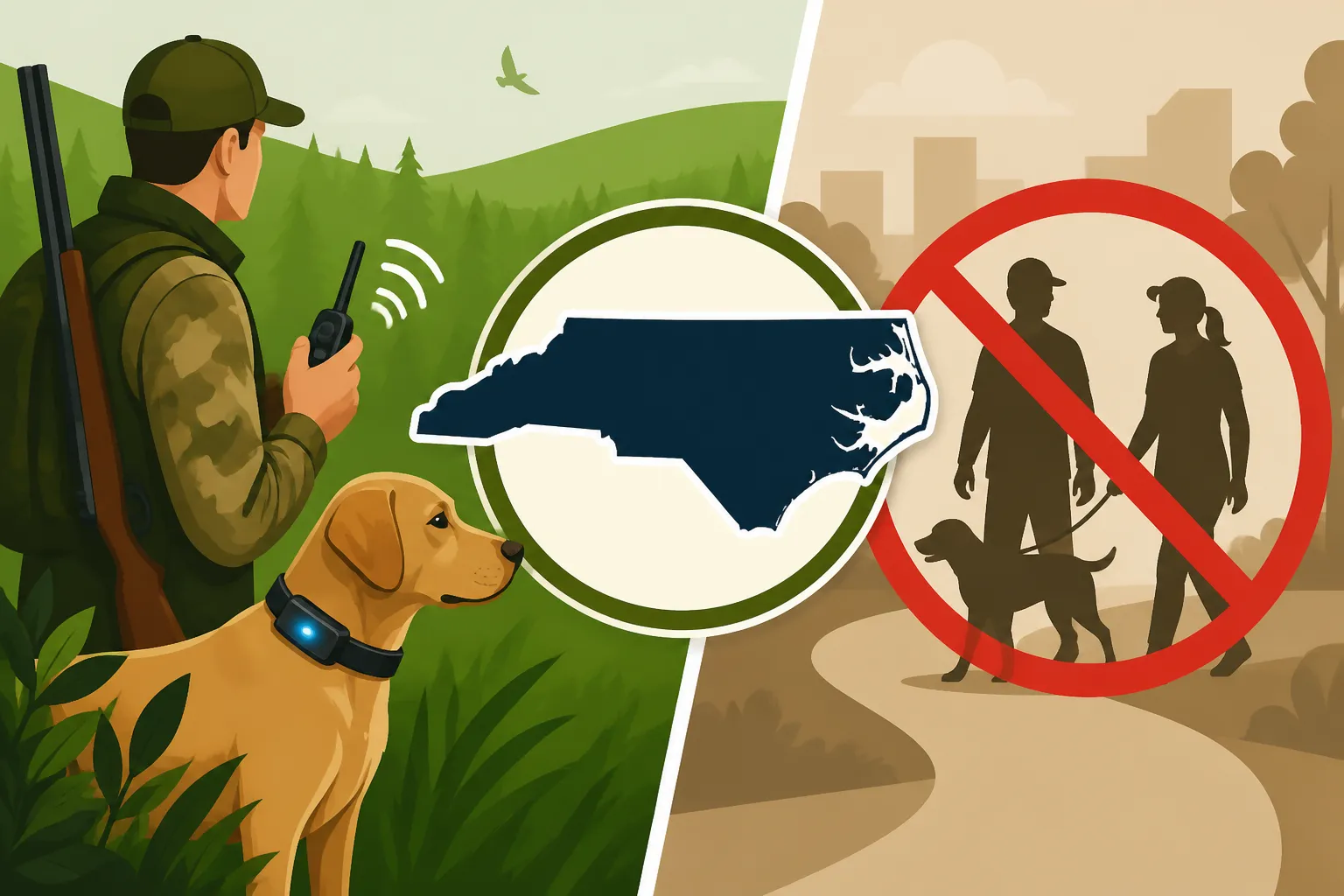
Venturing onto North Carolina's public lands with your hunting dog is a fantastic experience, but the question of using an e-collar can often lead to uncertainty and concern. You want to ensure your dog is safe, controlled, and performing effectively, all while adhering to regulations and showing respect to fellow outdoor enthusiasts. This guide will walk you through the nuances of using e-collars on public ground in North Carolina, covering legality, responsible practices, and how to choose the right gear.
Navigating North Carolina's E-Collar Regulations on Public Lands
One of the biggest anxieties for hunters is making sure they're on the right side of the law, especially when it comes to technology like e-collars. North Carolina, like many states, has specific rules that govern hunting and dog use, and understanding these is your first step. It’s not always as simple as a "yes" or "no" answer, as various types of public land can have slightly different guidelines.
State-Level Guidelines for Dog and E-Collar Use
Generally, North Carolina's statewide hunting regulations, set by the Wildlife Resources Commission (NCWRC), permit the use of e-collars as a training and control tool for hunting dogs. The focus of these regulations tends to be on how you hunt with dogs (e.g., what species can be hunted with dogs, prohibitions on disturbing wildlife during closed seasons) rather than outright banning control devices. The e-collar is primarily viewed as a means to ensure compliance and safety, which is always encouraged. This means for most general hunting seasons and species where dog use is allowed, an e-collar is a perfectly legal and often recommended tool to keep your canine partner in line. You can often find specifics related to general dog use when reviewing North Carolina Small Game and Furbearers regulations.
However, it's vital to remember that "public land" isn't a monolithic entity. What's permissible on a vast tract of national forest might differ from a smaller state game land or a wildlife refuge. The overarching principle is always control and minimizing disturbance to other users and wildlife. The state wants hunters to be responsible, and an e-collar, used correctly, is a tool for responsibility.
Specific Rules on Game Lands and National Forests
When you step onto a specific public hunting area, you need to be extra vigilant about localized rules. North Carolina's Game Lands, managed by the NCWRC, often have their own specific regulations listed for each property. While a general statewide rule might allow e-collars, a particular game land might have unique stipulations regarding dog use during certain times or for certain species. For example, some might restrict dog training during nesting seasons, or have specific leash requirements in high-traffic areas. Checking the current game land rules for your specific destination, which you can usually find on the NCWRC website or by using resources like GoHunt to visualize boundaries and rules, is absolutely non-negotiable.
National Forests like Pisgah, Nantahala, or Croatan, while generally more permissive, still fall under federal regulations in addition to state ones. These areas typically allow e-collar use for hunting and dog training as long as it's consistent with forest service rules regarding dog control and wildlife harassment. The key here is always control. A dog running wild, even with an e-collar, is still a problem. Ensuring your dog stays within reasonable hunting parameters, doesn't chase non-game animals, and remains recallable is the expectation. Always consult the specific National Forest's local office or website for their particular guidelines on dog use before heading out. Sometimes, specific designated wilderness areas within these forests may have stricter rules about dog access or behavior.
Responsible and Ethical E-Collar Use on Public Land
Beyond just legality, responsible and ethical e-collar use on public land is about being a good steward of the land and a respectful member of the outdoor community. Public land is shared by hikers, birdwatchers, mountain bikers, and other hunters. Your actions, and your dog's, reflect on all hunters.
Minimizing Disturbance to Other Users and Wildlife
One of the most common complaints about dogs on public land, even well-behaved ones, is noise and perceived lack of control. An e-collar is your primary tool for addressing this. Imagine you're still-hunting a ridge in Pisgah National Forest and suddenly another hunter's dog comes barking through, or a family hiking hears incessant barking. This immediately creates a negative experience for them and can negatively impact other hunters' chances. Using your e-collar to maintain quiet control, keeping your dog close when encountering others, or quickly correcting any unwanted barking or wandering is crucial.
Consider the potential for disturbing non-game wildlife. Even if you're hunting squirrels or rabbits, your dog should only be pursuing those legal quarry. An e-collar allows you to correct a dog that might try to chase deer, turkeys out of season, or even livestock if you're hunting near private land boundaries. Respect for all wildlife, game or non-game, is paramount. Effective e-collar training means your dog understands what is acceptable to chase and what is not, preventing unnecessary harassment and promoting a healthy ecosystem.
Etiquette for Hunting with Dogs on Shared Land
Public land hunting often means running into other people, and sometimes, other hunters with their own dogs. Good etiquette involves:
- Announcing your presence: If you know you're in an area where others might be, make your presence known before your dog bursts onto the scene. A simple "Hunter and dog coming through!" can avoid startling people.
- Leashing up: When you encounter other people, especially non-hunters or children, it's often best practice to call your dog in and leash them, even if momentarily, as a sign of respect and control. Not everyone is comfortable with off-leash dogs.
- Controlling the chase: If your dog is on a hot track, ensure they are staying within reasonable boundaries and not pushing game directly into other hunters or crossing onto posted private land. Tools like GoHunt can help you visualize these boundaries in real-time. This is where an e-collar with good range becomes invaluable.
- Cleaning up: Always pick up after your dog, especially in high-traffic areas or near parking lots. This goes without saying but is sometimes overlooked.
- Understanding other dog dynamics: If you encounter another hunter with their dogs, communicate. Ask if their dogs are friendly, and keep your dog leashed or under tight e-collar control until you understand the situation. A dog fight on public land is a nightmare no one wants.
| E-Collar Feature | Benefit for Public Land Use | Why it Matters in NC |
|---|---|---|
| Range | Maintain control over distance | NC's varied terrain (dense woods, open fields) requires good range. |
| Waterproofing | Protection from rain, dew, swamps | Frequent rain, dew-soaked brush, and coastal swamps are common. |
| Tone/Vibration Options | Non-stimulus warnings for subtle corrections | Useful for quiet communication without disturbing wildlife or others. |
| Rechargeable Battery | Consistent power for long hunts/training sessions | You don't want a dead collar miles from the truck. |
| Expandability | Control multiple dogs with one remote | Handy for hunters running a brace of hounds or multiple bird dogs. |
| Adjustable Stimulation Levels | Fine-tune corrections for different situations/dogs | Allows for precise control without over-correcting. |
| GPS Tracking (Integrated) | Locate dog in dense cover or if out of range | Invaluable in vast areas like Pisgah National Forest or coastal pocosins. |
Selecting and Training with Your E-Collar for North Carolina Hunting
Choosing the right e-collar and, more importantly, knowing how to use it effectively through proper training, are critical components of responsible public land hunting. An e-collar isn't a magic bullet; it's a communication tool that needs to be introduced and reinforced correctly.
Choosing the Right E-Collar for North Carolina's Terrain
North Carolina's hunting landscapes are incredibly diverse. From the steep, dense Appalachian mountains to the rolling farmlands of the Piedmont and the thick, wet pocosins of the Coastal Plain, your e-collar needs to stand up to the challenge.
When looking at e-collars, consider these factors:
- Range: For mountain hunting, where dogs might get out of sight quickly in steep terrain, or when Running Hounds Where North Carolina Allows It in vast tracts, you'll want a collar with a long, reliable range. Hills and dense foliage can significantly reduce signal strength. Conversely, if you're hunting small woodlots near suburban Charlotte, you might not need the maximum range, but still require reliability.
- Waterproofing: This is non-negotiable in North Carolina. Morning dew, rain, crossing creeks, or slogging through swamps means your collar will get wet. Look for collars that are fully submersible. Many of the reputable brands offer collars designed to handle harsh outdoor conditions.
- Durability: Your dog is going to run through briars, thickets, and over rough ground. The collar receiver needs to be robust enough to withstand bumps, scrapes, and being snagged.
- Features: Do you need tone-only warnings? Vibration? Multiple stimulation levels? For a versatile hunting dog, having a range of options allows for nuanced communication. GPS tracking integration can be a lifesaver in dense cover or vast wilderness, allowing you to track your dog's location even if they're out of traditional e-collar range. Brands like Garmin are popular for their integrated GPS tracking and e-collar functionalities.
Think about the species you hunt. A retriever working flooded timber for wood ducks needs a highly waterproof collar with excellent range, whereas a beagle working fencerows for rabbits might prioritize a lighter, more compact design with good close-to-medium range.
Essential Training Principles for E-Collar Success
An e-collar is not a punishment tool; it's a communication tool. Proper training is about teaching your dog what the stimulation means in conjunction with known commands, building reliable habits, and reinforcing good behavior.
- Start Low and Slow: Introduce the collar at the lowest effective stimulation level. This is often called the "working level" – the point where your dog just barely perceives the stimulation, perhaps with a head tilt or ear twitch, without showing pain or fear.
- Associate with Known Commands: Always pair the e-collar stimulation with a command your dog already knows (e.g., "come," "sit," "heel"). Give the command first, then immediately follow with a brief, consistent stimulation if the dog doesn't respond. Release stimulation the moment the dog complies. This teaches the dog that responding to the command turns off the sensation.
- Consistency is Key: Use the e-collar consistently in a variety of environments, gradually increasing distractions. This reinforces the learned behavior. Practice in your yard, then at a local park, and finally in hunting-like scenarios.
- Proofing Commands: "Proofing" means practicing commands in increasingly challenging environments. For public land hunting, this means practicing recalls when there are other dogs, people, or tempting smells around. A reliable recall, even when a deer bounds across their path, is paramount for safety and etiquette.
- Positive Reinforcement: Always back up e-collar corrections with positive reinforcement (praise, treats, play) when your dog performs correctly. You want your dog to associate compliance with positive outcomes, not just avoiding stimulation.
- Progressive Use: Start with basic obedience (sit, stay, heel, come) before moving to advanced hunting commands. The goal is a dog that chooses to comply because they understand, not just because they're being forced.
Remember, the goal is for the dog to perform commands without needing constant e-collar input. It should be a safety net and a way to reinforce commands when distractions are high, such as when your dog gets excited during Hunting Coastal Plain Pocosin Swamps or runs a hot track. An e-collar makes Dog Training on North Carolina Public Land much more effective, allowing you to achieve a high level of control and confidence, which benefits both you, your dog, and everyone else who shares North Carolina's beautiful outdoor spaces.
Disclaimer
This article is for general informational purposes only and does not constitute professional advice. Laws, prices and regulations vary by location and change over time. Consult a qualified professional for guidance on your specific situation.