Blind Bags and Cold-Weather Gear
It's happened to all of us: you plan for a perfect North Carolina hunt, maybe on a crisp December morning in the Piedmont, or a blustery November day on the coast, only to have the weather turn on a dime. A sudden squall rolls in, the temperature drops fifteen degrees, or that misty fog turns into a soaking rain, and suddenly, you're shivering, your gear is damp, and your hunt is miserable. This guide is all about helping you be prepared, focusing on the critical pieces of gear that keep your essentials dry and you warm, so you can stay in the stand or blind longer and enjoy your time outdoors.
The Indispensable Blind Bag: Your Mobile Command Center
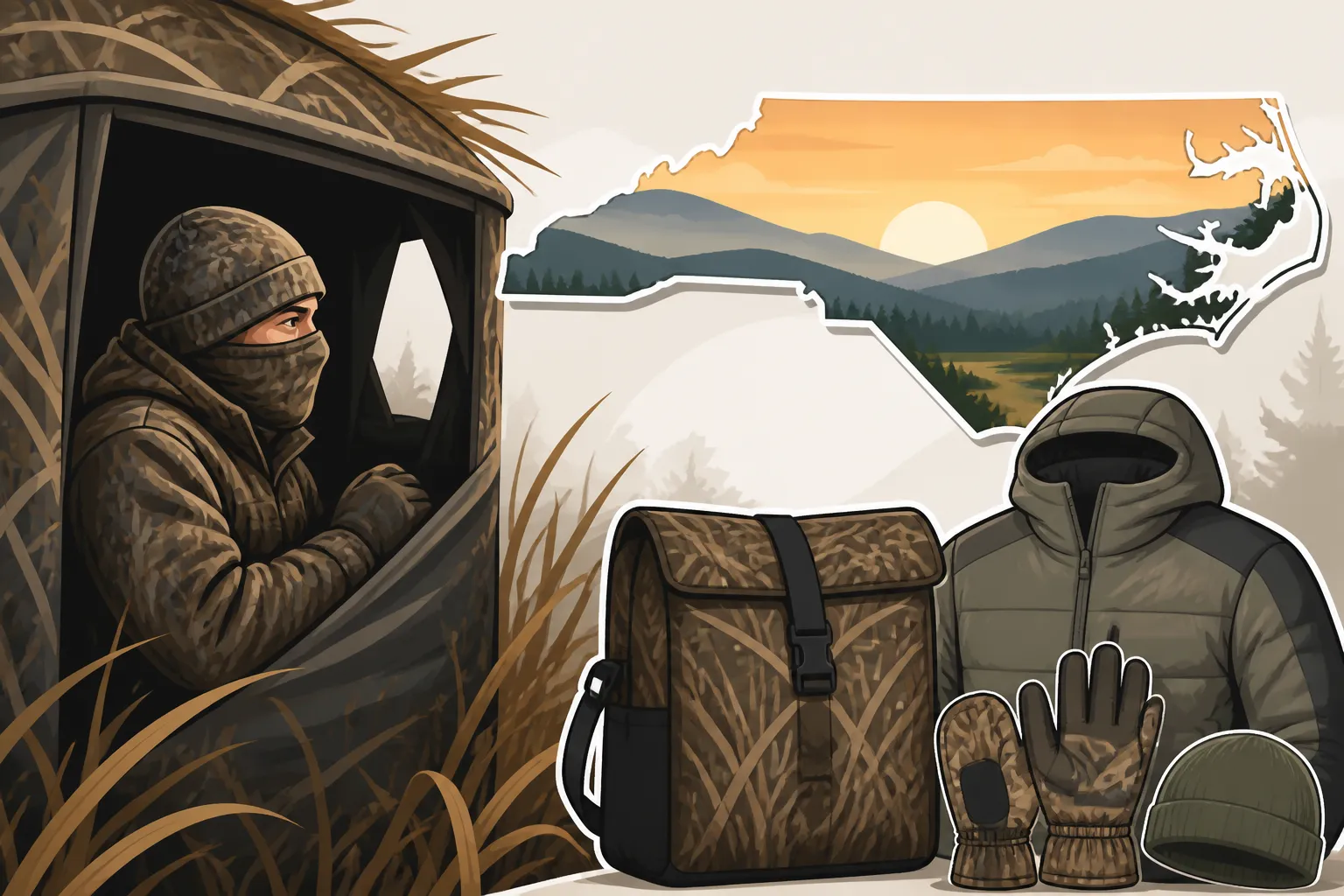
Think of your blind bag as your mobile command center, your personal survival kit, and your comfort station all rolled into one. It’s not just for waterfowl hunters; anyone spending extended time in a treestand, ground blind, or even still-hunting through diverse North Carolina terrain can benefit from a well-organized, protective bag. The varied conditions you encounter, from the dampness of a coastal pocosin to the chilly winds atop a mountain ridge, demand that your essential gear is protected and readily accessible.
What Goes Into a Well-Stocked Blind Bag?
A blind bag isn't just a place to toss your stuff; it's a strategically organized repository for everything you might need when you're away from the truck. First and foremost, you need to think about protection from the elements. North Carolina weather can shift dramatically, especially during late season hunts. A good blind bag will feature waterproof or highly water-resistant materials, often with sealed zippers or storm flaps, to keep moisture out. You might be slogging through mud on a public game land or hunkering down in a sudden downpour, and the last thing you want is a wet phone or damp snacks.
Inside, organization is key. Multiple compartments, internal pockets, and even clear zippered pouches help you separate items and find them quickly in the dark or when wearing gloves. I always recommend dedicating specific pockets for items like your hunting license and permits, car keys, and phone – things you absolutely cannot afford to lose or get wet. Other essentials often include a compact first-aid kit, a small flashlight or headlamp with extra batteries, a knife, a multi-tool, and emergency fire-starting materials. Don't forget snacks and a water bottle, especially if you're out for a long sit. For those using mapping applications, like the ones you might find on GoHunt, keeping your phone charged and protected is paramount, so a portable power bank is also a smart addition.
Choosing the Right Blind Bag for North Carolina Conditions
The "right" blind bag really depends on your primary hunting style and the typical conditions you face. Waterfowl hunters, for instance, often need larger, fully waterproof bags that can float if accidentally dropped into a marsh or pond. These bags often have specialized compartments for calls, shells, and even thermos flasks. They're built to withstand constant exposure to water, mud, and abrasive vegetation. If you're Hunting Flooded Timber for Wood Ducks, a truly submersible bag is a game-changer.
Deer hunters, whether in a treestand in the Piedmont or a ground blind in the mountains, might prioritize bags that are quieter, with soft exteriors that won't clank against metal stands or rustle loudly when you reach for something. They'll still need water resistance for those inevitable misty mornings or sudden showers, but perhaps not the same level of submersion protection. A good all-around hunting bag will often have a comfortable shoulder strap or backpack-style straps for carrying heavier loads, particularly if you're heading deep into public land like Pisgah National Forest Hunting. Consider how much gear you tend to carry, and match the bag's capacity accordingly. A smaller, more streamlined bag is perfect for quick morning hunts, while a larger one might be necessary for all-day endeavors or when you're packing extra layers.
Conquering the Cold: Layering for North Carolina's Winter Hunts
North Carolina's cold weather can be deceptive. It's rarely arctic, but the dampness, especially in the coastal regions, can make 40 degrees feel like 20. In the mountains, you'll experience true cold, often with snow and biting winds. The key to staying warm and comfortable in all these scenarios isn't one giant, heavy jacket, but rather a system of layers that can be adjusted as conditions change or as your activity level fluctuates. This strategic approach allows you to regulate your body temperature, preventing both overheating and chilling.
The Art of the Base Layer: Wicking Away Moisture
Your base layer is arguably the most important part of your cold-weather system, yet it's often overlooked. Its primary job isn't to make you warm, but to wick moisture – sweat – away from your skin. When sweat stays on your skin, it cools rapidly, drawing heat from your body and making you feel much colder, much faster. This is especially true during periods of exertion, like packing in your gear to a remote spot, followed by periods of inactivity, like sitting still in a blind.
Materials like merino wool and synthetic fabrics (polyester, polypropylene) excel at wicking. Merino wool has the added benefit of being naturally odor-resistant and still insulating even when damp, making it a fantastic choice for multi-day trips or situations where you might work up a sweat then cool down. Synthetics are often more affordable and dry incredibly fast, but can retain odor more easily. Avoid cotton as a base layer at all costs! Cotton absorbs moisture like a sponge and holds it against your skin, practically guaranteeing you'll get cold once you stop moving. Investing in quality base layers, both tops and bottoms, will make a significant difference in your overall comfort, whether you're deer hunting in the Piedmont or enduring a Cold-Weather Sitting Strategy in the Mountains.
Mid-Layers: Trapping That Precious Heat
Once your base layer is wicking away moisture, your mid-layers are responsible for trapping warm air and providing insulation. This is where you add the bulk of your warmth. Depending on the severity of the cold, you might use one or multiple mid-layers. Fleece is a popular and effective choice for mid-layers. It's lightweight, relatively inexpensive, and offers excellent warmth for its weight. Different weights of fleece (100-weight, 200-weight, 300-weight) allow you to customize your insulation.
Other excellent mid-layer options include down or synthetic insulated jackets and vests. Down offers superior warmth-to-weight ratio and compressibility, but it loses its insulating properties when wet. Synthetic insulations, while slightly bulkier, perform much better in damp conditions, which is a big plus for hunting in North Carolina's often humid environment. Wool Versus Synthetics in Mountain Cold is a constant debate among hunters, and for mid-layers, both have their merits. A good strategy is to have a versatile fleece jacket and a packable insulated vest or jacket that you can add or remove easily based on the temperature fluctuations throughout the day. Remember, the goal is to be able to add or shed layers to stay comfortable, not to be stuck in an all-or-nothing situation.
Outer Shells: Battling Wind, Rain, and Snow
Your outer shell is your primary defense against the elements. Its job is to protect your inner layers from wind, rain, and snow, preventing them from getting wet and losing their insulating capabilities. For North Carolina, where rain can be persistent and wind can cut right through you, a waterproof and windproof outer shell is crucial. Look for shells made with breathable waterproof membranes that allow sweat vapor to escape while keeping liquid water out.
Quality rain gear often features fully taped seams, waterproof zippers, and adjustable cuffs and hoods to create a complete barrier against moisture. When you're Hunting Deer After a Cold Front, the wind can be brutal, and a good windproof shell will be a game changer. The shell itself might not provide much warmth, but by blocking wind and moisture, it allows your base and mid-layers to do their job efficiently. Consider whether you need a shell designed for silent movement, especially for bowhunting, or if durability is your top priority for slogging through thick brush. Having a reliable set of Rain Gear for a North Carolina Downpour means you can stay out longer and more comfortably, regardless of what the skies decide to throw at you.
Here's a quick comparison of common layering materials:
| Layer Type | Material | Key Benefit | Downside | Best For |
|---|---|---|---|---|
| Base | Merino Wool | Excellent wicking, warm when damp, odor-resistant | More expensive, slower drying | Longer hunts, varied activity levels |
| Synthetic (Poly) | Fast wicking, quick-drying | Can retain odor | High-exertion, single-day hunts, budget-friendly | |
| Cotton | Avoid for hunting | Holds moisture, cools body | Casual wear only | |
| Mid | Fleece | Lightweight, warm, breathable | Less windproof | Moderate cold, active hunts |
| Down Insulation | Superior warmth-to-weight, compressible | Loses insulation when wet | Dry, very cold conditions | |
| Synthetic Insulation | Warm when wet, durable | Bulkier, heavier | Damp, cold conditions, general use | |
| Outer | Hard Shell (Waterproof/Breathable) | Complete protection from wind/rain | Can be noisy, less flexible | Extreme weather, wet environments |
| Soft Shell | Flexible, breathable, water-resistant | Not fully waterproof | Drier, milder windy conditions |
Essential Cold-Weather Accessories You Can't Forget
Even the best layering system can be undermined if you neglect the extremities. Your hands, feet, and head are crucial areas where significant heat loss can occur. These often-overlooked accessories can make the difference between a successful, comfortable hunt and an early exit from the woods. When you're planning your route with a tool like GoHunt, visualizing the terrain and potential exposure to wind or wet conditions can help you mentally prepare and pack the right accessories.
Hands and Feet: Your Most Vulnerable Extremities
Cold hands and feet are a hunter's worst nightmare, making it impossible to stay focused and often leading to an early retreat. For your hands, a layering approach works best here too. Start with a thin, wicking liner glove, which offers a small amount of warmth and allows you to perform delicate tasks (like checking your phone or tying a knot) without fully exposing your skin. Over these, you can add a warmer, insulated glove or a pair of mittens. Mittens are generally warmer than gloves because your fingers share body heat, but gloves offer better dexterity. Many hunters opt for a combination, perhaps insulated gloves for walking in and a pair of heavy mittens or a hand warmer muff for sitting still in the stand. Chemical Hand Warmers That Last a Full Sit are also invaluable, especially tucked into gloves or boots.
For your feet, the equation is simple: dry feet are warm feet. Good quality, moisture-wicking socks (again, merino wool or synthetics, never cotton!) are paramount. You might even layer a thin liner sock under a thicker insulated sock. Pair these with insulated, waterproof boots appropriate for the terrain. If you're Hunting Coastal Plain Pocosin Swamps, rubber boots are a must to keep your feet dry from standing water and muck. For mountain hunting, a sturdy, insulated, and waterproof hiking boot is more suitable. Ensure your boots fit well, with enough room for thicker socks without being too tight, as restricted circulation will make your feet colder. When considering Insulated Boots for All-Day Sits, think about the temperature rating and if they'll keep your feet comfortable during prolonged inactivity.
Head and Neck Protection: Sealing in the Warmth
A surprising amount of body heat can be lost through your head and neck. A warm hat is non-negotiable for cold weather. Options range from simple knit beanies to insulated, windproof caps with ear flaps. For truly bitter conditions, a balaclava or a neck gaiter provides additional protection, sealing off any gaps between your hat and collar. These items are small and lightweight, so there's no excuse not to have them stashed in your blind bag. They can be pulled up over your face during cold winds or pulled down when you're moving.
Emergency and Comfort Items for Extended Stays
Beyond the basics, a few extra items can significantly boost your comfort and safety during cold-weather hunts, especially if you plan on being out for a long day or find yourself further afield than anticipated. A small, lightweight backpacking stove and a freeze-dried meal or instant coffee can provide a huge morale boost on a cold, dreary day. A thermos of hot coffee, tea, or soup is also a fantastic way to warm up from the inside out. Don't forget a basic emergency blanket or bivvy sack; these are incredibly compact but can be life-saving if you get stuck out longer than planned or need to shelter from an unexpected storm. These are the kinds of items that, while you hope to never need them, you'll be eternally grateful to have if the unforeseen happens. Packing a sufficient Packs for a Day on Public Land means considering all these contingencies.
Staying warm and dry is not just about comfort; it's about safety and ultimately, about extending your time in the field. When you're well-prepared, the challenging conditions of a North Carolina winter hunt transform from an obstacle into a memorable part of the experience.
Disclaimer
This article is for general informational purposes only and does not constitute professional advice. Laws, prices and regulations vary by location and change over time. Consult a qualified professional for guidance on your specific situation.