North Carolina Fawn Survival Rates
It's a question every deer hunter in North Carolina asks themselves, especially when scouting the woods or sitting in a stand: "Where are all the fawns?" You spend hours seeing mature does, maybe a few younger bucks, but sometimes the little ones seem absent. This often leads to worries about the future of the deer herd and what it means for hunting opportunities down the line. Understanding North Carolina's fawn survival rates is key to comprehending the health and trajectory of our whitetail population, revealing the complex dance between predators, habitat, weather, and management efforts. This guide will delve into what impacts these vulnerable young deer and what it means for hunters across our diverse state.
The Critical Role of Fawn Survival in North Carolina's Deer Herd
Fawn survival might not be the most talked-about topic around the deer camp fire, but it's arguably one of the most vital components determining the overall health and future numbers of our state's white-tailed deer. Think of it as the foundation of the population pyramid. If that base is weak, the whole structure suffers down the road. Every single deer you see, from the youngest button buck to the oldest matriarch doe, started as a fawn, and their ability to make it through their first few months of life is paramount.
When we talk about fawn survival rates, we're essentially looking at the percentage of fawns born each spring that manage to survive until their first birthday. A strong survival rate means a robust recruitment of new deer into the population, ensuring there are enough animals to replace those lost to hunting, natural causes, or other factors. Conversely, low survival rates can lead to declining deer numbers over time, even if the adult population appears stable for a season or two. This is why wildlife biologists pay such close attention to these figures; they’re a direct indicator of reproductive success and future hunting potential.
Why Fawn Numbers Matter to Hunters
For hunters, understanding fawn survival goes beyond just biological curiosity; it directly impacts the quality of your hunting season. Imagine a few years of consistently low fawn survival. What you'd start to see on the landscape is a noticeable drop in deer sightings, particularly younger animals. The age structure of the herd would shift, with fewer one- and two-year-old deer entering the population. This could mean fewer opportunities, smaller harvests, and even a reduced chance of encountering that mature buck you’ve been chasing, as the overall deer density declines.
Moreover, good fawn recruitment helps maintain a healthy buck-to-doe ratio. If fawn survival is poor, especially if it disproportionately affects male fawns (though that's less common), it can throw off this delicate balance, potentially impacting rut activity and breeding success in subsequent years. A resilient deer population, bolstered by strong fawn survival, also has a better chance of weathering other challenges, like disease outbreaks or particularly harsh winters. It builds a buffer against future stressors, ensuring that North Carolina remains a fantastic place to hunt deer for generations to come.
The Long-Term Impact on Deer Management
The data on fawn survival isn't just a snapshot; it's a critical piece of the puzzle for wildlife agencies like the NC Wildlife Resources Commission when they make management decisions. If biologists observe a trend of declining fawn survival, it signals a need to investigate the underlying causes. Is it increased predation pressure? A decline in critical fawning habitat? The spread of a localized disease? The answers to these questions can lead to adjustments in season lengths, bag limits, or even habitat improvement initiatives to support the deer herd.
For instance, if predation is identified as a primary driver of low fawn survival in a particular region, management strategies might focus on predator control efforts or enhancing habitat to provide more secure fawning cover. Conversely, if fawn survival is consistently high and the population is booming, it might indicate that the herd can sustain higher harvest rates. Hunters often feel the direct impact of these decisions, so appreciating the science behind them, especially the role of fawn survival, helps us all be better stewards of the resource. It’s all part of the intricate system discussed in North Carolina Deer Population Estimate.
Major Threats to Fawn Survival in the Tar Heel State
Fawns are born incredibly vulnerable, and their first few months are a gauntlet of challenges. From the moment they hit the ground, they're navigating a world full of threats, both natural and man-made. Understanding these dangers helps us appreciate just how resilient deer truly are and sheds light on why survival rates can fluctuate so much from year to year and region to region across North Carolina.
Predation Pressure
One of the most significant and often discussed threats to fawn survival is predation. North Carolina is home to several effective predators, and young deer are a prime target for many of them. The most prominent players in this arena are coyotes. These opportunistic hunters have expanded their range across the entire state and are incredibly efficient at finding and dispatching fawns, especially in the first few weeks of life when fawns are still small and relatively immobile. You might be out Coyote Calling in North Carolina Farm Country and not even realize the impact these animals have on the deer you pursue.
Beyond coyotes, black bears also account for a notable number of fawn mortalities, particularly in areas where bear populations are dense, such as the mountainous western regions and the extensive coastal pocosins. A sow bear emerging from her den with hungry cubs is certainly on the lookout for an easy meal, and a newborn fawn fits the bill. Even bobcats, though generally smaller, are adept hunters and will take fawns if the opportunity arises. It's a harsh reality of the wild, but it's a natural process that shapes the deer herd. Learning more about this interaction can be found in North Carolina Predator Impact on Fawn Recruitment.
Habitat Quality and Cover
The quality of fawning habitat plays a crucial, though often underestimated, role in a fawn's chances of survival. Does instinctively seek out dense cover to give birth and hide their fawns during their most vulnerable days. This could be thick briar patches, regenerating clear-cuts, dense pine plantations, or even tall stands of switchgrass. When this crucial fawning cover is scarce, fawns become more exposed to predators and adverse weather, significantly reducing their survival odds. Imagine a doe in a fragmented suburban woodlot versus one in a sprawling Game Land with diverse vegetation – the latter offers far more options for concealment.
As land use changes across North Carolina, whether through development, intensive agriculture, or certain forestry practices, the availability of prime fawning cover can diminish. A landscape dominated by mature, open timber or vast, cleanly managed fields offers little refuge for a hidden fawn. Hunters often use tools like GoHunt to analyze aerial photos, and this kind of mapping can help identify those crucial pockets of thick cover that might serve as natural nurseries for the deer herd. These areas are not just good for hunting; they're essential for the fawn crop.
Disease and Environmental Factors
While predation and habitat are often at the forefront of discussions, disease and environmental factors can also deal a significant blow to fawn survival. Hemorrhagic Disease (HD), often referred to as EHD or Bluetongue, is a prime example. While it primarily impacts adult deer, particularly bucks, severe outbreaks can also affect fawns, weakening them and making them more susceptible to other threats or causing direct mortality. Knowing about EHD Die-Offs in North Carolina Deer helps understand these risks.
Weather is another unpredictable variable. Prolonged periods of cold, wet weather shortly after fawning season can be devastating, as young fawns are not yet adept at regulating their body temperature. Similarly, extreme droughts can reduce the quality and availability of forage for nursing does, potentially impacting the health and milk production that fawns rely on. Conversely, mild winters and optimal spring conditions can lead to higher fawn survival, as fawns are born into a more forgiving environment. These environmental fluctuations mean that fawn survival isn't a static number but can vary considerably from year to year.
Regional Differences in Fawn Survival: Mountains to Coast
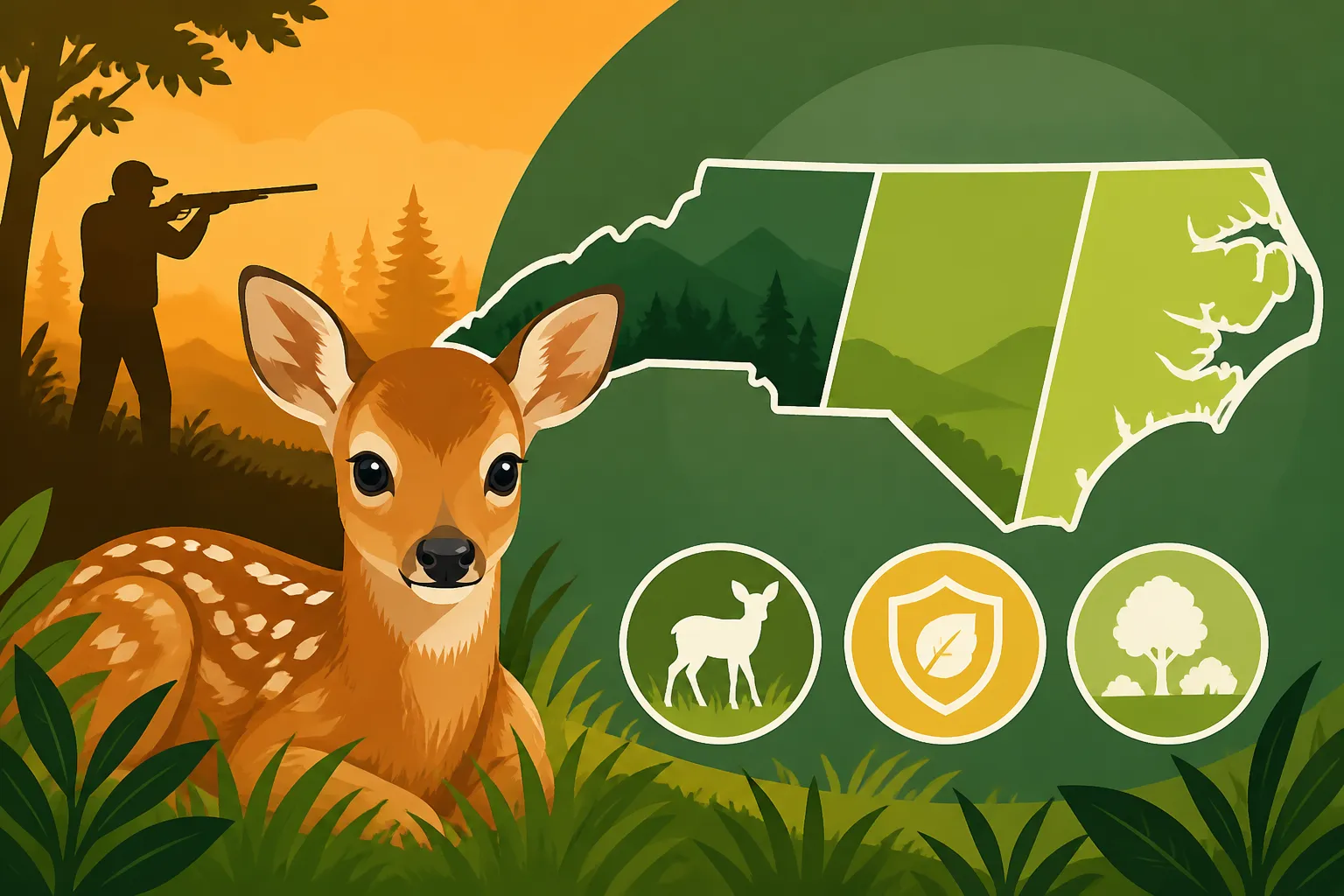
North Carolina is an incredibly diverse state, stretching from the highest peaks of the Appalachians to the sandy barrier islands of the Atlantic. This vast range of ecosystems means that the factors influencing fawn survival can look very different depending on whether you're hunting in the rugged western mountains, the rolling Piedmont, or the expansive coastal plain. What keeps a fawn alive in Pisgah National Forest might not be the same as what challenges one in Holly Shelter Game Land.
Mountain Zone Fawn Challenges
In North Carolina's Mountain Zone, fawns face a unique set of challenges. The terrain itself can be a factor – steep slopes and dense undergrowth in areas like the Nantahala National Forest offer plenty of hiding spots, but also make travel more strenuous for young fawns. Predation pressure from black bears can be particularly acute in these areas where bear populations are robust. A doe might hide her fawn effectively, but a bear's keen sense of smell can often uncover the hidden youngster.
The overall deer density in many mountain areas can also be lower than in other parts of the state. This means that each fawn recruited into the population carries more weight for the local herd's health. Weather also plays a more dramatic role here, with longer, colder winters and potentially late spring cold snaps that can stress newborns. Hunters in these regions often focus on Reading a Ridge for Mountain Zone Deer, and understanding where does choose to fawn can inform those tactics, often in thickets along benches or in remote rhododendron patches.
Piedmont's Mixed Bag for Fawns
The Piedmont region presents a more mixed landscape for fawn survival. This area is a patchwork of agriculture, expanding suburbs, and remnant timber stands. Here, fawns might find excellent cover in regenerating timber cuts or thick fencerows bordering fields. However, they also face significant human disturbance from development and roadways. Vehicle collisions are a constant threat to all deer, including fawns, as they navigate increasingly fragmented habitats.
Predation by coyotes is a consistent pressure across the entire Piedmont, thriving in the mosaic landscape. However, the abundance of agricultural food sources can sometimes lead to healthier does that are better able to support their fawns, potentially offsetting some of these other pressures. Hunters seeking Hunting Piedmont Farmland Deer often observe does with fawns in the edges of those fields, a testament to the food and cover provided by agricultural practices, even with the inherent risks. Using a mapping app like GoHunt to identify specific fawning habitat can be a valuable tool for understanding local fawn populations.
Coastal Plain's Unique Obstacles
Down on North Carolina's Coastal Plain, fawns contend with an entirely different environment. The vast pocosins, cypress swamps, and dense pine plantations offer incredible hiding cover. A doe can tuck her fawn into a thick bay thicket or a dense stand of pines, making it incredibly difficult for predators or humans to find. This abundant cover can be a significant boost to fawn survival rates. However, this region also supports some of the highest black bear densities in the state, particularly in areas like the Alligator River National Wildlife Refuge, so bear predation remains a concern.
Water is also a factor. While providing cover, low-lying areas are prone to flooding, which can displace fawns or make them vulnerable. Insects, like mosquitoes and ticks, are also more prevalent and can transmit diseases or cause stress. The long growing season here often means does are in excellent condition, but the sheer density of predators in some areas, especially coyotes and bears, can still take a toll. Tracking deer movement in these areas, perhaps with a tool like GoHunt, can help identify preferred fawning areas, often found in the densest, most inaccessible parts of the swamp or pine thicket, similar to how hunters approach Hunting Coastal Plain Pocosin Swamps.
Here's a look at how different factors influence fawn survival across regions:
| Factor | Mountain Zone | Piedmont Zone | Coastal Plain Zone |
|---|---|---|---|
| Primary Predators | Black Bears, Coyotes | Coyotes, Bobcat | Coyotes, Black Bears |
| Habitat Type | Steep slopes, dense forest, rhododendron thickets | Mixed agriculture, suburban fringes, fragmented woodlots | Pocosins, cypress swamps, pine plantations, dense brush |
| Weather Impact | Cold, wet springs; harsh winters | Moderate, but can have heat stress or localized floods | High humidity, potential flooding, mild winters |
| Human Impact | Less direct human disturbance in remote areas | High fragmentation, vehicle collisions, development | Less direct disturbance in vast wildlands, some agriculture |
| Disease Risk | EHD possible, generally lower densities | EHD more common due to higher densities | EHD outbreaks occur, dense populations can spread faster |
| Forage Quality | Variable, mast-dependent | Generally good, agricultural crops, diverse browse | High, dense vegetation year-round, agriculture |
What Hunters Can Observe and What Biologists Track
For many of us who spend time in the woods, our observations on fawn survival are anecdotal. We count the number of fawns we see with does, notice if there seem to be fewer young deer than usual, or perhaps spot an orphaned fawn. While these individual observations are important for our own understanding and enjoyment, wildlife biologists rely on more systematic and scientific methods to track fawn survival rates across the state.
How Biologists Study Fawn Survival
Wildlife biologists use a variety of sophisticated techniques to get accurate data on fawn survival. One common method involves capturing pregnant does, often in late winter, and fitting them with vaginal implant transmitters (VITs). These devices are expelled during fawning, sending a signal to biologists, who can then quickly locate the newborn fawn. Once found, the fawns are typically weighed, measured, and fitted with tiny radio collars. These collars allow biologists to track the fawn's movements and, crucially, to determine if and when it dies, and often what caused its demise.
This intensive monitoring provides valuable insights into the specific causes of mortality (e.g., predation by North Carolina Coyote Range and Density, disease, abandonment, accident) and helps identify critical time periods when fawns are most vulnerable. By collaring a sufficient number of fawns across different study sites and over multiple years, biologists can generate statistically sound estimates of fawn survival rates, which are then used to inform management decisions and population models. This research helps paint a clearer picture of the health of White-Tailed Deer Across North Carolina.
What Hunters Can Observe in the Field
While you're not out there collaring fawns, your observations in the field are still incredibly valuable, even if they're more qualitative. Pay attention to the doe groups you see. Do most does have one, two, or even three fawns following them? Are the fawns healthy and active, or do they appear stunted or weak? Note the timing of when you first start seeing fawns – a late fawning season could mean fawns face more challenges entering winter. When you’re Scouting North Carolina Public Land Before Season, look for areas with dense fawning cover where a doe might choose to hide her young.
Keep a mental tally (or even a physical log) of the number of fawns you observe relative to the number of adult does. A good rule of thumb is that if you're consistently seeing one or more fawns per adult doe, that's generally a healthy sign of good recruitment. If you're seeing adult does year after year with no fawns, or very few, it might indicate a localized problem with fawn survival. While these observations won't give you exact percentages, they offer a ground-level understanding that complements the broader scientific data. Such field notes can provide interesting insights when you're considering North Carolina Buck-to-Doe Ratio by Region.
Contributing to the Bigger Picture
Believe it or not, hunters can indirectly contribute to our understanding of fawn survival. By participating in harvest surveys, reporting your deer, and even engaging with wildlife agencies, you're helping provide the data points that allow biologists to track deer populations more accurately. High harvest numbers for antlerless deer, for example, can indicate a robust population that can sustain that pressure, often built on strong fawn survival. Conversely, a decline in antlerless harvest might prompt questions about recruitment.
Furthermore, being mindful of ethical hunting practices and respecting the land contributes to a healthy environment where fawns can thrive. Supporting habitat conservation efforts, whether through purchasing hunting licenses (which fund wildlife agencies) or engaging in local conservation groups, directly benefits fawns by preserving and improving their critical habitat. Every time you're out hunting, scouting, or even just using a mapping tool like GoHunt to analyze game movement, you're interacting with a system where fawn survival is fundamental to its continued success.
Disclaimer
This article is for general informational purposes only and does not constitute professional advice. Laws, prices and regulations vary by location and change over time. Consult a qualified professional for guidance on your specific situation.