Gray Versus Fox Squirrels in North Carolina
There’s nothing quite like a crisp North Carolina morning, the sun just peeking over the ridge, and the rustle of leaves betraying movement in the treetops. But then you spot it – a flash of bushy tail, a quick scramble up a trunk – and you find yourself asking, "Is that a gray squirrel or a fox squirrel?" It's a common dilemma, and knowing the subtle (and sometimes not-so-subtle) differences can totally change your hunting strategy, not to mention deepen your appreciation for these fantastic small game animals. This guide is here to help you confidently identify whether you've got a nimble gray or a robust fox squirrel in your sights.
The Basics: What Makes a Gray Squirrel a Gray?
When most folks think "squirrel" in North Carolina, they're picturing the eastern gray squirrel (Sciurus carolinensis). These are the bustling, chattering, high-energy critters you see in your backyard, in city parks, and deep in the hardwoods of our national forests. They are incredibly adaptable and represent the vast majority of our squirrel population.
Size and Build: The Nimble Acrobats
Gray squirrels are built for speed and agility in the canopy. They’re smaller and more streamlined than their fox squirrel cousins, typically weighing in around a pound to a pound and a half. Their bodies are lithe, designed for quick bursts, daring leaps between branches, and rapid descents down tree trunks. Their tails are long and exceptionally bushy, often held arched over their backs, providing balance and serving as a vital communication tool. Think of them as the gymnasts of the forest – constantly in motion, rarely sitting still for long. When you’re hunting them, you’ll notice their almost frantic energy, a constant flurry of activity as they forage and play. This nimbleness is part of what makes Squirrel Hunting North Carolina Bottomland Hardwoods such an engaging experience, as they dart through the dense canopy.
Coloration and Markings: Subtle Shades
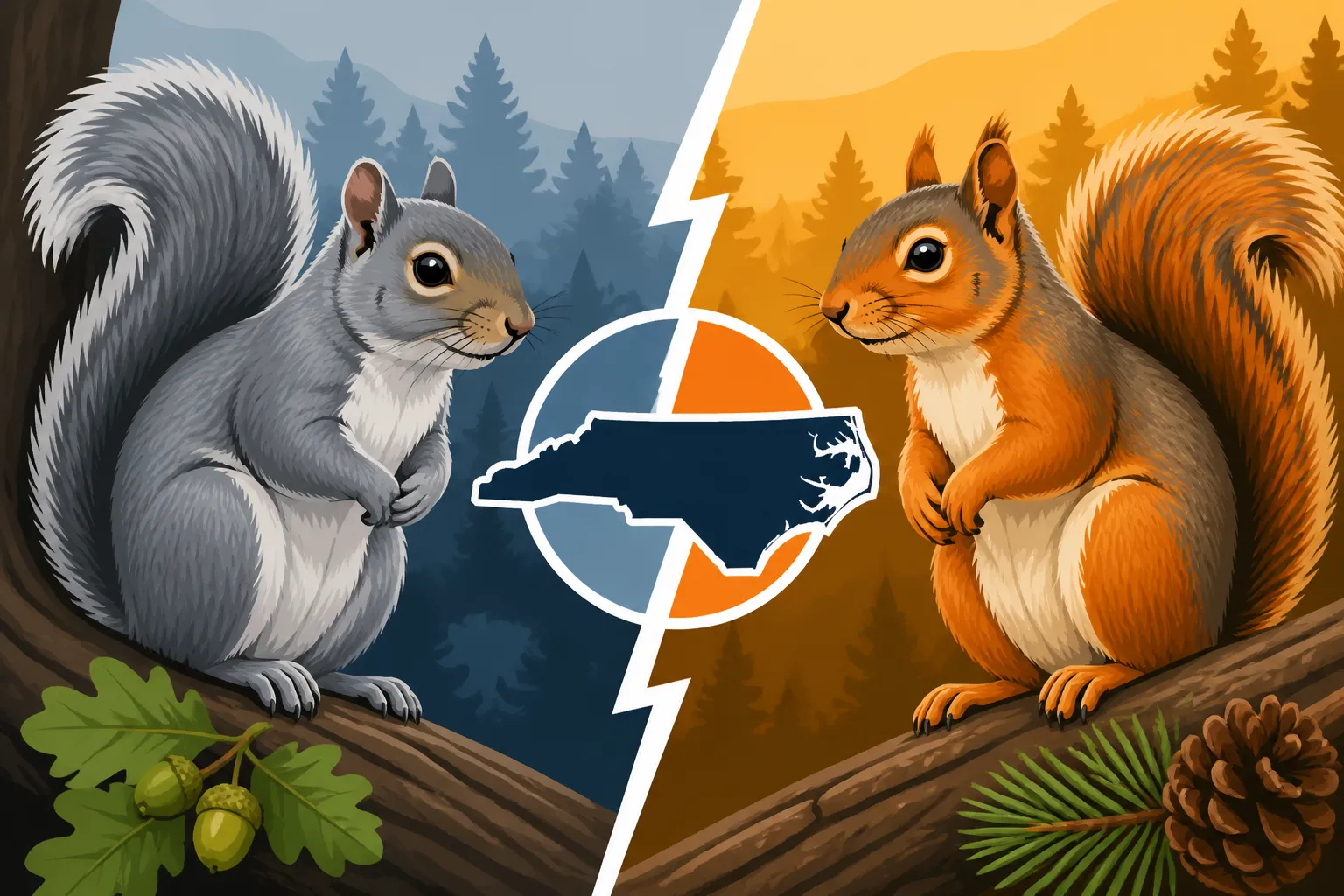
As their name suggests, gray squirrels are predominantly gray, often with a brownish-reddish wash down their backs, especially noticeable in their fur in certain lights or times of the year. Their undersides are usually a crisp white or light gray. They have relatively small ears, often with a hint of white tufting in the winter, and their eyes are large and dark. While there can be slight variations in color intensity, from a darker slate gray to a lighter, almost silver hue, the overall impression is one of uniformity. You won't typically see dramatic patches of color or stark contrasts on a gray squirrel. Their overall camouflage helps them blend seamlessly into the bark of our native oaks and hickories, making them surprisingly difficult to spot until they move.
Habitat Preferences: The Forest Generalist
Gray squirrels are, by and large, creatures of the dense, mature hardwood forests. They thrive where there's an abundance of nut-producing trees like oaks, hickories, and beeches. These trees not only provide their primary food source but also the intricate canopy structure and tree cavities essential for their homes and nests. You'll find them scattered across almost every county in North Carolina where suitable timber exists, from the deep woods of the Pisgah National Forest to the scattered woodlots in the Piedmont. They're generalists when it comes to forest types, as long as there are plenty of mast trees. They're also quite comfortable living close to human habitation, often becoming bold residents of suburban neighborhoods and city parks, taking advantage of bird feeders and gardens.
Behavior on the Ground and in Trees
Gray squirrels spend a significant amount of their time in the trees, where they feel safest and find most of their food. They're incredible climbers, using their sharp claws and strong hind legs to scale trunks at astonishing speeds. When startled, their first instinct is often to bolt straight up the nearest tree. They're also adept at navigating the forest floor, where they bury and retrieve nuts, but they tend to remain within easy dashing distance of a tree. Their activity levels are highest in the early morning and late afternoon, coinciding with prime hunting times. They're social creatures, and you'll often see several gray squirrels interacting in the same area. This communal activity can be a boon for hunters, as spotting one often means others are nearby.
Understanding the North Carolina Fox Squirrel
The fox squirrel (Sciurus niger) is a completely different beast. While sharing the "squirrel" moniker, they are distinct in appearance, behavior, and habitat preferences, making them a unique target for hunters in certain parts of our state. Many hunters who encounter them for the first time are surprised by their size and coloration.
Size and Build: The Chunky Cousin
Fox squirrels are substantially larger than gray squirrels, earning them the nickname "cat squirrels" in some regions due to their size. They can weigh anywhere from 2 to 3 pounds, sometimes even more, making them almost twice the size of a typical gray squirrel. They have a more robust, chunky build, with a broader head and a thicker body. Their tails are long and bushy, but often appear a bit flatter or less "fluffy" than a gray's, though still serving the same purpose for balance and communication. When you see a fox squirrel, its sheer mass is often the first thing that strikes you, conveying a sense of deliberation rather than frantic energy. This larger size also means more meat for the table, a bonus for the small game hunter.
Coloration and Markings: A Spectrum of Surprises
This is where fox squirrels really stand out. Unlike the relatively uniform gray, fox squirrels in North Carolina exhibit an incredible variety of color patterns, making identification both exciting and sometimes challenging. While they often have a rusty or reddish-brown hue, particularly on their undersides and flanks, they can also range from grizzled gray to black, often with distinct black masks and white patches on their nose, ears, and paws.
These variations are often regional. In the Sandhills and Coastal Plain, you might encounter fox squirrels with classic rusty undersides and a mix of black, gray, and white on their backs, often with a striking white nose and ear patches. In other areas, you might find individuals with more dominant black fur. This diverse palette makes every fox squirrel sighting a unique visual experience. When you're glassing a potential area, using good optics can help discern these unique markings from a distance, perhaps even with a quality piece of gear you located via a platform like GoHunt.
Habitat Preferences: Pine Savannas and Open Woods
Fox squirrels are habitat specialists, preferring open pine forests, especially mature longleaf pine savannas, pine-oak woodlands, and forest edges adjacent to agricultural fields. They thrive where the understory is relatively open, allowing them to see potential predators and move freely on the ground. You'll rarely find fox squirrels in the dense, closed-canopy hardwood forests favored by gray squirrels. Instead, look for them in areas with a mix of pines and scattered oaks, common in the Sandhills and parts of the Coastal Plain. These habitats provide both the pine seeds and the acorns they depend on. Understanding these specific habitat needs is key to successful Squirrel Hunting a North Carolina Oak Ridge or open pine stand where fox squirrels might be present.
Behavior: More Ground-Dwelling and Deliberate
Compared to gray squirrels, fox squirrels spend a much greater proportion of their time on the ground. They're often seen foraging among pine needles and underbrush, or crossing open areas between scattered trees. Their movements tend to be slower and more deliberate, less frantic than a gray squirrel's. When startled, they might dash for a tree, but they're just as likely to freeze in place, relying on their camouflage, or to simply walk away at a slower pace. They are generally less arboreal and less acrobatic than grays. This ground-dwelling tendency means that still-hunting or spot-and-stalk tactics can be more effective for fox squirrels, as opposed to simply waiting under a busy oak tree. They're also less social than gray squirrels, often seen singly or in pairs rather than larger groups.
Why Knowing the Difference Matters for North Carolina Hunters
Beyond just curiosity, distinguishing between gray and fox squirrels has practical implications for hunters in North Carolina, affecting everything from your hunting plan to what you bring home for dinner.
Legality and Bag Limits
Currently, North Carolina's regulations treat gray and fox squirrels the same regarding season dates and bag limits. However, regulations can change, and knowing which species you're pursuing is always good practice. The North Carolina Wildlife Resources Commission (NCWRC) often monitors species populations individually. For instance, the specific rules for North Carolina Squirrel and Rabbit Season Rules cover both species under the same umbrella right now. While there isn't a differential bag limit today, it’s crucial to understand what you’re harvesting and stay updated on the latest rules. Always check the current regulations before heading afield, because a seasoned hunter knows that wildlife management decisions can shift to protect or encourage specific populations.
Hunting Tactics: Adjusting Your Approach
Knowing which squirrel you're targeting significantly impacts your hunting strategy.
- For Gray Squirrels: Since they're highly arboreal and often found in dense hardwoods, tactics that involve sitting quietly and waiting near mast-producing trees, or slowly still-hunting through thick timber, tend to be most effective. Their quick, erratic movements often require fast reflexes for a shot. Barking calls or squirrel calls can be very effective in bringing curious gray squirrels into view. For areas like Hunting a Funnel Between Two Pocosins with mixed hardwoods, gray squirrels will be the primary target.
- For Fox Squirrels: Their preference for more open pine or mixed-pine-oak habitats and their more ground-oriented behavior means you might employ different tactics. Spot-and-stalk can be particularly effective in open pine woods where you can see farther. Patience is key, as they move more slowly and deliberately. You might spend more time glassing open areas or walking slowly through the understory. A good mapping app, such as a subscription to GoHunt, can be invaluable here to identify the specific habitat types, like longleaf pine stands, that fox squirrels prefer, helping you narrow down your hunting grounds before you even step foot in the woods.
Culinary Differences and Preparation
While both species are delicious table fare, some hunters report subtle differences in their meat. Fox squirrels, being larger, naturally yield more meat per animal, which can be a real boon if you're looking to fill the freezer. Some say fox squirrel meat is slightly darker and perhaps a bit richer in flavor, while gray squirrel meat is lighter and milder. These differences can sometimes be attributed to diet (pine seeds vs. various nuts) and activity levels. Regardless, both are excellent when properly prepared, whether it's stewed, fried, or used in a hearty pot pie. The process of Butchering a Deer at Camp might be different in scale, but the care in processing small game is just as important for a delicious meal.
Where to Find Each Species in North Carolina
North Carolina's diverse ecosystems create distinct territories for both gray and fox squirrels, though there are certainly overlap zones. Understanding these geographical preferences is your first step in finding success.
Gray Squirrel Hotspots
You can find gray squirrels almost everywhere in North Carolina, given their adaptability, but they particularly thrive in areas rich in mature hardwood forests.
- Mountain Regions: The vast expanses of Pisgah and Nantahala National Forests are prime gray squirrel territory. Here, the dense oak and hickory stands on the slopes and in the valley bottoms provide abundant food and cover. If you're planning a trip for Squirrel and Small Game Hunting in North Carolina in the mountains, you'll be hard-pressed not to find grays.
- Piedmont: This region, with its mix of urban encroachment and still-significant hardwood timber, is teeming with gray squirrels. River bottoms, mature woodlots, and even urban parks can hold strong populations. Look for areas with a healthy mast crop from oaks and hickories.
- Coastal Plain: While the Coastal Plain is known for its pines, mature hardwood bottomlands along rivers and swamps, like those found in the Croatan National Forest, offer excellent gray squirrel hunting opportunities.
When you're scouting, especially on public lands like the Uwharrie National Forest, pay close attention to the dominant tree species. A heavy concentration of oak, hickory, and beech trees usually points to a healthy gray squirrel population. Using a robust mapping tool, such as those available through GoHunt, can help you identify these specific timber types and plan your approach, maximizing your chances for success on Reading Cuttings Under an Oak or a beech stand.
Fox Squirrel Strongholds
Fox squirrels are much more specific in their habitat requirements, meaning you'll need to focus your efforts on particular regions and forest types to find them.
- Sandhills Region: This is arguably the premier fox squirrel country in North Carolina. The Sandhills are characterized by extensive longleaf pine forests with an open, park-like understory. Areas like the Sandhills Game Land are well-known for their fox squirrel populations.
- Coastal Plain (Specific Areas): Pockets of the Coastal Plain that feature open pine woodlands, especially those that have undergone prescribed burns to maintain an open understory, can also hold good numbers of fox squirrels. Look for a mix of pines and scattered hardwoods, often bordering agricultural fields.
- Piedmont (Sparse): While less common, fox squirrels can occasionally be found in the Piedmont, particularly in areas with more open, mature pine stands or along the edges of farmlands where scattered oaks and pines create suitable habitat. These populations tend to be more isolated.
Identifying these specific habitats is crucial. Look for areas with larger, more mature pines, where the ground cover isn't too dense. Fire-managed forests, which create that open savanna feel, are often ideal. Checking the North Carolina Small Game Season Rules for your specific area will confirm if fox squirrels are prevalent.
Overlap Zones and Hybrid Habitats
It's not always a clear-cut case of one species or the other. You will find areas in North Carolina where both gray and fox squirrels coexist. These "hybrid" habitats often occur where different forest types merge, such as where a hardwood bottomland transitions into an upland pine ridge, or where a mature mixed pine-oak forest provides suitable conditions for both.
In these overlap zones, you might encounter both species during the same hunt. This offers a unique opportunity to observe their distinct behaviors side-by-side. For example, while Hunting a Clear-Cut Regrowth Edge, you might find grays working the older timber nearby and fox squirrels foraging closer to the more open, recovering ground. It reinforces the importance of knowing your target and adapting your tactics on the fly. These mixed areas can be excellent for a diverse small game bag, but they also require careful observation to make positive identification before taking a shot. Paying attention to details such as tree species distribution on your Scouting North Carolina Public Land Before Season trips can really help you pinpoint these transition areas.
| Feature | Eastern Gray Squirrel (Sciurus carolinensis) | Fox Squirrel (Sciurus niger) |
|---|---|---|
| Size | Smaller (1-1.5 lbs) | Larger (2-3 lbs), robust, "cat squirrel" size |
| Build | Lithe, agile, built for canopy | Chunky, deliberate, more ground-oriented |
| Coloration | Mostly gray, reddish wash on back, white belly | Variable: rusty, reddish-brown, grizzled, or black. Often with white nose/ears/paws |
| Tail | Very bushy, often held arched over back | Long, bushy, sometimes flatter, less "fluffy" |
| Habitat | Dense, mature hardwood forests (oaks, hickories) | Open pine forests, longleaf savannas, pine-oak, forest edges |
| Behavior | Highly arboreal, fast, erratic, social, chatter | More ground-dwelling, slower, deliberate, less social |
| Movement | Quick bursts, daring leaps, rapid climbing | Slower, relies on camouflage or walking away |
| Found In NC | Widespread across all regions with hardwoods | Primarily Sandhills, parts of Coastal Plain, sparse Piedmont |
Disclaimer
This article is for general informational purposes only and does not constitute professional advice. Laws, prices and regulations vary by location and change over time. Consult a qualified professional for guidance on your specific situation.