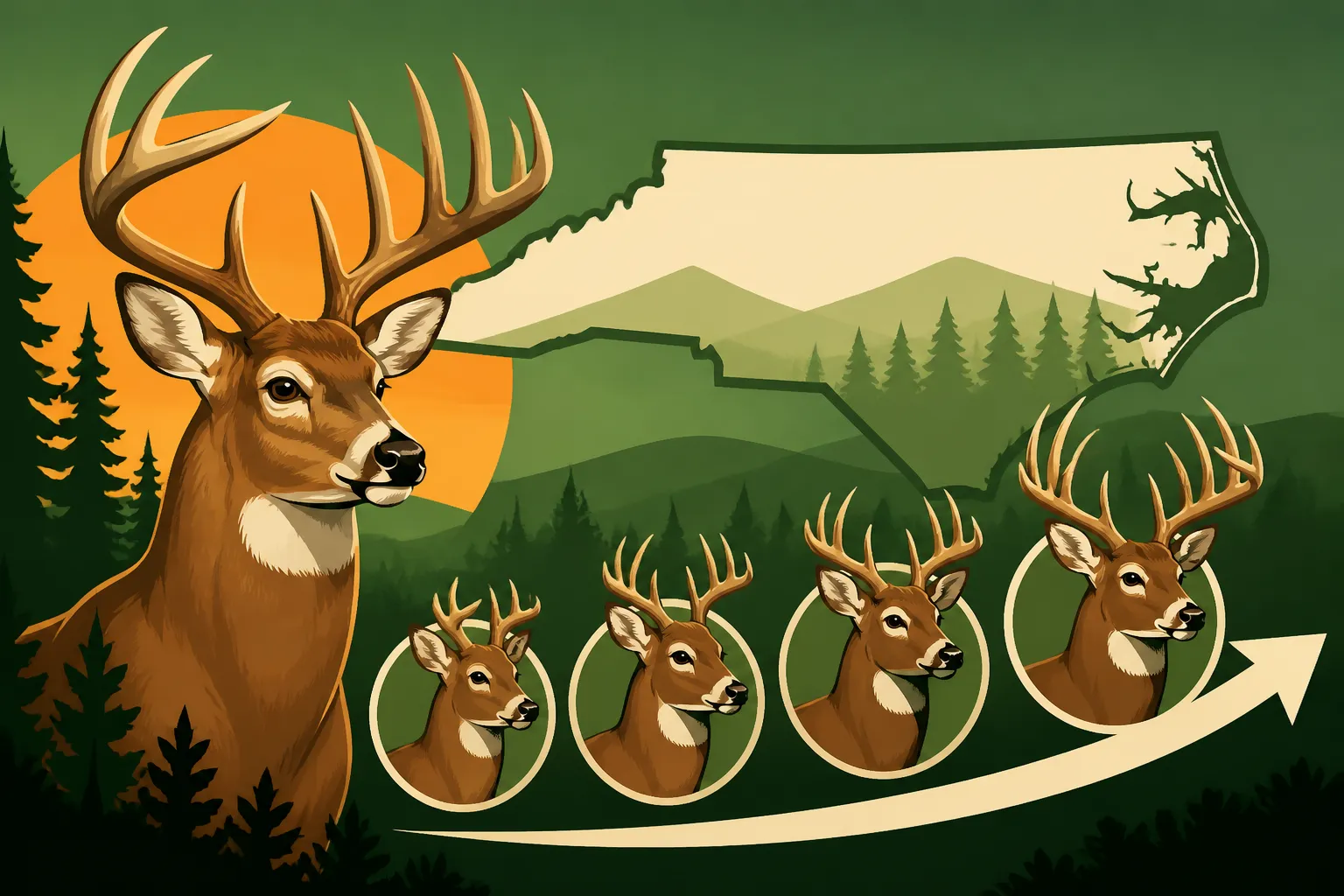
North Carolina Buck Age Structure
It's easy to get caught up in the excitement of a new deer season, scanning field edges and dense timber for any sign of movement. But have you ever paused to consider the bigger picture of the deer you're seeing – specifically, the age distribution of North Carolina's bucks? Understanding the North Carolina buck age structure isn't just for biologists; it's a critical piece of information that can profoundly influence your hunting strategies, expectations, and overall success. This guide will break down what buck age structure truly means for our state's whitetails, why it should matter to every hunter, and how different regions of North Carolina present unique challenges and opportunities based on the age of the bucks roaming their woods.
What We Mean by "North Carolina Buck Age Structure"
When we talk about "buck age structure," we're not just discussing how old one particular deer is. Instead, we're looking at the distribution of age classes within the entire male deer population across a specific area – be it a county, a region, or even statewide. Think of it like a demographic profile for the antlered deer. It tells us what percentage of the bucks are yearlings (1.5 years old), what percentage are 2.5 years old, 3.5 years old, and so on, up to the older, more mature animals.
The Foundation of a Healthy Herd
A truly healthy deer herd isn't just about sheer numbers; it's about balance. A robust buck age structure is one where there's a good representation of bucks in multiple age classes, not just an overwhelming majority of young, immature deer. Imagine a pyramid: you want a wide base of younger deer, but also significant tiers for middle-aged and even older bucks. This kind of structure ensures genetic diversity, promotes healthy competition during the rut, and provides hunters with a wider range of opportunities. If you're consistently seeing only young bucks, it can be a sign of high hunting pressure or other factors that prevent bucks from reaching maturity.
Consider a property where almost every buck harvested is a yearling. While it might be exciting to fill the freezer, it indicates that few bucks are surviving long enough to express their full potential, both in terms of body size and antler growth. Conversely, a place with a balanced age structure offers the chance to pursue more mature animals, which are often more challenging and rewarding to hunt.
Understanding the Age Classes
Biologists typically categorize deer into distinct age classes, usually in half-year increments to account for their birth in spring and fall hunting seasons.
- Yearlings (1.5 years old): These are essentially "teenagers" in the deer world. They are often thin, still growing, and typically have small antlers, though some can surprise you depending on genetics and nutrition. They are usually the most numerous age class in many areas due to natural mortality factors impacting older deer.
- 2.5-Year-Olds: These bucks are starting to mature. Their body size is increasing, and their antlers are becoming more impressive, though they're still not at their peak. They are often more visible than older bucks, still making mistakes that younger deer do.
- 3.5-Year-Olds: Now we're getting into what many hunters consider "mature." These bucks have filled out considerably and are usually showing significant antler development. They are warier, having survived multiple hunting seasons.
- 4.5 Years and Older: These are the truly mature, often "big" bucks. Their bodies are massive, and their antlers are usually at or near their peak for that individual's genetic potential. They are cunning, elusive, and the toughest to consistently harvest.
Knowing these categories helps frame your observations in the field. When you see a buck, try to mentally place it into one of these buckets. Over time, you'll develop a clearer picture of the local buck age structure in your hunting areas. This perspective is different from just looking at the overall North Carolina Deer Population Estimate; it's a deeper dive into the health and potential of the male segment of that population.
Why Buck Age Structure is Important for North Carolina Hunters
Ignoring the buck age structure is like trying to navigate a dense swamp without a map – you might stumble into something good, but you're probably missing better opportunities and getting stuck more often than not. For North Carolina hunters, understanding this demographic breakdown of bucks offers profound advantages, helping shape realistic expectations and refine hunting tactics.
Setting Realistic Expectations and Goals
First and foremost, knowing the buck age structure of the area you hunt helps manage your expectations. If you're hunting public land in an area known for very high hunting pressure, where most bucks are harvested as yearlings, then consistently holding out for a 4.5-year-old giant might lead to a lot of tag soup. Conversely, if you've done your homework and found a spot known for a more balanced age structure, you can confidently pass on younger bucks, knowing there's a higher probability of encountering an older class.
It allows you to align your personal hunting goals with the reality on the ground. Are you purely meat hunting? Then the age structure might be less critical than finding deer in general. Are you looking to harvest a mature buck? Then understanding the age structure of your particular hunting zone or property is paramount. The North Carolina Deer Harvest Records can offer broad insights, but deeper analysis into age at harvest is what truly informs this.
Influencing Deer Behavior and Rut Activity
A skewed buck age structure, where there are very few older bucks, can also influence deer behavior, especially during the breeding season. In areas with a poor age structure, younger, less experienced bucks are often forced to do most of the breeding. This can lead to a less intense rut, as these younger bucks don't exert the same level of dominance or cover as much ground as older, more dominant males.
On the other hand, a healthy age structure, particularly one with a good ratio of mature bucks, can lead to a more intense and predictable rut. Older bucks are more driven, more territorial, and more willing to chase does, which in turn makes them more visible and vulnerable during the peak of the Hunting the North Carolina Rut by Zone. They will actively seek out scrape lines along a logging road and engage in more aggressive rattling and grunting in North Carolina, providing better opportunities for hunters utilizing those tactics. This also helps maintain a healthy North Carolina Buck-to-Doe Ratio by Region, which is crucial for overall herd health.
Informing Management Decisions and Hunter Contributions
For those involved in land management, whether on private property or through cooperative efforts on public lands, understanding age structure is fundamental. It helps evaluate the impact of current harvest strategies. If the goal is to produce more mature bucks, and the age structure shows a lack of older deer, it signals a need to adjust harvest pressure on younger age classes.
Hunters play a crucial role in this. By exercising harvest selectivity – choosing to pass on younger bucks to allow them to mature – hunters directly contribute to improving the buck age structure. This isn't just about growing bigger antlers; it's about fostering a more natural and resilient deer population. Many passionate hunters use scouting tools, sometimes even sophisticated mapping programs or platforms like GoHunt, to analyze habitat and predict where older bucks might be more likely to thrive based on available cover and food sources, further aiding in selective harvesting.
Factors Shaping North Carolina's Buck Age Structure Across Regions
North Carolina is a state of incredible diversity, from the Appalachian Mountains in the west to the vast Coastal Plain in the east. This geographic variation, coupled with differing human populations, land use, and hunting traditions, significantly impacts the buck age structure in each region. It's not a one-size-fits-all situation; what you see in Pisgah National Forest will likely be very different from the pocosin swamps of the east.
Mountain Region: The Challenge of Maturity
The North Carolina Mountains, characterized by steep terrain, dense forests, and lower deer densities, often present a unique buck age structure. Here, bucks might naturally live longer due to less overall hunting pressure compared to more accessible areas, but their growth rates can be slower due to poorer soil quality and less abundant, high-quality forage. However, mature bucks are still extremely elusive because of the vastness of the cover and the demanding terrain. Hunters in this region might encounter older deer, but the sheer effort required to locate and harvest them is substantial.
Success often comes from relentless scouting North Carolina public land before season, understanding wind and thermals on a Blue Ridge slope, and focusing on remote pockets where bucks can reach older age classes without constant disturbance. Despite the difficulty, the satisfaction of harvesting an old mountain buck is unparalleled. You might not see as many deer as in other regions, but the potential for older, more seasoned animals can be there if you put in the legwork to find where Nantahala Forest bucks bed.
Piedmont Region: A Mixed Bag of Opportunity
The Piedmont region, nestled between the mountains and the coast, is a mosaic of agriculture, suburban sprawl, and scattered timber. This diverse landscape often leads to a highly variable buck age structure, sometimes even within the same county. On heavily pressured public lands or smaller private tracts near urban centers, yearlings and 2.5-year-olds might dominate the harvest. However, in more rural areas with good cover, quality food sources, and landowners practicing some level of quality deer management, the Piedmont can produce some of the state's most impressive mature bucks. This is precisely Why the Piedmont Grows Big Bucks.
The key here is often access to larger, privately managed tracts where bucks are allowed to age. Here, deer have access to rich agricultural fields and abundant natural browse, allowing for excellent body and antler development. Hunters in the Piedmont can find a wide range of age classes, and strategies often involve setting up on a Piedmont field edge or understanding entry routes through standing soybeans. The proximity to human development can sometimes create unique pockets where bucks live longer due to urban archery zones or limited access, despite overall higher population densities.
Coastal Plain and Sandhills: Fast Growth, High Pressure
The Coastal Plain and Sandhills regions are characterized by flat terrain, extensive swamps, vast pine plantations, and productive agricultural land. Deer here generally benefit from excellent nutrition, leading to fast growth rates. This means a 2.5-year-old buck in the Coastal Plain might have antlers comparable to a 3.5-year-old in other regions. However, these areas often face intense hunting pressure, particularly on public lands and smaller private tracts. This pressure can result in a buck age structure heavily skewed towards younger animals, with many bucks being harvested before they reach their full potential.
Despite the pressure, the sheer density of deer and the rapid growth means that if a buck survives a few seasons, it can become a truly impressive animal. Hunting in this region often involves navigating thick cover, understanding how to hunt a funnel between two pocosins, and dealing with significant hunting pressure. Hunters targeting older bucks often focus on large, hard-to-access swamps or private lands where management practices prioritize letting bucks walk. Data platforms like GoHunt can sometimes provide insights into areas with lower hunting pressure or specific habitat characteristics that might favor older bucks, even in these high-density regions.
| Region | Typical Buck Age Structure Tendency | Key Influencing Factors | Hunting Challenge | Potential for Mature Bucks |
|---|---|---|---|---|
| Mountains | Good mix, but low density | Vast cover, poorer soils, lower pressure | Locating deer, rugged terrain, limited access | High (but rare encounters) |
| Piedmont | Highly variable, potential for good | Mixed habitat, agriculture, moderate pressure | Finding managed land, suburban encroachment | High (on managed land) |
| Coastal Plain | Skewed young, but fast growth | Abundant food, dense cover, high pressure | Navigating thick cover, dealing with pressure | Moderate (if they survive) |
Field Estimations and Hunting Strategies for Different Age Classes
Knowing the theory of buck age structure is one thing; applying it in the field is another. Hunters often struggle with quickly estimating a buck's age, especially when a deer is only visible for a few fleeting seconds. However, with practice, you can get surprisingly good at it, and this skill will directly inform your hunting strategy.
Estimating Age in the Field: Key Indicators
Forget antler size for a moment. While impressive racks are often associated with older deer, nutrition and genetics play a huge role, meaning a 2.5-year-old in a fertile area can have better antlers than a 4.5-year-old in a food-poor environment. Instead, focus on body characteristics:
- Yearlings (1.5 years old): These bucks look like their mothers, only with antlers. Their neck is thin and blends smoothly into their shoulders. Their legs often look too long for their body. They move with a somewhat gangly, less deliberate gait. Antlers typically range from spikes to small 6- or 8-points.
- 2.5-Year-Olds: The neck begins to thicken, especially at the base, but is still distinctly separate from the shoulders. The stomach might show a slight sag. They look more athletic and muscular than yearlings, but still lean. Antlers are noticeably larger, showing better mass and spread.
- 3.5-Year-Olds: This is where the body starts to "square off." The neck is thick and blends well into the shoulders, especially during the rut. The chest is deep, and the belly often sags. The legs no longer look disproportionately long. They move with purpose and caution. Antlers are often significantly developed, showing good mass and tine length.
- 4.5 Years and Older: These are heavy-bodied animals. The neck is massive, blending seamlessly with the shoulders and chest. The back often sags slightly. They appear stocky and powerful, like a small horse. Their movement is deliberate and hyper-cautious. Antlers are typically at or near their genetic peak, with heavy mass, long tines, and wide spreads. Their North Carolina Deer Antler Growth Timeline will show peak development around these ages.
Using tools like binoculars or spotting scopes, especially for distant observations or while glassing a powerline cut at last light, can greatly aid in discerning these subtle body cues. A quality piece of glass can make all the difference in making a quick, informed decision.
Tailoring Strategies to Age Structure Goals
Once you understand the general age structure of your hunting area and can make educated guesses in the field, you can adjust your hunting strategies.
- Hunting for Meat (Any Age): If your primary goal is venison, the age structure is less of a concern. Focus on areas with high deer density, such as those discussed in Deer Density by North Carolina Zone, and target any legal buck that offers a clean shot. Your methods might involve hunting a standing cornfield in farm country, or perhaps hunting a green field planted for deer.
- Targeting Middle-Aged Bucks (2.5-3.5 years old): These bucks are often more vulnerable than true giants but still offer a rewarding challenge. They are more responsive to tactics like rattling and grunting in North Carolina and are still prone to making mistakes during the rut. Focus on areas with good food sources and adequate cover, where these bucks can thrive and feel secure. This might include targeting deer drives with three or four hunters to push them out of thickets.
- Pursuing Mature Bucks (4.5+ years old): This requires extreme patience, stealth, and meticulous planning. These bucks are experts at avoiding hunters. Focus on their core areas, understanding their travel patterns, and exploiting their vulnerabilities during the rut or when late-season food sources for North Carolina whitetails are scarce. This might mean extended sits, using a ground blind on North Carolina public land in strategic locations, or being prepared to track a deer through North Carolina leaf litter after dark. You’ll need to put in extra effort scouting for their bedding areas and preferred escape routes, perhaps using a program like GoHunt that overlays public/private land and topography to find those untouched pockets.
Remember, a hunter's choice to pass on younger deer directly impacts the future buck age structure. It's a testament to patience and a commitment to quality hunting experiences for oneself and future generations. Every time you let a promising 1.5-year-old walk, you're investing in the potential for a truly exceptional harvest down the road.
Disclaimer
This article is for general informational purposes only and does not constitute professional advice. Laws, prices and regulations vary by location and change over time. Consult a qualified professional for guidance on your specific situation.