Best North Carolina Counties for Turkeys
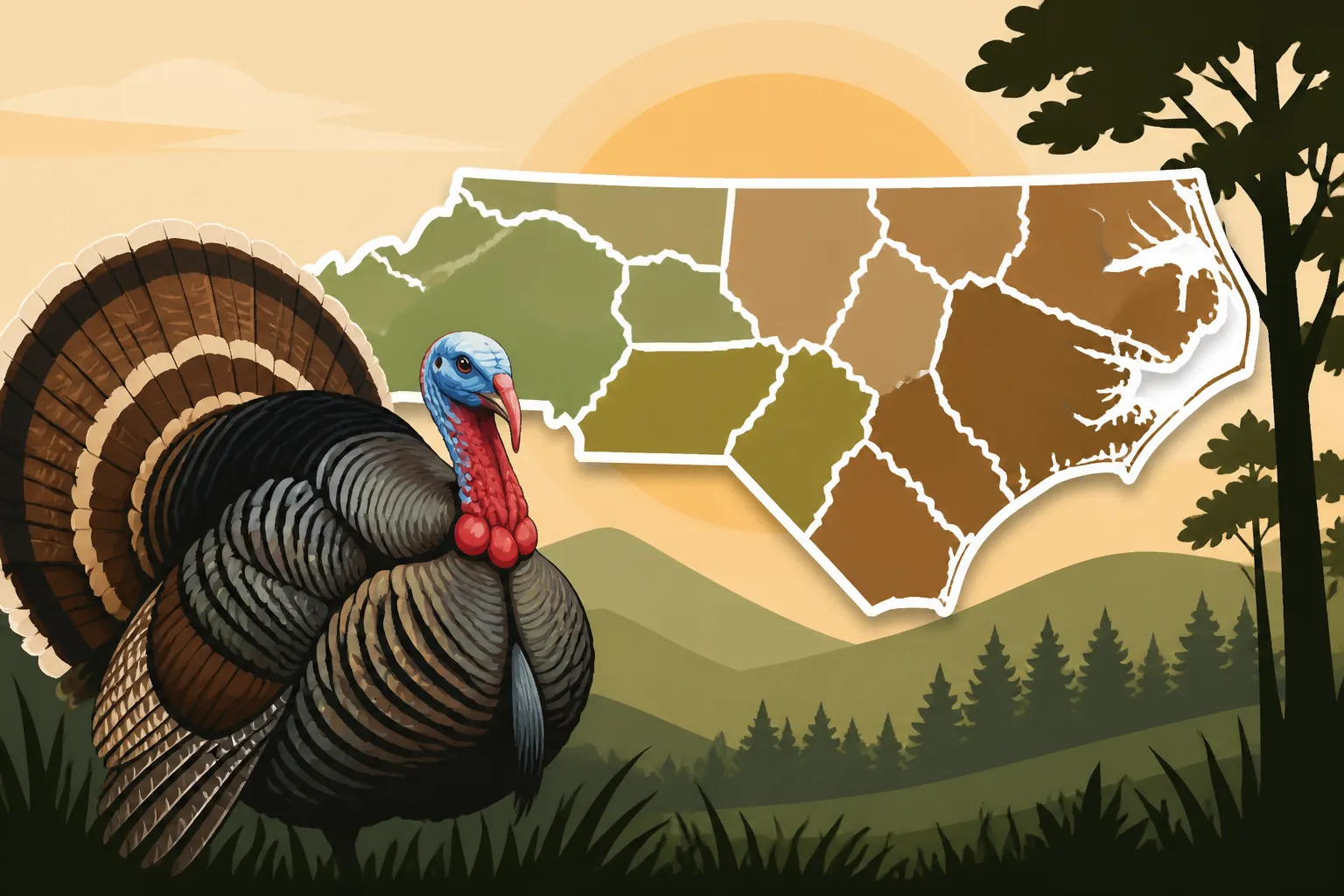
Trying to figure out where to find the best wild turkey hunting in North Carolina can feel like a real puzzle. Our state is so incredibly diverse, from the high mountains to the coastal swamps, and each region offers a completely different experience – and a different challenge – when it comes to chasing gobblers. This guide is here to cut through the confusion, helping you understand what makes certain counties shine for turkey hunters and pointing you toward some of our state's most promising turkey grounds.
Understanding North Carolina's Diverse Turkey Habitats
North Carolina's landscape is a beautiful, sprawling tapestry, and nowhere is that more evident than when you look at our turkey populations. What makes a great turkey county in the mountains is often completely different from what makes one stand out on the coast. Understanding these regional distinctions is key to unlocking your best hunting opportunities, no matter where you plan to hang your vest.
The Rugged Realm of Mountain Turkeys
Up in the western part of our state, the Appalachian Mountains offer some truly unique turkey hunting. We're talking about vast expanses of timber, steep slopes, and deep hollows. Turkeys here have to work for a living, and so do the hunters who pursue them. The mountain birds often roam large tracts of public land within the Pisgah National Forest Hunting and Nantahala National Forest Hunting areas, finding food sources like acorns, berries, and insects. The sheer scale of the terrain means less concentrated hunter pressure in many spots, but it also demands a higher level of physical fitness and scouting prowess. You might not see as many birds per acre as in other regions, but connecting with a mountain gobbler feels like a true accomplishment.
Hunting in these mountainous regions often involves covering a lot of ground, listening for distant gobblers echoing through the valleys, and being prepared for sudden weather changes. The birds might be more scattered, making traditional run-and-gun tactics a bit more challenging unless you hit an active roost site early in the morning. However, the reward of seeing a longbeard strutting against a backdrop of mountain peaks is unparalleled.
The challenge here isn't just finding a bird, it's finding one that's willing to talk and work its way up or down those steep inclines. Access can be a breeze with so much National Forest land, but don't mistake "access" for "easy hunting." You'll be putting in the miles, and your legs will feel it. But for those who love a wilderness feel and a hard-earned bird, the mountains hold a special appeal.
Piedmont's Productive Patchwork
As you move east from the mountains, you hit the rolling hills and mixed forests of the Piedmont. This region is often a fantastic sweet spot for turkey hunting because it combines agricultural fields with extensive timber blocks. You'll find a mix of hardwoods, pines, and brushy edges, providing turkeys with abundant food sources like grain, insects, and mast crops, along with ideal roosting and nesting cover. This diverse habitat allows for a very healthy turkey population.
Many Piedmont counties boast a significant amount of private land, where quality habitat management often translates into robust turkey numbers. While getting permission on these private parcels is the golden ticket, there are also scattered game lands and public access points that can be highly productive, especially with diligent Scouting North Carolina Public Land Before Season. Birds here often use field edges for strutting and feeding, making them a little more predictable than their mountain cousins, but still plenty wary.
The Piedmont offers a unique blend of hunting scenarios. You might be Turkey Tactics for Piedmont Field Edges early in the morning, setting up a decoy spread where birds can see it from a roosted tree across a field. Later in the day, you might switch to calling from the timber, trying to coax a bird out of the woods. The varied terrain and land use here make for dynamic hunting, where adaptability is often the key to success.
Coastal Plain's Cover-Rich Coves
Further east, the Coastal Plain stretches out, characterized by flat terrain, pine forests, swamps, and pocosin wetlands. This region can be deceptively good for turkeys. While the dense cover might seem daunting, it provides incredible refuge and nesting habitat, and the birds here thrive on various food sources, including agricultural crops, insects, and berries found along wetland edges and pine stands. The turkey populations in many coastal counties are strong, often surprising hunters who envision endless swamps.
Hunting in the Coastal Plain often means navigating thicker vegetation, sometimes requiring more aggressive calling tactics to get a bird to pinpoint your location through the brush. You might find yourself setting up on logging roads, clear-cut edges, or the fringes of a pocosin swamp, trying to intercept birds moving between feeding and roosting areas. The sheer density of cover can make close-range encounters thrilling and often provides excellent concealment for hunters.
Access in the Coastal Plain can be a mix of large timber company lands, private farms, and some significant game lands. While public access might require a bit more navigation through dense woods, the rewards are often worth the effort. These birds are accustomed to using thick cover to their advantage, and learning to hunt their habits in this unique environment is a rewarding challenge. Understanding Hunting Coastal Plain Pocosin Swamps can be a game-changer for finding these wary birds.
Key Factors That Make a Turkey County Stand Out
It's not just about having some turkeys; it's about having a sustainable, healthy population that offers consistent opportunities for hunters. Several factors come into play when we talk about what truly elevates a county to "best" status for wild turkeys. These aren't always immediately obvious, but they're the underlying reasons why certain areas consistently produce happy hunters.
Population Density and Quality Habitat
At the heart of any good turkey county lies a robust population, which is directly tied to the quality and quantity of suitable habitat. Turkeys need a specific blend of environments to thrive: mature timber for roosting, open fields or thinned forests for strutting and feeding, and dense undergrowth for nesting and brood-rearing. Counties that consistently offer this diverse mosaic are usually the ones holding the most birds. You can often glean insights into a county's potential by researching North Carolina Turkey Population Trends and Poult-to-Hen Ratios and What They Mean for the region.
Imagine a county where expansive mature oak and pine forests seamlessly transition into agricultural fields or recently thinned timber. This provides everything a turkey needs: acorns and insects for food, tall trees for safety at night, and grassy areas for hens to nest and raise poults. Conversely, a county dominated by monoculture crops or extremely fragmented small woodlots might struggle to maintain high turkey numbers because critical habitat components are missing. Tools like GoHunt can be incredibly useful for analyzing satellite imagery and identifying these varied habitat types before you even set foot in the woods.
Furthermore, a healthy habitat often means healthier birds. Counties with diverse food sources and adequate cover tend to have turkeys that are in better condition, which can translate to better breeding success and higher survival rates. This isn't just about finding a gobbler; it's about finding a place where the entire turkey ecosystem is flourishing, leading to more birds for everyone in the long run.
The Dynamics of Public Versus Private Land
North Carolina is a blend of private and public lands, and how these are distributed within a county can significantly impact turkey hunting. Generally, private land, especially large tracts managed for wildlife, tends to hold higher turkey densities and potentially less hunting pressure if access is limited. Landowners often have the resources to plant food plots, thin timber strategically, and create ideal turkey habitat, leading to prime hunting opportunities.
However, public lands, while often facing more hunter pressure, provide invaluable access for those without private land connections. Counties with extensive public game lands or national forest acreage can still be top-tier turkey destinations if hunters are willing to work harder, walk farther, and scout more thoroughly. Many times, the most successful public land hunters are those who use mapping tools, like GoHunt, to identify remote corners or difficult-to-access areas that others overlook. Hunting Pressure on North Carolina Public Land is a real factor, but it's not insurmountable if you're strategic.
The "best" county often strikes a balance. It might have excellent private land opportunities for those who can secure permission, but also sufficient and quality public land to ensure that all hunters have a reasonable chance at success. A county with large blocks of unpressured private timber bordering a publicly accessible river bottom, for example, could be a phenomenal spot, offering diverse hunting scenarios and escape routes for birds.
Hunter Pressure and Access
This factor is often overlooked but plays a huge role in a county's overall "best" ranking. A county might have an astronomical turkey population, but if every single accessible acre is pounded by hunters from opening day until closing, your personal success rate might plummet. High hunter pressure can make birds "go quiet" faster, become more wary, and alter their routines, making them incredibly difficult to locate and call in.
Counties that offer good access to less-pressured areas are goldmines. This could be due to sheer acreage of public land, fragmented private parcels that are harder for many hunters to secure, or simply areas that require more effort to reach. Learning to Finding Ground Others Walk Past on public land is a critical skill for any turkey hunter. It often means a longer walk, crossing a creek, or tackling a steeper incline, but the rewards are often worth the extra effort.
Conversely, a county with a healthy turkey population but limited public access or highly controlled private land can be incredibly frustrating. While the birds might be there, actually getting to them and having an ethical shot opportunity is the real challenge. So, while high turkey numbers are essential, considering how easily (or difficultly) you can access and hunt those birds within a county is equally important for determining its "best" status. Always check North Carolina Public Land Hunting Hours and local regulations before you go.
Top North Carolina Counties for Turkeys: Where to Find the Action
Now, let's talk about some specific areas that consistently stand out when it comes to chasing spring gobblers in North Carolina. While turkey populations can fluctuate year to year and localized conditions always play a role, these counties generally offer strong prospects for hunters willing to put in the time.
Mountain Zone Standouts for Spring Gobblers
When you head to the western part of North Carolina, the counties that border or encompass large tracts of the national forests are often your best bet. These areas provide the vast, unbroken habitat that mountain gobblers crave, even if it means you'll be earning every bird you call in.
- Haywood County: Situated deep in the Appalachian Mountains, Haywood County offers extensive public lands within the Nantahala National Forest. This means plenty of room to roam and find unpressured birds. The terrain is rugged, with steep ridges and deep hollers, which can make for challenging but incredibly rewarding hunts. Gobblers here are often found along creek bottoms, on benches halfway up mountainsides, and around mature oak stands. You'll need good boots and a willingness to hike, but the solitude and beauty of the hunt are unparalleled. Look for areas with a mix of hardwoods and some open timber, as these provide both roosting opportunities and good bugging grounds.
- Wilkes County: While still mountainous, Wilkes County sits on the edge of the Blue Ridge, offering a slightly different mix of habitat. It has both significant public land, including parts of the Brushy Mountains, and a good amount of private timber and farmland. This blend provides a diverse food base for turkeys. Birds might roost in the larger timber blocks and then fly down to strut in open fields or clearings. Hunting Blue Ridge Escarpment Ridgelines can be highly productive here, as birds often travel these natural corridors. The key here is often identifying travel corridors between feeding and roosting areas, especially where timber meets agricultural land.
- Ashe County: Tucked away in the northwestern corner, Ashe County is known for its high elevations and beautiful mountain scenery. It features a mix of private farms and substantial public land, including some game lands. Turkeys in Ashe benefit from the mosaic of pastures, hayfields, and hardwood forests. While the temperatures can be a bit cooler here in spring, the gobbling can be hot. Focus on areas where mature timber provides good roost sites adjacent to more open areas where birds can feed and strut. Scouting early to locate roosting areas is crucial, and mapping tools can help you identify these pockets of optimal habitat.
Piedmont Powerhouses for Turkey Action
Moving into the central part of the state, the Piedmont offers a fantastic mix of habitat. These counties often have a strong agricultural presence interspersed with significant timber, creating prime turkey habitat that supports thriving populations.
- Montgomery County: Home to a large portion of the Uwharrie National Forest, Montgomery County provides excellent public land opportunities for turkey hunters. Beyond the national forest, there's a good mix of private timber and farmland. Turkeys thrive in the rolling hills and mixed forests of the Uwharries, using the timber for roosting and the clearings and fields for feeding and strutting. This county is often cited for its solid turkey numbers and consistent harvest. Patience and calling skills are often rewarded here, whether you're working a bird on public land or Setting Up on a Piedmont Field Edge on a private tract.
- Randolph County: Situated right in the heart of the Piedmont, Randolph County benefits from a blend of mature hardwoods, pine plantations, and extensive agricultural fields. This mosaic creates excellent conditions for turkeys, offering abundant food sources and secure cover. While much of the land is private, there are still public game lands and opportunities for those who seek permission. The birds here are typically responsive to calling, especially early in the season. Focus your efforts where timber blocks meet cultivated fields, as these transition zones are often hotspots for activity.
- Chatham County: Located just west of Raleigh, Chatham County is a fast-growing area, but it still maintains significant rural character and excellent turkey habitat. With large tracts of mixed hardwood and pine forests, coupled with agricultural fields and river bottoms, it provides ideal conditions for turkeys. This county consistently produces good harvests. Access can be a challenge due to private land, but scouting for unpressured areas on public lands or securing landowner permission can lead to highly productive hunts. The blend of mature timber and open land here is a major draw for gobblers.
Coastal Plain Gems for Diverse Hunts
Don't let the perception of "swamp hunting" deter you; many Coastal Plain counties offer fantastic turkey opportunities. The birds here are often numerous and can provide some exciting, close-quarters action in denser cover.
- Bladen County: This large Coastal Plain county boasts vast tracts of timber, including longleaf pine forests and pocosin wetlands, alongside agricultural areas. Bladen County consistently ranks high for turkey harvests. The habitat here is ideal, offering plenty of roosting trees and diverse foraging grounds. Hunters often find success working logging roads, clear-cuts, and the edges of swamps. The dense cover means birds might not gobble as much on the roost, but they can be very responsive once on the ground and moving. Hunting Croatan Forest Pocosin Edges can give you an idea of the type of terrain and tactics that work in this region.
- Onslow County: Located near the coast, Onslow County features a mix of pine forests, agricultural land, and wetland areas. Its varied habitat supports a healthy turkey population, making it a reliable choice for hunters. Large private timber holdings are common, but there are also game lands to explore. Turkeys here utilize the edges of thick cover and open fields, often moving between them throughout the day. Calling aggressively in the thicker spots can sometimes draw out a curious gobbler.
- Sampson County: As one of North Carolina's largest agricultural counties, Sampson County might not immediately scream "turkey haven," but its extensive corn, soybean, and peanut fields, interspersed with ample woodlots and river bottoms, provide an incredible food source. This attracts and holds a significant turkey population. The birds here often feed in the fields during the day and retreat to the timbered river corridors or larger woodlots to roost. Early morning setups on field edges or calling from timber blocks overlooking crop fields can be very effective.
Here's a quick overview of what makes these regions shine:
| Region | Example County(ies) | Primary Habitat Type | Hunting Style Emphasis | Notable Features |
|---|---|---|---|---|
| Mountains | Haywood, Wilkes, Ashe | Vast Timber, Steep Slopes, Hollers | Extensive Scouting, Physical Hunt | Solitude, Hard-Earned Birds, Large Public Tracts |
| Piedmont | Montgomery, Randolph, Chatham | Mixed Timber, Agriculture, Rolling Hills | Field Edge Setups, Versatile Calling | Balanced Opportunity, Good Private/Public Mix |
| Coastal Plain | Bladen, Onslow, Sampson | Pine Forests, Pocosins, Agriculture | Aggressive Calling, Dense Cover | Strong Populations, Unique Swamp/Thicket Hunting |
No matter which county you choose, remember that scouting is paramount. Use mapping apps like GoHunt to analyze aerial photos, topo maps, and land ownership before you ever leave the house. Look for those critical habitat transitions, potential roosting areas, and natural funnels that birds might use. The more homework you do, the better your chances of connecting with a North Carolina gobbler.
Disclaimer
This article is for general informational purposes only and does not constitute professional advice. Laws, prices and regulations vary by location and change over time. Consult a qualified professional for guidance on your specific situation.