Hunting Croatan Forest Pocosin Edges
Hunting the dense, often impenetrable edges of pocosins in North Carolina's Croatan National Forest can feel like an impossible puzzle. The sheer thickness of the cover, combined with wet, boggy ground, makes it intimidating for many hunters. But don't let that deter you; these challenging environments are precisely where some of the biggest, smartest deer in the state choose to live and roam. This guide is dedicated to unraveling the secrets of effectively hunting these unique transition zones, offering practical strategies to turn Croatan's daunting pocosins into your next successful hunting ground.
The Allure and Challenge of Croatan's Pocosin Edges
Croatan National Forest, nestled along North Carolina's central coast, is a vast, wild expanse known for its unique blend of pine forests, swamps, and, most notably, its extensive pocosins. These areas present both a significant challenge and an incredible opportunity for hunters willing to put in the effort. Understanding this distinctive habitat is the first step toward unlocking its deer hunting potential.
What Exactly is a Pocosin, Anyway?
When you hear "pocosin," think dense, low-lying, and often incredibly wet. The word itself comes from an Algonquian term meaning "swamp on a hill," which hints at its somewhat misleading nature – it's not always a flowing water swamp, but rather an elevated, poorly drained wetland. These areas are characterized by a thick tangle of evergreen shrubs like gallberry, titi, and sweet bay, interspersed with pond pine, loblolly pine, and cypress. The soil is usually an acidic peat, saturated with water, making travel difficult, to say the least.
Walking through a true pocosin can be a Herculean effort. Imagine pushing through head-high brush, sinking into mud with every step, and navigating unseen roots and cypress knees. It’s an environment that screams "stay out!" to most people, and indeed, to most predators. This inherent difficulty is precisely why deer, especially mature bucks, seek refuge within these thickets. They offer unparalleled security and an escape from human pressure. The Croatan National Forest contains some of the best examples of this habitat type in the state, offering a real taste of wild, coastal plain hunting. If you've ever found yourself frustrated by the sheer density, remember that this is part of its appeal to the deer you're after.
Why Deer Gravitate Towards These Edges
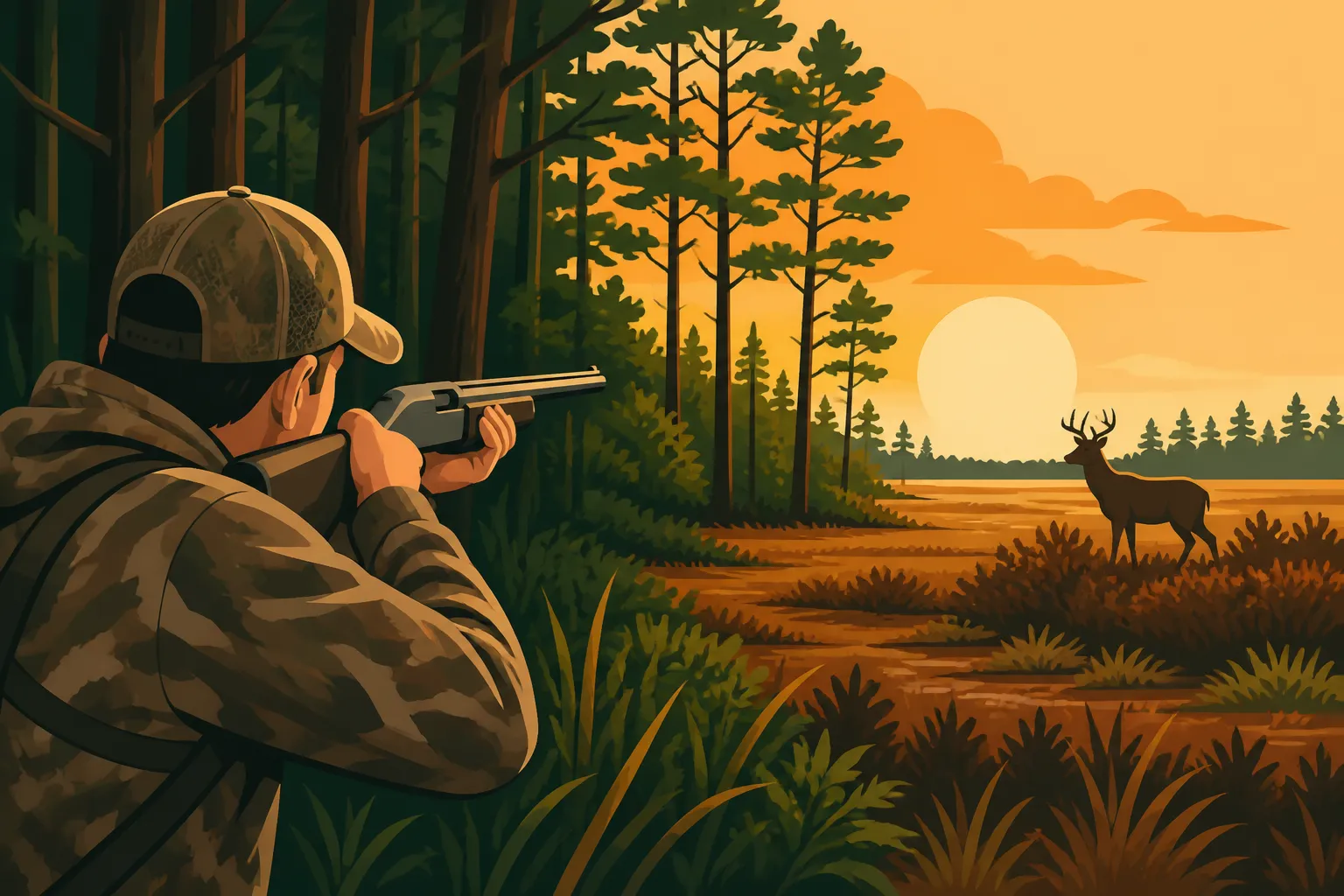
Deer, like most wildlife, are creatures of efficiency and security. Pocosins provide the ultimate security, but the best food sources often lie just outside these dense interiors. This creates highly active transition zones – the pocosin edges – where deer feel comfortable enough to move freely between bedding and feeding areas. During the day, particularly after opening weekend when hunting pressure increases, those big bucks will retreat deep into the thickest, nastiest parts of the pocosin. But come evening, or even during mid-day lulls, they'll often venture to the fringes to browse on more palatable vegetation found in the adjacent pine stands, cutovers, or even along the edges of small clearings or logging roads.
These edges provide a perfect blend of cover and sustenance. They allow deer to quickly duck back into the impenetrable cover if they sense danger, while still accessing vital food sources. You'll find deer using these corridors for movement between different parts of the pocosin, or between the pocosin and adjacent uplands. It's a completely different dynamic than hunting wide-open spaces, requiring a keen understanding of their movements in heavy cover. These transition areas are where you'll have your best chance, as deer are less likely to expose themselves fully to open areas during daylight hours. Targeting these critical intersections is a key component of Hunting Coastal Plain Pocosin Swamps successfully.
Scouting for Success in Dense Cover
Hunting pocosin edges demands thorough, intelligent scouting. You can't just wander in and expect to stumble upon a trophy. The sheer density of the vegetation means that every bit of intel you gather before the season opens will significantly increase your odds. It's about finding those subtle clues that reveal deer movement patterns in an otherwise homogenous landscape.
Reading the Terrain for Natural Funnels
When you're looking at a map of Croatan, the pocosin might appear as one big, green blob. But get down to the details, and you'll start to see nuances. Deer, despite their ability to push through thick brush, prefer the path of least resistance. This means they will use natural funnels, even subtle ones, along the pocosin edges. Look for fingers of slightly higher ground that extend into the pocosin, or areas where the pocosin narrows between two higher points. These are natural pinch points that concentrate deer movement.
Using mapping tools like GoHunt, or even detailed satellite imagery, is absolutely critical for this type of scouting. Zoom in and identify variations in vegetation density, subtle elevation changes, or even old, overgrown ditch lines that act as hidden highways. Sometimes, a tiny island of pines or hardwoods within the pocosin will draw deer, and the trails leading to it will be hot. When you're Scouting North Carolina Public Land Before Season, pay close attention to where the deep swamp transitions to drier ground. These are the areas where deer will often stage before entering more open feeding areas. Remember, you're not trying to scout the entire pocosin; you're looking for the high-traffic lanes along its edges.
Locating Rubs, Scrapes, and Bedding Areas
Once you've identified potential funnels and pinch points on your map, it's time to put boots on the ground, preferably in the off-season to avoid disturbing game. When scouting pocosin edges, focus your efforts on finding fresh sign right on the fringe of the thick cover. You're unlikely to find extensive rub lines deep inside the pocosin, but you'll find them where bucks are emerging or entering. Look for fresh rubs on smaller trees and saplings that line trails leading out of the dense cover. These indicate a buck's travel route and often signal its presence in the area.
Scrapes are another key indicator. Bucks will often make scrapes where they feel relatively secure but want to announce their presence. These will typically be found along well-used trails, just inside the tree line or under an overhanging branch near the pocosin edge. These scrapes are communication hubs, especially during the rut. As for bedding areas, they'll usually be in the densest, nastiest part of the pocosin itself, but you might find flattened vegetation or worn-out spots on slightly elevated dry ground just a few yards inside the thick stuff. These spots indicate where deer stage before moving out. It's tough, but if you can locate a series of rubs or a fresh scrape line, you've found a high-odds spot. Learning to read aerial photos, like when Reading Aerial Photos for Piedmont Deer, can be adapted to spot these subtle changes in the coastal landscape.
Tactical Approaches for Hunting Pocosin Transitions
Successfully hunting pocosin edges requires patience, a bit of grit, and strategies tailored to the unique environment. Whether you prefer a solitary sit or a coordinated effort, understanding how to approach these transition zones is paramount.
Still-Hunting and Stand Placement Strategies
For the solo hunter or small group, still-hunting along pocosin edges can be incredibly effective, but it's a slow, deliberate affair. You're not covering ground quickly; you're moving at a snail's pace, pausing every few steps to scan, listen, and glass. The wind direction is absolutely critical here – always hunt with the wind in your favor, blowing from the pocosin towards you, or parallel to the edge. Deer rely heavily on their noses, and the swirling winds common in thick cover can easily betray you. Focus on detecting movement, even subtle ear twitches or tail flicks, within the dense vegetation.
When it comes to stand placement, the goal is to overlook those identified funnels, pinch points, or intersecting trails along the pocosin edge. A good strategy might be to set up on a tree that offers a clear view down a narrow lane where deer are forced to travel, or overlooking a point where the pocosin juts into a pine stand. Consider setting up a climbing stand or a fixed-position stand (if allowed and retrieved daily on public land) that can be easily accessed. The shots will likely be close and fast, so be prepared for a quick reaction. Even Using a Ground Blind on North Carolina Public Land can be a viable option, brushed in effectively right on the edge, providing great concealment in the thick undergrowth. Often, you're looking for that brief window when a deer transitions from the deep cover to the more open woods. Don't be afraid to try to find a natural funnel Hunting a Funnel Between Two Pocosins that connects two pockets of thick cover.
Driving Pocosin Edges Effectively
Given the impenetrable nature of much of the pocosin, deer drives are a very common and often highly effective tactic, especially in areas like Croatan. This method is best employed with a group of hunters who understand how to coordinate safely and efficiently. The idea isn't to push deep into the heart of the pocosin, which is often impossible, but rather to push along the edges, encouraging deer to break cover in predictable locations where standers are waiting.
For a successful drive, you need a plan. Two or three drivers can slowly work an edge, making noise and occasionally busting into the very fringe of the thick stuff, while two or three standers are strategically positioned on the opposite side of the suspected deer movement, or at key pinch points where deer are likely to exit. Communication among the group is vital, either through radios or pre-determined signals, to ensure everyone knows where other hunters are located. Safety is paramount – always wear blaze orange, know your shooting lanes, and never shoot towards other drivers or standers. These drives can be exhausting for the drivers, but they often yield results, pushing deer that have been holed up in the thick stuff all day. Understanding how to set up Deer Drives on North Carolina Public Land is crucial, especially when you need to effectively Posting a Drive Around a Pocosin Swamp.
Essential Gear for Navigating Croatan's Swamps
Hunting pocosin edges isn't a walk in the park, and your gear needs to reflect that. The environment will test your equipment, so investing in the right tools can make or break your hunt, ensuring you stay comfortable, safe, and effective.
Footwear and Clothing for Wet, Thick Conditions
Forget your lightweight hiking boots; Croatan's pocosins demand serious footwear. Tall, waterproof rubber boots are non-negotiable. Brands like LaCrosse and Muck make excellent options that will keep your feet dry when you're slogging through mud, standing in shallow water, or traversing boggy ground. The taller the boot, the better, as you never know when you'll step into a deeper-than-expected depression. These boots also offer a degree of protection from snakes, which are prevalent in these wet environments. When considering Rubber Boots for Swamp Walking, prioritize comfort for long walks and durability.
For clothing, think layers and durability. Your outer layer needs to be tough enough to withstand constant abrasion from thick brush, thorns, and briars. Materials like waxed cotton or heavy-duty synthetics work well. Underneath, layer strategically based on the temperature. Early season hunts might call for lighter, moisture-wicking base layers, while late-season demands insulation. Scent control is also a wise consideration, as deer in these dense areas are often very close before you even see them. Remember, you'll be exerting a lot of energy, so choose layers that can be shed or added to regulate your body temperature.
Optics and Navigation in Low Visibility
Even in dense cover, optics still play a vital role. A quality pair of binoculars (8x or 10x magnification) can help you pick apart dense cover, identify movement, or confirm whether that dark patch is a deer or just a stump. Given the lower light conditions often found under the thick canopy, look for binoculars with good low-light performance. However, perhaps even more critical than traditional optics is reliable navigation. The monotonous nature of pocosin environments makes it incredibly easy to get disoriented.
A dedicated GPS unit or a robust hunting app on your smartphone, such as GoHunt, is an absolute must-have. Before you even set foot in the woods, use your chosen mapping tool to mark your truck, your planned route, potential stand locations, and any significant landmarks. Features like tracking your path as you walk are invaluable for ensuring you can find your way back out, especially in the dark. Many modern apps also allow you to download offline maps, which is crucial as cell service is often spotty or nonexistent in remote parts of Croatan. Don't rely solely on your phone; always carry a backup power bank, and ideally, a compass and map as a fail-safe. Choosing between GPS Units Versus Phone Apps comes down to personal preference, but having both bases covered is the smartest approach. Also, consider adding a powerful headlamp to your Packs for a Day on Public Land for navigating those tricky walks in and out before dawn and after dusk.
| Feature | Still-Hunting Pocosin Edges | Driving Pocosin Edges |
|---|---|---|
| Best For | Solo hunters, small groups, patient hunters, specific funnels | Larger groups, pushing thick bedding areas, covering more ground |
| Patience Required | High | Moderate (for standers), High (for drivers) |
| Visibility | Limited, focus on listening and subtle movement | Limited for drivers, better for standers on break-out points |
| Noise Level | Low, slow, deliberate | Moderate to High (by drivers) |
| Safety Concerns | Minimal (solo), high awareness of surroundings | High (multiple hunters, moving deer), blaze orange crucial |
| Ideal Conditions | Light wind, quiet leaves, overcast | Any conditions, but knowing deer escape routes is key |
| Gear Focus | Stealthy clothing, comfortable boots, optics | Blaze orange, good communication, durable outer layers |
Disclaimer
Hunting is an inherently dangerous activity. This guide provides general information and recommendations. Always prioritize safety, adhere to all local, state, and federal hunting regulations, and consider taking a certified hunter education course. Conditions in the field can change rapidly, and personal responsibility is paramount.