How Managed Pine Could Restore North Carolina Quail
The sound of a wild quail covey rise is a truly heart-stopping moment, but for many North Carolina hunters, it's become a rare, almost mythical experience. Our state's bobwhite quail populations have faced a drastic decline over decades, leaving many of us wondering if we'll ever hear that iconic "bob-white!" call echo through our fields and forests again. This comprehensive guide will explore how the thoughtful management of pine ecosystems, particularly our native longleaf pine, could be the key to bringing back these cherished game birds.
The Steep Decline of North Carolina's Wild Quail
For generations, bobwhite quail were an integral part of North Carolina's rural landscape and hunting heritage. Their distinctive calls and explosive covey flushes were once common occurrences, shaping memories for countless hunters. Today, however, these experiences are tragically rare, a stark reminder of a species in peril. Understanding the depth of this loss is the first step toward effective conservation.
Tracing North Carolina's Historic Quail Decline
The stories from our grandparents and great-grandparents often include tales of quail populations so abundant they were almost nuisances. Farmers used to flush coveys just walking through their fields, and a good bird dog could point multiple coveys in a single outing. These weren't just romanticized memories; it was a reality that has drastically changed. Over the past 70 years, North Carolina, much like other Southeastern states, has witnessed a catastrophic reduction in its bobwhite quail numbers, a decline that saddens anyone who cherishes our small game hunting heritage. You can trace this back to the mid-20th century when significant landscape changes began to accelerate, making it increasingly difficult for these sensitive birds to thrive.
This isn't just about fewer birds in a few isolated pockets; it's a statewide crisis. While there might be local exceptions, the overall trend points to a staggering loss of what was once a foundational part of our state's wildlife. The casual observer might not even notice the absence, but those of us who grew up with wingshooting know the difference. The quietness where once there was a flurry of wings is a stark reminder of what we've lost, and what we're fighting to regain. For a deeper dive into this historical context, you might want to read our article on North Carolina's Historic Quail Decline. Understanding the scale of this decline is the first step in appreciating the urgency of restoration efforts, especially concerning habitats like managed pine forests.
The Multifaceted Factors Contributing to Quail Loss
It's never just one thing, is it? The reasons behind the bobwhite quail's disappearance are complex and interconnected, a perfect storm of environmental shifts. Habitat loss stands at the top of the list, unquestionably. The sprawling fields, hedgerows, and brushy edges that once defined North Carolina's rural landscape have given way to larger monoculture farms, dense timber plantations, or suburban sprawl. This reduction in quality habitat means less cover for nesting, less escape cover from predators, and fewer diverse food sources throughout the year.
Beyond outright habitat destruction, the quality of remaining habitat has also suffered. Modern forestry practices, often focused on maximum timber production, can lead to dense, shady pine plantations that lack the open understory quail need. Agricultural practices that eliminate "weedy" field borders and fence rows, often for efficiency, also play a huge role. Increased predation pressure from animals like raccoons, opossums, and, yes, coyotes (which are now widespread across the state, as we discussed in a previous piece on Coyotes and Predators in North Carolina), along with diseases and even severe weather events, further compounds the issue. It's a tough world out there for a bobwhite, and the combination of these factors has unfortunately pushed their populations to critically low numbers.
Understanding Historical Quail Habitat in North Carolina
To effectively restore bobwhite quail, we must first understand the type of habitat they evolved to thrive in. North Carolina's natural landscape, particularly in the Coastal Plain and Sandhills, was historically very different from what many of us see today. It was a dynamic environment shaped by powerful natural forces, creating conditions perfectly suited for quail.
North Carolina's Fire-Dependent Landscape and Its Quail
To truly grasp what quail need, we have to look back to how North Carolina's ecosystems naturally functioned for centuries. Much of our state, particularly the Coastal Plain and Sandhills regions, was historically shaped by frequent, low-intensity fires. These fires, often started by lightning or Native Americans, were a natural process, clearing out dense underbrush, preventing woody encroachment, and promoting the growth of fire-adapted grasses and forbs. This created an open, park-like forest structure with a diverse, herbaceous understory – the perfect home for bobwhite quail.
Quail thrive in this kind of open habitat, where they can easily move, find seeds and insects on bare ground or sparse vegetation, and still have enough overhead cover from hawks. The fire cycle maintained this delicate balance, creating a mosaic of successional stages, from freshly burned ground to slightly older, brushier patches. This varied landscape provided everything a covey needed: nesting cover in clumped grasses, brooding cover full of insects, escape cover in brushy thickets, and abundant seed-bearing food sources. Without this natural fire regime, these areas became choked with dense shrubs and saplings, rendering them largely useless for quail, a process we’ve seen happen across much of the state.
The Impact of Land Use Changes and Habitat Fragmentation
The 20th century brought massive shifts in how land was used and managed across North Carolina, fundamentally altering quail habitat. The fire suppression policies that became widespread in the early to mid-1900s were a major disruptor. While intended to protect timber, they inadvertently suffocated the natural processes that created prime quail habitat. Forests grew unnaturally dense, and the open, diverse understory essential for quail disappeared, replaced by thick, unproductive shade. Simultaneously, the intensification of agriculture – larger farms, fewer fencerows, heavy herbicide use, and conversion of marginal lands – stripped away crucial nesting and foraging areas.
Think about it: a small farm in the past with diverse crops, patchy woods, and weedy borders provided a banquet and sanctuary for quail. Today, vast tracts of single crops, often without any adjacent cover, offer little for wildlife. On the timber side, many pine forests were planted in dense, uniform rows and allowed to grow without appropriate thinning or burning, creating what we call a "biological desert" for many species, including quail. This fragmentation of what little good habitat remained isolated populations, making them more vulnerable to local extinctions and less able to recover from environmental stresses. It’s a sad reality, but one that dedicated land managers and hunters are actively trying to reverse through informed, proactive management.
The Longleaf Pine Ecosystem: A Quail Sanctuary
When we talk about restoring quail in North Carolina, the conversation inevitably turns to longleaf pine. This isn't just any pine; it's a foundational species for the Sandhills and Coastal Plain, uniquely adapted to the fire-dependent ecosystems that bobwhites require. It's a key component of what many refer to as ideal North Carolina Longleaf Pine and Quail Habitat.
Characteristics of a Thriving Longleaf Pine Forest for Quail
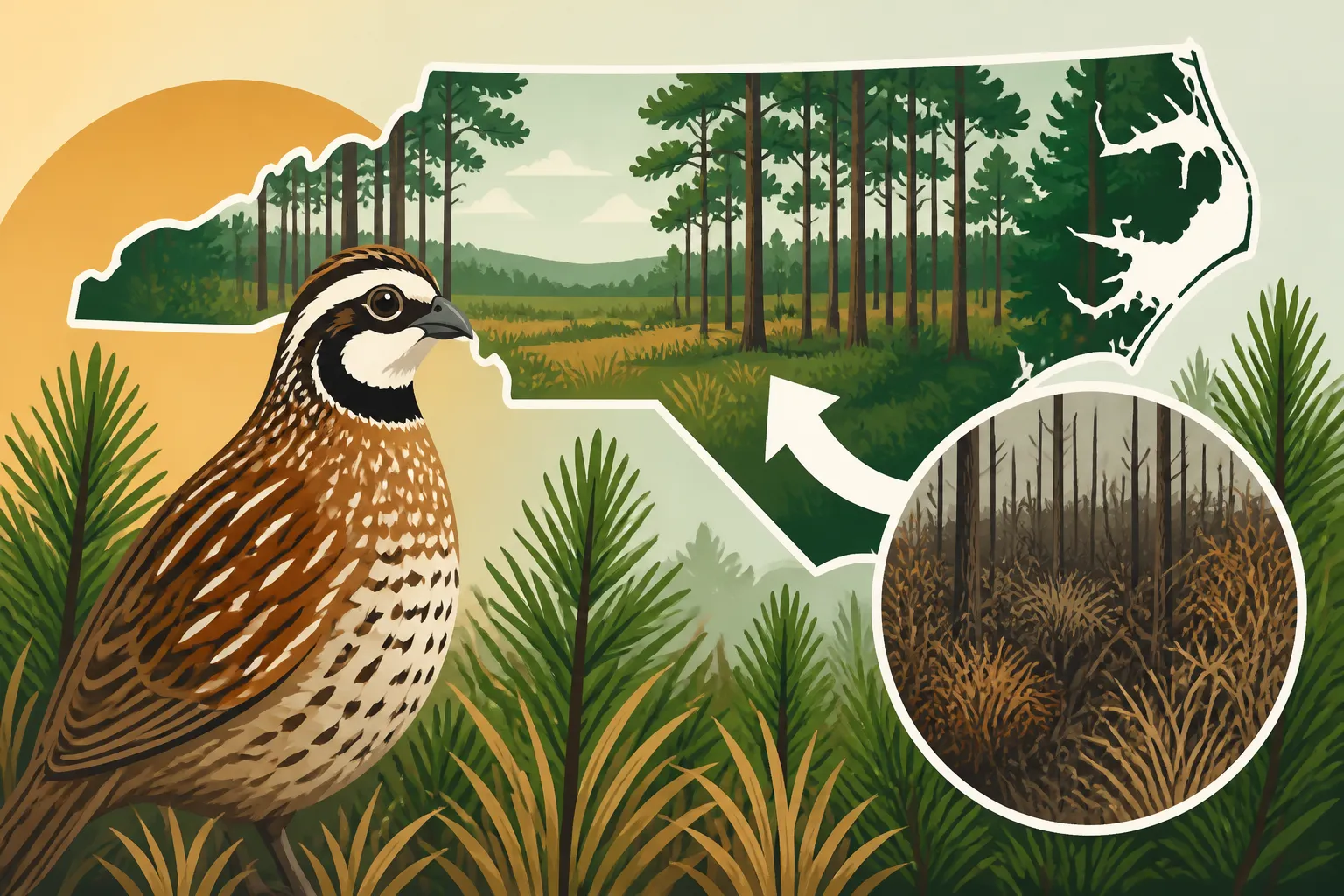
A thriving longleaf forest, particularly one managed for quail, looks strikingly different from a typical loblolly plantation. You'll see widely spaced, mature longleaf pines with a high canopy, allowing ample sunlight to reach the forest floor. This open canopy is critical, as it allows for the growth of diverse ground-level vegetation that quail depend on. Imagine walking through a forest where you can see for dozens of yards between trees, not a dense thicket.
The magic happens beneath the canopy. The understory of a healthy longleaf ecosystem is dominated by a diverse array of native grasses – like wiregrass – and wildflowers, known as forbs. These plants provide excellent nesting cover that allows for easy movement, abundant seeds, and a haven for the insects that quail chicks absolutely rely on for protein. The ground is relatively open, often with patches of bare soil, making it easy for quail to walk, forage, and escape predators. This structure is precisely what sustained robust quail populations for millennia, and it’s the blueprint we need to follow for successful restoration.
Why Longleaf Pine is Indispensable for Bobwhite Quail
Longleaf pine isn't just good for quail; it's practically tailor-made for them. Its unique growth habit – a long "grass stage" where the seedling develops a robust root system before shooting up rapidly – helps it survive the frequent, low-intensity fires that clear the understory. This inherent fire resistance is crucial, as prescribed burning is the single most important tool for maintaining prime quail habitat. The open nature of mature longleaf stands, coupled with the vigorous groundcover response to fire, creates a dynamic, productive environment. This unique synergy between tree and fire results in a constant supply of diverse native plants that provide both food and cover throughout the year.
Beyond fire adaptation, the very structure of a longleaf forest offers specific benefits. The wide spacing of trees allows sunlight to penetrate, encouraging a rich diversity of herbaceous plants that produce the seeds and insects quail need. These areas also provide crucial nesting cover that isn't too dense, allowing quail to move freely while remaining concealed. Furthermore, longleaf pine needles themselves, when falling, create a relatively sparse ground litter compared to other pines, maintaining those essential patches of bare ground for easy foraging. If you're looking to turn around quail numbers, focusing on restoring and managing our longleaf landscapes, as many conservation groups and even private landowners are doing, is the most impactful step you can take.
Implementing Effective Management Practices in Pine Stands
Restoring quail habitat in pine stands is an active process that requires a deliberate, long-term commitment. It's not just about letting nature take its course; it's about reintroducing and mimicking the natural processes that historically created and maintained these ecosystems. The combination of several key management practices is what truly drives success.
The Critical Role of Prescribed Burning for Quail
If there's one tool that truly encapsulates the essence of quail habitat management in pine ecosystems, it's prescribed burning. This isn't just setting a fire; it's a carefully planned and executed strategy to mimic natural fire regimes. Burning every 1-3 years in pine stands, especially longleaf, clears out woody undergrowth, stimulates the growth of native grasses and forbs, and reduces leaf litter, creating the open, accessible foraging grounds that bobwhites require. It's truly a game-changer for understory diversity and structure, making areas more palatable and easier for quail to traverse. We've seen how vital it is for numerous species, and you can even see discussions about its impact on game movements in articles like Prescribed Burns and North Carolina Hunting Closures.
When you burn, you're not just clearing fuel; you're recycling nutrients, controlling undesirable vegetation, and creating a mosaic of different successional stages. A healthy, well-conducted burn leaves some unburned patches, providing immediate cover, while newly burned areas quickly sprout with fresh, nutritious growth. This periodic disturbance is what keeps the habitat from becoming overgrown and unproductive for quail. For landowners looking to actively restore their land for quail, understanding the nuances of prescribed fire—from timing to firebreaks—is absolutely essential. It’s an investment of time and effort, but the payoff for wildlife, especially bobwhites, can be immense.
Strategic Thinning and Timber Harvesting for Habitat Improvement
While prescribed fire is vital, it works best in conjunction with smart timber management, particularly thinning. Dense pine stands, regardless of species, create too much shade, suppressing the herbaceous understory that quail need. Strategic thinning operations, where a significant number of trees are removed, open up the canopy and allow crucial sunlight to reach the forest floor. This instantly encourages the growth of those crucial grasses, forbs, and legumes that provide food and cover for quail. It's about finding that sweet spot where you can still grow timber but also create fantastic habitat.
The goal isn't just any thinning; it's quail-friendly thinning. This often means thinning more aggressively than a typical timber-first approach, leaving fewer trees per acre and aiming for irregular spacing to create more diverse light patterns. After thinning, the forest floor responds dramatically, especially when combined with prescribed fire. This integrated approach ensures that the pine stand transitions from a dense, dark monoculture to an open, productive savanna-like environment. Timber harvesting, when done with quail in mind, becomes a tool for habitat creation, not just wood production. Tools like the GoHunt platform, with its robust mapping and satellite imagery features, can help landowners plan and visualize these thinning operations, tracking changes over time to optimize for quail habitat. It's a win-win for both the logger and the bird hunter.
Native Plant Restoration and Supplemental Food Sources
Once you've established the right light conditions with thinning and cleared the ground with fire, the next step is often to encourage or reintroduce the right native plants. The natural seed bank will often respond well to these changes, but sometimes a little help is needed to jumpstart the process. Planting native warm-season grasses and legumes can accelerate the recovery of the understory, providing a bounty of seeds and insect habitat. Species like partridge pea, various native lespedezas, and native sunflowers are excellent choices, offering high-energy food sources throughout the year as well as vital cover.
While the primary focus should always be on establishing and maintaining natural habitat, supplemental food plots can play a role, especially in areas where natural food sources are still recovering or in smaller, fragmented habitat pockets. These aren't meant to be the sole food source but can provide a critical boost, particularly during lean times of the year. Think about planting strips of millet, sorghum, or even winter wheat around the edges of managed pine stands. These can act as magnets, drawing in quail and providing a reliable food source. However, always remember that food plots are secondary to the primary goal of creating diverse, structurally appropriate native habitat. It's the overall health and diversity of the ecosystem that truly supports sustainable quail populations, not just isolated food sources.
Challenges, Collaborations, and a Hopeful Future for Quail
Restoring bobwhite quail is a monumental task, riddled with challenges that require patience, resources, and a collaborative spirit. However, the passion for these birds runs deep in North Carolina, and dedicated efforts are proving that a comeback is possible.
Navigating Funding, Landowner Participation, and Technical Assistance
Let's be real, managing land for quail isn't cheap or easy. The initial costs of thinning, conducting prescribed burns, and potentially planting native species can be significant. This is a major hurdle for many private landowners, who collectively own the vast majority of potential quail habitat in North Carolina. Thankfully, there are programs out there to help. State and federal agencies, along with non-profits, offer various cost-share programs and technical assistance to help landowners implement these beneficial practices. Organizations like Quail Forever and the National Wild Turkey Federation are working tirelessly to connect landowners with resources and expertise, providing invaluable guidance.
Getting landowner buy-in is paramount. Many folks just don't know the ecological benefits of practices like prescribed fire or that they can generate income from timber while also improving wildlife habitat. Education and outreach are vital here. Sharing success stories, demonstrating tangible results, and showing how these practices align with broader land management goals can make a huge difference. For those interested in getting started, reaching out to your local NC Wildlife Resources Commission biologist or a private land consultant is a fantastic first step. You can also explore options like North Carolina Wildlife Cooperator Land Access for potential partnerships and shared management goals.
Balancing Predator Management with Habitat Enhancement
While habitat is the undisputed king of quail restoration, we can't ignore the impact of predators. A healthy habitat allows quail to thrive despite predators, by giving them places to escape, hide, and successfully raise broods. However, in areas where habitat is still recovering, or where predator populations are exceptionally high, managing predators can be a complementary tactic. This isn't about eradication, but about reducing localized pressure to give quail a better chance to reproduce and survive. For example, focused trapping efforts for mesopredators like raccoons, skunks, and opossums around nesting and brooding areas can make a difference.
It's a delicate balance, and predator control should always be viewed as a secondary measure to habitat improvement. Without the right habitat, even a drastic reduction in predators won't lead to sustainable quail populations. However, ignoring the issue entirely is also unrealistic in some contexts. For those considering a comprehensive approach, understanding local predator dynamics and implementing targeted, ethical control measures as part of a broader plan can offer a significant boost. Resources exist for learning more about effective and legal methods, including insights into Running a Trapline in Rural North Carolina. It's about stacking the odds in the quail's favor, using every appropriate tool available.
Success Stories and the Future of North Carolina Quail
Despite the challenges, there's genuine hope for North Carolina's bobwhite quail. Across the state, there are inspiring success stories where dedicated landowners, conservation groups, and agencies have transformed degraded landscapes into vibrant quail habitat. From the expansive Sandhills Longleaf Public Ground to numerous private properties in the Coastal Plain and Piedmont, areas under active, science-based management – combining prescribed fire, strategic thinning, and native plant restoration – are seeing quail numbers rebound. These aren't just isolated incidents; they are blueprints for widespread recovery, proving that sustained effort yields real results.
The future of wild quail in North Carolina hinges on expanding these successful efforts. It means continued education, increased financial incentives for landowners, and a broader embrace of ecological forestry. Leveraging modern tools, like satellite imagery and advanced mapping features in apps such as the GoHunt platform, allows land managers to pinpoint specific areas for improvement, track changes in vegetation, and monitor progress over time, ensuring efforts are as efficient and effective as possible. The passion is certainly there among hunters and conservationists alike. By continuing to invest in and advocate for sound habitat management, especially within our managed pine ecosystems and focusing on longleaf, we can ensure that the distinctive "bob-white!" call once again becomes a common, cherished sound across our beloved Old North State, ensuring future generations can experience the thrill of North Carolina Small Game Season Rules that include healthy quail populations.
Here's a quick overview of key management techniques:
| Management Technique | Primary Goal for Quail | Key Actions | Quail Benefit |
|---|---|---|---|
| Prescribed Burning | Reduce woody understory, promote herbaceous growth | Low-intensity fire every 1-3 years; timing varies by objective | Creates open ground for foraging, stimulates native seeds/insects, improves escape cover and nesting sites |
| Strategic Thinning | Increase sunlight to forest floor; promote open canopy | Remove excessive trees, prioritize irregular spacing; aim for 30-60 sq ft basal area | Promotes diverse understory plants, increases food/cover options, improves movement corridors |
| Native Plant Restoration | Enhance food & cover diversity; boost natural productivity | Plant native warm-season grasses, legumes, forbs | Provides high-quality forage, superior nesting and brooding cover, critical insect habitat |
| Mechanical/Chemical Brush Control | Suppress undesirable woody growth; prevent thickets | Mowing, disking, selective herbicide use, roller chopping | Maintains open structure, prevents habitat choking, creates diverse successional stages |
Disclaimer
This article is for general informational purposes only and does not constitute professional advice. Laws, prices and regulations vary by location and change over time. Consult a qualified professional for guidance on your specific situation.