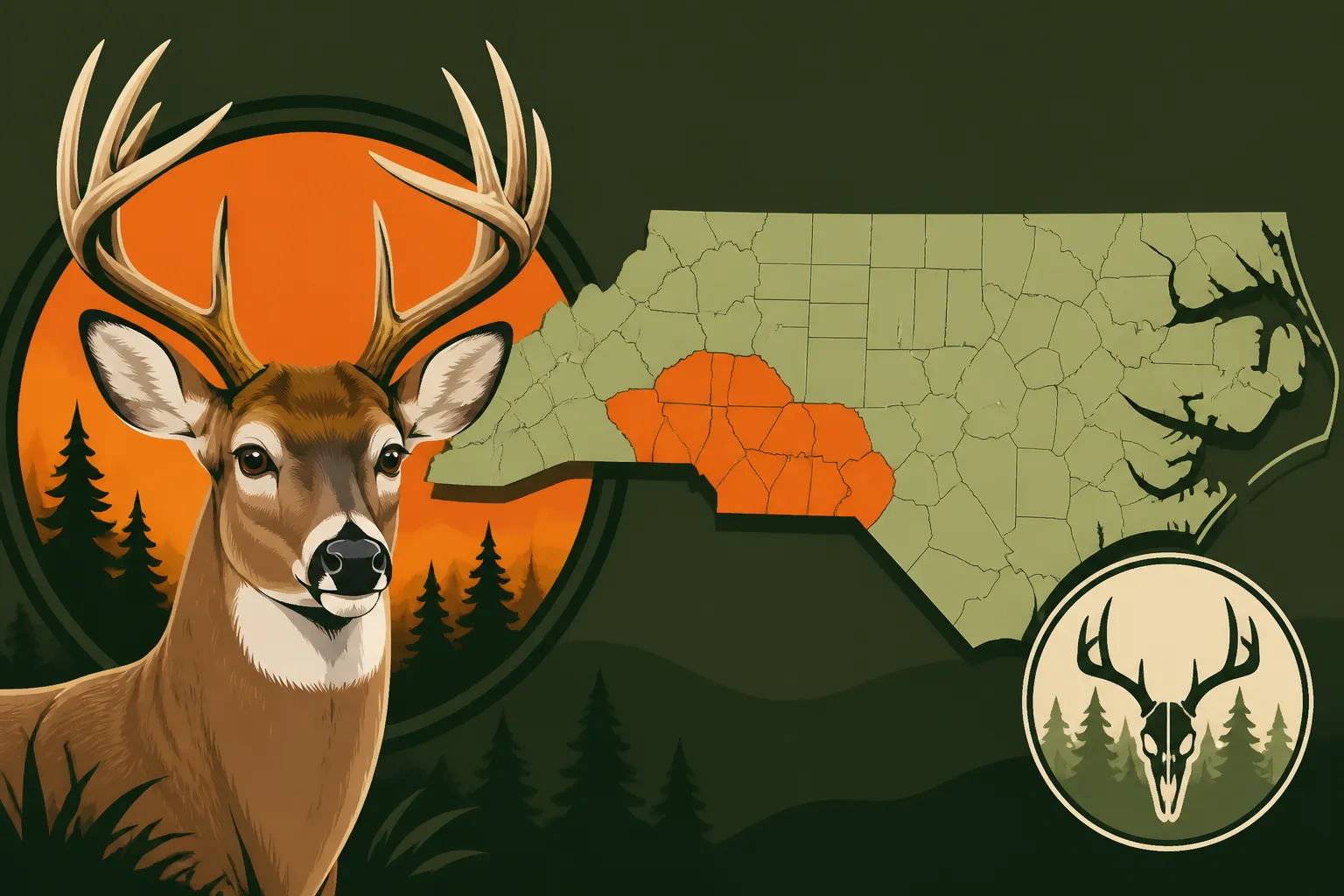
North Carolina’s Seven-County CWD Footprint
The discovery of Chronic Wasting Disease (CWD) in North Carolina sent a ripple of concern through the hunting community. It's a sobering reality when a disease with no known cure for animals threatens the very herds we cherish, impacting not just our hunting traditions but the health of the deer themselves. If you're a hunter in North Carolina, especially in the central and western parts of the state, understanding this disease and its presence in our woods is absolutely vital. This guide will walk you through North Carolina's designated seven-county CWD footprint, explaining what this means for deer and for every hunter heading afield.
What Exactly is Chronic Wasting Disease?
CWD isn't just another deer illness; it's a unique and persistent neurological disease that has no known cure and is always fatal for infected animals. It's a game-changer for deer management and hunting, demanding our serious attention and cooperation. Understanding the enemy is the first step in combating its spread.
The Prion Problem and Its Effects
Unlike typical diseases caused by bacteria or viruses, CWD is caused by abnormal proteins called prions. Think of it like a misfolded protein that starts infecting other normal proteins, causing them to misfold too. These rogue prions accumulate in the brain and nervous system of cervids—animals like deer, elk, moose, and caribou—slowly destroying brain tissue. Imagine a deer's brain literally developing holes, leading to a host of debilitating symptoms.
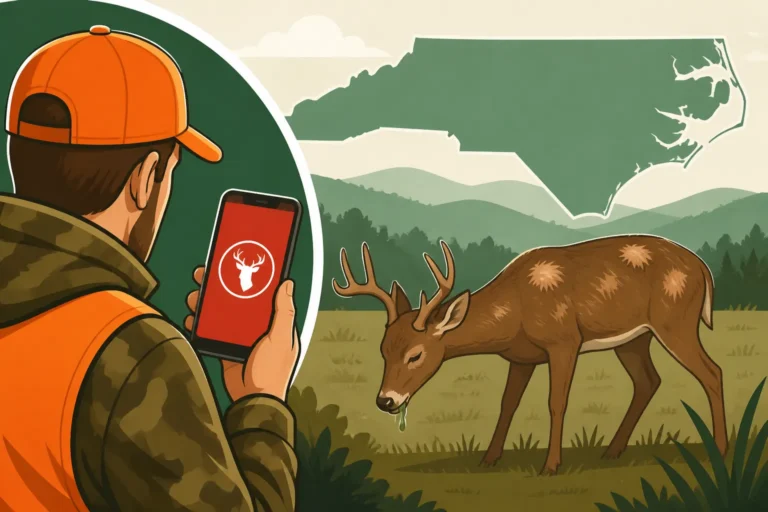
Initially, a deer infected with CWD might show no outward signs. It's a slow-burning disease, sometimes taking months or even years for symptoms to appear after infection. But once they do, they are unmistakable and heartbreaking. Infected deer might display drastic weight loss (the "wasting" part of the name), stumbling, a lack of coordination, excessive drooling, lethargy, and an unusual lack of fear of humans. They often walk with their heads down, looking disoriented. These symptoms worsen over time, ultimately leading to death. There’s no coming back from it, and that's what makes CWD such a serious threat to our white-tailed deer population. It's not a pleasant topic, but it's one we absolutely must confront as hunters and conservationists.
Transmission and Environmental Persistence
The insidious nature of CWD lies not only in its lethality but also in how easily it spreads and how incredibly resilient the prions are in the environment. CWD primarily spreads through direct contact between deer, often through saliva, urine, and feces. Picture deer congregating at a food plot or a natural mineral lick, sharing these bodily fluids. A buck rubbing its antlers on a tree, then another buck coming along to do the same – these are all potential vectors for prion transmission.
Beyond direct contact, CWD prions can persist in the environment for years, even decades, after an infected animal has died or left the area. They bind to soil particles and can remain infectious, meaning a healthy deer can pick up the disease by ingesting contaminated soil or plants. This environmental persistence makes CWD incredibly difficult, if not impossible, to eradicate once it has taken hold in an area. It’s not something you can just spray away or vaccinate against. This is why strict carcass movement rules are so crucial, preventing us from unknowingly carrying infected material from one county to another, potentially establishing new infection sites. Hunters using tools like the GoHunt app can often find information overlays for CWD zones, helping them understand where these restrictions apply.
CWD's Arrival and Establishment in North Carolina
For years, North Carolina stood as an island, one of the few states in the southeast without a confirmed case of CWD. We hoped and prayed it would never arrive, knowing the challenges other states faced. But the unfortunate reality is that CWD doesn't respect state lines or county borders. Its eventual discovery here was a stark wake-up call.
The First Confirmed Cases and Initial Surveillance
The quiet, unsettling news finally broke in 2022. That's when Which County Confirmed North Carolina's First CWD Case was announced, a buck harvested in Yadkin County during the 2021-2022 deer season, marking North Carolina's first-ever confirmed case of Chronic Wasting Disease. This discovery immediately triggered an intensive response from the North Carolina Wildlife Resources Commission (NCWRC), moving from a long-standing surveillance effort into an active management phase.
Following the initial detection, the NCWRC ramped up its efforts, specifically focusing on the area around the initial positive. This wasn't just about finding more cases, but about understanding the extent of the spread and How CWD Reached the Yadkin Valley in the first place, though pinpointing the exact vector is incredibly challenging. Surveillance efforts in the subsequent seasons quickly identified additional positive cases, confirming that CWD wasn't an isolated incident but had established a foothold in the region. This rapid expansion underscored the urgent need for a defined management strategy and clear communication with hunters.
Identifying the Seven-County Footprint
Based on the initial positive detections and subsequent surveillance, the NCWRC officially designated a CWD Management Area (CMA). This area encompasses seven specific counties, drawing a clear boundary for special regulations and intense monitoring. These are the counties where hunters face additional responsibilities and where the most significant changes to hunting practices are being implemented:
- Yadkin County: The location of North Carolina's first confirmed CWD case.
- Surry County: Quickly confirmed with multiple positive cases, showing a concentrated presence.
- Wilkes County: Adjacent to the initial detection, part of the core surveillance area.
- Stokes County: Included due to its proximity and deer movement patterns.
- Forsyth County: Another neighboring county, brought into the CMA for comprehensive management.
- Davie County: Situated to the south of the initial detection, vital for preventing southern spread.
- Iredell County: The most southerly of the initial CMA counties, rounding out the designated management zone.
These counties form the critical front line in North Carolina's fight against CWD. The designation of these specific counties is based on a scientific assessment of deer movement, geographical proximity to known positives, and a proactive approach to containing the disease. It's a necessary step to focus resources and implement targeted regulations where they are most needed. Hunters in these areas, or those passing through, must be especially diligent in adhering to the new rules. The state agency relies heavily on hunter participation and reporting to gain a clearer picture of North Carolina CWD Prevalence in the Yadkin Valley.
Here's a quick overview of the seven counties currently designated within North Carolina's CWD Management Area:
| County Name | Initial CWD Designation Date (Approx.) | Why Included |
|---|---|---|
| Yadkin | Spring 2022 | Site of NC's first confirmed CWD case (2021 harvest) |
| Surry | Spring 2022 | Multiple early positive detections, high prevalence |
| Wilkes | Fall 2022 | Proximity to initial positives, extensive deer range |
| Stokes | Fall 2022 | Adjacency to known CWD areas, potential for spread |
| Forsyth | Fall 2022 | Buffer zone, deer movement corridor to urban areas |
| Davie | Fall 2022 | Southern expansion of surveillance area, deer habitat |
| Iredell | Fall 2022 | Southernmost county in initial CMA, preventative measure |
Navigating the CWD Management Area Regulations
Once an area is designated as a CWD Management Area (CMA), special rules come into play. These aren't meant to make hunting harder, but rather to minimize the risk of spreading the disease further. As hunters, it’s our responsibility to understand and adhere to these regulations. Ignoring them could have severe long-term consequences for our deer herds.
Mandatory Testing and Carcass Movement Restrictions
One of the most significant changes for hunters in the CWD Management Area is the implementation of mandatory CWD testing. If you harvest a deer within any of these seven counties during designated periods, you are often required to submit a sample for testing. This isn't just a suggestion; it's a legal requirement designed to gather crucial data on disease prevalence and spread. Knowing Mandatory Testing Inside a CWD Surveillance Area is paramount. The NCWRC sets up numerous sampling stations, often at game lands offices, taxidermists, or butcher shops, to make this process as convenient as possible. You might find self-serve kiosks too, typically marked with clear instructions. Checking the NCWRC website or an up-to-date hunting app like GoHunt can help you locate the nearest sampling station.
Equally important are the carcass movement restrictions. To prevent the physical transportation of CWD prions, there are strict rules about Moving a Deer Carcass Out of a CWD Area. Generally, you cannot move a whole deer carcass or certain high-risk parts (like the brain, spinal cord, lymph nodes) out of the designated CMA. Only deboned meat, clean hides, antlers, and skull plates with all brain tissue removed are usually allowed to cross county lines out of the zone. This means field dressing and processing procedures might need to change for hunters in or near the CMA. It can be a hassle, especially if your butcher or taxidermist is outside the zone, but these measures are critical to protecting uninfected deer populations elsewhere in the state.
Special Hunting Seasons and Tagging Requirements
Beyond testing and carcass rules, the NCWRC has introduced special hunting opportunities within the CWD Management Area aimed at increased harvest and disease surveillance. A key example is The New Special Early CWD-Zone Season. This season typically offers an early opportunity to hunt deer, often with a focus on antlered bucks, to help gather more samples for testing before the main gun season influx. This early season is specifically designed to manage deer populations within the CWD footprint and collect more data, so understanding Why the Early Season Targets Antlered Deer Only in this context is important.
While overall statewide bag limits for deer remain, hunters in CWD areas need to be extra vigilant with their tagging and reporting. All harvested deer still need to be immediately tagged and reported to the NCWRC via their online system or app, just like any other deer in the state. However, the additional layer of CWD testing means careful record-keeping of your harvest information, which is linked to your sample. Staying informed on these season nuances and regulations requires hunters to regularly check official NCWRC resources or use reliable hunting information platforms.
The Hunter's Role in CWD Mitigation
The North Carolina Wildlife Resources Commission can set rules and conduct research, but the real heavy lifting in the fight against CWD falls to us, the hunters. We are the eyes and ears in the woods, and our actions can either help slow the spread or inadvertently contribute to it. This isn't just about compliance; it's about being responsible stewards of our wildlife.
Best Practices in the Field
When you're hunting in or near a CWD Management Area, adopting some best practices can significantly reduce the risk of spreading the disease. First and foremost, proper carcass disposal is crucial. If you process a deer in the field, especially within the CMA, ensure that any high-risk parts (head, spinal column, etc.) are left where they were taken down or disposed of in an approved landfill. Never discard them in ditches, rivers, or on properties outside the CWD zone.
Secondly, meticulous equipment hygiene can't be overstated. Prions are incredibly tough and can hitch a ride on boots, knives, ATV tires, or even your hunting clothes. After field dressing a deer or handling any carcass in a CWD area, thoroughly clean and disinfect all your tools, boots, and vehicle tires. A bleach solution (1 part bleach to 9 parts water) can be effective on non-porous surfaces. It sounds like a lot, but this small effort can prevent you from becoming an unknowing vector. For hunters who are also involved in Deer Drives With Three or Four Hunters on public land near the CWD zone, this level of attention to detail after the hunt becomes even more critical due to the potential for multiple deer and shared equipment.
Reporting Suspect Animals and Staying Informed
You are our best defense against the further spread of CWD. If you ever observe a deer exhibiting symptoms consistent with CWD—emaciation, abnormal behavior, drooling, stumbling—do not harvest it. Instead, immediately contact the NCWRC. They have specific protocols for investigating and testing suspect animals. Your report could be key to identifying new infection clusters. It’s a hard call to make, especially when you’ve been hunting for hours, but it’s the right call for the herd's health.
Beyond reporting, committing to staying informed is vital. The CWD situation is dynamic, and regulations can change. Regularly check the NCWRC website for updates on CWD management plans, testing opportunities, and any shifts in the CWD Management Area boundaries. Many hunters rely on digital resources and mobile apps for this kind of critical information. Platforms like GoHunt often integrate NCWRC data and can provide real-time updates and mapping overlays showing CWD zones, helping hunters adhere to rules even when in remote areas with limited signal. This commitment to staying informed is part of our broader role in North Carolina Wildlife Disease Monitoring and responsible hunting.
Looking Ahead: The Future of Deer Hunting in CWD Areas
The presence of CWD in North Carolina is a challenge, but it's not a death knell for our hunting heritage. It simply means we must adapt, educate ourselves, and work together. The NCWRC and hunters alike are invested in finding ways to manage this disease and ensure healthy deer populations for generations to come.
Long-Term Management Strategies and Research
The NCWRC is not taking CWD lightly. Their long-term management strategy is multi-faceted, focusing on intense surveillance, targeted population management, and ongoing research. This involves continued CWD testing, even outside the current seven-county footprint, to monitor for new outbreaks. In areas where CWD is established, there may be discussions around increasing antlerless deer harvest opportunities to manage deer density, as higher densities can facilitate faster CWD transmission.
Research efforts are also crucial, both locally and nationally, to better understand CWD prions, how they interact with the environment, and potential mitigation strategies. While a cure or vaccine remains elusive, scientists are exploring various avenues. The goal is to develop tools and strategies that minimize the disease's impact on deer populations and ensure the long-term sustainability of hunting. These strategies might include specific habitat enhancements or altered feeding practices to reduce congregation and potential transmission points.
Adapting Hunting Traditions
For many of us, hunting is steeped in tradition, passed down through generations. CWD forces us to re-evaluate some of those traditions, particularly when hunting in a CWD Management Area. The carcass movement restrictions might mean saying goodbye to taking a whole deer straight to your buddy's house in another county for processing. Instead, you might need to learn how to debone a deer in the field or utilize a local processor within the CWD zone. This also applies to Deer Camp Traditions if parts of the deer are intended for consumption or mounting outside the CMA.
Furthermore, hunters might need to adjust their scouting and hunting tactics. While CWD itself isn't known to drastically alter deer behavior in early stages, understanding how deer move and congregate becomes more important. For example, if you're Reading a Ridge for Mountain Zone Deer or hunting Uwharrie Piedmont Hollows, being aware of high-traffic areas where prions could accumulate in the soil might influence stand placement or hunting frequency. It's a subtle shift, but one that emphasizes our role in disease management rather than just harvest. Tools like GoHunt can aid in scouting, allowing hunters to mark potential CWD hot spots or areas where they've observed sick animals, helping to inform future hunts.
Understanding North Carolina CWD Prevalence in the Yadkin Valley
The Yadkin Valley, particularly the areas within Yadkin and Surry counties, represents the current epicenter of CWD in North Carolina. Understanding the prevalence here – meaning the proportion of the deer population that is infected – is paramount for effective management. While the exact numbers fluctuate, data from the NCWRC shows that the disease is present and has been steadily detected in this region since its initial discovery. This prevalence guides specific management actions, such as intensive surveillance and targeted harvest strategies during the special seasons.
For hunters in this particular region, this means an increased likelihood of encountering an infected deer, which reinforces the importance of mandatory testing and carcass regulations. It also means that community cooperation is even more critical. The long-term health of the deer herd in the Yadkin Valley will depend heavily on hunters actively participating in surveillance efforts and adhering to all guidelines. This detailed knowledge allows the NCWRC to make informed decisions about future hunting regulations, ensuring that the burden of managing CWD is distributed effectively while striving to minimize its impact on the cherished hunting opportunities across the state.
Disclaimer
The information provided in this guide is for general informational purposes only and is subject to change. Hunting regulations, CWD management areas, and testing requirements are determined by the North Carolina Wildlife Resources Commission and can be updated at any time. Hunters are solely responsible for knowing and abiding by all current laws and regulations before engaging in any hunting activities. Always consult the official NCWRC website or printed regulations for the most accurate and up-to-date information.