Why the Early Season Targets Antlered Deer Only
It’s a new challenge for North Carolina deer hunters, especially for those of us who spend countless hours scouting and anticipating opening day. You’re finally out in the woods, the air crisp, and the deer are moving, but now you’re faced with specific, often confusing, regulations regarding chronic wasting disease (CWD) and the new early season that targets only antlered deer. It can feel like just another hurdle in an already complex sport, leaving you wondering why these rules are even necessary. This guide aims to clear up that confusion, explaining the scientific and management reasons behind this antlered-deer-only focus, and how it impacts your hunting strategy in the CWD management areas.
Understanding North Carolina's Special Early CWD Season
The appearance of Chronic Wasting Disease in North Carolina has thrown a curveball into deer hunting, especially in the affected counties. It's a disease that brings significant concern and, consequently, new rules that often feel restrictive or arbitrary at first glance. The North Carolina Wildlife Resources Commission (NCWRC) isn't imposing these rules lightly; they are a direct response to a serious threat to our state's deer herd.
The Urgency of Chronic Wasting Disease
CWD is a tricky, fatal neurological disease affecting deer, elk, and moose. It's caused by abnormal proteins called prions, which can persist in the environment for years, making it incredibly challenging to manage once it takes hold. Imagine a microscopic, invisible enemy that lurks in the soil, plants, and even other deer, slowly spreading and inevitably leading to death. That's CWD. When it first showed up in North Carolina, particularly in the Yadkin Valley region, it was a wake-up call. The disease works slowly, often taking months or even years for an infected deer to show symptoms, making it an insidious threat that can spread widely before anyone even notices.
The urgency stems from the fact that there is no known cure, and it’s always fatal. If left unchecked, CWD can decimate deer populations, severely impacting both the health of the herd and the future of hunting. This isn't just about deer; it's about the entire ecosystem and the traditions we hold dear. Understanding the gravity of CWD helps put these new regulations, like the early antlered-only season, into perspective. It’s a proactive, and sometimes drastic, measure to protect our wild cervid populations from this relentless disease. For more detailed information on the disease's presence in the state, check out our guide on North Carolina's Chronic Wasting Disease Areas.
Geographic Focus of the Early Season
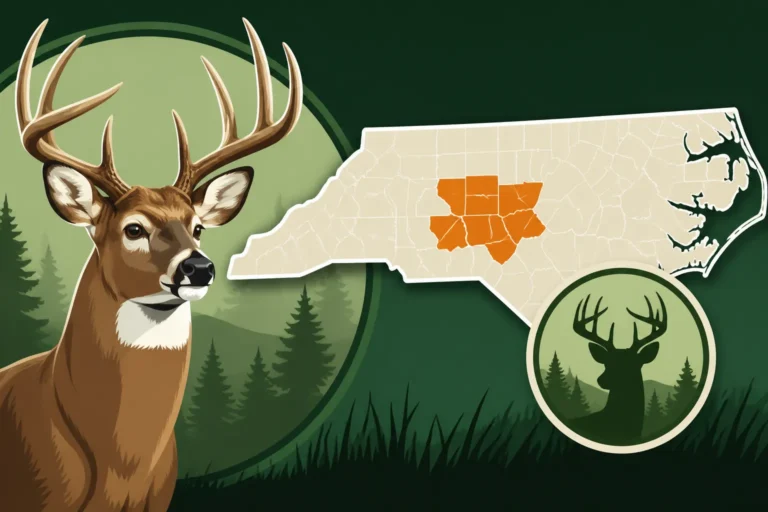
Not all of North Carolina is under the same CWD management rules. The special early antlered-deer-only season is specifically implemented within designated CWD Management Areas (CWD-MAs). Currently, these are focused around the initial detection sites, primarily encompassing counties in the Yadkin Valley. For instance, counties like Surry, Yadkin, and Wilkes have been at the forefront of this management challenge. These zones are not just lines on a map; they are areas where biologists have confirmed CWD cases or where the risk of transmission is considered highest.
Hunting in these specific areas means hunters become a critical part of the monitoring and management effort. This early season isn't designed to be a free-for-all; it's a targeted strategy. For example, if you're hunting in Surry County, which unfortunately seems to drive North Carolina’s CWD count, you'll be well aware of the heightened regulations. The NCWRC aims to concentrate efforts where they can have the most impact, using hunters as their primary data collectors and population managers. Knowing exactly which counties sit in a CWD Management Area is crucial, as the rules, including the specifics of the special early season and mandatory testing requirements, are different there. To understand the full scope of these zones, it's worth reviewing Which Seven Counties Sit in a CWD Management Area.
The Strategic Choice: Why Antlered Deer?
When you hear about an antlered-deer-only season, it's natural to scratch your head. After all, isn't CWD a disease that can affect any deer, regardless of sex or antler status? While that's true, the decision to specifically target antlered deer during this early special season is rooted in some very specific biological and epidemiological factors that contribute to the spread of CWD. It’s not about male deer being inherently more susceptible, but rather how their behavior plays a role in transmission.
Biological Factors Driving CWD Transmission
The primary reason for focusing on antlered deer boils down to their behavior, particularly during the pre-rut and rut phases leading up to and during the regular deer season. Bucks, especially older, larger ones, tend to have wider home ranges than does. They travel more extensively as they search for mates, increasing the potential for them to encounter and interact with more deer across a larger geographical area. Think about a mature buck scent-checking scrapes along a logging road or cruising through new territory. Each of these actions can contribute to the spread of prions.
Furthermore, bucks engage in more direct deer-to-deer contact through sparring, fighting, and nose-to-nose interactions during the rut. These direct contacts, often involving saliva, blood, and antler velvet residue, are highly efficient ways to transmit CWD prions. Bucks are also more likely to visit mineral licks, rub trees, and scrape lines, depositing prions in the environment where other deer can pick them up. Data from CWD studies in other states, and increasingly in North Carolina, indicates a higher prevalence of CWD in mature bucks compared to does or younger deer. This isn't because they're genetically weaker, but because their behavior pattern, especially their ranging and aggressive interactions, makes them more effective vectors for the disease. By reducing the number of mature bucks in the population before the peak rut, wildlife managers hope to slow down the rate of CWD transmission. It's a targeted approach to interrupt a key pathway for the disease.
Management Goals Beyond Harvest Numbers
The goals of the early antlered-deer-only season in CWD-MAs extend far beyond simply increasing the overall deer harvest. While harvest data is important, the primary objective here is to collect critical biological samples for CWD testing and to mitigate disease spread. The early season provides a unique opportunity to sample a segment of the deer population — mature bucks — known to have a higher likelihood of CWD infection.
Here’s a table outlining the key management goals:
| Goal Category | Specific Objective | How Antlered-Only Helps |
|---|---|---|
| Disease Surveillance | Maximize the collection of CWD samples from high-risk individuals. | Antlered deer, especially older bucks, show a higher prevalence of CWD. Targeting them early provides valuable data on disease presence and spread, helping biologists to identify hotspots and understand the disease’s progression within the herd. |
| Reduced Transmission | Limit direct and indirect contact opportunities between deer, especially during the rut. | Removing infected or potentially infected bucks before the peak of the rut, when deer-to-deer contact is highest, can help reduce the number of prions shed into the environment and decrease direct transmission rates through sparring and breeding activities. |
| Data & Research | Gather data on buck movement, health, and population dynamics in affected areas. | The early season allows for focused data collection on a critical demographic. This information is vital for understanding how CWD is affecting the local deer population and refining future management strategies. |
| Hunter Engagement | Involve hunters directly in CWD management efforts, fostering awareness and compliance. | By participating in this specific season, hunters become partners in disease management, contributing samples and learning about CWD protocols. This builds a crucial foundation for long-term control efforts. |
This isn't about eradicating every buck, but about strategically removing animals that pose the highest risk of spreading CWD. By focusing on these individuals, the NCWRC hopes to keep the overall disease prevalence as low as possible and confine it to its current footprint. For hunters, it means a more focused approach, and one that requires careful attention to reporting requirements. Our resource on North Carolina Deer Reporting Requirements can help clarify this process.
What This Means for Hunters in CWD Zones
Hunting in a CWD Management Area (CWD-MA) means adapting to new rules and taking on a greater responsibility in the fight against this disease. It’s not just about what you can harvest, but how you contribute to wildlife management efforts. This early antlered-deer-only season is a prime example, requiring hunters to be more informed and more strategic in their approach.
Gear and Tactics for Early Season Success
The special early CWD season opens up new opportunities and challenges for hunters. Since it specifically targets antlered deer, your scouting and hunting tactics need to be finely tuned to locate and pursue bucks during this unique timeframe. The season typically runs in late summer or early fall, often before the general archery or gun seasons kick off, as we detail in When the New Special Early Season Runs. This means you’ll be hunting in conditions that might be warmer, with more foliage, and deer patterns that haven't fully shifted into their fall routines.
- Pre-Season Scouting: This becomes even more critical. Bucks will still be in their summer patterns, often hanging out in bachelor groups and focused on food sources. Look for areas with lush forage, especially agricultural fields like soybeans or alfalfa if you're hunting in a farming region, or natural mast crops that are beginning to drop. Tools like the GoHunt app or other mapping software can be invaluable for identifying prime feeding areas and potential travel corridors. Pay close attention to water sources as well, especially if the weather is warm.
- Stand Placement: Given the denser foliage, ground blinds might offer a better advantage for concealment than a traditional treestand in some areas, particularly along field edges or thick travel routes. If using a treestand, focus on pinch points or funnels that connect bedding to feeding areas. Wind direction is always paramount, but even more so in warmer weather when deer are less tolerant of human scent.
- Rifle or Bow Selection: While the "early season" often implies archery, in CWD zones, the special antlered-only season might allow specific firearm types depending on the exact regulations. Always double-check the NCWRC’s current rules for legal weapons in that specific CWD-MA. If it's a rifle season, consider a caliber suitable for North Carolina deer that offers versatility for various ranges you might encounter in the woods, as discussed in our article on Rifle Setups for North Carolina Deer Hunting. If it’s archery, ensure your bow is sighted in and you’re comfortable with shots in potentially dense cover.
- Scent Control: Warm weather hunting means more sweating. Aggressive scent control becomes even more important. Use scent-eliminating sprays, wash your hunting clothes in scent-free detergent, and store them properly.
- Patient Hunting: Deer, especially bucks, can be more nocturnal in warmer temperatures. Be prepared for longer waits and focus on the golden hours of dawn and dusk. Patience and persistence will pay off.
Remember, the goal isn't just to harvest any deer, but to specifically target an antlered buck to contribute to the CWD management effort.
Navigating Mandatory CWD Reporting and Testing
Perhaps the most significant change for hunters in CWD-MAs is the mandatory CWD testing. This isn't optional; it's a legal requirement that directly contributes to the NCWRC's understanding of the disease. Successfully taking an antlered deer in this special season comes with the responsibility of ensuring your harvest is sampled.
Here's what you need to know:
- Reporting: Immediately after harvesting an antlered deer in a CWD-MA, you must report it to the NCWRC. This can usually be done quickly and easily through their online reporting system or the NC Wildlife mobile app. Our detailed guide on North Carolina Deer Reporting Requirements covers this process thoroughly. This reporting triggers the next step: CWD testing.
- Sampling Locations: Once reported, you’ll need to take your deer, or at least its head, to a designated CWD sampling station. These stations are strategically located within or near the CWD-MAs to make the process as convenient as possible for hunters. The NCWRC typically provides a map of these locations on their website. It’s wise to scout these locations beforehand, perhaps even using a mapping tool like GoHunt to mark them on your digital map, so you know exactly where to go if you're successful.
- Carcass Movement Restrictions: One of the most critical aspects of CWD management is preventing the further spread of the disease through infected carcasses. If you harvest a deer in a CWD-MA, there are strict rules about moving the carcass or certain parts of it outside of that zone. Generally, you can only transport boned-out meat, capes (without skull attached), antlers (cleaned of all tissue), and clean skull plates. This means no whole carcasses or spinal columns leaving the CWD-MA, even if your deer tests negative. These North Carolina Carcass Movement Restrictions are in place to safeguard other areas of the state. It’s a bit of a hassle, but it’s a vital measure to contain the disease.
- Results and Follow-Up: The NCWRC will process the samples and typically notify you of the test results within a few weeks. If your deer tests positive, you’ll receive specific instructions on how to handle the carcass and any remaining meat, which usually involves strict disposal protocols.
Participating in this early antlered-only season and adhering to the CWD regulations makes you an active participant in conservation. It's not just about your hunt; it's about protecting the long-term health of North Carolina's deer herd for future generations.
Disclaimer
The information provided in this guide is for general informational purposes only and does not constitute legal advice. Hunting regulations, season dates, and CWD management protocols are subject to change. Always consult the official North Carolina Wildlife Resources Commission (NCWRC) regulations and proclamations for the most current and accurate information before planning any hunting activity. Failure to comply with state and federal hunting laws can result in penalties.