North Carolina CWD Prevalence in the Yadkin Valley
For many North Carolina deer hunters, the phrase "Chronic Wasting Disease" sends a shiver down their spine, and nowhere is that feeling more acute than in the beautiful, deer-rich Yadkin Valley. The reality of CWD in our state can be confusing and frankly, a bit disheartening, but understanding its prevalence in this specific region is crucial for both conservation and responsible hunting. This comprehensive guide aims to cut through the noise, explaining the current situation of CWD in the Yadkin Valley, what it means for local deer populations, and what every hunter needs to know and do to help manage this complex challenge.
The Arrival of CWD and Its Foothold in North Carolina's Yadkin Valley
The news of Chronic Wasting Disease (CWD) arriving in North Carolina was a gut punch for hunters and wildlife enthusiasts across the state, but its establishment in the Yadkin Valley has certainly placed this region at the forefront of the fight. This insidious neurological disease, always fatal to deer and other cervids, has been slowly creeping across the continent for decades, and its detection here brought a new level of concern. It's not just a far-off problem anymore; it's right in our backyard.
CWD is caused by abnormal proteins called prions, which slowly accumulate in the brain and other tissues of infected animals. These prions essentially turn the deer's brain into a spongy mess, leading to emaciation, abnormal behavior, and eventually death. What makes CWD particularly terrifying for hunters and wildlife managers is its persistence in the environment. Prions can remain viable in soil and plants for years, making eradication incredibly difficult once the disease takes hold. This environmental persistence means that even if all infected deer were removed, the land itself could still harbor the prions, continuing the cycle of infection for future generations of deer. The potential for long-term ecological impact and significant reductions in deer populations is a very real concern, hitting close to home for anyone who cherishes the deer hunting traditions of the Yadkin Valley.
How CWD Entered North Carolina
The exact pathway of CWD into North Carolina, and specifically the Yadkin Valley, is a complex question with no single, easy answer. Wildlife biologists and enforcement agencies have been working tirelessly to trace its origins and understand its spread. The most common theories involve natural deer movement from neighboring states where CWD was already established, or potentially the illegal movement of infected deer or deer carcasses by humans. It's a sobering thought to consider that human actions, however unintentional, could contribute to such a devastating outcome for our wild deer herds. The interconnectivity of deer populations, especially across state lines and within vast landscapes like the Appalachian foothills that border the Yadkin Valley, means that boundaries are largely meaningless to a disease like CWD.
Once CWD was confirmed in the Yadkin Valley, it sent shockwaves through the local hunting community. Many hunters, myself included, have spent a lifetime chasing deer through the rolling hills and river bottoms of counties like Surry, Wilkes, and Yadkin. The idea that this beautiful, vibrant deer herd could be threatened by an unseen enemy is a tough pill to swallow. The initial detection points often serve as a wake-up call, triggering immediate and extensive surveillance efforts to determine the full extent of the infection and implement management strategies to slow its progress. This is why understanding Which County Confirmed North Carolina's First CWD Case was such a critical piece of information when CWD arrived on our radar.
The Designation of the Yadkin Valley CWD Zone
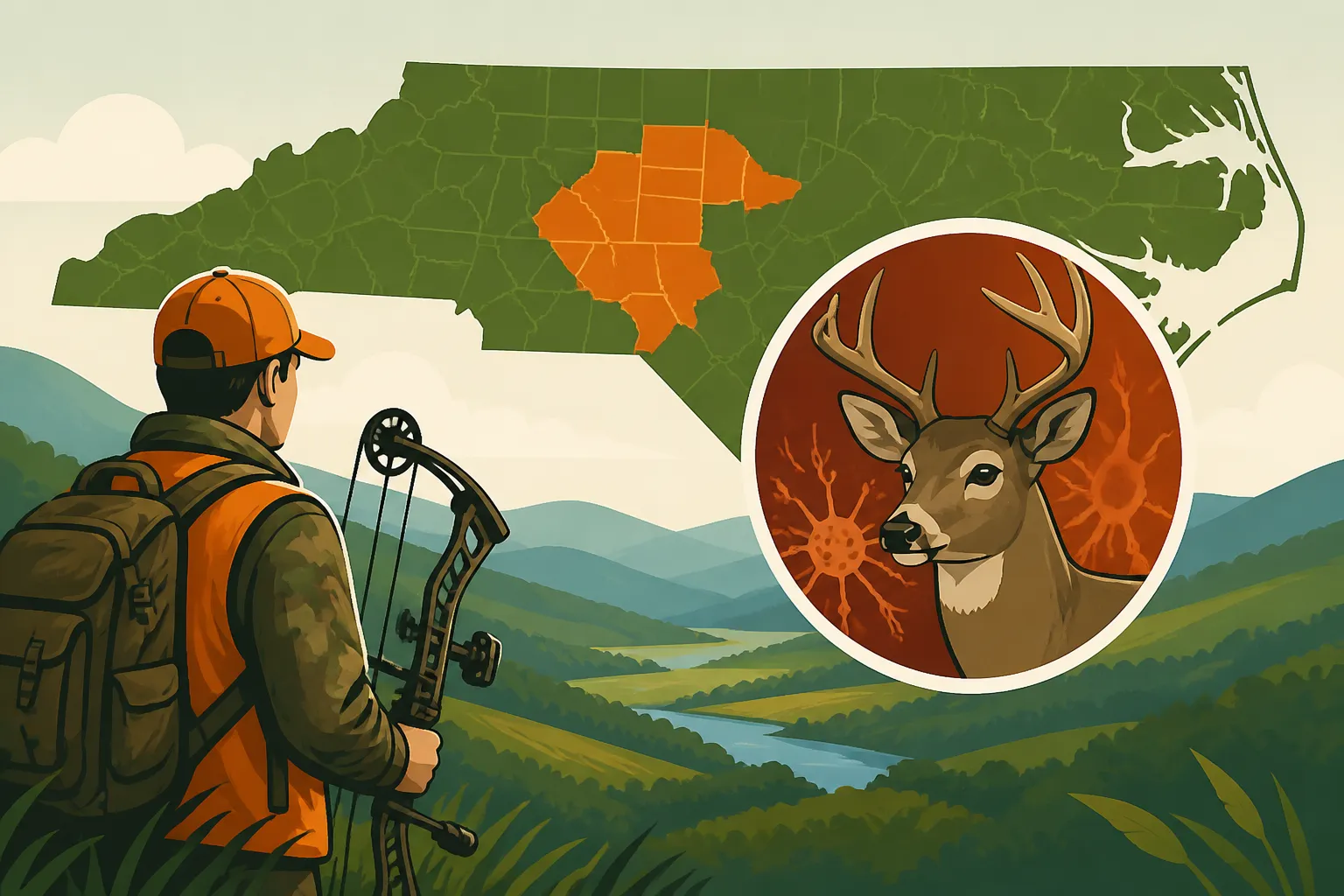
Following the initial detections, the North Carolina Wildlife Resources Commission (NCWRC) took swift action to delineate specific CWD Management Areas (CMAs) and Primary and Secondary Surveillance Areas (PSAs/SSAs) in the Yadkin Valley. These zones are not arbitrary lines on a map; they represent carefully considered boundaries based on epidemiological data, deer movement patterns, and geographical features designed to contain and manage the spread of the disease. The intention behind these zones is to focus resources and regulations where they are most needed, minimizing the impact on areas currently free of CWD.
For hunters, these designations are critically important because they dictate specific rules regarding everything from carcass transport to mandatory testing. Living and hunting within a designated CWD zone means adapting to a new set of responsibilities, all aimed at protecting our deer herd. It's a collaborative effort, and every hunter's adherence to these regulations is a vital part of the solution. The boundaries of these zones might feel restrictive, but they are a necessary tool in the long-term fight against CWD. Understanding the nuances of North Carolina's Chronic Wasting Disease Areas is no longer optional for those hunting in or around the Yadkin Valley.
Understanding CWD Prevalence and Hotspots in the Yadkin Valley Region
The Yadkin Valley, with its blend of agricultural lands, mature timber, and river drainages, provides prime deer habitat that has historically supported robust populations. Unfortunately, this also makes it an ideal environment for CWD to potentially spread once introduced. Understanding the current prevalence – how many deer are infected – and identifying specific hotspots within the region is key to targeted management efforts and informed hunting decisions.
The NCWRC relies heavily on surveillance data gathered from hunter-harvested deer, road-killed deer, and targeted removals to gauge the extent of CWD. Each tested sample contributes to a larger picture, helping biologists map the disease's distribution and intensity. This data helps answer the unsettling question of How Many Deer Have Tested CWD-Positive Since Testing Began, giving us a clearer understanding of the challenge ahead. It’s a dynamic situation, and what might be a low prevalence area one season could see an uptick the next, underscoring the need for continuous monitoring and adaptive strategies.
Counties Most Affected and Identified Hotspots
When CWD was first detected in North Carolina, the Yadkin Valley quickly became the focal point, with specific counties emerging as areas of primary concern. Surry County, in particular, has seen a higher number of positive cases, leading many to observe that Why Surry County Drives North Carolina's CWD Count is a critical piece of the puzzle. This county's unique blend of topography, land use, and deer movement patterns likely contributes to its status as a CWD hotspot. Other adjacent counties, such as Yadkin, Wilkes, and parts of Stokes and Forsyth, also fall within the larger CWD Management Areas, experiencing varying levels of surveillance and confirmed cases.
These hotspots are often characterized by factors that facilitate disease transmission, such as high deer densities, concentrated feeding areas, or specific habitat features that encourage prolonged contact between animals. For a hunter using a tool like GoHunt to scout public or private land, understanding these county-level distinctions and identified hotspots can influence where and how they choose to hunt, and what precautions they take. Knowing if you're hunting in a Primary Surveillance Area versus a broader Secondary Surveillance Area can change your approach to field dressing, meat processing, and even equipment hygiene.
Trends in Disease Detection and Spread
Analyzing the trends in CWD detection provides invaluable insight into how the disease might be spreading and whether current management efforts are having an impact. Wildlife biologists monitor several key metrics: the total number of positive cases, the geographic spread of those cases, and the prevalence rate within specific populations. An increase in any of these metrics could signal a need for intensified measures. Conversely, a stable or decreasing trend, however unlikely in the early stages, would offer a glimmer of hope.
The good news is that early detection and rapid response are critical in managing CWD. The NCWRC has been proactive in establishing robust surveillance programs, encouraging hunter participation in testing, and implementing strict carcass movement restrictions. While we all wish CWD had never arrived, the comprehensive approach in the Yadkin Valley is a testament to the dedication of our wildlife professionals and the hunting community. We're all in this together, and the vigilance of hunters reporting sick deer or submitting samples for testing is a major factor in understanding and slowing the spread.
| County | CWD Management Area Status | Key Regulations for Hunters |
|---|---|---|
| Surry County | Primary Surveillance Area (PSA) | Mandatory CWD testing for deer harvested during certain periods, carcass movement restrictions, no feeding of deer. |
| Yadkin County | Primary Surveillance Area (PSA) | Mandatory CWD testing for deer harvested during certain periods, carcass movement restrictions, no feeding of deer. |
| Wilkes County | Secondary Surveillance Area (SSA) | Carcass movement restrictions (certain parts cannot leave CMA), voluntary testing encouraged, no feeding of deer. |
| Stokes County | Secondary Surveillance Area (SSA) | Carcass movement restrictions (certain parts cannot leave CMA), voluntary testing encouraged, no feeding of deer. |
| Forsyth County | Secondary Surveillance Area (SSA) | Carcass movement restrictions (certain parts cannot leave CMA), voluntary testing encouraged, no feeding of deer. |
| Davidson County | Secondary Surveillance Area (SSA) | Carcass movement restrictions (certain parts cannot leave CMA), voluntary testing encouraged, no feeding of deer. |
| Davie County | Secondary Surveillance Area (SSA) | Carcass movement restrictions (certain parts cannot leave CMA), voluntary testing encouraged, no feeding of deer. |
Note: This table provides a general overview. Specific regulations, dates, and areas can change. Always check the latest NCWRC CWD information for current details, or consult mapping tools like GoHunt for precise boundaries.
Navigating the New Normal: Regulations and Hunter Responsibilities in CWD Areas
The introduction of CWD into the Yadkin Valley has undeniably changed the landscape for North Carolina hunters. What was once a relatively straightforward endeavor of securing your license and heading afield now involves an added layer of responsibility and adherence to new regulations. It’s a "new normal" that, while sometimes frustrating, is absolutely vital for the long-term health of our deer herd and hunting traditions. Embracing these changes is a fundamental part of being a responsible steward of our wildlife resources.
The NCWRC has implemented a series of specific rules for CWD Management Areas (CMAs) and Surveillance Areas, primarily focusing on limiting the potential for human-assisted spread of the disease. These regulations are designed to minimize the transport of infected prions, whether on deer carcasses, through contaminated feed, or via hunting equipment. It's a comprehensive approach that recognizes the many ways CWD can move, and asks hunters to become active participants in prevention.
Mandatory Testing and Carcass Movement Restrictions
Perhaps the most significant change for hunters in the Yadkin Valley's CWD zones is the implementation of mandatory testing requirements for deer harvested during specific periods, particularly during the early gun seasons or within Primary Surveillance Areas. This isn't just an inconvenience; it's a critical component of the state's surveillance strategy. By submitting samples for testing, hunters provide invaluable data that helps wildlife biologists understand the true prevalence and geographical distribution of the disease. Without this information, effective management would be impossible. You can find detailed instructions on North Carolina CWD Testing for Hunters on the NCWRC website.
Alongside mandatory testing, stringent carcass movement restrictions are now in place. These rules dictate which parts of a deer harvested in a CWD-affected county can be transported out of that county or zone. Typically, only deboned meat, clean antlers (without brain tissue), hides, and taxidermy-ready skulls (free of tissue) can leave the CWD Management Area. The goal is to prevent the spread of prions, which are most concentrated in the brain, spinal cord, lymph nodes, and spleen. This means field dressing and processing practices must adapt, often requiring hunters to quarter their deer in the field or utilize designated CWD drop-off and processing sites. Navigating North Carolina Carcass Movement Restrictions is essential for any hunter in these areas to avoid unknowingly contributing to the disease's spread.
Prohibited Activities and Preventative Measures
Beyond testing and carcass restrictions, there are other important prohibitions and preventative measures that hunters in the Yadkin Valley CWD zones must adhere to. One of the most common and impactful rules is the prohibition on feeding deer. While seemingly harmless, feeding concentrates deer in unnaturally high densities, increasing nose-to-nose contact and the likelihood of CWD transmission. This includes mineral blocks, bait, and supplemental feed, even if you are just trying to help the deer through a tough winter. Similarly, the use of urine-based attractants is often discouraged or prohibited, as these products could theoretically harbor CWD prions.
Furthermore, hunters are strongly encouraged to practice good hygiene with their equipment. This means cleaning treestands, boots, ATVs, and processing tools between hunts, especially if moving between different hunting areas or out of a CWD zone. Simple steps like washing hands thoroughly and sterilizing knives can go a long way in preventing inadvertent spread. For those utilizing resources like GoHunt, paying close attention to the delineated CWD zones on their maps can help inform these preventative practices, ensuring you're always aware of where you stand in relation to management boundaries.
Practical Advice for Hunters in the Yadkin Valley CWD Management Zone
Hunting in the Yadkin Valley, particularly within its designated CWD Management Areas, requires a thoughtful and responsible approach. While the challenges of CWD are real, they don't have to spell the end of your hunting traditions. Instead, they call for an informed and proactive mindset. As hunters, we are often the first line of defense and our actions directly impact the future of our deer herd.
The key is to understand the regulations, adapt your practices, and see yourself as an integral part of the solution. This means staying informed, participating in surveillance efforts, and making ethical choices that prioritize herd health. Embracing this role ensures that you continue to enjoy the hunt while contributing positively to wildlife conservation. The passion we have for hunting in North Carolina means we also have a responsibility to protect it.
Staying Informed and Utilizing Resources
The first step for any hunter in the Yadkin Valley is to stay constantly informed. Regulations can and do change based on new scientific understanding and the evolving spread of the disease. The official source for all CWD-related information is the North Carolina Wildlife Resources Commission website. They provide maps of the CWD zones, detailed regulations, instructions for submitting samples, and locations of sampling stations. Make it a habit to check their CWD section before each season, and even periodically during the season, especially if you plan to hunt in a new area.
Beyond the official channels, many hunters find digital mapping tools incredibly helpful. Platforms like GoHunt often integrate CWD zone boundaries directly into their maps, allowing you to visually confirm if your hunting area falls within a Primary Surveillance Area or a broader management zone. This visual aid can be invaluable for planning hunts, understanding carcass movement restrictions relevant to your specific property, and finding local CWD sampling sites. Don't rely on outdated information or hearsay; verify everything through official or trusted digital resources.
Adapting Your Hunting and Processing Practices
Hunting within a CWD zone requires some practical adjustments to your routine. One crucial change is how you handle your harvest. If you hunt in a mandatory testing area, be prepared to get your deer tested. This might mean field dressing your deer in the woods and then taking the head (with some neck attached) to a designated sampling station. Knowing how to efficiently quarter a deer in the field can be extremely useful, especially if you need to transport parts out of a strict CWD zone. The less bulk you move, the easier it is to comply with Moving a Deer Carcass Out of a CWD Area rules.
Consider where and how you process your deer. If you're accustomed to taking your entire deer to a processor outside the CWD zone, you'll need to verify that processor is aware of and compliant with carcass restrictions. Alternatively, many hunters in these areas are now deboning their deer themselves or utilizing local processors who are equipped to handle CWD-zone harvests. Remember, only the approved parts, such as deboned meat, can leave the CWD zone. This also extends to your taxidermy plans; discuss the regulations with your taxidermist beforehand to ensure they can legally accept and process your trophy. Taking extra care when Handling Venison From a CWD Management Area will give you peace of mind.
Supporting Surveillance and Management Efforts
As hunters, we have a unique and powerful role to play in CWD management. The NCWRC relies heavily on our participation in surveillance efforts. If you harvest a deer in a CWD zone, especially within a mandatory testing area, dutifully submit your sample. Beyond the requirements, if you observe a deer exhibiting signs of CWD – such as extreme thinness, stumbling, drooling, or a lack of fear of humans – immediately report it to the NCWRC. Do not harvest or approach the animal yourself; let wildlife professionals handle it.
Your cooperation in following all regulations, even those that seem inconvenient, directly contributes to protecting the overall health of North Carolina's deer herd. This includes adhering to bans on feeding deer, respecting carcass movement rules, and practicing good sanitation. These efforts, combined with strategic hunting in areas with higher deer densities, particularly during seasons like Hunting the Special Early CWD-Zone Season, can help mitigate disease spread. By being vigilant and responsible, hunters in the Yadkin Valley can help ensure that deer hunting traditions continue for generations to come, even in the face of CWD.
Disclaimer
This article is for general informational purposes only and does not constitute professional advice. Laws, prices and regulations vary by location and change over time. Consult a qualified professional for guidance on your specific situation.