North Carolina Boone and Crockett Whitetails
For many North Carolina deer hunters, the dream of a Boone and Crockett whitetail can feel like a far-off fantasy, something reserved for the Midwest or certain well-known trophy states. It's easy to get discouraged when you consistently see smaller deer, leading to the belief that our state just doesn't produce those giants. But I'm here to tell you that North Carolina absolutely has the genetics and habitat to grow world-class bucks, and with the right strategy and a boatload of patience, that B&C dream is very much within reach. This guide will help you understand where these impressive deer come from in our state and how to increase your odds of finding one.
The Allure of North Carolina's Trophy Whitetails
There's a special kind of thrill that comes with pursuing a truly mature whitetail buck, one that has navigated years of challenges and grown antlers that command respect. In North Carolina, this pursuit often means looking beyond the typical deer seen in most areas and understanding the unique factors that contribute to trophy potential.
Dispelling the Myth: NC's Potential
Let's be honest, North Carolina isn't usually the first state that pops into mind when people talk about Boone and Crockett whitetails. We're known for our diverse hunting opportunities, from the mountains to the coast, and for a healthy, abundant deer herd. But often, that abundance means a higher deer density and, in many areas, a younger age structure among bucks. Hunters often face the frustration of seeing lots of deer, but consistently passing on younger animals in search of something truly special. This can lead to the widespread misconception that our state simply doesn't produce top-end deer.
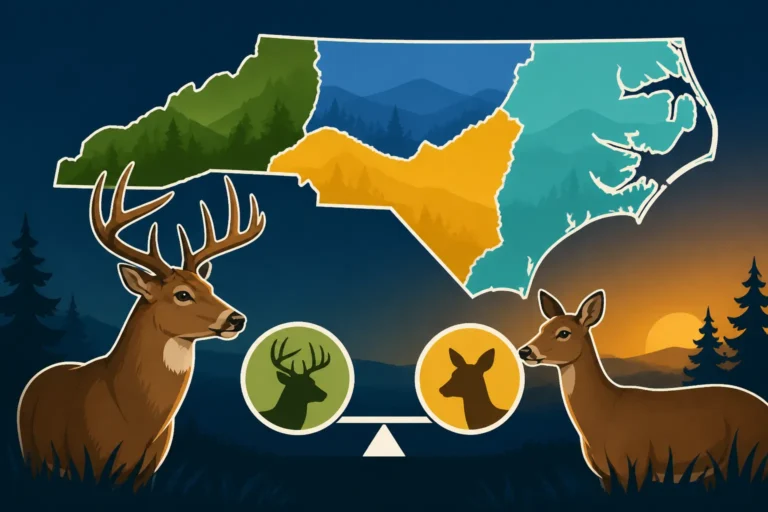
The truth is, while our dense cover and varied habitat might make these bucks harder to consistently find and pattern, the genetic potential exists. It's not about if North Carolina has B&C bucks, but where and how to find them. Our state's diverse landscape offers pockets of ideal conditions where deer can reach their full potential, whether it's the rich agricultural fields of the Piedmont, the vast, secluded swamps of the Coastal Plain, or the rugged, low-pressure mountain ranges. The challenge isn't the deer themselves, but rather unlocking their secrets within our unique environment.
Understanding Boone and Crockett Standards
So, what exactly does "Boone and Crockett" mean when we're talking about whitetails? It's more than just a big rack; it signifies a deer that has met a very specific set of antler scoring criteria, developed by the Boone and Crockett Club to honor mature, free-ranging North American big game animals. For whitetails, there are two main categories: typical and non-typical. Typical racks are symmetrical, with points growing primarily upwards from the main beam. Non-typical racks have abnormal points, drop tines, or unusual antler growth that deviates significantly from a typical pattern.
The minimum score for a typical whitetail to make the all-time B&C records is 170 inches, while for non-typical, it's 195 inches. These are hefty scores, reflecting deer that are not only mature but have had excellent nutrition and strong genetics throughout their lives. Achieving such a score requires a deer to be at least 4.5 to 5.5 years old, often older, and to have avoided hunter pressure and natural predators for many seasons. The pursuit of a B&C buck is about recognizing and understanding what goes into growing such an animal, and then strategically hunting the areas and conditions that make it possible. It's a testament to the animal's longevity and the quality of its habitat, making the hunt for one a truly rewarding and challenging endeavor.
Here's a quick look at the B&C minimums for whitetails:
| Category | Minimum All-Time Score | Minimum Awards Score | Description |
|---|---|---|---|
| Typical Whitetail | 170 inches | 160 inches | Symmetrical antler growth with minimal abnormalities. |
| Non-Typical Whitetail | 195 inches | 185 inches | Significant abnormal points or irregular growth. |
Note: Awards scores are for entries recognized in interim periods between all-time record books.
Where to Find North Carolina's Trophy Contenders
Finding a B&C buck in North Carolina isn't about sheer luck; it's about understanding the landscapes and resources that allow deer to thrive and reach their maximum antler potential. Our state is wonderfully diverse, and each region offers its own set of opportunities and challenges.
Regional Hotbeds for Big Bucks
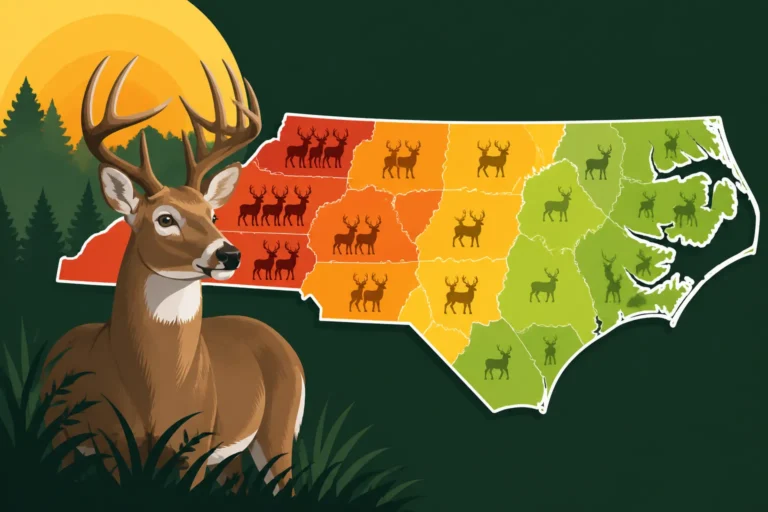
When you start digging into the North Carolina Deer Record Book, you'll quickly notice some patterns in where the biggest bucks are harvested. While a trophy can turn up anywhere, certain regions consistently produce larger-racked deer. The Piedmont stands out as a prime area for producing truly big bucks. Why? It's often a combination of fertile agricultural lands providing abundant nutrition, interspersed with dense timber and cover that offers refuge. Counties along major river systems in the central and western Piedmont, in particular, often report impressive deer. These areas provide the perfect blend of food, water, and security that allows bucks to grow old and develop significant headgear. This phenomenon is a big part of Why the Piedmont Grows Big Bucks.
The Coastal Plain can also produce heavy-bodied deer with solid racks, especially in areas with extensive pocosins, swamps, and large private timber tracts where hunting pressure might be more controlled. While the scores might not always rival the Piedmont's top-end typicals, the sheer body size and resilience of these swamp bucks are legendary. Moving west, the Mountains present a different kind of challenge and opportunity. Deer densities are generally lower, and the terrain is rugged, but the mature bucks here are often older and incredibly wily. They survive by being elusive in the vast national forests like Pisgah and Nantahala, making any mature buck taken a significant trophy. Learning to interpret the terrain is key; for example, Reading a Ridge for Mountain Zone Deer can unlock new hunting opportunities.
Habitat and Nutrition: The Foundation for Giants
No matter the region, the bedrock of any trophy whitetail population is exceptional habitat and abundant nutrition. Bucks need a consistent, high-quality diet to express their genetic potential in antler growth. This means access to protein-rich forage during spring and summer, along with diverse mast crops (acorns, persimmons) in the fall, and dependable food sources throughout the winter. Think about areas with a mosaic of agriculture – soybeans, corn, and winter wheat – bordered by dense, mature timber for bedding and security. These are the kinds of places where deer can literally eat themselves big.
Beyond agricultural fields, healthy native forage in diverse forest stands is crucial. Areas with planned timber management that creates successional growth also provide excellent browse. Critically, these deer need low-stress environments. Large tracts of private land, or remote sections of public land that see minimal human disturbance, act as sanctuaries where bucks can live to older ages. A buck that is constantly harassed by hunters, dogs, or even ATVs, is putting its energy into survival rather than antler growth. Understanding the North Carolina Deer Antler Growth Timeline reveals just how dependent antler development is on sustained nutrition and overall deer health. It's a year-round process, not just a fall phenomenon.
Strategies for Tagging a North Carolina B&C Buck
Pursuing a B&C buck in North Carolina demands a different approach than simply filling a tag. It requires dedication, a keen understanding of deer behavior, and the willingness to go the extra mile.
Advanced Scouting and Reconnaissance
The hunt for a trophy buck often begins long before opening day. Year-round scouting is paramount. This isn't just a casual walk in the woods; it's a dedicated effort to understand the landscape, identify key resources, and, ideally, locate a specific buck. Start with tools like aerial maps and topographical features, which can reveal hidden benches, pinch points, dense bedding areas, and overlooked food sources. Utilizing hunting apps, such as GoHunt, can overlay property boundaries, terrain features, and even recent harvest data, helping you narrow down high-potential areas, whether on private land with permission or vast public tracts.
Shed hunting in late winter and early spring is an invaluable way to confirm the presence and caliber of bucks that made it through the previous season. Finding a large shed antler is like finding a treasure map to a trophy buck. Once you've identified promising areas, trail cameras become your best friend. Deploy them strategically along known travel corridors, food plot edges, or rub lines to monitor deer movement and, hopefully, capture images of the specific buck you're after. This intelligence allows you to understand their patterns, preferred routes, and daylight activity. Remember, Scouting North Carolina Public Land Before Season is crucial to ensure you know where the deer are and how they're using the land before the pressure of hunting season sets in.
Hunting Pressure and Mature Buck Avoidance
Mature whitetails, especially those with B&C potential, become incredibly sensitive to hunting pressure. They learn quickly to avoid areas with human activity and often become almost entirely nocturnal once the season opens. To consistently encounter these deer, you need to think like them and seek out areas that other hunters overlook or can't easily access. This could mean venturing deeper into remote sections of game lands, navigating thick pocosin swamps, or finding small, unpressured pockets within larger areas. The key is to find sanctuary where these deer feel safe enough to move during daylight hours.
Your approach routes are just as important as your stand location. Always consider wind direction, thermal currents (especially in the mountains), and visual concealment when approaching and leaving your hunting area. Minimizing your impact is critical. This also means being meticulous with scent control, a topic we cover in depth in Scent Control Gear for Humid Coastal Hunts, particularly important in North Carolina's often humid environment. Understanding Hunting Pressure on North Carolina Public Land and how to counteract it is a game-changer when targeting older, wiser bucks. Sometimes, it's about finding the small, odd-shaped woodlots or field corners that everyone else walks past, especially on heavily hunted public ground. For example, knowing how to set up on a good Entry Routes Through Standing Soybeans can make all the difference in farm country.
Timing the Rut for Trophy Opportunities
If there's one time of year when mature bucks become more vulnerable, it's during the rut. As they become single-minded in their pursuit of does, their caution can sometimes take a backseat. However, the timing and intensity of the rut vary significantly across North Carolina's diverse zones. Understanding Hunting the North Carolina Rut by Zone is crucial for maximizing your time afield. The peak breeding activity might occur in late October in the Western mountains, while the Coastal Plain might see its most intense rutting action in mid-November.
During the pre-rut, bucks are actively scraping and rubbing, marking their territory and searching for does. This is a great time to hunt travel corridors between bedding and feeding areas, or established scrape lines. As the rut progresses into its peak, bucks will be on their feet more during daylight hours, cruising for estrous does. This is often the best window for seeing a true monarch. Post-rut can also be productive, as bucks are exhausted and often looking for easy food sources to recover. Paying close attention to the specific timing, such as When the North Carolina Rut Peaks by Zone, and adjusting your tactics accordingly will dramatically increase your chances of intercepting a trophy.
Gear and Patience: Your Trophy Toolkit
When you're targeting a B&C buck, quality gear can make a difference, but patience and persistence are truly your most valuable assets. High-quality optics, such as binoculars and a spotting scope, are essential for glassing distant fields, scouting thick timber edges, and identifying deer accurately without disturbing them. A reliable rangefinder is non-negotiable for precise shot placement, especially with North Carolina's varied terrain and often close-quarters shots.
Whether you prefer a rifle or bow, ensure your equipment is dialed in and you've practiced extensively at realistic hunting distances. A well-placed shot is critical, and you want to be confident when the moment of truth arrives. Beyond the hardware, your mental game is paramount. Hunting B&C deer in North Carolina often means enduring many long, quiet sits, sometimes seeing few deer at all. It means passing on numerous smaller bucks, trusting that your scouting and strategy will eventually pay off. Tools like GoHunt can help you stay organized with your scouting data, mapping, and even logging observations, making your patient efforts more efficient over time. Don't underestimate the power of sheer determination and the ability to stay focused when the odds seem stacked against you.
The Journey from Woods to Record Book
Finally taking down a Boone and Crockett caliber whitetail in North Carolina is an incredible achievement. But the journey doesn't end when the deer hits the ground; proper care and documentation are essential for preserving the memory and potentially entering it into the record books.
Field Care and Measurement
Once you've harvested a potential trophy, the first priority is proper field care. This means quickly and efficiently field dressing the animal to begin the cooling process. Especially during early season hunts in North Carolina, when temperatures can still be warm, quick action prevents meat spoilage. We've got a comprehensive guide on Field Dressing a Deer in Cold Weather that covers some similar principles, but for warmer days, cooling the carcass is even more critical.
For a rack intended for scoring, careful handling of the skull plate is vital. If you plan to have a European mount, you'll need to remove the skull cap with the antlers attached, ensuring you preserve the entire skull plate without damage. The Boone and Crockett Club requires a mandatory 60-day drying period after the animal is harvested and before it can be officially measured. This allows the antlers to fully dry and stabilize, preventing shrinkage that could affect the final score. During this time, store the antlers in a cool, dry place. After the drying period, you'll need to locate an official Boone and Crockett scorer who can accurately measure and certify your trophy. They meticulously measure each point, beam length, circumference, and spread according to strict B&C guidelines.
Celebrating the Achievement
Bringing down a Boone and Crockett whitetail in North Carolina is more than just a number; it's the culmination of countless hours of scouting, patience, and strategic hunting. It's a testament to your dedication and skill as a hunter, and a celebration of North Carolina's often-underestimated deer herd. When that rack officially qualifies for the record book, it not only immortalizes your hunt but also contributes valuable data to the understanding of North Carolina's deer genetics and habitat quality.
Beyond the scores and the records, it's about the stories. The memory of that crisp morning, the careful stalk, the thumping heart, and the triumphant feeling when you finally get your hands on a buck you've pursued for seasons – these are the real trophies. Every entry into the North Carolina Deer Record Book isn't just a set of measurements; it's a piece of our state's hunting heritage, inspiring future generations to experience the challenge and reward of pursuing mature whitetails in the Old North State.
Disclaimer
This article is for general informational purposes only and does not constitute professional advice. Laws, prices and regulations vary by location and change over time. Consult a qualified professional for guidance on your specific situation.