North Carolina’s Chronic Wasting Disease Areas
The news about Chronic Wasting Disease (CWD) spreading into new areas of North Carolina can feel like a punch to the gut for any deer hunter. It introduces a whole new layer of complexity to a pastime we cherish, making us worry about the health of our deer herds and adding extra rules to navigate. This comprehensive guide is here to cut through the confusion, explaining what CWD is, where it's been found in our state, and exactly what you, as a responsible hunter, need to know and do when hunting in or around these affected zones.
Understanding Chronic Wasting Disease
Chronic Wasting Disease is a serious concern for deer hunters and wildlife managers alike, and it's something we all need to wrap our heads around. It's not just another deer illness; it's a unique and persistent threat to our wild cervid populations.
Understanding the Prion Disease
At its core, CWD is a neurological disease caused by abnormal proteins called prions. Unlike bacteria or viruses, prions aren't living organisms, which makes them incredibly tough to destroy. These misfolded proteins cause normal proteins in the brain to also misfold, leading to progressive damage. Think of it like a cascade effect, slowly but surely deteriorating the animal's brain and central nervous system. This insidious nature is what makes CWD so challenging – it's not a quick illness that an animal can shake off.
What's particularly unnerving about prions is their resilience. They can survive in the environment for years, even decades, resisting extreme temperatures, disinfectants, and natural decomposition. This means that once a CWD-infected animal sheds prions into the soil, plants, or water through its saliva, urine, or feces, that area can become a long-term source of infection for other deer. This environmental persistence is a major factor in why CWD is so difficult to contain and eradicate once it takes hold in a landscape. It's a silent, lingering threat that impacts generations of deer, even if infected animals are removed.
Symptoms and Progression in Deer
The symptoms of CWD are not always immediately obvious, especially in the early stages of the disease, which can last for months or even years. This long incubation period means an infected deer can appear perfectly healthy while still shedding prions and potentially infecting other animals. It’s a frustrating reality for hunters trying to identify sick deer in the field.
As the disease progresses, however, the symptoms become more pronounced and heartbreaking to witness. You might observe a deer exhibiting drastic weight loss, often described as a "wasting" away, despite maintaining a normal appetite. Behavioral changes are also common, including listlessness, stumbling, tremors, excessive drooling, and an abnormal head carriage. The animal might appear disoriented, unafraid of humans, or show repetitive walking patterns. Ultimately, CWD is always fatal for infected deer, with no known treatment or vaccine. If you ever encounter a deer displaying these kinds of symptoms, it's crucial to report it immediately to the North Carolina Wildlife Resources Commission (NCWRC) to help monitor the disease's spread.
Transmission and Environmental Persistence
CWD is primarily spread through direct animal-to-animal contact, but also through contact with contaminated environments. As mentioned, infected deer shed prions through their bodily fluids, contaminating feed, soil, and water sources. This means that deer don't even need to be in direct contact to transmit the disease; they can pick it up from a shared food plot, a waterhole, or even a rub line where an infected deer once visited.
The environmental persistence of prions adds another layer of complexity to managing CWD. Once prions are in the soil, they can bind to certain minerals and remain infectious for extended periods. Plants can even take up these prions, becoming a source of infection for browsing deer. This is why practices like baiting or establishing mineral sites are so strongly discouraged or even prohibited in CWD zones, as they concentrate deer in small areas, increasing the likelihood of direct and indirect transmission. Understanding these transmission pathways is critical for hunters to adopt practices that minimize the risk of further spread.
The Arrival and Spread of CWD in North Carolina
For years, North Carolina stood as an island of "CWD-free" status in the Southeast, a point of pride for our state's wildlife management. Unfortunately, that changed, bringing new challenges and concerns for hunters.
North Carolina's First Confirmed Cases
The news hit hard: in March 2022, North Carolina confirmed its first-ever case of CWD in a deer harvested during the hunting season in Yadkin County. This was a significant and somber milestone, transitioning our state from CWD-free to a CWD-positive state. The initial discovery was the result of ongoing surveillance efforts by the NCWRC, highlighting the importance of their proactive testing. This single positive case immediately triggered a cascade of actions, leading to the designation of a CWD Management Area (CMA) and a CWD Surveillance Area (CSA) around the affected region.
Following the initial confirmation, further testing revealed additional cases, predominantly within the same cluster. Each new positive test reinforces the reality that CWD is not an isolated incident but a foothold that requires serious and sustained management efforts. This geographical concentration in the Yadkin Valley was an immediate red flag, indicating that the disease was likely present in the herd for some time before detection. The swift response from the NCWRC involved extensive sampling and public outreach, seeking to inform hunters about the new reality and enlist their help in managing the disease.
The Yadkin Valley Focus Area
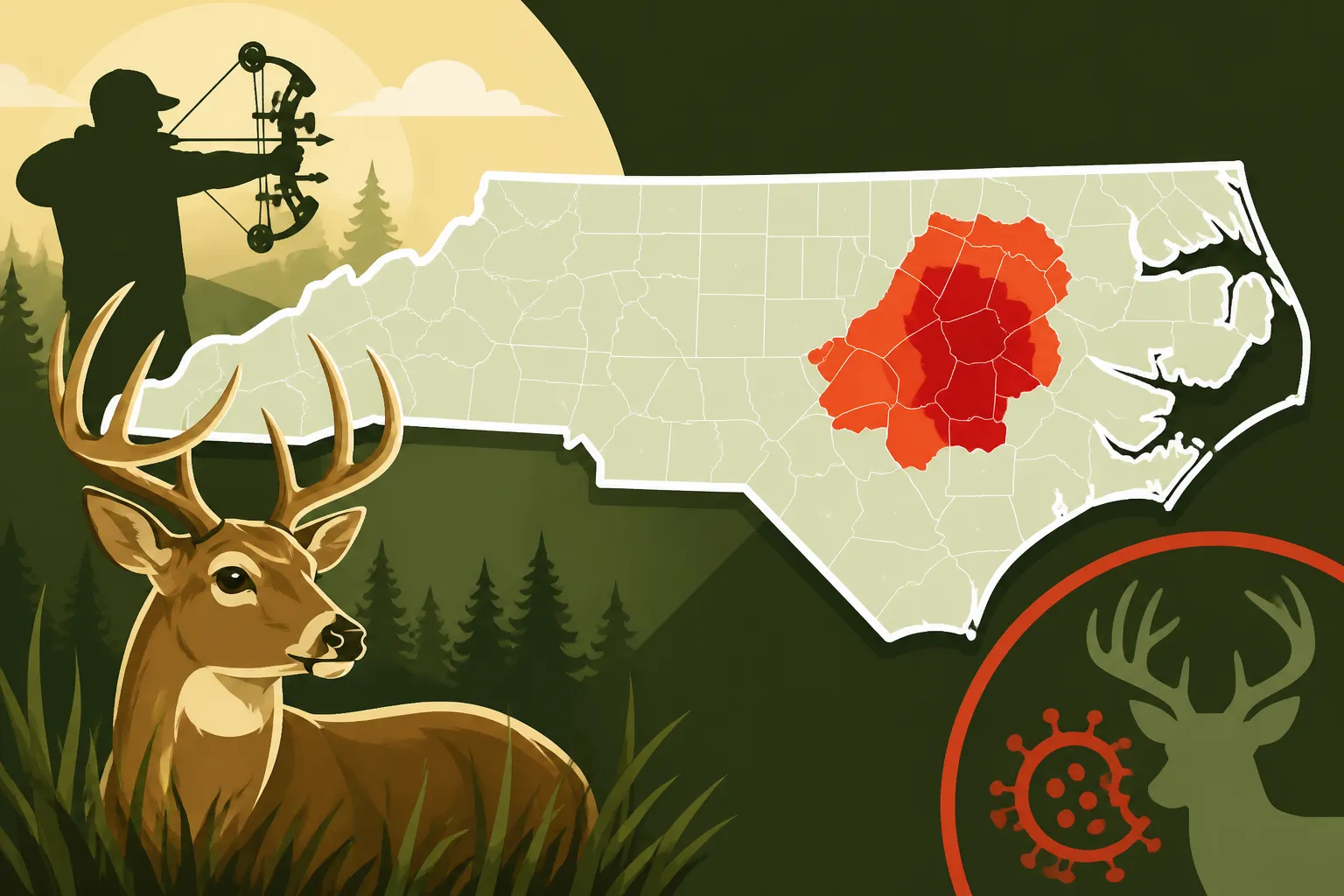
The Yadkin Valley, encompassing several counties in the northwestern Piedmont, quickly became the primary focus of North Carolina's CWD management efforts. This region, known for its rolling hills, agricultural lands, and strong deer populations, now faces the direct impact of the disease. The affected area is primarily centered around Surry and Yadkin counties, extending into portions of Forsyth, Stokes, Davie, and Wilkes counties. This specific geographical designation helps wildlife biologists target their surveillance and management strategies where they are most needed.
For hunters, this means that if you regularly pursue deer in these counties, you're now operating under a different set of rules. The boundaries of the CWD Management Area and the surrounding Surveillance Area dictate everything from carcass movement to specific hunting season structures. Understanding Which Seven Counties Sit in a CWD Management Area is absolutely critical before you even head into the field, as non-compliance can lead to serious penalties. The NCWRC has done an admirable job delineating these zones, but it's up to us as hunters to stay informed and adhere to the guidelines.
Why Surry County Drives North Carolina's CWD Count
When you look at the numbers, you'll quickly see that Surry County has unfortunately been at the epicenter of North Carolina's CWD detections. While the initial case was in Yadkin, subsequent surveillance and testing efforts have revealed a higher prevalence of CWD-positive deer in Surry County. This doesn't necessarily mean Surry has a "worse" problem, but rather that the disease appears to be more established there, or perhaps surveillance efforts have been more concentrated and fruitful due to its proximity to initial findings.
This concentration in Surry County is a key indicator for wildlife biologists, providing crucial data on the disease's progression and spread within the state. It helps them model potential future expansion and fine-tune their management strategies. For hunters, knowing that Why Surry County Drives North Carolina's CWD Count is important because it reinforces the need for strict adherence to all CWD regulations within and around this area. It also underscores the importance of participating in voluntary testing, even if you hunt just outside the mandatory sampling zones, to provide more data and help contain the outbreak.
Identifying CWD Management Areas and Surveillance Zones
Navigating the landscape of CWD can be confusing, especially with different zones carrying different rules. It's not enough to know CWD is in North Carolina; you need to know exactly where the lines are drawn.
Defining CWD Management Areas (CMAs)
A CWD Management Area (CMA) is the hot zone, the area where CWD has been detected in wild deer. These areas are established by the NCWRC in response to a confirmed CWD case, and they come with the most stringent regulations designed to prevent further spread of the disease. Think of a CMA as ground zero, where the risk of encountering an infected deer, and thus the potential for spreading prions, is highest. The primary goal within a CMA is intensive surveillance and management to reduce the prevalence of CWD and limit its geographic expansion.
Currently, North Carolina's CMA encompasses all of Surry and Yadkin counties, along with portions of Stokes, Forsyth, Davie, and Wilkes counties. These boundaries are not arbitrary; they are determined by science, considering deer movement patterns, geographic features, and the location of confirmed CWD positives. If you're hunting in a CMA, you can expect mandatory carcass disposal restrictions, specific testing requirements, and possibly limitations on baiting or attractants. It's absolutely essential to be aware of these boundaries, which can often be found on the NCWRC website or integrated into scouting apps like GoHunt. Using such tools can help you visualize the CMA boundaries clearly when you're planning your hunt or out in the field.
Understanding Surveillance Areas (SAs)
Surrounding the core CWD Management Area, you'll find the CWD Surveillance Areas (SAs). These are buffer zones, typically adjacent to CMAs, where CWD has not yet been confirmed but where the risk of its arrival is considered elevated. The purpose of an SA is to monitor for the outward spread of CWD and to establish an early warning system. While regulations in an SA might not be as restrictive as those in a CMA, they are still more stringent than in CWD-free areas of the state.
Hunters in a CWD Surveillance Area should expect increased CWD testing efforts, often voluntary, but sometimes mandatory for certain harvests or during specific timeframes. Carcass movement restrictions might also apply, although they might be less rigid than in a full CMA. The idea is to catch any new CWD cases early, before they become established. So, even if you're not in a full CMA, understanding the SA boundaries is critical. The NCWRC regularly updates these maps, so always check the latest information before your hunt, especially if you're hunting near the edges of a known CWD zone.
Finding Which Zone Your County Sits In
One of the biggest frustrations for hunters, especially those who hunt across multiple counties or property lines, is knowing exactly where they stand regarding CWD regulations. Our state has clear lines drawn, but those lines can feel invisible on the ground. Fortunately, the NCWRC provides excellent resources to help you determine Finding Which Zone Your County Sits In. Their website features interactive maps that allow you to zoom in on specific areas, see county lines, and understand whether you're in a CWD Management Area, a Surveillance Area, or outside of any designated CWD zone.
Beyond the official NCWRC maps, hunting apps and GPS systems are invaluable tools for hunters. Platforms like GoHunt often integrate state-specific CWD boundary data directly into their mapping layers. This means you can be standing in the woods, pull out your phone, and instantly see if your current location, or the property you're scouting, falls within a restricted CWD zone. Always double-check with the official NCWRC resources, as boundaries can be updated. Having this information readily available empowers you to make informed decisions about hunting, carcass handling, and testing, ensuring you comply with all current regulations and do your part to help manage CWD.
Regulations and Requirements for Hunters in CWD Areas
Hunting in a CWD-affected area means you have a vital role to play in managing the disease. It also means adhering to specific regulations that might be different from what you're used to.
Special Rules for Hunting in CMAs
Hunting within a CWD Management Area (CMA) comes with a distinct set of rules designed to minimize the risk of CWD transmission. These aren't just suggestions; they are mandatory requirements that every hunter must follow. For instance, there are strict rules regarding baiting and the use of deer attractants. Concentrating deer in a small area, which baiting does, dramatically increases the chances of direct and indirect prion transmission. Therefore, within CMAs, activities such as placing bait (corn, mineral blocks, etc.) or using liquid deer attractants are often prohibited.
Furthermore, there might be specific harvest regulations aimed at controlling deer populations. This could include altered bag limits or special antlerless harvest opportunities to help reduce overall deer density, which can slow CWD spread. Hunters in CMAs are also typically subject to mandatory CWD testing of harvested deer during specific periods. These special rules are a critical component of the NCWRC's strategy, and it's incumbent upon every hunter to be fully informed. Ignoring these regulations not only puts you at risk of fines but also jeopardizes the health of our deer herd.
Reporting Requirements and Deadlines
One of the most crucial responsibilities for hunters, particularly those in or near CWD zones, is adhering to deer reporting requirements. All harvested deer in North Carolina must be reported to the NCWRC, and this process is even more critical in CWD areas. When you harvest a deer in a designated CWD Management Area or Surveillance Area, there are usually specific instructions regarding how and when to report the kill, often tied directly to the CWD sampling process. The information you provide helps wildlife officials track deer harvest data and correlate it with CWD test results.
The North Carolina Deer Reporting Deadline is usually by midnight on the day of harvest, but always check the most current regulations for any CWD-specific modifications or requirements. You can report your harvest quickly and easily Reporting a Deer Through North Carolina's App or online. This isn't just bureaucratic red tape; it's essential data collection that informs wildlife management decisions. Every reported deer contributes to a larger picture, helping biologists understand deer populations, harvest trends, and the geographical spread of CWD. Your prompt and accurate reporting is a direct contribution to the health of our state's deer.
Prohibited Activities: Baiting, Mineral Sites, and Carcass Movement
To effectively combat CWD, the NCWRC has implemented clear prohibitions on activities that could facilitate its spread. Among the most significant of these are restrictions on baiting and the establishment of mineral sites. As discussed, these practices bring deer into close contact, increasing the likelihood of prion exchange through saliva, urine, and feces. Consequently, within CWD Management Areas and often in Surveillance Areas, placing out corn, food plots, mineral blocks, or any other substance intended to attract deer for hunting purposes is strictly forbidden.
Beyond attractants, strict rules govern carcass movement. This is one of the most vital regulations, as moving an infected carcass, even parts of it, out of a CWD zone is a primary way the disease can spread to new areas. You cannot simply take an entire deer harvested in a CMA and transport it across county lines to your home or butcher shop in a non-CWD county. The specific rules for Moving a Deer Carcass Out of a CWD Area are detailed and must be followed meticulously. Typically, only deboned meat, clean skull plates (with antlers attached), antlers, hides, and taxidermy mounts that have been properly processed can be moved. The brain and spinal column, which contain the highest concentration of prions, must remain within the CWD zone for proper disposal.
Carcass Movement and Handling Restrictions
These restrictions are perhaps the most impactful change for hunters accustomed to taking their entire harvest home. Understanding these rules is absolutely non-negotiable for preventing CWD from spreading to new areas.
Mandatory Carcass Restrictions
The moment you harvest a deer in a CWD Management Area, your responsibilities regarding its carcass begin. These are not suggestions; they are mandatory restrictions put in place to contain the disease. The fundamental principle is to prevent the movement of high-risk tissues, such as the brain and spinal cord, out of the designated CWD zone. This means you generally cannot transport a whole deer, or even a deer head, out of a CWD Management Area. Doing so could inadvertently introduce CWD prions to an entirely new region.
Instead, hunters must either process the deer entirely within the CWD zone or take specific steps to prepare the carcass for transport. This usually involves deboning the meat and leaving the spinal column, brain, and other prohibited parts for disposal within the CWD area. This can be a significant shift for hunters who typically take their deer home whole for processing, but it's a critical measure. The NCWRC provides guidelines for proper field dressing and processing techniques that allow for compliant transport, ensuring that only low-risk parts leave the zone. It’s also important to dispose of any remaining carcass parts in a landfill or other approved facility within the CWD Management Area.
Legal Transport of Processed Meat and Taxidermy
While whole carcasses are largely restricted, the good news is that hunters can still legally transport certain parts of a deer harvested in a CWD zone. The key is that these parts must be considered "low-risk" for CWD transmission. Deboned meat, for example, is generally safe to transport out of a CWD area. This means taking the time to carefully remove all muscle tissue from the bone, ensuring no brain or spinal cord tissue remains attached. For many hunters, this might mean a more thorough field dressing process than usual, or taking the deer to a licensed processor located within the CWD zone.
Hunters wishing to get their trophies mounted can also transport clean skull plates (with antlers attached), provided all brain and soft tissue have been completely removed. Similarly, clean hides are generally allowed. Taxidermists within or near CWD zones are familiar with these regulations and can provide guidance on proper preparation. It's always best to communicate with your taxidermist beforehand. For any parts you plan to keep, thoroughly cleaning and preparing them according to NCWRC guidelines is paramount. This ensures you can still enjoy your harvest and trophies while fully complying with regulations and helping prevent CWD spread.
Butchering a Deer at Camp
For those who enjoy the tradition of Butchering a Deer at Camp, hunting in a CWD zone requires careful consideration and adherence to specific protocols. If your camp is located within a CWD Management Area, you have more flexibility, as you can process the entire animal on-site and dispose of the high-risk waste materials (brain, spinal column, etc.) properly within that zone. This might mean using a designated collection point, double-bagging and landfilling, or burying the waste deep on private property if local regulations allow. The key is that these high-risk parts do not leave the CWD area.
However, if your camp is outside a CWD zone, and you plan to hunt within one, then the carcass movement restrictions become paramount. You cannot bring a whole deer back to a camp outside the CMA. Instead, you'll need to field-dress and debone the deer completely at the kill site or at a temporary processing station within the CMA. Only the deboned meat and other low-risk parts would then be eligible for transport back to your camp or home. This requires more planning and perhaps different equipment, like heavier duty game bags and portable butchering tools, to ensure you can comply with the regulations right there in the field.
Mandatory Testing and Sampling for CWD
Hunter participation in CWD testing is perhaps the single most important tool in our collective fight against this disease. It's how we track its presence and spread.
When and Where Testing is Required
Within designated CWD Management Areas, and sometimes in specific Surveillance Areas, CWD testing of harvested deer becomes mandatory during certain periods. This typically occurs during the main deer hunting seasons, including gun and archery seasons, to maximize the number of samples collected. The NCWRC will establish specific dates and locations for mandatory testing, which are widely publicized through their website, local wildlife offices, and hunter education programs.
Hunters who harvest a deer within these mandatory testing zones are required to bring their deer (or specific parts of it, such as the head with 4-6 inches of neck attached) to an official CWD sampling station. These stations can include staffed check stations, designated drop-off sites, or even participating taxidermists and processors. The sample collected is usually tissue from the obex region of the brainstem or lymph nodes, which are the most reliable indicators of CWD. This process, while an extra step, is absolutely critical for understanding the true prevalence and distribution of the disease. It allows biologists to gather the data needed to make informed management decisions and track the disease's movement. For accurate, up-to-date information, always check the NCWRC’s current guidance on Mandatory Testing Inside a CWD Surveillance Area and CMAs.
Finding a North Carolina CWD Sampling Location
Once you've harvested a deer in a mandatory CWD testing area, the next step is finding a convenient and authorized sampling location. The NCWRC makes a concerted effort to provide accessible options for hunters to submit their samples. Their website is the best resource for locating these sites, often featuring an interactive map showing all official CWD sampling stations. These stations can vary, from dedicated NCWRC check stations staffed by biologists and technicians, to self-service drop-off coolers at convenient locations like county agriculture offices or public game lands access points.
Additionally, many licensed taxidermists and meat processors located within or near CWD zones are authorized to collect CWD samples. This can be a practical option if you're already taking your deer to one of these businesses. Before your hunt, it's a smart move to identify a few potential sampling locations closest to your hunting spot, along with their operating hours or drop-off procedures. Again, using a mapping tool like GoHunt can be incredibly helpful here, as it may overlay these sampling locations onto your hunting maps, making it easier to plan your post-harvest logistics. Remember, properly submitting your sample is a legal requirement and a vital contribution to our statewide CWD management strategy.
How Many Deer Have Tested CWD-Positive Since Testing Began
Understanding the scope of the CWD problem in North Carolina requires looking at the numbers, and the NCWRC is transparent about their findings. Since the first positive case in March 2022, continuous surveillance and testing efforts have confirmed additional cases. How Many Deer Have Tested CWD-Positive Since Testing Began is a question many hunters ask, and the answer is updated regularly on the NCWRC website. While the numbers are certainly concerning, especially with most cases clustered in specific areas like the Yadkin Valley, they also reflect a robust surveillance program that is actively detecting the disease.
The NCWRC has tested thousands of deer since implementing heightened CWD surveillance. The fact that positives have been identified underscores the need for continued vigilance and hunter cooperation. Each positive test, while unfortunate, provides critical data points that help define the geographical extent of the disease and inform future management strategies. These statistics are not just abstract figures; they are direct indicators of the health of our deer herd and the challenges we face. As hunters, staying informed about these numbers helps us appreciate the importance of our role in following regulations and participating in testing programs.
Understanding the Special Early CWD-Zone Season
North Carolina has introduced a new hunting opportunity specifically designed to address CWD: the Special Early CWD-Zone Season. This is a targeted effort to help manage deer populations in critical areas.
Purpose and Timing of the Season
The Special Early CWD-Zone Season is not just another hunting date on the calendar; it's a strategic management tool implemented by the NCWRC. Its primary purpose is to increase hunter harvest opportunities for antlered deer within the designated CWD Management Areas, particularly in counties like Surry and Yadkin. By increasing the harvest, especially of older, antlered bucks, the NCWRC aims to reduce the overall deer population density, which in turn can help slow the spread and prevalence of CWD. Higher deer densities often lead to more frequent deer-to-deer contact, which is a primary mode of CWD transmission.
This special season typically runs for a short period, often in late August, preceding the statewide archery opener. When the New Special Early Season Runs will always be clearly announced by the NCWRC well in advance of the hunting year. The timing is strategic, allowing hunters early access to the woods when deer patterns might be more predictable, without conflicting with the more generalized statewide seasons. It’s an opportunity for hunters to contribute directly to disease management while enjoying an earlier start to their deer season.
Why the Early Season Targets Antlered Deer Only
A common question among hunters regarding this special season is, Why the Early Season Targets Antlered Deer Only? The focus on antlered deer during this specific early season is a deliberate management decision rooted in CWD science. Research suggests that CWD prevalence is often higher in older-aged bucks, which tend to have larger home ranges and more complex social interactions, potentially increasing their role in disease transmission. By focusing on antlered deer, the NCWRC aims to selectively remove individuals that are more likely to be CWD-positive and contribute to its spread.
Additionally, during late summer, antlered bucks are typically in their summer patterns, often more visible and predictable before the complexities of the rut kick in. This makes them a more accessible target for hunters looking to participate in this management effort. While some might argue for an antlerless harvest to reduce overall density, the strategic removal of potentially higher-risk antlered deer during this early window is seen as a key component of the overall CWD management plan. It's a targeted approach that complements other harvest regulations throughout the year.
Hunting the Special Early CWD-Zone Season Weekend
Participating in the Special Early CWD-Zone Season offers a unique experience and an important opportunity for hunters to actively help manage the deer herd. Typically, this season runs for a designated weekend or short period, usually in late August, making it a condensed but impactful hunt. Imagine heading out in the crisp, pre-dawn hours of an August morning, the woods still thick with summer foliage, knowing you're not just pursuing a trophy but also contributing to the health of the entire deer population. The earlier start means different deer behavior; bucks might still be in bachelor groups, focused on summer food sources, and less wary than during the peak of gun season.
Hunters participating in this season need to be extra diligent about understanding the specific regulations, including required CWD testing for any harvested deer. This is not just a freebie hunt; it comes with responsibilities. For example, Hunting the Rut in the Eastern Zones might be your typical focus later in the year, but this early season demands different tactics, like focusing on established feeding patterns or monitoring trail cameras over summer forage. Using a mapping app, perhaps with GoHunt's public and private land layers, becomes even more crucial to ensure you're hunting within the correct CWD zone and abiding by all specific rules for that weekend. It's a chance to make a real difference, but it requires careful preparation and adherence to the rules.
Protecting the Herd: What Hunters Can Do
As hunters, we are the frontline stewards of our wildlife. Our actions in the face of CWD are paramount to protecting North Carolina’s cherished deer herd.
Best Practices for Hunters Everywhere
Even if you hunt outside of a designated CWD Management Area or Surveillance Area, adopting CWD-conscious best practices is crucial. The goal is to minimize any potential for spreading the disease, whether it's by accident or unknowingly. First and foremost, never transport an entire deer carcass out of the county where it was harvested, especially if you're anywhere near a known CWD zone. It’s always safer to process your deer locally, either by deboning the meat yourself or utilizing a local, licensed processor. This simple act drastically reduces the risk of moving prions into new territories.
Secondly, avoid using natural urine-based attractants. While popular, these products carry a theoretical risk of containing CWD prions if sourced from infected deer. Opt for synthetic alternatives instead. Lastly, participate in voluntary CWD testing whenever offered by the NCWRC, even in non-CWD zones. The more data they have, the better they can monitor and respond to any new detections. By embracing these best practices, we contribute to the collective health of our deer and ensure that future generations can enjoy the rich hunting heritage North Carolina offers. This vigilance should extend to your scouting, ensuring you're not inadvertently creating high-contact areas, perhaps by placing trail cameras near deer bedding areas.
Reporting Sick Animals
One of the most immediate and impactful actions any hunter or outdoors person can take is to report any sick or unusually behaving deer to the North Carolina Wildlife Resources Commission. Remember the symptoms we discussed earlier: severe weight loss, lethargy, stumbling, excessive drooling, or an unusual lack of fear of humans. These are all potential indicators of CWD, or another serious illness like EHD, and need to be investigated. You are the eyes and ears in the woods, and your observations are invaluable to wildlife biologists.
Don't hesitate or assume someone else will report it. Make the call or use the NCWRC's online reporting tools as soon as possible, providing as much detail as you can about the animal's location, observed symptoms, and approximate size. If possible and safe to do so, take a photo or video from a distance. The NCWRC has protocols in place to respond to these reports, which may include dispatching personnel to collect samples for testing. Your prompt reporting helps identify new CWD cases early, preventing further spread and allowing for more targeted management efforts. This is a direct way you can help preserve our herd.
The Role of Responsible Hunting in CWD Management
Ultimately, responsible hunting is at the heart of effective CWD management. While CWD presents significant challenges, it also underscores the critical role hunters play as conservationists. By purchasing hunting licenses, adhering to regulations, and participating in management programs, hunters provide the funding and data essential for wildlife agencies to combat diseases like CWD. The NCWRC relies heavily on hunter cooperation for successful surveillance, harvest management, and public education. Without our collective effort, the task of containing CWD would be immeasurably harder.
This means being informed, being compliant, and being proactive. It means understanding the impact of your actions, from where you field dress a deer to how you dispose of carcass waste. It means adapting your hunting practices to the new realities of CWD. It's a testament to the North Carolina hunting community that when faced with challenges, we rise to the occasion. By continuing to uphold the highest standards of ethical and responsible hunting, we not only help manage CWD but also solidify our legacy as true stewards of North Carolina’s incredible natural resources.
| North Carolina CWD Management Areas (CMAs) & Surveillance Areas (SAs) | Status & General Guidelines |
|---|---|
| Surry County (All) | CMA (Management Area): Mandatory CWD testing for harvested deer during specific seasons. Strict carcass movement restrictions. Baiting & mineral sites generally prohibited. |
| Yadkin County (All) | CMA (Management Area): Mandatory CWD testing for harvested deer during specific seasons. Strict carcass movement restrictions. Baiting & mineral sites generally prohibited. |
| Stokes County (Portions) | CMA/SA (Management/Surveillance Area): Specific boundaries determined by NCWRC. Mandatory testing possible in CMA portions. Carcass movement restrictions apply in both. Check current maps. |
| Forsyth County (Portions) | CMA/SA (Management/Surveillance Area): Specific boundaries determined by NCWRC. Mandatory testing possible in CMA portions. Carcass movement restrictions apply in both. Check current maps. |
| Davie County (Portions) | CMA/SA (Management/Surveillance Area): Specific boundaries determined by NCWRC. Mandatory testing possible in CMA portions. Carcass movement restrictions apply in both. Check current maps. |
| Wilkes County (Portions) | CMA/SA (Management/Surveillance Area): Specific boundaries determined by NCWRC. Mandatory testing possible in CMA portions. Carcass movement restrictions apply in both. Check current maps. |
| Other Adjacent Counties | SA (Surveillance Area): Often voluntary CWD testing encouraged. Carcass movement restrictions for high-risk parts may apply if harvested within a CMA and transported through an SA. Always consult NCWRC maps for exact boundaries and current regulations. |
| All Other NC Counties | CWD-Free (Currently): No mandatory CWD testing or carcass movement restrictions (unless harvested from a CMA/SA). However, "Best Practices for Hunters Everywhere" should still be followed to prevent potential introduction, including not moving whole carcasses across county lines and avoiding natural urine-based attractants. |
Disclaimer
The information provided in this guide is intended for educational purposes and general guidance only. Hunting regulations, CWD management areas, and testing requirements are subject to change. Hunters are solely responsible for knowing and complying with all current North Carolina Wildlife Resources Commission (NCWRC) regulations. Always consult the official NCWRC website and current hunting regulations digest before engaging in any hunting activities.