Hunting Coastal Plain Pocosin Swamps
Anyone who's ever tried to navigate the thick, mucky expanse of North Carolina's coastal plain pocosins knows the sheer frustration of getting swallowed by knee-deep water or tangled in impenetrable vegetation. These unique, often unforgiving landscapes present a truly distinct set of challenges for hunters, demanding specialized gear, precise tactics, and an unwavering commitment to safety. This guide aims to pull back the curtain on these mysterious swamps, offering seasoned advice and practical strategies for successfully hunting deer, bear, and hogs in North Carolina's challenging pocosin environments.
Understanding the Pocosin Environment
North Carolina's coastal plain is famous for its vast, low-lying areas, and among them, the pocosin swamps stand out as some of the most formidable and intriguing landscapes a hunter can face. These aren't your typical open-timbered bottomlands; pocosins are a world unto themselves, characterized by dense, acidic soils, stunted evergreen shrubs, and water that can range from ankle-deep to chest-high depending on recent rainfall.
Defining Pocosin Swamps and Their Ecosystem
Pocosins, derived from an Algonquin word meaning "swamp-on-a-hill," are unique wetland ecosystems where peat soils have accumulated over thousands of years. This peat, composed of partially decayed plant matter, creates an acidic, nutrient-poor environment that supports a very specific type of vegetation. You’ll mostly find dense thickets of pond pine, loblolly bay, sweet gallberry, titi, and a whole host of other evergreen shrubs that form an almost impenetrable canopy. The water table is usually at or just below the surface, meaning you're almost always walking in water or extremely damp ground. This constant moisture, combined with the dense vegetation, makes for incredibly difficult travel for both humans and game, but it also creates crucial sanctuary. Think of counties like Hyde, Tyrrell, and Washington, where these vast pocosins stretch for miles, offering incredible, albeit challenging, hunting opportunities. The terrain rarely offers high ground, except for isolated "islands" or old logging roads, which become critical travel corridors and bedding areas for wildlife.
The ecosystem of a pocosin is finely balanced, with fire playing a natural and essential role in its health and regeneration. Historically, lightning strikes would periodically sweep through these areas, burning off the thick undergrowth and allowing new growth to emerge. Today, land managers, including the NC Wildlife Resources Commission (NCWRC) and federal agencies, often use controlled burns to mimic this natural process, improving habitat and reducing fuel loads. A recently burned pocosin can be a fantastic place to hunt in the following seasons, as the new growth attracts deer and other animals, and the reduced understory makes travel a little bit easier, if only for a short time. Understanding these ecological cycles is key to predicting where game might be feeding or bedding in a given year.
Wildlife Adaptation in Pocosin Habitats
The harsh conditions of pocosin swamps mean that only the toughest and most adaptable wildlife thrive here. White-tailed deer in these areas are often smaller-bodied than their Piedmont cousins, but they are incredibly resilient and masters of evasion. They know these dense thickets intimately, using them not just for cover from predators and hunters but also as thermal refuges during extreme weather. Bucks, in particular, will often seek out the deepest, nastiest parts of a pocosin to escape hunting pressure, making them notoriously difficult to find. You might see tracks or rubs on the edges, but the deer themselves often remain hidden deep within the green briar and titi.
Beyond deer, pocosins are also prime habitat for North Carolina's Black Bear Population and Feral Hogs Across North Carolina. Coastal bears are known for growing to enormous sizes in these nutrient-rich, secluded environments. They feast on berries, nuts, and insects found within the swamps and use the dense cover for denning. Hogs, being equally adaptable and resilient, thrive in the wet, muddy conditions, rooting through the peat for tubers and grubs. They can often be found in large sounders, leaving a path of destruction as they churn up the sensitive wetland soils. Hunting these formidable animals in their home territory is an intense experience, requiring patience, physical stamina, and a good understanding of their habits. You'll also find a surprising variety of North Carolina Small Game and Furbearers like raccoons, bobcats, and various waterfowl, particularly in the more open water areas and impoundments often adjacent to pocosin systems. The sheer biodiversity in these areas is truly astounding, but accessing it is the real challenge.
Essential Gear and Thorough Preparation
Hunting pocosins isn't like hunting an open hardwood forest. Your gear choices can make or break your hunt, impacting everything from your comfort and safety to your ability to recover game. Skimping on preparation here isn't just uncomfortable; it can be dangerous.
Essential Clothing and Footwear
Forget your lightweight hiking boots for pocosin hunting. You need serious, waterproof protection that can withstand constant moisture and sharp vegetation. Rubber boots, ideally knee-high or even hip waders, are non-negotiable. Brands like Lacrosse Alpha Burly Pro or Muck Boots are popular choices for their durability and comfort, especially if you're going to be on your feet for hours. You'll be crossing flooded areas, sinking into mud, and pushing through briar patches, so anything less will leave you cold, wet, and miserable. Consider the material of your clothing too; quick-drying synthetics are far better than cotton, which absorbs moisture and stays wet, leading to hypothermia even on relatively mild days. Layers are always wise, allowing you to shed or add clothing as your activity level changes and the sun moves in and out. A good rain suit, even if the forecast is clear, is a smart addition, as pop-up showers are common on the coast, and pushing through wet brush will soak you just as fast as falling rain.
Beyond staying dry, protection from the dense vegetation is crucial. Heavy-duty brush pants or chaps can save your legs from endless scratches and tears from greenbrier, blackberry, and other thorny plants. I’ve seen hunters come out of a pocosin looking like they’ve wrestled a bobcat if they weren't adequately protected. While not required for bowhunters in the closed canopy of deep pocosin, remember that North Carolina Blaze Orange Requirements for gun hunters are strict, and wearing plenty of visible orange, even more than the minimum, is highly recommended when hunting with a party or in areas that might see other hunters. Your safety and visibility are paramount in such thick cover where sight lines are minimal.
Navigation Tools and Communication
Getting lost in a vast pocosin swamp is not a hypothetical scenario; it's a genuine risk. The monotonous landscape, with its dense, identical-looking vegetation, makes it incredibly easy to become disoriented, especially as you push deeper into the cover. A reliable GPS unit or a robust mapping application on your smartphone is absolutely essential. While your phone can be a powerful tool, remember that cell service can be spotty to non-existent in remote pocosin areas. This is where a downloaded offline map comes in handy. Apps like OnX Hunt or GoHunt provide detailed satellite imagery, property boundaries, and the ability to mark waypoints, which are invaluable for tracking your path in and out. I personally prefer to run my phone on airplane mode with a fully charged external battery pack to conserve power, using it strictly for GPS navigation.
Beyond electronic aids, consider carrying a physical compass and a waterproof map as a backup. Knowing how to use them, even if it feels old-school, could literally save your life if your electronics fail. Communication is another critical aspect. If you're hunting with a group, two-way radios can be incredibly useful for coordinating drives or simply checking in, especially where cell service drops out. For solo hunters, or anyone venturing deep, a satellite messenger device like a Garmin inReach or a Zoleo can be a lifesaver. These devices allow you to send and receive text messages, track your location, and most importantly, send an SOS signal to emergency services if you get into serious trouble, even without cell service. Don't leave home without a fully charged phone, an external battery, and at least one other reliable navigation/communication method.
Firearms and Ammunition Considerations
Choosing the right firearm for pocosin hunting involves a balance of power, maneuverability, and reliability in wet conditions. Shots in these environments are almost always close-range, often measured in yards rather than dozens of yards. For deer and hogs, a shotgun with slugs or buckshot can be incredibly effective. The sheer density of the cover means a rifle shot beyond 75 yards is rare, and often obstructed. Many hunters opt for a sturdy lever-action rifle in a caliber like .30-30 or .45-70, which delivers significant knockdown power at close range and handles well in tight spaces. For more modern setups, a short-barreled AR-platform rifle chambered in a cartridge like 300 Blackout or even a pistol caliber carbine offers quick handling and multiple shots. For Rifle Calibers for North Carolina Bear, you'll want something with enough punch to ethically harvest a large animal, typically a .30 caliber or larger.
Ammunition choice is equally important. For shotguns, choose slugs designed for heavy cover, or buckshot patterns that hold tight enough for quick, close shots. With rifles, good quality, heavy-for-caliber bullets designed for brush penetration can be beneficial, though deflection is always a risk in extremely thick conditions. Reliability is key; your firearm needs to function flawlessly in wet, muddy, and often gritty conditions. Keep it clean, well-lubricated, and consider a sling that allows for easy carrying when you're pushing through thickets. Optics should be kept simple; a low-power variable scope (1-4x or 1-6x) or even a red dot sight is often more practical than a high-magnification scope in the dense cover, allowing for quick target acquisition. Remember, your gear will get wet and dirty, so choose durable options built to withstand the elements.
Tactics for Deer in Pocosin Swamps
Hunting deer in pocosins requires a different playbook than open woods. You can't rely on long-range glassing or sitting over a distant food plot. It's about getting in close, understanding deer movement through the dense cover, and often, working with a team.
Still-Hunting the Edges and Islands
Still-hunting is a highly effective, albeit physically demanding, method for hunting deer in pocosin swamps, particularly along the fringes or around isolated high-ground "islands" within the swamp. Deer frequently utilize the slightly drier edges where the pocosin transitions into more open timber or agricultural fields. These edges offer both food and immediate, impenetrable cover for escape. When still-hunting, your pace should be agonizingly slow – one step, pause, scan, listen, another step. You're not trying to cover ground; you're trying to move stealthily enough to spot a deer before it spots you, which is incredibly difficult in thick cover. Look for slight disturbances in the vegetation, a horizontal line where there should be vertical, or the flick of an ear.
Focus your efforts on the transition zones and the "high spots" within the pocosin. These elevated areas, whether natural or old spoil piles from ditches, become natural travel corridors and bedding areas, especially after heavy rains when the surrounding swamp is flooded. Deer will concentrate on these drier patches. You might find more concentrated sign here – rubs, scrapes, and tracks – indicating consistent deer movement. The key is to hunt into the wind, constantly checking for thermals that might betray your presence. With the thick cover, deer often won't bolt at the first sign of danger but might try to sneak away, using the dense vegetation to their advantage. Patience and keen observation are your best allies. You're effectively stalking through their living room, so every sound, every movement needs to be calculated. For more on navigating these complex environments, Reading Aerial Photos for Piedmont Deer can offer transferable skills, even if the terrain is different.
Using Drives in Thick Cover
Given the nearly impenetrable nature of pocosins, deer drives are an incredibly popular and often highly successful tactic, particularly on public lands like many of the North Carolina Game Lands found in the Coastal Plain. Deer simply can't slip away undetected as easily as they might in open timber. The strategy involves a group of "drivers" pushing through a section of pocosin, attempting to move deer towards "standers" positioned along escape routes. These escape routes are often natural funnels, like slight ridges, drier edges, old logging roads, or narrow strips of timber between pocosin sections. Coordinating a drive successfully requires good communication and a clear understanding of the terrain. Hunters often use radios to stay in touch, especially given the thick cover.
Safety is paramount during a drive. Everyone involved must be aware of their assigned positions, shooting lanes, and the location of other hunters. Standers should position themselves in areas offering clear, safe shots and good visibility, always with a solid backstop in mind. Drivers need to move methodically and make enough noise to encourage deer movement without simply pushing them deeper into another inaccessible section of the swamp. It’s a fine art, often requiring local knowledge of how deer typically react to pressure in a specific pocosin block. A common frustration is deer circling back through the drivers or slipping out the sides, so having enough hunters to cover the escape routes and a well-planned route for the drivers is crucial. For detailed strategies, consider looking into Deer Drives With Three or Four Hunters, as these smaller drives are often highly effective in containing pocosin deer.
Reading Sign in Wet Environments
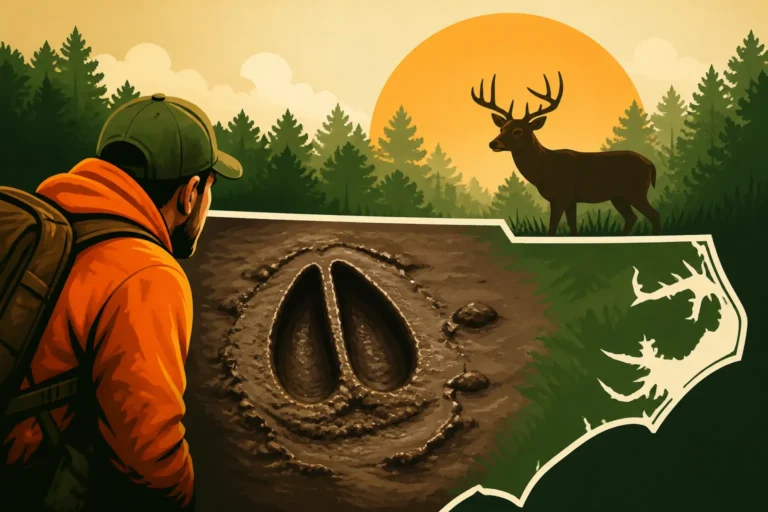
Reading deer sign in pocosin swamps presents its own unique challenges, primarily due to the wet, often muddy ground and the dense undergrowth. Tracks are often abundant in muddy areas, but they can be distorted by water or rapidly filled in. Look for clear, distinct tracks along drier edges, game trails, or on the sandy banks of ditches. Pay close attention to the size and depth of the tracks; larger, deeper tracks often indicate a bigger, heavier deer, potentially a mature buck. Scrapes and rubs, while present, can be harder to spot due to the sheer volume of vegetation. Rubs might be found on smaller pond pines or titi bushes, but they often blend in with the surrounding scrub.
Instead of just looking for obvious sign, you need to think like a deer moving through this thick cover. Deer will use any opening or slightly less dense pathway to conserve energy. Look for "tunnels" – worn-down paths through the thickest briars and bushes. These tunnels are often too small for a human to comfortably walk through but are perfectly sized for a deer. Fresh droppings, especially if found in an area where tracks are also prevalent, indicate recent deer activity. Also, observe what plants are being browsed. Deer are opportunistic feeders, and while they might feed on agricultural crops bordering the pocosin, they also browse on various woody plants and grasses within the swamp itself. Knowing what they're eating can help you identify key feeding areas. Remember, the pocosin's dense cover means deer sign is often very localized, so focus your efforts on those subtle indicators rather than expecting widespread, obvious trails.
Hunting Other Game in Pocosins
While deer are a primary target, pocosins offer fantastic opportunities for other large game. The same dense cover and food sources that attract deer also make these swamps ideal for bears and feral hogs, both of which require specific approaches.
Bear Hunting in Coastal Pocosins
North Carolina's coastal pocosins are legendary for producing some of the largest black bears in the eastern United States. The abundant food sources and impenetrable cover allow bears to grow to immense sizes and reach old ages largely undisturbed. Hunting these coastal bears is an experience unlike any other. The most common and often most effective method for Hunting Coastal Bear Pocosins involves using well-trained bear hounds. The dogs are released on a fresh track or in an area known to hold bears, and they work to track and eventually bay or tree the bear. Hunters follow the baying dogs, often for miles through incredibly difficult terrain, to reach the treed bear. This requires a high level of physical fitness, specialized dog handling skills, and equipment like GPS collars for the hounds. You might be slogging through water, crawling over fallen trees, and fighting through briars for hours, so proper footwear and hydration are critical.
Still-hunting for bears in pocosins is also possible, though extremely challenging. It's often done by focusing on the fringes of the pocosin where it meets agricultural fields, particularly during the late season when bears are looking to fatten up before denning. Bears will often move out of the pocosin at dawn or dusk to feed on corn or soybeans, then retreat back into the safety of the swamp during the day. Setting up a ground blind or treestand (where legal and safe) on the edge of a field overlooking a known bear trail can be productive. Baiting is also a legal method for bear hunting in some parts of North Carolina, but rules vary by county and zone, so it's crucial to check local regulations carefully. The sheer size and power of these animals mean that ethical shot placement and a powerful firearm are absolutely essential.
Feral Hog Strategies
Feral hogs are an increasingly prevalent issue across North Carolina, and pocosins provide them with ideal habitat. These intelligent, destructive animals thrive in the dense cover, rooting for food in the soft, wet ground and using the thickets for bedding and farrowing. Hunting hogs in pocosins offers a unique challenge and, importantly, helps to control their populations, which cause significant damage to native ecosystems and agricultural crops. The good news is that North Carolina's Year-Round Hog Rule on Private Land allows for continuous hunting opportunities, with specific rules for public lands.
Similar to bear hunting, using trained dogs can be very effective for hogs in pocosins. Specialized "bay dogs" locate and hold a hog at bay, allowing hunters to move in for a shot. This method can be intense, as hogs are notoriously aggressive when cornered. Still-hunting for hogs works best on the edges of pocosins or along interior game trails, especially at dawn and dusk when they are most active. Look for fresh rooting, distinct tracks, and wallows – muddy depressions where hogs cool themselves. Hogs often travel in sounders, so if you find one, there are likely more nearby. Trapping is also a highly effective method for controlling hog populations, especially when done systematically over time. Night hunting hogs with lights is legal on private land in North Carolina, and this can be particularly effective when hogs are coming out of the pocosin to feed in adjacent fields. Regardless of your chosen method, be prepared for a tough fight and ensure you have a firearm capable of quickly and ethically dispatching these tough animals.
Safety and Recovery in Pocosin Terrain
The beauty and challenge of pocosin hunting come hand-in-hand with significant safety considerations and often arduous game recovery efforts. Being prepared for these eventualities is as important as any hunting tactic.
Navigating Deep Water and Mud
One of the most immediate and physical challenges of hunting pocosins is simply moving through the terrain. You will encounter deep water, slick mud, and unseen obstacles beneath the surface. Waders or tall rubber boots are essential, but even with them, you need to be constantly aware of where you're stepping. A submerged log or a deep hole can quickly lead to a fall, potentially injuring you or soaking your gear. Many experienced pocosin hunters carry a sturdy walking stick or a pair of trekking poles. These aren't just for balance; they're vital for probing the water and mud ahead of you, assessing depth and identifying submerged hazards. I’ve personally used a walking stick countless times to avoid stepping into waist-deep muck or tripping over hidden roots.
If you find yourself sinking into deep mud, try to stay calm. The natural reaction is to pull straight up, but this often creates a suction effect. Instead, try to shift your weight side-to-side, gently wiggling your foot or leg free, gradually breaking the suction. If you're wearing boots, sometimes it's impossible to get them free without leaving them behind, which is why a good, snug fit is important. When planning your route, use topographic maps and satellite imagery to identify slightly higher ground or natural ridges that might offer firmer footing. Even a slight elevation change of a few inches can make a world of difference. Remember, the goal is to hunt, not to get stuck, so slow and deliberate movement is always the safest bet.
Dealing with Wildlife Encounters
While the primary focus is often on deer, bear, and hogs, the dense cover of a pocosin means you might encounter a variety of other wildlife, some of which could pose a threat. Alligators are present in the coastal plain and can be found in the more open water areas, canals, and ditches within or bordering pocosins. While generally shy, they are powerful predators. Be aware of your surroundings, especially near water, and give them a wide berth. If you're wading, shuffle your feet to avoid surprising one. Venomous snakes, such as cottonmouths and various rattlesnakes, also inhabit these wetlands. Wearing snake boots or chaps can offer an extra layer of protection, but always watch where you place your hands and feet.
Beyond reptiles, the unpredictable nature of feral hogs, especially a sow with piglets or a cornered boar, means you need to be prepared for an aggressive encounter. While rare, a charging hog can inflict serious injury. Carrying a sidearm (where legal and permissible by licensing) for self-defense is a consideration for some hunters, but your best defense is always situational awareness and giving animals space. If you encounter a bear, remain calm, make noise, and slowly back away. Most bears will try to avoid confrontation. Remember, you are a visitor in their home, and respecting their space is key to a safe outing.
Deer Recovery and Extraction Challenges
You've made a good shot, the deer is down – congratulations! Now comes one of the most physically demanding parts of pocosin hunting: retrieving your game. A downed deer in the middle of a dense, muddy pocosin can feel like a monumental task. Blood trailing is often incredibly difficult in standing water, deep leaf litter, and thick vegetation. Mark your shot location precisely, and note the last place you saw the deer. If you're hunting with a partner, mark the track and spread out slowly. Having a quality blood trailing light can make a huge difference, especially if you're trying to track after dark. Consider reading Blood Trailing After Dark in North Carolina for more strategies.
Once you find the deer, the real work begins. Dragging a deer through water, mud, and tangled briars is exhausting. A sturdy deer drag, sled, or even a specialized cart (if the terrain allows for it, which is rare in deep pocosin) can help. Many hunters prefer to field dress the deer on the spot to lighten the load, but even then, it's a brute force effort. If you're deep in the swamp, you might consider the "gutless method" to bone out the deer and pack it out in pieces in a frame pack. This method, while more involved, can save you hours of grueling dragging. Ensure you have strong game bags to keep the meat clean and cool. Bringing extra water and high-energy snacks for the extraction is a smart move, as it will likely take longer and be more strenuous than you anticipate. Remember to check your deer through the North Carolina Deer Reporting Requirements once you've successfully brought it out of the swamp.
Respecting the Environment and Regulations
Hunting pocosins is an immersion into a truly wild ecosystem. It's a privilege to experience, and with that privilege comes a responsibility to respect the environment and adhere to all hunting regulations.
Minimizing Impact in Fragile Ecosystems
Pocosin swamps are fragile and unique ecosystems, and as hunters, we have a duty to minimize our impact. When moving through the swamp, try to stick to existing game trails or natural openings whenever possible, rather than creating new paths through the dense vegetation. Be mindful of the peat soils, which are easily disturbed and slow to recover. If you're using ATVs or other off-road vehicles (where legally permitted on designated trails), stay on marked paths to prevent soil compaction and erosion. The use of trail cameras is generally allowed on public lands, but always ensure they are clearly marked with your NCWRC customer ID and remove them promptly after the season. For details on regulations, refer to Trail Camera Rules on North Carolina Public Land.
Littering is, of course, absolutely unacceptable. Pack out everything you pack in, including spent shell casings, food wrappers, and anything else that doesn't belong. This includes any flagging tape you might use to mark a blood trail or your path – remove it on your way out. Respect any managed burn areas or regeneration zones, understanding that these are crucial for the long-term health of the pocosin ecosystem and its wildlife. By being conscious of our footprint, we ensure that these incredible, wild places remain vibrant and accessible for generations of hunters to come.
Navigating North Carolina Game Land Rules
Many of the most extensive pocosin hunting opportunities in North Carolina exist on public lands, specifically the vast network of North Carolina Game Lands. These lands are managed by the NCWRC and often include large tracts of pocosin. However, hunting on Game Lands comes with specific rules and regulations that can differ significantly from private land. It is absolutely essential to consult the latest North Carolina Inland Fishing, Hunting, & Trapping Regulations Digest before heading out. This digest outlines season dates, bag limits, weapon restrictions, and specific Game Land rules, which can vary by individual Game Land.
Some Game Lands may require a permit for certain hunts, such as special quota hunts for deer or bear. Others might have specific sign-in or check-out procedures, often using kiosks at access points or through the NCWRC mobile app. These procedures are critical for accurate harvest data collection and for ensuring hunter safety. For example, some Game Lands may have specific areas designated as "still-hunt only" or "dog hunting only." Always know the boundaries of the Game Land you're hunting and be aware of any private land inholdings or adjacent properties. Using mapping tools like GoHunt, which integrate Game Land boundaries, can be incredibly helpful for staying compliant and avoiding trespassing issues.
Table: Essential Pocosin Hunting Gear Checklist
To help visualize the crucial items needed for a successful (and safe!) pocosin hunt, here's a quick checklist:
Category Essential Items Notes to your unique challenges, and to help you navigate North Carolina's complex hunting regulations with confidence.
Disclaimer
The information provided in this guide is for general informational purposes only and does not constitute legal advice. Hunting regulations in North Carolina are subject to change and can be complex. Always consult the most current North Carolina Inland Fishing, Hunting, & Trapping Regulations Digest published by the North Carolina Wildlife Resources Commission (NCWRC) or contact the NCWRC directly for the most accurate and up-to-date information before engaging in any hunting activities. Ensure you possess all necessary licenses and permits. Hunting involves inherent risks, and safety should always be your top priority.