Bird Dog Gear for North Carolina Cover
Stepping into the vast, varied landscapes of North Carolina with your bird dog is an incredible experience, but it comes with its own unique set of challenges. From the thick, thorny undergrowth of the coastal pocosins to the rocky, briar-choked mountain slopes, our dogs face everything the wild can throw at them. This guide is all about equipping your loyal hunting partner with the right gear to keep them safe, effective, and comfortable, ensuring many more seasons of successful hunts together across our beautiful state.
North Carolina's Diverse Hunting Cover and Its Challenges
North Carolina offers a truly diverse array of hunting opportunities, and with that comes an equally diverse set of terrains and cover types. What works well for your pointer in the open pine savannah of the Sandhills might not cut it for a setter busting through mountain laurel. Understanding these different environments is the first step in outfitting your bird dog appropriately. It's not just about the game you're after; it's about the ground your dog's paws will cover and the brush their body will push through.
Coastal Plain Pine Plantations and Pocosins
Imagine walking through a coastal pine plantation, the rows of trees giving way to thick undergrowth, or pushing into a true pocosin swamp. These areas, particularly in the eastern part of the state, are notorious for dense, nearly impenetrable vegetation. We're talking about gallberry, titi, greenbrier, and a host of other thorny, tangled bushes that can snag fur, scratch eyes, and cut paws. It's brutal on both hunter and dog, and a dog without proper protection here can quickly become a casualty of the terrain.
The ground itself can be soft, wet, and muddy in places, making for heavy going. Dogs can sink, twist ankles, or get mired. The heat and humidity in these areas, especially during early seasons, can also be intense, quickly leading to overheating if a dog isn't adequately conditioned and hydrated. Keeping them visible in these dense environments, where you might not see them for minutes at a time, is another crucial concern.
Piedmont Fencerows and Brush
Moving inland to the Piedmont, you'll often find a mix of agricultural fields, mature hardwoods, and dense secondary growth. Here, prime bird cover often means thick fencerows choked with multiflora rose, honeysuckle, and blackberry brambles. These linear strips of cover are magnets for rabbits, quail, and other small game, but they are also absolute shredders for an unprotected dog. While perhaps not as vast as a coastal pocosin, the intensity of the thorns can be just as bad, if not worse, in these confined spaces.
Hunting the Piedmont means a lot of stop-and-go, with dogs working thick cover and then crossing open fields. The ground can be hard and rocky in some spots, especially along old farm tracks or creek beds, while others are soft and loamy. The variety demands gear that can handle both abrasive surfaces and sharp thorns. Hunters often find themselves navigating broken terrain, so reliable communication with your dog is key as they work in and out of sight. Rabbit Hunting North Carolina Fencerows is a great example of the kind of cover your dog will encounter here.
Mountain Laurel and Rhododendron Thickets
Venture into the western mountains of North Carolina, and the challenge shifts again. Here, you're dealing with elevation, steep slopes, and vast expanses of mountain laurel and rhododendron thickets. These "rhodo hells" or "laurel slicks" are legendary among grouse hunters for their ability to swallow dogs whole. The woody stems are tough, abrasive, and form a dense, interwoven canopy that can severely limit visibility and movement. Dogs have to literally crawl and push their way through, scraping against branches and often getting tangled.
The terrain in the mountains is unforgiving, with rocky outcrops, slippery moss-covered logs, and steep descents. Paws take a beating from sharp rocks, and legs can get scraped raw by the relentless undergrowth. The cooler temperatures at higher elevations can be a blessing, but wet conditions can also lead to hypothermia, making appropriate layering and post-hunt care important. Navigation is also critical in these vast, often featureless thickets, where a dog can easily get disoriented. If you're chasing grouse, your dog will know these places intimately. Grouse Hunting the Blue Ridge Escarpment explores these demanding areas.
Essential Protective Gear for Your Hunting Dog
Just like you wouldn a durable hunting coat and tough boots, your bird dog needs specialized protection to thrive in North Carolina's challenging cover. Sending a dog into thick briars or rocky terrain without the right gear isn't just inefficient; it's genuinely risky for their health and well-being. Investing in quality protective gear means less time at the vet, more time in the field, and a happier, healthier hunting partner.
Vests and Skid Plates for Briar Protection
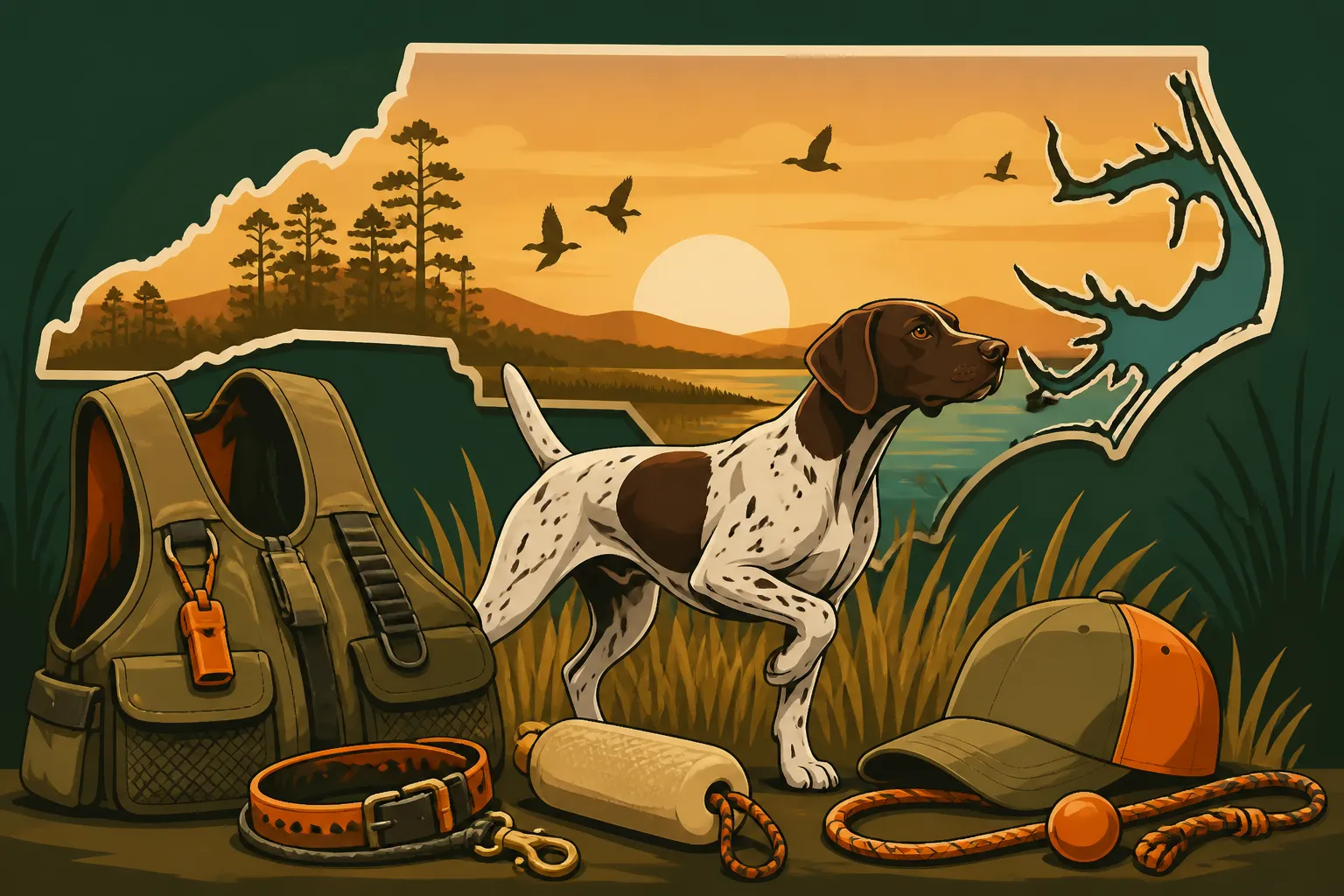
If you've ever watched your dog barrel through a patch of greenbrier, you know the sound of thorns catching fur, and the worry that follows. Protective vests are non-negotiable for many North Carolina hunting scenarios. These vests typically cover the chest and belly, areas most vulnerable to punctures, cuts, and scrapes from briars, sticks, and sharp stubble. They come in various materials, from durable Cordura to ballistic nylon, and some even incorporate layers for extra puncture resistance or buoyancy for water work.
A good vest will fit snugly but allow full range of motion, ensuring your dog can run, jump, and turn without restriction. Look for bright colors, like blaze orange or yellow, for maximum visibility in dense cover – a crucial safety feature, especially when hunting with others. Some vests also feature skid plates, which are essentially tougher, sometimes rigid, panels on the underside to protect against abrasion when a dog is crawling or sliding through tight spots. Think of them as body armor for your best friend.
| Vest Type | Primary Material | Key Features | Ideal NC Cover Type | Visibility |
|---|---|---|---|---|
| Briar Vest | Cordura, Nylon | Full chest/belly coverage, cut-resistant | Piedmont fencerows, coastal thickets | High |
| Skid Plate Vest | Ballistic Nylon, Kevlar | Extra belly protection, abrasion resistant | Dense pocosins, mountain laurel, crawling through brush | High |
| Waterfowl Vest | Neoprene, Cordura | Buoyancy, insulation, chest protection | Currituck Sound marshes, flooded timber | Moderate |
| Tracking Vest | Blaze Orange/Yellow | High visibility, GPS collar pouch | Any dense cover where visibility is key | Very High |
Paw Protection and Booties for Rough Terrain
A dog's paws are their primary mode of transportation, and they take an absolute beating in North Carolina's varied landscapes. Whether it's sharp rocks in the mountains, abrasive stubble in a cut cornfield, or thorns hidden in the undergrowth, torn pads can quickly end a hunt and lead to a painful recovery. This is where paw protection, in the form of booties or balms, becomes incredibly important.
Dog booties come in various designs, from simple slip-on fabric ones to more rugged, rubber-soled versions. They protect against cuts, abrasions, and extreme temperatures. It's often a trial-and-error process to find booties that stay on your dog's paws and that your dog tolerates wearing. Many seasoned hunters will carry a few spares in their pack, knowing that a lost bootie can happen at any moment. For less severe conditions or as a preventative measure, conditioning balms can toughen up paw pads over time. Protecting your dog's feet is vital for their long-term health and hunting career. Read up on Bird Dog Boots and Cut Pads for more details.
Bells and Beepers for Tracking and Safety
In North Carolina's dense cover, a bird dog can vanish from sight in an instant. This is where bells and beeper collars become invaluable tools for both tracking their movements and ensuring their safety. A small, clear-sounding bell attached to your dog's collar provides a constant auditory cue, letting you know roughly where they are and if they're moving or on point. It’s particularly useful in heavy brush where visual contact is minimal.
Beeper collars take this a step further, offering different tones to indicate if the dog is moving or if they've gone on point and are standing still. Some models can be set to only beep when the dog is stationary, which is fantastic for knowing when to hustle in for the shot. These are especially useful in thick woods where a bell's sound might be muffled, or when you need a more distinct indication of a point. The audible signals from these devices not only help you locate your dog quickly but also provide a layer of safety, alerting other hunters to your dog's presence in high-traffic areas.
Navigation and Communication Tools in the Field
Even the most well-trained bird dog can get lost or disoriented in the vastness of North Carolina's public lands or dense private tracts. Modern technology, combined with traditional communication methods, provides a safety net that every bird hunter should utilize. Losing a dog in the field is a nightmare no one wants to experience, and these tools are designed to prevent just that.
GPS Trackers and E-Collars
GPS tracking systems have revolutionized bird hunting, giving hunters unparalleled peace of mind. These systems typically consist of a collar with a GPS transmitter worn by the dog and a handheld receiver carried by the hunter. You can see your dog's exact location, track their movement, and even tell how far they are from you and in what direction. This is invaluable when your dog ranges far, is working out of sight in thick cover, or has gone on point where you can't see them. Several brands offer robust systems, and you might even consult resources like GoHunt to see reviews and comparisons of different models before committing.
Many GPS systems are integrated with e-collars, allowing you to provide various levels of stimulation (tone, vibration, or static correction) to reinforce commands or correct undesirable behavior from a distance. This combination is incredibly powerful for maintaining control and ensuring your dog's safety, especially when they might be approaching a road, private property, or an area with dangerous wildlife. It’s important to understand and practice proper E-Collar Use on Public Ground to ensure ethical and effective application.
Whistles and Hand Signals
While technology offers incredible advantages, don't underestimate the power of traditional communication. A good dog whistle is an essential piece of gear. Its clear, piercing sound carries further than your voice, especially on windy days or across open fields, and it's less likely to spook game than shouting. Consistency is key here; use the whistle to train for recall, "whoa" commands, or to change direction.
Coupled with a whistle, hand signals provide visual cues that can be understood even when sound is compromised by wind, distance, or dense cover. Training your dog to respond to both auditory and visual commands creates a more versatile and reliable hunting partner. In North Carolina's varied terrain, where a dog can be out of sight or hearing in an instant, having multiple ways to communicate can be the difference between a controlled hunt and a chaotic one.
First-Aid Kits for Field Emergencies
No matter how well-prepared you are, accidents can happen in the field. A comprehensive first-aid kit specifically for your dog is just as important as your own. This kit should include items to treat common injuries like cuts, punctures, pad tears, and insect stings. Think about gauze, antiseptic wipes, vet wrap, small scissors, tweezers for thorns, saline solution for eye flushing, and a blood-clotting agent.
Beyond physical injuries, having some basic medications, such as antihistamines for allergic reactions (consult your vet first), can be critical. Carrying a small bottle of water and a collapsible bowl is also wise for hydration. Knowing how to use these items and practicing basic field first aid can make a huge difference in an emergency, potentially saving your dog's life or preventing a minor injury from becoming a major problem. Being able to stabilize an injury quickly can buy you precious time to get your dog to a vet.
Training Aids and Conditioning for Peak Performance
A well-conditioned and thoroughly trained bird dog is not just a joy to hunt with; it's a safer, more effective partner in the field. Gear plays a critical role in both the initial training process and maintaining your dog's physical peak throughout the hunting season. You wouldn't hit the woods unprepared, and neither should your canine companion.
Dummy Launchers and Training Scents
Effective bird dog training hinges on consistent exposure to simulated hunting scenarios. Dummy launchers, whether manual or remote-controlled, allow you to mimic the sound of a gunshot and the flight of a bird, launching dummies or bumpers a significant distance. This helps your dog associate the sound with retrieving, and builds their marking skills, crucial for finding downed game in thick cover. Varying the launch locations and cover types during training will better prepare them for the real thing in North Carolina's diverse environments.
Pairing these launchers with training scents can further enhance the realism. Scented dummies, often imbued with pheasant, quail, or duck scent, help develop your dog's nose for locating game and tracking wounded birds. This is particularly important for species like quail or grouse, where a strong nose is paramount. Regular, focused training sessions with these tools build confidence and skill, turning a raw pup into a reliable retriever.
Leads, Check Cords, and Training Collars
Before your dog is ready for off-leash work in the field, a foundation of obedience is built with various leads, check cords, and training collars. A sturdy, comfortable leash is essential for basic heeling and control in public spaces or when traveling. For more advanced field training, especially for young dogs learning to range, a long check cord (15-30 feet) is invaluable. It allows you to give your dog more freedom to explore while still maintaining control, enabling you to correct them from a distance without physical restraint.
Training collars, ranging from traditional slip leads to gentle remote training collars, are tools to reinforce commands. It's vital to use these tools responsibly and with proper instruction. The goal is always to encourage desired behaviors and build a reliable, responsive hunting partner, not to punish. Proper use of these tools can help prevent common issues like breaking point or ranging too far, critical skills for Squirrel and Small Game Hunting in North Carolina where precise control can make all the difference.
Hydration and Nutrition for Active Dogs
Hunting is physically demanding, and your dog expends a tremendous amount of energy covering miles of ground, often in challenging conditions. Proper hydration and nutrition are foundational to their performance and health. Always carry plenty of fresh water for your dog, especially on warm days or long hunts. Collapsible water bowls are lightweight and easy to pack. Take frequent water breaks, not just when you stop for yourself, but whenever your dog has worked hard or shows signs of panting.
Beyond water, consider their diet. Active hunting dogs require high-quality, high-protein dog food to sustain their energy levels and aid muscle recovery. During intense hunting seasons, some handlers even supplement their dog's diet with additional calories or specific recovery aids, but always discuss any dietary changes or supplements with your veterinarian. A well-hydrated, properly fueled dog has more stamina, recovers faster, and is less prone to injury or heat exhaustion in the varied climates of North Carolina.
Comfort and Care: Gear for Travel and Recovery
The hunt doesn't end when the birds are bagged or the sun sets. The comfort and recovery of your bird dog before, during, and after a hunting trip are just as crucial for their long-term health and readiness for the next adventure. Thoughtful gear choices for travel and rest can make a significant difference in their well-being.
Dog Crates and Kennels for Safety
Whether you're driving to the mountains for a North Carolina's Black Bear Population hunt or heading to the coast for Waterfowl Hunting Currituck Sound and the Coast, safe travel for your dog is paramount. A sturdy, well-ventilated dog crate or kennel is essential. Not only does it provide a secure space for your dog during transit, preventing them from becoming a projectile in an accident or distracting the driver, but it also offers a safe, familiar den for them to rest in at camp or a hotel.
Modern kennels come in various materials, from plastic and wire to impact-resistant composites. Choose one that is appropriately sized, allowing your dog to stand up, turn around, and lie down comfortably. Secure the kennel in your vehicle to prevent shifting. A good kennel isn't just a travel accessory; it's a vital piece of safety equipment and a comfortable retreat for your dog. For those long drives to new game lands, you can even use GoHunt's map features to plan your route and identify dog-friendly stops.
Vehicle Protection and Organization
Let's be honest, hunting dogs and clean vehicles don't always mix. Mud, burrs, loose hair, and slobber are just part of the deal. However, some simple gear can go a long way in protecting your vehicle's interior and keeping things organized. Waterproof seat covers, hammocks, or cargo liners are excellent investments. They create a barrier against dirt and moisture, making cleanup a breeze after a long day in the field. Look for durable, easily washable materials.
Beyond protection, consider organization. Traveling with a bird dog means hauling extra gear: leads, water bowls, training dummies, first-aid kits, and more. Storage solutions like cargo bins, seat-back organizers, or even a dedicated "dog bag" can keep everything tidy and easily accessible. This saves you frustration and ensures you always know where your dog's essentials are, whether you're at a remote trailhead or a busy truck stop.
Elevated Beds and Warming/Cooling Pads
After a hard day of running miles through North Carolina's challenging cover, your dog deserves a comfortable place to rest and recover. Elevated dog beds, often made with a mesh or fabric surface suspended above the ground, provide several benefits. They keep your dog off cold, damp, or hard surfaces, which is great for their joints and overall comfort. The elevated design also promotes airflow, helping them stay cool in warmer weather.
In colder temperatures, especially during late-season hunts in the mountains, a warm sleeping bag or a self-warming pad can provide crucial insulation. Conversely, in the early archery season or during hot scouting trips on the Coastal Plain, a cooling pad can help prevent overheating. Providing your dog with a dedicated, comfortable resting spot aids in muscle recovery, prevents stiffness, and ensures they wake up refreshed and ready for the next day's hunt. Remember, a well-rested dog is a happy and effective hunting partner. North Carolina Deer Camp Traditions often include making sure the dogs are just as comfortable as the hunters after a long day!
Disclaimer
This article is for general informational purposes only and does not constitute professional advice. Laws, prices and regulations vary by location and change over time. Consult a qualified professional for guidance on your specific situation.