Climbing Sticks for North Carolina Hardwoods
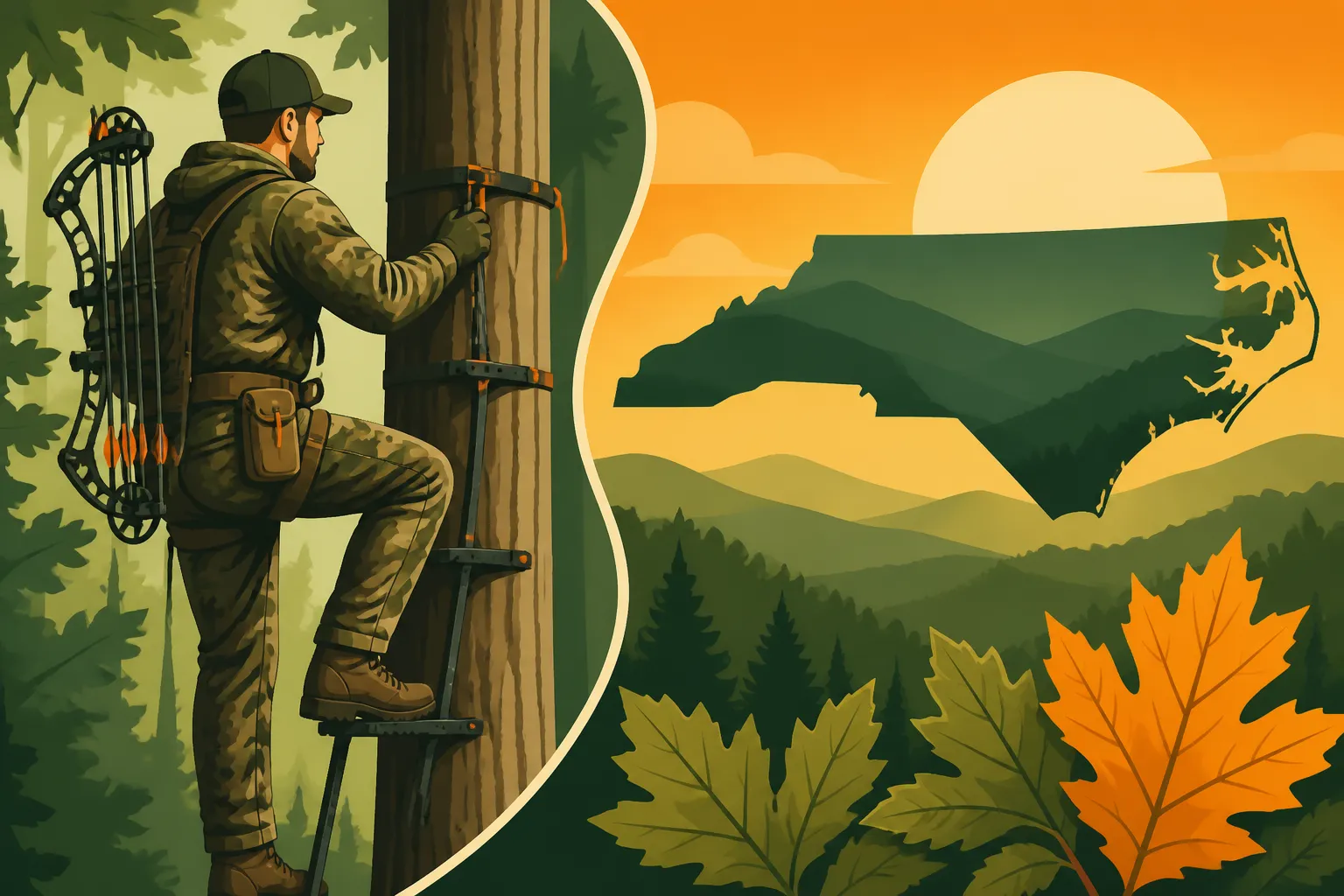
It's a familiar scenario for any hunter in North Carolina: you've scouted a prime piece of hardwood timber, found the perfect rub line or acorn flat, and now you need to get up into a tree silently and safely. The challenge often lies in the dense, mature hardwoods that dominate much of our landscape, making traditional climbing methods difficult or impossible. This guide will walk you through everything you need to know about selecting, using, and maintaining climbing sticks to conquer those North Carolina hardwoods and elevate your hunting success.
Why Climbing Sticks are Essential for Hunting North Carolina Hardwoods
North Carolina's diverse topography, from the steep, rocky Appalachian Mountains to the rolling Piedmont hills and the flat Coastal Plain, presents a unique set of challenges for elevated hunting. Traditional screw-in steps are often impractical, damaging to trees, or simply banned on public land. Ladder stands, while stable, lack mobility. That's where climbing sticks shine, offering a portable, versatile, and often safer alternative for reaching hunting heights in our varied hardwood forests.
Navigating Diverse North Carolina Terrain
Imagine hunting in the Pisgah National Forest, where the terrain can shift from steep, laurel-choked slopes to open, mature oak flats within a hundred yards. Or picture a Piedmont river bottom, where ancient sycamores and poplars tower over dense undergrowth. In these environments, carrying a bulky ladder stand or relying on finding a climbable tree for screw-in steps just isn't feasible. Climbing sticks break down into manageable sections, making them much easier to pack through thick cover and over rugged ground. Their modular nature allows you to adapt to the specific tree you choose, whether it's a gnarled mountain oak or a straight, tall pine on a private tract bordering a swamp. The ability to quickly and quietly get into a tree, even in challenging spots, is a game-changer for pressured deer and wary turkeys.
Advantages Over Other Climbing Methods
When you think about getting off the ground, you have a few options. Old-school screw-in steps are a no-go on most public lands due to tree damage and their permanent nature. Plus, who wants to carry a bag of heavy, noisy steps? Ladder stands offer stability but are heavy, cumbersome, and generally not suitable for run-and-gun hunting or accessing remote areas. Climbing sticks, however, are specifically designed for mobility and adaptability. They offer a stable ascent, are relatively lightweight, and, when used correctly, leave minimal trace. This means you can get to those hard-to-reach spots where the deer feel safe, allowing you to access prime feeding areas, natural funnels, and bedding transitions that other hunters simply bypass. The stealth factor cannot be overstated; a noisy ladder stand setup can alert every deer within a quarter-mile. With practice, climbing sticks can be deployed with surprising quietness.
Overcoming Tree Selection Challenges
One of the biggest frustrations in North Carolina's hardwoods is finding a "huntable" tree. Sometimes the perfect funnel is flanked by trees that are too small for a climber stand, too crooked for ladder sections, or have lower limbs that prevent easy ascent. Climbing sticks give you immense flexibility. You can bypass those inconvenient lower limbs by positioning your first stick above them. You can navigate around slight crooks or knots, and you can even set up on trees that aren't perfectly straight, provided the attachment is secure. This adaptability opens up a vast number of potential stand sites that would otherwise be unusable. For example, if you're Hunting the Rut in the Eastern Zones, finding the exact right tree on a travel corridor can be the difference between seeing a cruising buck and going home empty-handed. Sticks let you maximize your options.
Types of Climbing Sticks Available for North Carolina Hunters
Just like every piece of hunting gear, climbing sticks come in a variety of styles, materials, and designs. Understanding the differences is crucial for choosing the right set for your specific North Carolina hunting adventures. The choice you make will directly impact your ease of transport, setup speed, and overall hunting experience, particularly in our state's diverse environments.
Materials and Their Impact on Weight
The material of your climbing sticks is probably the biggest factor in their weight, which in turn affects your mobility, especially if you're packing deep into a public land tract.
- Aluminum Sticks: These are the most common and popular choice for North Carolina hunters. They strike a great balance between weight, durability, and cost. Aluminum sticks are light enough to carry several sections without excessive fatigue, making them ideal for mobile hunting. You'll find a wide variety of designs, from single-step sections to multi-step ladders, all crafted from this versatile metal. They resist rust well, which is a big plus in the humid conditions we often experience, particularly in the Coastal Plain or after a heavy dew. However, aluminum can be noisy if bumped against other gear or a tree trunk, so conscious effort towards silent packing and setup is key.
- Steel Sticks: While less common for mobile setups, steel climbing sticks offer superior strength and often come at a lower price point. Their primary drawback is their weight, making them a less desirable option for covering long distances. If you have a permanent stand location on private land that you don't plan to move often, or you're setting up a more semi-permanent setup for Deer Drives With Three or Four Hunters, steel might be considered for its sheer robustness. However, for most dynamic North Carolina hunting situations, the weight penalty often outweighs the strength benefits. They can also be more prone to rust if not properly maintained, especially with our frequent rain and humidity.
- Carbon Fiber Sticks: These are the lightest and most technologically advanced options on the market. Carbon fiber offers incredible strength-to-weight ratios, making them a dream for ounce-counting hunters who trek miles into remote areas of the Nantahala Forest. The downside, as you might expect, is the significantly higher price tag. If you're serious about ultralight mobile hunting and your budget allows, carbon fiber sticks are the pinnacle of portability. They're also generally quieter than aluminum due to their material properties, reducing the metallic clanking sound during transport.
| Material | Key Advantage | Key Disadvantage | Typical Use Case |
|---|---|---|---|
| Aluminum | Good strength-weight ratio, affordable | Can be noisy, average durability | Most mobile hunters, public and private land, general use |
| Steel | Highest durability, lowest cost | Heaviest, prone to rust, least portable | Permanent stand setups, less mobile hunting, budget-conscious |
| Carbon Fiber | Ultralight, extremely strong | Most expensive, requires careful handling | Ounce-counting mobile hunters, long treks, premium experience |
Design Variations and Attachment Methods
Beyond the material, the design and how sticks attach to the tree are critical to their functionality and your confidence in them.
- Single-Step Sections vs. Multi-Step Ladders:
- Single-step sections typically consist of individual sections, each with one or two steps, allowing for a customizable height. They are highly packable and versatile for crooked trees. This modularity means you only carry the height you need, which is great if you're doing Run-and-Gun Turkey Tactics on Public Land and need to quickly change setups.
- Multi-step ladder sections are longer, offering two or more steps per section. These can be faster to set up for taller climbs but are generally bulkier to pack. They excel when you have a known, straight tree and prioritize speed over packability for a less mobile hunt.
- Attachment Methods:
- Cam Buckle Straps: The most common method. These straps wrap around the tree and are tightened with a cam buckle, providing a secure, silent hold. They are easy to use and adjust, making them popular for quick setups and adjustments. Many sticks now feature specialized "tree-friendly" coatings or designs on the part that contacts the tree, minimizing bark damage.
- Rope/Daisy Chain Systems: Some ultralight sticks utilize a rope or a daisy chain system with a specific knot (like a Klemheist or a Prusik) for attachment. These can be incredibly lightweight and quiet but require more practice to master for quick, secure setups. They also allow for fine-tuning the angle of the stick, which can be useful on oddly shaped trees.
- Quick-Connect Systems: A few brands offer proprietary quick-connect systems, often involving a bracket or cleat that attaches to the tree, allowing the stick to slot into place. These can be extremely fast and quiet once the initial bracket is secured, but often limit compatibility with other brands' sticks and may require more initial setup time for each location. When researching these types of systems, checking reviews and demonstrations on sites like GoHunt can be immensely helpful to understand their specific pros and cons in action.
Choosing the Right Climbing Sticks for Your North Carolina Hunt
Selecting the perfect set of climbing sticks isn't a one-size-fits-all decision, especially with the wide range of hunting styles and environments we have here in North Carolina. What works for a hunter still-hunting in the Nantahala Forest might not be ideal for someone working a dove field edge in the Coastal Plain. You need to consider several factors to ensure your sticks enhance your hunt, rather than hinder it.
Weight and Packability for Mobile Hunting
For many North Carolina hunters, especially those of us who venture onto public lands or practice a mobile hunting style, weight is paramount. Every ounce counts when you're packing in a stand, sticks, your bow or rifle, and all your accessories for a full day's hunt.
- Long Hauls: If your hunting strategy involves significant hikes to get away from the crowds – perhaps into the deep pockets of Pisgah National Forest or traversing large tracts of Game Lands – then minimizing weight is critical. Carbon fiber sticks are a dream for this, but high-quality aluminum sticks are a more budget-friendly and widely adopted alternative. Look for sticks that stack tightly or nest together to reduce bulk in your pack. A lot of folks debate whether to carry a full set for higher climbs or fewer sticks for a quick 12-foot setup. I'd lean towards having enough to get to at least 15-20 feet consistently, as that extra height can often make the difference in getting busted, especially in open hardwoods where a deer can easily spot you.
- Run-and-Gun vs. All-Day Sit: If you're a run-and-gun hunter, constantly moving and setting up new stands based on fresh sign, packability and quick setup are key. Lightweight, modular sticks are essential here. You don't want to be fighting with heavy, bulky gear every time you move. For an all-day sit, you might be willing to carry a slightly heavier, perhaps more comfortable, setup, but the initial trek still requires thoughtful gear choices. Remember, in North Carolina's often dense undergrowth, even a few extra inches of width on your packed sticks can snag on briars and saplings, making your approach noisy and frustrating. Consider how your sticks will integrate with your Packs for a Day on Public Land to ensure a comfortable carry.
Height and Stealth Considerations
How high do you need to get, and how quietly can you do it? These two questions are deeply intertwined when it comes to climbing sticks.
- Optimal Hunting Height: In North Carolina hardwoods, especially in areas with mature timber, lower limbs can be an issue. You often need to get above the main canopy or at least clear enough branches to get a clear shooting lane. For deer hunting, getting to 15-25 feet is often considered ideal for concealment and scent dispersion. This means you'll likely need 3-5 stick sections, depending on the length of each section. Taller sticks can get you higher with fewer sections, but they are often less packable. Shorter, modular sticks give you more control and allow you to adapt to varying tree heights and limb structures.
- Silent Operation: Nothing ruins a hunt faster than a metallic clang as you're setting up. Look for sticks with noise-dampening features, such as rubberized steps, padded coatings, or design elements that prevent metal-on-metal contact. When packing, use bungee cords or straps to cinch them tightly together to prevent rattling. Many hunters even wrap their sticks in camouflaged tape or rubber strips to further reduce noise. Practice your setup at home or in the off-season to ensure you can deploy your sticks silently and efficiently. Pay attention to how the attachment straps or ropes work; some cam buckles can be noisy if not handled carefully. GoHunt often features reviews where hunters specifically comment on the noise factor of different climbing stick models, which can be invaluable feedback.
Budget and Durability
Hunting gear is an investment, and climbing sticks are no exception. You want gear that will last and perform reliably season after season.
- Cost vs. Performance: As discussed, carbon fiber is top-tier for weight but comes with a premium price. Aluminum offers a fantastic middle ground in terms of cost and performance for most hunters. Steel is the most budget-friendly but sacrifices mobility. Consider your long-term hunting goals. If you're just getting into mobile hunting, a solid set of aluminum sticks is a great starting point. As you gain experience and refine your style, you can always upgrade. Don't cheap out entirely, though; flimsy sticks are not only frustrating but can be dangerous.
- Longevity and Maintenance: Good climbing sticks should withstand years of abuse. Look for robust welds, durable powder coatings, and strong attachment hardware. Check reviews for common failure points or issues. Regular maintenance, such as inspecting straps for wear, cleaning mud and debris, and storing them properly, will extend their life. Humid North Carolina weather can take its toll, so ensuring everything is dry before storage can prevent premature wear or rust, even on aluminum. Investing in a quality set from a reputable brand usually pays off in the long run with better durability and customer support.
Mastering Climbing Stick Setup and Placement
Getting your climbing sticks up the tree and ready for your stand requires more than just physical effort; it demands strategy, practice, and an unwavering commitment to safety. A well-executed setup is stealthy, stable, and positions you perfectly for the shot. A rushed or careless setup can be dangerous and could alert game to your presence.
Pre-Season Practice and Safety First
Before you even think about hitting the woods during deer season, take your climbing sticks and stand to a safe, controlled environment. Your backyard or a friend's property with suitable trees is perfect.
- Familiarity is Key: Practice setting up your sticks and stand repeatedly. Learn the feel of the straps, the sound of the buckles, and the most efficient way to ascend. The goal is to make the process second nature so you can do it quickly and quietly in the dark or dim light of a pre-dawn hunt. This is especially critical for those crisp, early mornings when deer movement is often highest.
- Full Body Harness: This is non-negotiable. Always, always wear a full-body safety harness from the moment your feet leave the ground until they return to it. Use a lineman's belt when ascending and descending with your sticks, ensuring you're always tethered to the tree. Once at hunting height, use your tree strap or a separate tether. Falls from treestands are a leading cause of serious hunting injuries. No buck is worth your life or a life-altering injury. Treat every climb as if it could be your last if you're not absolutely secure. The rules for Treestand Safety Gear for Steep Ground are especially important here.
- Scouting for Suitable Trees: During your off-season scouting trips, don't just look for deer sign. Actively identify potential "stand trees" that are straight, sturdy, and free of dead limbs that could fall. Note any lower limbs that need to be navigated or trimmed (if allowed). Think about your entry and exit routes to these trees, and how wind direction might affect your hunt from that location. This pre-planning will save valuable time and reduce noise on hunting day. When you're Scouting North Carolina Public Land Before Season, marking these potential trees on an app like GoHunt can be incredibly useful.
Strategic Placement for Maximum Advantage
Once you're in the field, where and how you place your sticks can make or break your hunt. It's about more than just getting up the tree; it's about positioning yourself for success.
- Optimizing Your Ascent Path: When approaching your chosen tree, consider your entry route. Try to approach from a direction that keeps you concealed and downwind. Place your first stick low enough to be easily reached from the ground but high enough that deer passing by won't bump it or be too aware of it. Angle your sticks slightly to create a natural, comfortable ladder effect. Avoid placing sticks directly above or below each other if possible, as this can make climbing awkward and noisy. Think about where your stand will hang and how your sticks will lead you directly to its platform with minimal movement or fuss.
- Clearing Obstructions and Shooting Lanes: Once you're at hunting height and secured in your stand, take a moment to assess your shooting lanes. While you should have done some pre-scouting, the perspective from 20 feet up can be very different. Use a small, quiet hand saw or pruners to clear any small branches or twigs that might interfere with a shot or snag your bowstring. Only trim what's absolutely necessary and only if allowed on the property. Be mindful of scent dispersal when trimming. Remember, you're not building a permanent blind, but opening up critical windows.
- Concealment and Exit: Beyond shooting lanes, consider your concealment. Are you silhouetted against the sky? Can you blend into the canopy? Use the tree's natural cover to your advantage. When it's time to descend, think about your exit. Can you quietly retrieve your sticks, or will you leave them in place if permissible and safe? If you're leaving them, ensure they are secured in a way that minimizes visibility and deters theft. On public land, rules on leaving stands and sticks can vary, so always check Treestand Rules on North Carolina Public Land before you go.
Integrating Sticks with Your Treestand or Saddle System
Climbing sticks are rarely used in isolation; they are typically the essential first step to getting into your preferred elevated hunting position, whether that's a hang-on treestand or a mobile saddle system. Seamless integration is key for efficiency, safety, and ultimately, success in the North Carolina woods.
Pairing with a Hang-On Treestand
The most common pairing for climbing sticks is with a hang-on treestand. This combination offers excellent stability and comfort for longer sits, which can be crucial when you're waiting out a mature buck in a prime acorn bottom or a travel corridor.
- Compatibility and Stability: Not all stands and sticks are created equal, but generally, any climbing sticks can be used with any hang-on stand. The critical factor is ensuring your sticks get you to the desired height comfortably and safely to step onto your stand's platform. When hanging your stand, ensure it's level and tightly secured to the tree. The last thing you want is a wobbly platform. Many hunters find that setting the last stick just below the stand platform makes for an easy and quiet transition. Some sticks even have a small platform or step that can serve as a bridge. For hunting in areas like the Uwharrie National Forest, where terrain can be uneven, getting a level stand is a top priority, and flexible stick placement helps achieve that.
- Efficient Setup Sequence: The typical sequence involves attaching your lineman's belt, then hanging your first stick section, usually at chest height or slightly higher, to allow for a long first step. You then climb and attach subsequent sticks, always remaining safely connected to the tree. Once you reach the desired height, you hang your treestand, adjust it, and then transition from your lineman's belt to your primary tree tether. Practice this sequence repeatedly in the off-season. The more fluid your movements, the less noise you'll make and the less time you'll spend exposed during critical morning or evening hunts. Knowing your gear's limits and how it performs in different conditions, which can be found through thorough product research or checking community forums on platforms like GoHunt, contributes significantly to this efficiency.
Pairing with a Saddle Hunting System
Saddle hunting has exploded in popularity, especially among mobile hunters who value ultralight setups and stealth. Climbing sticks are absolutely integral to the saddle hunting experience.
- Lightweight and Versatile: Saddle hunters are often obsessed with weight reduction, making lightweight aluminum or carbon fiber sticks the natural choice. The modularity of sticks perfectly complements the saddle's "one stick" or "mobile stick" approach, where hunters may use a single stick and an aider for minimalist setups, or a few lightweight sections to gain height. The beauty of saddle hunting is the ability to shoot 360 degrees around the tree and use the tree itself for concealment, which is a huge advantage in thick North Carolina hardwoods where shot opportunities can be fleeting. For those interested in this highly mobile approach, I highly recommend exploring Saddle Hunting in North Carolina Hardwoods.
- Optimal Height and Step-Through: With a saddle, you're looking for an optimal height that allows you to comfortably stand on your platform (often a single "platform stick" or a custom platform) and shoot around the tree. Since you're not sitting in a stand but rather leaning against the tree, your sticks need to provide a stable path to your platform. Many saddle hunters use an "aider" – a fabric step attached to the stick – to get more vertical distance out of each stick section, allowing them to carry fewer sticks. This combination is highly effective for getting to optimal hunting height with minimal gear, which is perfect for navigating dense coastal pocosin edges or mountainous terrain.
Maintenance and Longevity of Your Climbing Sticks
You've invested your hard-earned money and precious time into choosing the right climbing sticks, so making them last is just good sense. Proper care isn't just about extending their lifespan; it's also a critical safety measure. Worn-out straps or corroded components can lead to dangerous failures, and nobody wants that in the field, especially not high up in a tree in the middle of nowhere.
Post-Season Cleaning and Inspection
Once the hunting season wraps up in North Carolina, whether you're ending a long deer season or putting away your gear after chasing spring gobblers, it's time to give your climbing sticks a thorough going-over.
- Washing Away the Grime: Our North Carolina woods can be muddy, dusty, and generally messy. Start by wiping down all stick sections with a damp cloth to remove dirt, mud, sap, and any other debris. For stubborn spots, a mild soap and water solution can work wonders. Make sure to rinse thoroughly to avoid leaving any residue. Pay special attention to the attachment points, buckles, and any moving parts. Sand and grit can cause premature wear on straps and mechanisms, so getting them clean is vital. If you've been hunting in swampy areas or during heavy rain, you might find a surprising amount of organic material clinging to your gear.
- Thorough Inspection: Once clean, inspect every inch of your sticks. Look for bent sections, cracks (especially on carbon fiber), deep gouges in aluminum, or excessive rust on steel components. Check all welds for integrity. Examine the steps themselves – are they secure? Are any rubberized coatings peeling or worn? Now, turn your attention to the straps or rope systems. Look for frayed edges, cuts, tears, or any signs of stretching or weakening. Test the cam buckles or knot systems to ensure they still engage securely. If any component shows significant wear or damage, consider replacing it or having it professionally repaired. It's better to discover a weakness in your garage than at 20 feet up a tree. Resources like GoHunt often have discussion forums where hunters share common wear points they've found on various stick models.
Proper Storage and Preventative Measures
How you store your climbing sticks during the off-season can drastically affect their condition when next season rolls around. Don't just toss them in a corner of the garage.
- Dry and Ventilated Space: Store your sticks in a cool, dry, and well-ventilated area. Humidity is a big issue in North Carolina, and it can promote rust on steel components, degrade fabric straps, and even lead to oxidation on aluminum. Avoid storing them in direct sunlight for extended periods, as UV rays can weaken fabrics and plastics. A shed, garage, or climate-controlled storage unit works well.
- Preventative Lubrication: For any metal-on-metal components, especially pins or hinges that allow sticks to nest or pivot, a light application of a silicone-based lubricant can prevent seizing and rust. Just make sure it's a non-scented, outdoor-friendly lubricant that won't deter game. Avoid excessive lubrication, as it can attract dirt and grime.
- Organized Storage: Keeping your sticks organized, perhaps hung on a wall or stacked neatly, prevents them from getting tangled or damaged by other garage items. If your sticks came with a carry bag or straps, use them to keep the sections together. This also makes them easier to grab and go when season starts again. Taking these simple steps ensures your climbing sticks are ready for action whenever North Carolina's Archery Season Opening Day rolls around, or for whatever hunting adventure you have planned.
Disclaimer
This article is for general informational purposes only and does not constitute professional advice. Laws, prices and regulations vary by location and change over time. Consult a qualified professional for guidance on your specific situation.