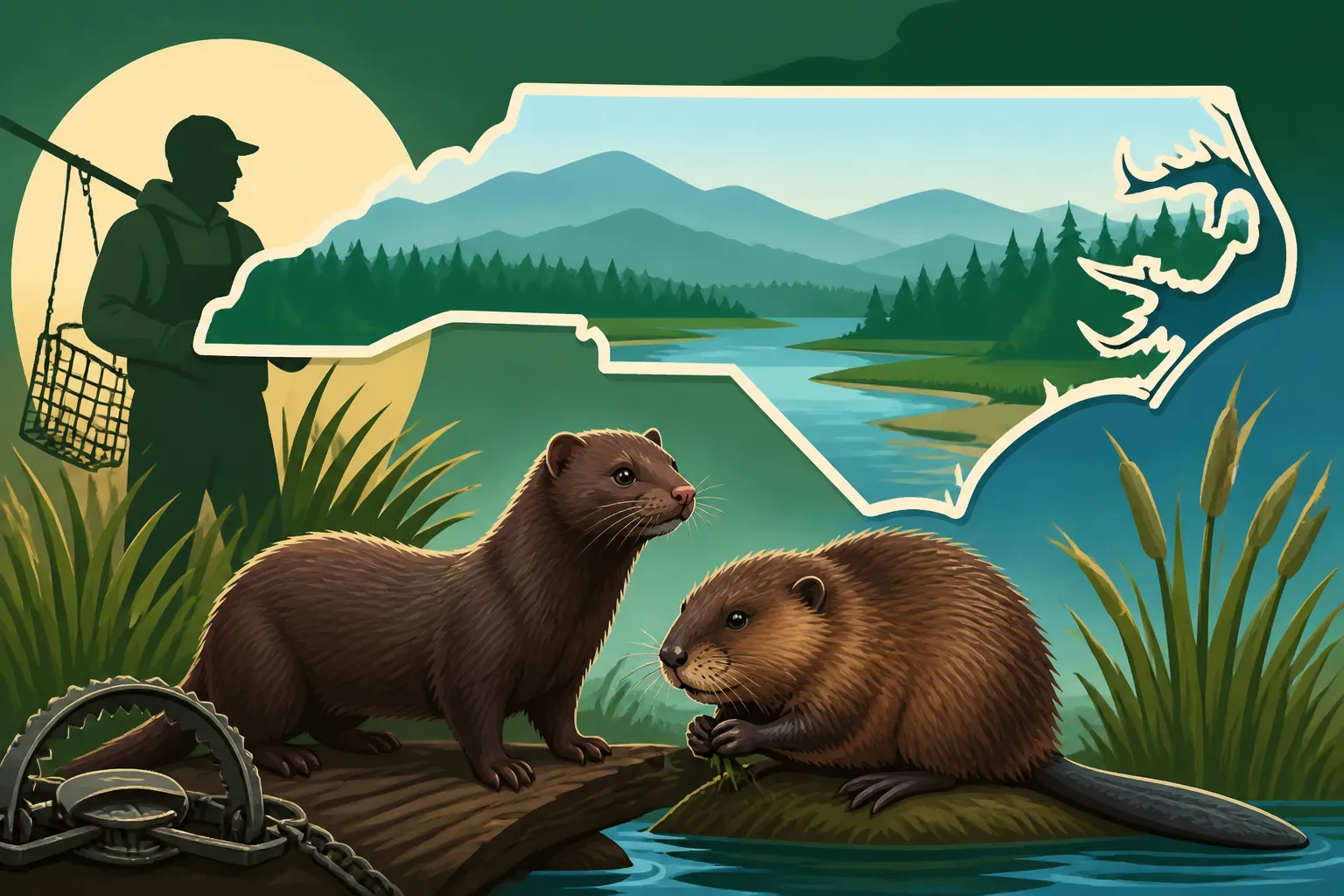
North Carolina Muskrat and Mink Trapping Trends
For many in North Carolina, the thought of trapping furbearers like muskrats and mink might seem like a bygone era, or perhaps an intimidating endeavor. The truth is, these traditions are still very much alive, though they come with their own unique challenges and trends. If you're looking to understand the ebb and flow of furbearer populations, the intricacies of trapping these elusive animals, or simply the current landscape of North Carolina's trapping community, this guide will delve deep into everything you need to know about muskrat and mink trapping.
Understanding North Carolina's Fur Market and Trapping History
Trapping has a long and storied history in North Carolina, stretching back to indigenous communities and then European settlers who prized the bountiful furbearers found across the diverse landscape. While the motivations and methods have evolved dramatically over centuries, the fundamental connection to the land and its wild inhabitants remains. Understanding this heritage and the current market realities is crucial for any modern trapper.
Historical Context of North Carolina Furbearer Trapping
Generations ago, trapping was often a necessity, a way for families to put food on the table and generate income from the pelts. The dense forests of the mountains, the sprawling river bottoms of the Piedmont, and the vast coastal swamps were rich with beaver, otter, muskrat, mink, raccoon, fox, and bobcat. Trapping wasn't just a hobby; it was a skill passed down, integral to survival and community life. Early trappers relied on intimate knowledge of animal behavior, tracking skills, and rudimentary but effective trap designs. The fur trade itself played a significant role in the state's economy, driving commerce and settlement patterns in many areas. It was a rugged life, demanding resilience and deep respect for the environment.
Today, while some might view trapping through a romanticized lens, the practicalities are still demanding. The legacy of these early trappers informs many of the techniques still used, albeit with modern, humane updates. This deep historical root gives North Carolina's trapping community a strong sense of tradition and stewardship. From the North Carolina Trapping License Requirements to understanding the nuances of how furbearers move through the landscape, modern trappers are still connected to those who came before them.
Current Market Realities for Wild Furs
Let's be real: the fur market isn't what it once was. While there's still a demand for high-quality wild furs, prices fluctuate wildly and rarely reach the peaks seen decades ago. This can be a tough pill to swallow for trappers who invest significant time and effort. Factors like international fashion trends, economic downturns, and the availability of farmed furs all play a role in depressing prices. A trapper might spend weeks setting lines, battling the elements, and carefully preparing pelts, only to find the payout barely covers their fuel costs and trap maintenance. This reality often means that for many, trapping has become less about significant income and more about the passion, the challenge, the outdoor experience, and contributing to wildlife management.
However, a dedicated trapper who consistently produces prime, well-prepared pelts can still find buyers. Some trappers have success selling directly to private buyers, small artisans, or even processing the fur themselves for personal use. Others appreciate the connection to a raw, natural resource and the pride of self-sufficiency. It takes a certain kind of grit to pursue trapping in this market, but for those who love it, the reward isn't always measured in dollars. It's in the knowledge, the skill, and the connection to nature that few other pursuits offer.
Muskrat Trapping Trends and Tactics in North Carolina
Muskrats are fascinating semi-aquatic rodents, and while they might not generate the high-dollar pelts of a beaver or otter, they offer a consistent and engaging trapping opportunity. Found throughout much of North Carolina where suitable wetland habitat exists, understanding their behavior and habitat is key to successful trapping.
Identifying Prime Muskrat Habitat in North Carolina
Muskrats thrive in slow-moving water with abundant vegetation – think marshes, ponds, lakes, slow creeks, and drainage ditches. In North Carolina, this means you'll find them in force across the Coastal Plain, with good numbers also present in the Piedmont's numerous farm ponds and winding creeks. They build distinctive "houses" out of vegetation in shallow water, or burrow into banks, often with underwater entrances. Key signs of muskrat activity include chewed vegetation (especially cattails and rushes), small "runs" or trails leading into the water from the bank, and distinct feeding platforms where they sit and eat.
When scouting for muskrat sign, pay close attention to the edges of ponds and ditches. Look for areas where the water is not too deep, allowing for abundant emergent vegetation. In the Coastal Plain, places like the edges of Hunting Coastal Plain Pocosin Swamps or slow-moving blackwater rivers can be highly productive. During your scouting, using a mapping tool like GoHunt can be incredibly helpful for identifying potential waterways, property lines, and access points before you even set foot on the ground. A good pair of binoculars can also reveal houses or bank dens from a distance, saving you valuable time.
Effective Muskrat Trapping Setups and Techniques
Muskrats are relatively easy to trap once you locate their activity. The most common and effective traps are body-grip traps (like Conibear-style traps, often in sizes like 110 or 120), foothold traps (smaller sizes, often a #1 or #1.5 coilspring or longspring), and sometimes even cage traps, though these are less common for muskrats specifically. Set placement is paramount. Underwater sets are highly effective because muskrats spend so much time in the water. One popular method is a "run set," where a body-grip trap is placed in a natural travel lane a muskrat uses, often within a foot of water depth. Setting traps near bank dens, feeding platforms, or even where they've created "slides" down into the water are also excellent choices.
Another effective technique involves using bait, though muskrats can often be caught without it. Apples, carrots, or commercial muskrat lures can be placed strategically to draw them to a trap. It's crucial to ensure your traps are secured properly to prevent animals from escaping with the trap or from depredation by other animals. For foothold traps, using a "drowning rig" is essential to ensure a quick and humane dispatch, pulling the animal into deeper water where it cannot breathe. Remember, vigilance is key; check your traps frequently, ideally every day, to ensure humane trapping and to recover your catch quickly.
Processing and Handling Muskrat Pelts
Once you've made a catch, proper pelt preparation is critical to maximizing its value, however modest that value might be. Muskrats are skinned "cased," meaning the skin is pulled off like a sock, leaving a tube of fur. The initial skinning should be done carefully to avoid cutting the hide or leaving too much flesh on the fur. After skinning, the pelt needs to be fleshed to remove any remaining fat and membrane. This is often done on a fleshing beam with a dedicated fleshing knife. This step is crucial for preventing spoilage and ensuring the pelt dries properly.
Following fleshing, the pelt is stretched on a wire or wood stretcher, ensuring it's shaped correctly for drying. Consistency in shape and size can make a difference in how a buyer perceives your pelts. The pelt then needs to be air-dried in a cool, well-ventilated area away from direct sunlight or excessive heat, which can damage the fur. Patience is a virtue here; rushing the drying process can lead to problems. Properly handled and dried muskrat pelts will be supple and clean, a testament to the trapper's skill and attention to detail. This entire process is part of the tradition, and a source of pride for those who master it.
Mink Trapping Trends and Tactics Across the Tar Heel State
Mink are far more elusive and solitary than muskrats, presenting a greater challenge for the North Carolina trapper. These small, fierce predators are members of the weasel family and possess incredibly valuable, luxurious fur. Successfully trapping mink requires a deeper understanding of their predatory nature and preferred hunting grounds.
Locating Mink in North Carolina's Diverse Ecosystems
Mink are opportunistic carnivores that stick close to water, much like muskrats, but they are also found far more frequently ranging along creek bottoms, drainage ditches, and riverbanks. They are superb hunters, preying on small mammals, birds, fish, frogs, and even muskrats themselves. Their territories can be quite large, and they prefer areas with plenty of cover: brush piles, rock crevices, undercut banks, and fallen logs. In North Carolina, you'll find them in similar habitats to muskrats, but also extending into more remote, heavily wooded stream corridors in the Piedmont and even the mountains. Any place you find good populations of muskrats, you likely have mink hunting them.
When scouting for mink, look for tracks along muddy banks, often distinct five-toed prints. Their scat, usually dark and twisted with visible fur or bone fragments, is another good indicator, often left on rocks or logs. Keep an eye out for signs of their prey, like muskrat activity, as this will draw mink in. Unlike muskrats, mink rarely leave obvious "houses," but they might have dens in rock piles or beneath roots. Using mapping resources, perhaps even with an aerial photography layer from GoHunt, can help pinpoint choke points along waterways or areas with dense bank cover where mink are likely to travel. Reading North Carolina Mud for Fresh Deer Movement can also help develop a keen eye for tracks that can apply to mink as well.
Mink Trapping Strategies and Equipment
Trapping mink often involves more strategic placement and camouflage than muskrat trapping. Body-grip traps (like the 110 or 120 size) are excellent for mink, especially when placed in "cubbies" or boxes that funnel the mink directly through the trap jaws. These cubbies protect the trap from non-target animals and weather. Foothold traps (sizes #1 to #1.5) are also effective, particularly when set in shallow water or on dry land where mink are known to travel. When setting dry land traps, ensure they are well-camouflaged and blended into the natural surroundings.
Natural "pinch points" or narrow areas along a creek where mink are forced to travel are prime locations. Dirt hole sets, where a trap is buried near an artificial hole that mimics a rodent's burrow, often with bait and lure, can be very effective for curious mink. For bait, small pieces of fish, beaver meat, or muskrat carcass work well. Commercial mink lures, often musky and potent, can also draw them in. Again, all traps should be secured, and drowning rigs are essential for water sets with foothold traps to ensure humane and quick dispatch. Mink are intelligent and wary; careful setup and minimal disturbance are key to success.
Value and Preparation of Mink Pelts
Historically, mink fur has always been one of the most highly valued wild furs, prized for its softness, durability, and rich brown color. While market values fluctuate like any other fur, a prime, well-handled mink pelt can still fetch a decent price, particularly if it's large and a vibrant color. The market for mink tends to be more stable than for some other furbearers due to its long-standing appeal in luxury markets.
Like muskrats, mink are typically skinned "cased." The skinning process needs to be precise, as mink hides are more delicate than some other furbearers. Fleshing is arguably even more critical for mink due to the high oil content in their fat, which can quickly rancidify and damage the fur if not removed thoroughly. A clean, fat-free pelt is essential. After fleshing, mink pelts are stretched fur-side-out on specific mink stretchers, which ensure a proper, elongated shape that showcases the fur beautifully. They are then dried in a cool, dark, well-ventilated area. Taking the time and care to properly prepare a mink pelt is an investment that pays off in higher quality and, potentially, better returns.
| Feature | Muskrat | Mink |
|---|---|---|
| Habitat | Marshes, ponds, slow creeks, ditches | Stream banks, river bottoms, dense cover near water |
| Diet | Mostly vegetarian (cattails, rushes, aquatic plants) | Carnivorous (rodents, birds, fish, frogs, muskrats) |
| Size | Small rodent, typically 1-4 lbs | Small weasel, typically 1.5-3 lbs |
| Signs | Vegetation houses, bank burrows, chewed plants, runs | Tracks, scat, dens in rock/root piles, signs of predation |
| Preferred Traps | 110/120 body-grips, #1/1.5 footholds | 110/120 body-grips (often in cubbies), #1/1.5 footholds |
| Pelt Value (General) | Modest, high volume | Higher, valued for luxury |
| Trapping Difficulty | Relatively easy, consistent | More challenging, elusive, wary |
The Future of Furbearer Trapping and Conservation in North Carolina
Trapping in North Carolina isn't just about catching animals; it's deeply intertwined with wildlife management and conservation efforts. Responsible trappers play a vital role in monitoring furbearer populations, contributing data, and helping to manage species like muskrat and mink to ensure healthy ecosystems for generations to come.
Navigating Regulations and Conservation Efforts
The North Carolina Wildlife Resources Commission (NCWRC) sets the rules for trapping, and these regulations are designed to ensure sustainable populations and ethical practices. It's not a free-for-all; there are specific seasons, bag limits, trap types, and checking requirements. For instance, understanding North Carolina Muskrat and Mink Trapping Trends also means understanding the dates you can legally set traps and the reporting requirements once you've made a catch. Ignoring these rules isn't just illegal; it undermines the conservation efforts that keep furbearer populations healthy.
Many trappers are keen conservationists at heart, understanding that their pursuit depends entirely on healthy, thriving wildlife. They often participate in workshops, read up on new research, and share knowledge about best practices. The NCWRC regularly reviews regulations based on population surveys and scientific data, so staying informed is crucial. This active engagement helps ensure that trapping remains a responsible and sustainable activity, avoiding the overharvesting that plagued some species in past centuries. It’s about balance: allowing for the tradition of trapping while always prioritizing the long-term health of the furbearer resource. You can check the current North Carolina Trapping License Requirements to ensure you're up to date on all legal aspects.
The Role of Technology and Resources for Trappers
While trapping is an ancient skill, modern technology has a definite place in making it more efficient, safer, and more effective. Mapping applications, like those found on platforms such as GoHunt, are invaluable for scouting remote areas, marking trap locations, identifying property boundaries to avoid trespassing, and planning efficient trap lines. This is especially true when you're exploring large tracts of public land or trying to navigate the sometimes-complex patchwork of private land in areas like the Piedmont. Having satellite imagery, topographical maps, and landowner information at your fingertips can drastically reduce wasted time and effort.
Beyond mapping, online forums and social media groups dedicated to North Carolina trapping offer a wealth of information. Trappers can share tips, ask questions, and stay abreast of changing conditions or techniques. Educational videos demonstrate proper skinning and fleshing techniques, or innovative trap sets. These resources supplement the invaluable knowledge passed down through generations. While a screen can never replace boots on the ground, integrating technology thoughtfully can enhance the trapping experience, making it more accessible and productive for today's trapper. From checking weather patterns to identifying prime habitats, tools like GoHunt are changing how trappers plan their seasons.
Sustaining the Trapping Tradition
The future of trapping in North Carolina, much like other outdoor traditions such as Spring Turkey Hunting in North Carolina or Bowhunting North Carolina's Statewide Archery Season, depends heavily on new generations embracing the skills and values. Mentorship plays a critical role. Experienced trappers taking apprentices under their wing, teaching them not just the mechanics of setting a trap but also the ethics, the regulations, and the importance of conservation, is paramount. These young trappers learn respect for the animal, an appreciation for nature's cycles, and a sense of self-reliance that's increasingly rare.
Beyond individual mentorship, organized trapping associations and clubs work to advocate for trapping rights, educate the public, and ensure that regulations are fair and science-based. They promote humane trapping practices and demonstrate the positive role trappers play in managing wildlife populations. By fostering a strong, informed, and ethical community, North Carolina can continue its rich tradition of furbearer trapping. It’s a challenging but rewarding pursuit, connecting participants to the wild rhythms of the state's diverse landscapes.
Disclaimer
This article is for general informational purposes only and does not constitute professional advice. Laws, prices and regulations vary by location and change over time. Consult a qualified professional for guidance on your specific situation.